This is the second largest drop of 2026. We explain why bitcoin’s mining difficulty has fallen again.
The BTC▲$62,630.00 network has reduced bitcoin mining difficulty by 10.09%—from 138.96 trillion to 124.93 trillion. That’s the second largest negative adjustment of 2026, following an 11.16% drop in February caused by a winter storm in the US.
Hot topic: Bitcoin Price Hits Two-Week High amid Hormuz Deal
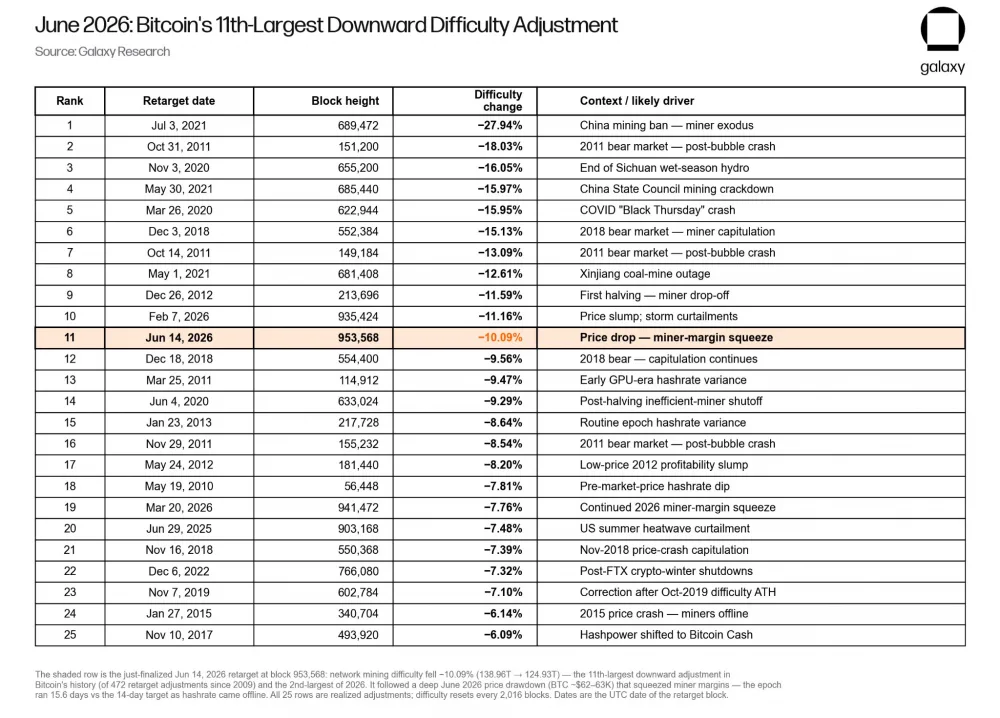
It’s also the 11th largest difficulty drop in bitcoin’s entire history. The trigger? June’s roughly 15% price decline, which squeezed miner margins and forced some operators to shut off unprofitable hardware.
Blocks started taking longer to find. The actual epoch length stretched to 15.6 days, well above the target of 14. That triggered the automatic difficulty correction. Remaining miners now earn about 11% more bitcoin per unit of active computing power.
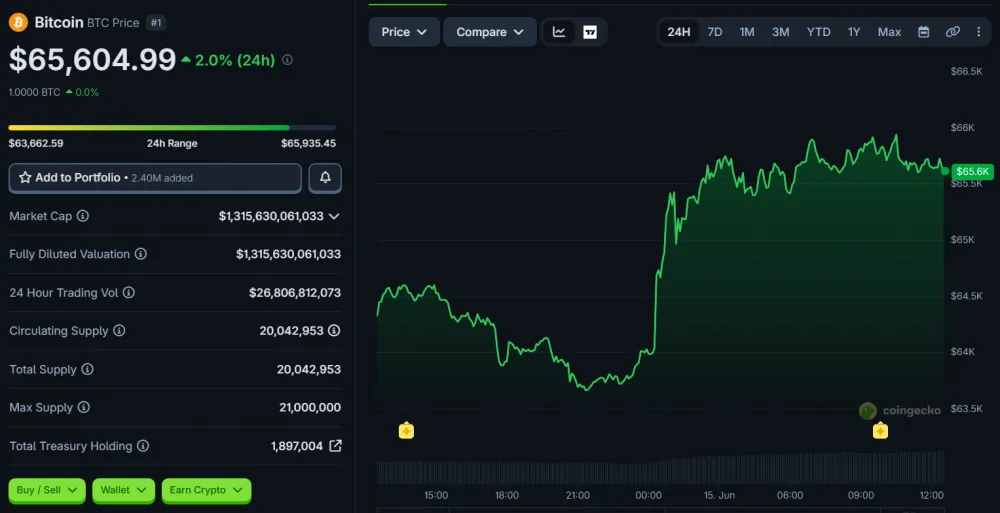
Hashprice has bounced back above $30 per PH/s per day, sitting around $32-$33 at press time. But the broader picture remains grim. The estimated cost to mine one bitcoin is about $84,300. Bitcoin is trading around $65,600.
Read more: Top 5 Bitcoin Mining Methods — How People Are Still Earning BTC in 2026
Contents
Hashrate Is Falling as Miners Pivot to AI and Cut Power Costs
The average network hashrate has fallen to 740-886 EH/s, depending on smoothing methodology—down 12% to 23% from October peaks. Miners continue shifting capacity to artificial intelligence and high-performance computing.
Cango, for example, has already shut down a third of its equipment to expand into AI. Summer peak demand in Texas is adding more pressure. Local operators are powering down rigs during peak hours to lower future electricity grid charges through the 4CP mechanism.
Read more: What Is AI Mining in Crypto? Top 5 Best AI Mining Platforms to Earn in 2026
Expert Take: No Capitulation Yet, but Stress Zone Remains
Independent analyst Axel Adler Jr. described the current state of miners as a “stress zone.” The Puell Multiple, a 30-day average, fell from 0.83 to 0.74 over ten days. Bitcoin’s price drawdown from the last difficulty low has reached 21%.
Still, he says, full capitulation is nowhere close. Current metrics are about half as severe as the extremes of 2018 and 2022. A meaningful deterioration would likely require bitcoin to drop below $55K without another difficulty adjustment.
The next difficulty change is expected around June 27. Coinwarz is projecting a modest positive adjustment of about 1.69%, to roughly 127 trillion. That will depend on where bitcoin’s price goes next—and whether miners bring their shuttered rigs back online.
Learn more: What Is the Fortune Crypto 100 Ranking and How Are Firms Chosen?