


Popular Conversions
Prices updated in real-time via CoinGecko
A number shown online means nothing until it’s locked in. When used every day, a crypto converter takes that changing price and makes a rough value people can work with before any transfer happens. One coin measured against another, or digital cash set beside regular currency – this step fills the gap. Prices shift from entry to approval, so that guess becomes important.
It seems basic at first glance – but the numbers underneath? They’re anything.
Most of the time, what you see in a cryptocurrency converter comes from mixing live prices, spreads, fees, along with how they round things off. Every piece shifts the total just a bit. One tiny difference might go unnoticed until you’ve done dozens of trades. That’s when it adds up.

Contents
What Is Crypto Converter Actually Shows
One tap swaps crypto, yet clarity hides if direction slips. Flip BTC for EUR is not EUR to BTC. Same button, opposite result. Eyes skim small displays – some mistakes creep in.
Even today, a few platforms call it a crypto convertor despite doing the exact same job. What you hand over must appear alongside what comes back plus the exchange rate applied. When one side stays out of sight, confidence in the outcome drops sharply. Just peeking at numbers helps little unless full info remains in view.
Why Pair Direction Matters
Out front, which way the pair moves sets up what comes later, long before costs matter. Even if a cryptocurrency conversion shows a familiar number, timing gaps hide shifts already happening elsewhere. While Europe stays busy into American trading times, these lags pop up regularly. What looks stable on screen might not match the live bids stacking behind it.
Most people watch the price, paying little mind to how much they’re trading. When deals get big, moving coins without a plan risks trouble – markets stretch thin beyond certain points. What shows up first might handle just a fraction. Other chunks slip into less favorable spots. Slippage creeps in right there.
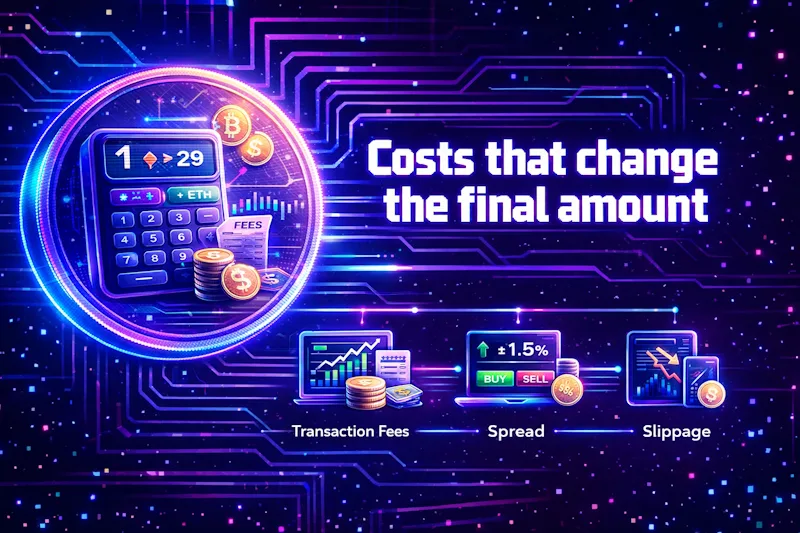
Crypto Fees that Change the Final Amount
A single tap might mask several fees. Sometimes, clicking convert on a platform sends trades through a hidden middle token before finishing. What looks like one step could involve two separate exchanges behind the scenes. Speed doesn’t always mean better results – sometimes less arrives than expected. Hidden paths shape outcomes without showing the full picture.
Before any swap, it helps to check the same items every time. A short list prevents most basic errors.
- Pair direction
- Quote currency
- Trading fee
- Spread
- Minimum order size
- Withdrawal fee if funds leave the platform
- Rounding rules for small balances
The list looks basic, but it changes decisions. A low fee loses value if the spread is wide or the pair is thin.
How Crypto Swap Works
A single glance at the chart explains gaps between expected and actual totals. For euros, seeing cryptocurrency values makes sense solely if final numbers include cost deductions. This case here paints a picture, yet the calculations follow typical platform rules. Tiny shares of value shift outcomes more than they seem.
| Item | Example value |
|---|---|
| Pair | BTC to EUR |
| BTC entered | 0.05000000 |
| Market price | €62,400 per BTC |
| Gross value | €3,120.00 |
| Trading fee | 0.35% |
| Spread estimate | 0.15% |
| Net EUR received | €3,104.40 |
| Difference from gross | €15.60 |
That gap may look minor once. It becomes material for users who rebalance often or convert payroll-sized amounts each month.
Local Details for the US Market
Payment customs carry weight equal to data charts. For American users, aligning a cryptocurrency tool with dollar deposits improves usefulness – especially when sync happens with domestic banking windows. Markets for digital coins operate nonstop; traditional banks follow fixed hours instead. Because of this mismatch, actual trade execution may shift unexpectedly.
Across the United States, people tend to weigh options like debit transactions against bank transfers or direct deposits. Near the top of compact displays, digital currency tools might appear right before checkout, pushing fee details further down. Using a card tends to speed things up – though extra charges typically show up plainly. Bank transfers generally cost less; settlement times stretch out more slowly, however.
Spotting the local trend tends to happen naturally during real-world use. When people look up prices after dark, they see crypto shifting outside regular business times. While digital assets keep changing value, traditional money waits for office openings. This mismatch causes annoyance far more frequently than costs tied to trades.
Simple Local Cryptocurrency Swap Comparison
The next comparison is not a fixed offer. It shows how common funding methods can affect a conversion outcome in Austria and nearby EU markets.
| Method | Typical timing | Typical extra cost | Practical effect |
|---|---|---|---|
| SEPA deposit | Same day to 1 business day | Low | Better for planned trades |
| Card purchase | Minutes | 1.8% to 3.2% | Faster, but costlier |
| Stablecoin transfer | Minutes to 1 hour | Network fee varies | Good for exchange-to-exchange moves |
| Weekend fiat withdrawal | Next business day | Bank dependent | Delays access to cash |
This is why planning matters. Speed, cost, and banking windows rarely line up at the same time.
Common Swap Mistakes Before Confirmation
Most mistakes happen before the trade engine does anything wrong. When users convert crypto during a bank cut-off window, they often judge the tool by timing problems rather than by pricing logic. That creates the wrong lesson. The real issue is usually process, not math.
The errors that follow show up just as often among beginners as they do among those who’ve practiced a while. Seemingly minor, yet every single detail shifts the outcome.
- Reversing the pair
- Ignoring the quote timestamp
- Comparing rates from different venues
- Forgetting the spread
- Moving funds out before checking withdrawal fees
- Using thin pairs for large orders
Each error has a simple fix. The fix starts with slowing down before the first click.
How to Read the Output Without Guessing
The output should answer three questions. First, what amount leaves the account. Second, what amount arrives after fees. Third, which rate and time stamp produced that result. If one answer is missing, the preview is incomplete.
In real use, a crypto converter is most helpful when it supports comparison, not impulse. Users should check the preview against the final order screen before they confirm. That habit sounds small, yet it cuts avoidable mistakes. It also makes platform comparisons fairer.
A useful workflow is short and repeatable. Use the same order size, the same pair, and the same funding method when comparing venues. That removes noise from the test. Once the inputs match, the result becomes more meaningful.

Practical Step-by-Step Check
This order helps keep the process clean. It also reduces the chance of mixing price, fee, and banking issues.
- Choose the asset you sell
- Choose the asset or fiat you receive
- Confirm the pair direction
- Check whether the quote is live
- Review fee and spread
- Read the final preview
- Confirm only after the numbers match your plan
After a few uses, the sequence becomes routine. That is when conversion tools start saving time instead of creating doubt.
How to Use Crypto Converter Correctly
A conversion tool is not a prediction engine. At its best, a crypto converter helps users compare routes, understand cost, and avoid simple input mistakes before money moves. That is enough to make it useful. Clear inputs, clear fees, and clear timing usually matter more than one headline rate.
Informational note. This article explains conversion logic and common trading mechanics. It does not replace tax advice, legal review, or the final terms shown by a platform before execution.
FAQ
How does a crypto converter show the final amount after fees?
A crypto converter is useful only when it shows the net result after fees and spread. First check whether the displayed amount is gross or final. Then compare it with the order preview, because some US platforms deduct fees from the sold asset, while others reduce the amount you receive. That difference changes the final total.
Why can the quoted amount change before I confirm the trade?
The quoted amount can change because crypto prices move all day and all night. The key point is simple: a preview is not a locked rate unless the platform says so. On active US trading pairs, even a short delay between input and confirmation can affect the result. Larger orders can also move across several price levels.
What should I check before converting BTC, ETH, or USDT to USD?
Before converting, confirm the pair, the quote currency, and the full fee structure. The main check comes first: make sure you are selling the correct asset into USD, not buying it by mistake. After that, review spread, minimum order size, and funding method. In the US, ACH, card, and wire timing can affect the full process.
Can one preview include spread, slippage, and withdrawal cost?
Yes, but many tools do not show all three items in one place. The most important detail is that spread, slippage, and withdrawal cost are not the same thing. Spread is part of the quote, slippage comes from execution, and withdrawal cost appears later. If one item is missing, the estimate may look better than the real outcome.
Is a conversion preview enough for tax records and trade tracking?
No, a preview is not enough for tax records or portfolio tracking. The main rule is to save the final trade receipt, execution time, pair, rate, and fee, because the preview can change before the order is filled. A calculator helps with planning, but completed transaction data is what matters later for reporting and account history.
Why do USD pairs matter more for users in the US market?
USD pairs matter because they remove one extra conversion layer and make costs easier to read. The main benefit appears early: fewer currency steps usually mean fewer hidden losses between quote and settlement. For users in the US, ACH timing, wire cutoffs, and local bank hours often shape the final outcome as much as the crypto price itself.
