According to our research, the best crypto wallet in 2026 are Ngrave & Ledger Stax. It combines offline key storage with support for thousands of assets across a wide range of networks, which is why it ranks among the best crypto wallets 2026 and the best safe crypto wallets 2026.

MetaMask remains the go-to choice for DeFi, while Trust Wallet is a better fit for users who manage assets mostly from a phone. Together with Ledger and Trezor, they cover most needs across the best cryptocurrency wallets 2026 market.
Our methodology is based on testing and on reviewing security models, supported networks, and documentation. A practical best crypto wallet 2026 choice should balance security, supported networks, recovery design, and everyday usability. That’s how we created our best cryptocurrency wallets comparison 2026.
Contents
Top 10 Crypto Wallets in 2026 – Overview
The best crypto wallets are rarely interchangeable because a storage wallet, DeFi wallet, and Bitcoin-only wallet solve different problems. The best cryptocurrency wallets 2026 below are compared based on how they store private keys, which networks they support, and how they behave in real use. This mix includes some of the best hardware wallets for crypto 2026, the best software crypto wallets 2026, and several of the best non-custodial crypto wallets 2026.
| Wallet | Type | Supported Assets / Networks | Price | Best For |
| NGRAVE ZERO | Cold, non-custodial, air-gapped | 3,500+ assets, including BTC▲$62,630.00, ETH▲$1,761.17, SOL▲$82.41, XRP▲$1.13, LTC▲$44.99, DOGE▲$0.0778, AVAX▲$6.98, Polygon, ERC-20 tokens, NFTs, and most EVM-compatible networks via MetaMask/Rabby integration | €398 | Maximum security-focused holders who want a fully offline (air-gapped) wallet with EAL7-certified security and biometric authentication |
| Ledger Stax | Cold, non-custodial | 5,000+ assets | €399 | Holding large balances with maximum isolation from online risks |
| Trezor Safe 7 | Cold, non-custodial | Thousands of coins and tokens | $249 | Secure long-term storage with open-source firmware |
| SafePal S1 | Cold, non-custodial | 10000+ assets | $50–100 | Getting cold storage without paying for premium hardware |
| Zengo | Hot, non-custodial | Bitcoin, Ethereum, Polygon, Solana | $20/month (optional) | Avoiding seed phrases and using simpler recovery methods |
| MetaMask | Hot, non-custodial | EVM networks, Bitcoin, Solana | Free | Interacting daily with DeFi protocols and EVM applications |
| Trust Wallet | Hot, non-custodial | 10000+ assets | Free | Managing assets entirely from a mobile device |
| Coinbase Wallet | Hot, non-custodial | EVM networks, Bitcoin, Solana | Free | Moving from exchange custody to self-custody with minimal friction |
| Exodus | Hot, non-custodial | 300+ assets | Free | Tracking and managing a portfolio on desktop |
| Phantom | Hot, non-custodial | Solana, Ethereum, Polygon, Bitcoin | Free | Using Solana-based apps, NFTs, and onchain tools |
| Electrum | Hot, non-custodial | Bitcoin | Free | Running Bitcoin-only setups with manual transaction control |
Cold (hardware) wallets reduce exposure by keeping keys off connected systems, while hot (software) wallets give up some isolation in exchange for speed and direct app access. The right choice depends on how often you move funds and where you use them. This top 10 crypto wallets list includes both cold and hot options because most users need storage and daily access at the same time.
Key Takeaways
- A crypto wallet is an app or device where you can view your balance and send or receive crypto. It serves as your access point to funds, not the place where they are stored.
- Ledger Stax is the best crypto wallet in 2026 for combining offline key storage, secure element hardware, and an easier-to-use interface than most hardware wallets offer. It is also one of the best Bitcoin wallets 2026.
- For storage, Trezor Model T and SafePal S1 are solid alternatives, while MetaMask and Trust Wallet make more sense when you actively use crypto.
- Never share your seed phrase and avoid signing unknown transactions. Crypto fraud caused over $5.6 billion in losses in 2023, according to the FBI IC3 Report.
1. Ledger Stax – Large Screen for Clear Transaction Verification
Ledger Stax is a hardware wallet that works through Ledger Live, connects via USB-C or Bluetooth, and confirms every transaction on the device itself. Its standout feature is the large E Ink touchscreen, which makes wallet addresses and transaction details much easier to review than on small button-based devices.
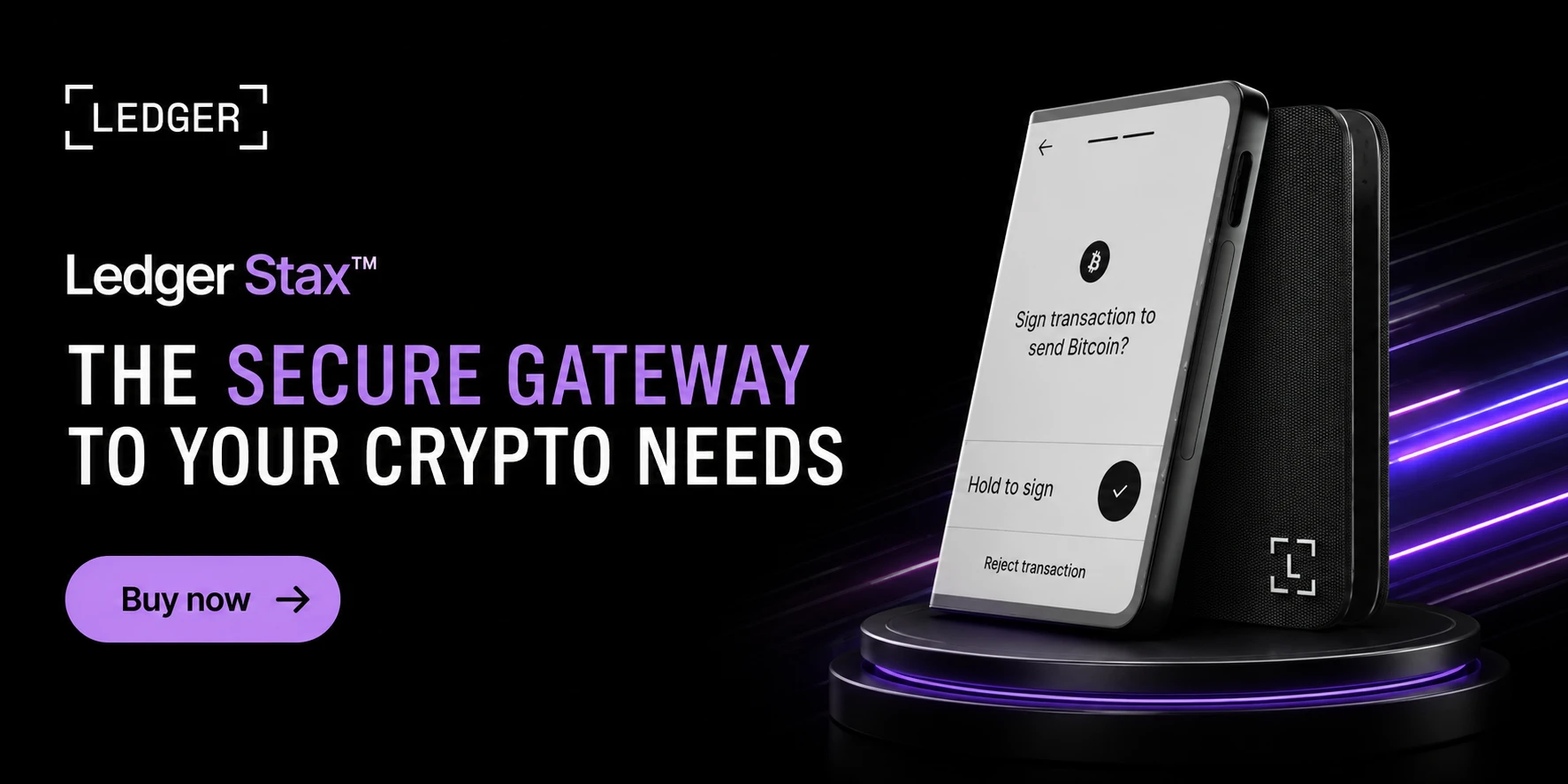
Ledger Stax Overview:
- Type: Cold, non-custodial
- Chain Coverage: 50+ networks
- Platforms: Hardware device; Ledger Live: Desktop (Windows, macOS, Linux), Mobile (iOS, Android), Browser extension (Safari)
- Fiat Support: Yes, via Ledger Live
- Usability: ⭐4/5, secure but slower in practice, and Ledger Live can feel clunky
- Drawbacks: More dependent on Ledger software than some competitors
Ledger Stax belongs in any list of the best hardware wallets for crypto 2026, the best bitcoin wallets 2026, and the best safe crypto wallets 2026, especially for users prioritizing isolation over speed.
2. Trezor Safe 7 – Open Firmware With Shamir Backup
Trezor Safe 7 is a hardware wallet that runs fully open-source firmware and supports Shamir backup, splitting recovery into multiple shares. The device works through Trezor Suite, connects to a computer or mobile device over Bluetooth, and supports major networks and their token ecosystems. Some assets still require external wallets for full interaction.

Trezor Safe 7 Overview:
- Type: Cold, non-custodial
- Chain Coverage: 8+ networks
- Platforms: Hardware device, Trezor Suite: Desktop (Windows, macOS, Linux), Mobile (iOS, Android), Browser
- Fiat Support: Yes, via Trezor Suite
- Usability: ⭐4/5, setup is straightforward, keeps most actions in a single interface
- Drawbacks: May require third-party wallets for full functionality
Trezor is also one of the best Bitcoin wallets 2026 for long-term holders and one of the best non-custodial crypto wallets 2026 for users who care about transparent firmware.
3. Safepal S1 – Fully Isolated Signing via QR Codes
SafePal S1 is a hardware wallet that signs transactions using QR codes instead of a direct connection. The device and phone exchange data visually, so the wallet never connects to a computer. This setup appeals to users who want full isolation during signing.

SafePal S1 Overview:
- Type: Cold, non-custodial
- Chain Coverage: 100+ networks
- Platforms: Hardware device, SafePal App → Mobile (iOS, Android), Browser extension (Chrome, Edge)
- Fiat Support: Yes, via app
- Usability: ⭐ 3/5, transaction flow takes longer than most hardware wallets
- Drawbacks: QR-based signing requires scanning between devices for every action
For buyers looking into the latest developments in crypto hardware wallets, SafePal stands out by keeping signing fully air-gapped. It also deserves a place among the best crypto wallets 2026 for budget-conscious users.
4. Zengo – Recovery Without a Seed Phrase
Zengo is a hot wallet that replaces the standard seed phrase with MPC-based recovery. Access is split between the device and an encrypted backup, rather than a single phrase. Setup is easier than with most self-custody wallets, and recovery feels less stressful for non-technical users.
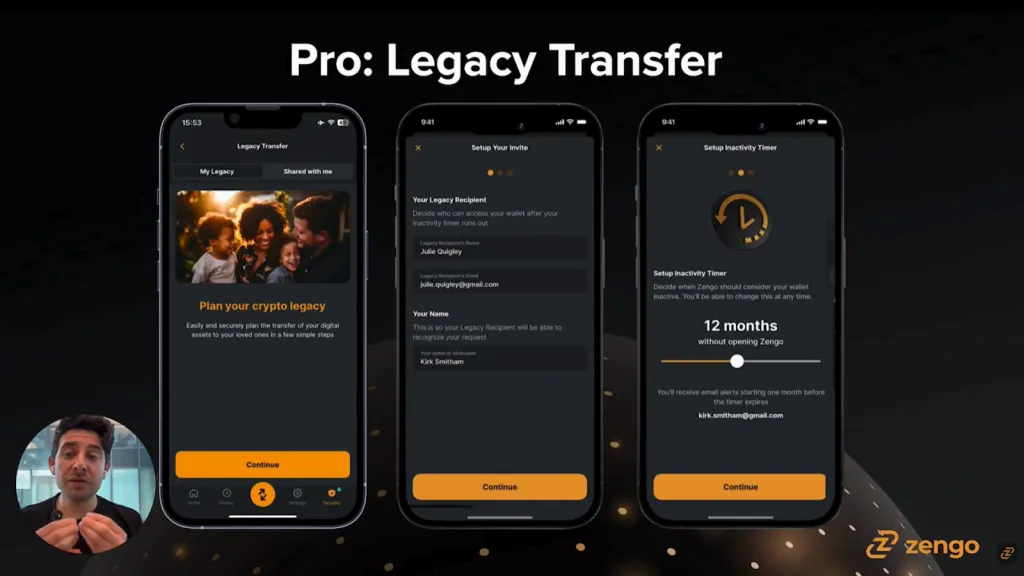
Overview
- Type: Hot, Non-Custodial
- Chain Coverage: 4+
- Platforms: Mobile (iOS, Android)
- Fiat Support: Yes
- Usability: ⭐4.5/5, very easy setup and recovery
- Drawbacks: No seed phrase means recovery depends on proprietary system
Zengo is one of the more interesting options in the best crypto wallets for beginners 2026 category because it removes one of the biggest failure points for new users.
5. MetaMask – Standard Tool for EVM Ecosystems
MetaMask is a browser and mobile wallet built for Ethereum and other EVM-compatible networks, with newer support for assets like Bitcoin and Solana. It connects directly to DeFi apps and handles transaction signing locally. MetaMask’s strength is ecosystem support; most applications integrate with it by default.

MetaMask Overview:
- Type: Hot, Non-Custodial
- Chain Coverage: EVM networks + Bitcoin, Solana (limited support)
- Platforms: Browser extension (Chrome, Firefox, Brave, Edge), Mobile (iOS, Android)
- Fiat Support: Yes
- Usability: ⭐ 3.5/5, powerful but confusing, especially with networks, gas, and approvals
- Drawbacks: Easy to approve malicious transactions if not careful
MetaMask remains one of the best software crypto wallets 2026 and a standard pick in any best software crypto wallets 2026 comparison for users active in DeFi.
6. Trust Wallet – Mobile Wallet for Everyday Use
Trust Wallet is a multichain wallet built primarily for mobile use. It combines storage, swaps, and staking in a single app and works across multiple networks without manual setup. It prioritizes simplicity over advanced controls, so detailed settings and transaction customization are limited.
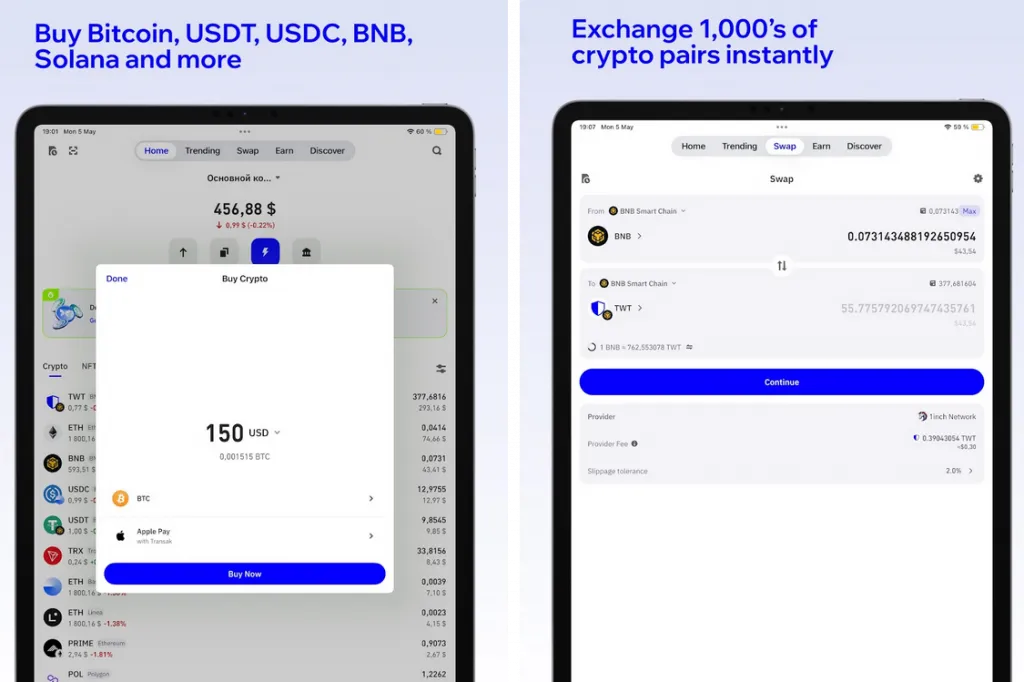
Trust Wallet Overview:
- Type: Hot, non-custodial
- Chain Coverage: 100+ networks
- Platforms: Mobile (iOS, Android), Browser extension (Chrome, Brave)
- Fiat Support: Yes
- Usability: ⭐4.5/5, fast and simple on mobile, but limited control compared to desktop wallets
- Drawbacks: Limited visibility into transaction details before signing
Trust Wallet is one of the most popular mobile crypto wallets 2026 and a strong candidate for the best mobile crypto wallet 2026 for users who manage everything from a phone.
7. Base (Formerly Coinbase Wallet) – Easiest Transition from Exchanges
Base is a self-custody wallet designed for users moving off centralized exchanges. It supports major networks and connects easily to Coinbase accounts. The interface is simple and familiar for beginners. Base provides the ability to store and manage NFTs, as well as access to dApps and DAO participation.

Base Overview:
- Type: Hot, non-custodial
- Chain Coverage: EVM networks, Bitcoin, Solana
- Platforms: Mobile (iOS, Android), Browser extension (Chrome), Browser
- Fiat Support: Yes
- Usability: ⭐ 4.5/5, very easy onboarding, especially for users coming from exchanges
- Drawbacks: Some features rely on Coinbase infrastructure
For users comparing the best bitcoin wallets and exchanges 2026, Base is relevant because it offers a smoother bridge from exchange custody to self-custody than most wallets do. It is also one of the best bitcoin wallets for beginners 2026.
8. Exodus – Desktop Wallet Focused on Portfolio View
Exodus is a multichain wallet that focuses on portfolio tracking. It combines balances, price data, and asset allocation in a single interface. The app includes built-in swaps, so users can exchange assets without external services. Exodus works well for managing holdings, but it is not built for complex DeFi workflows or contract interaction.
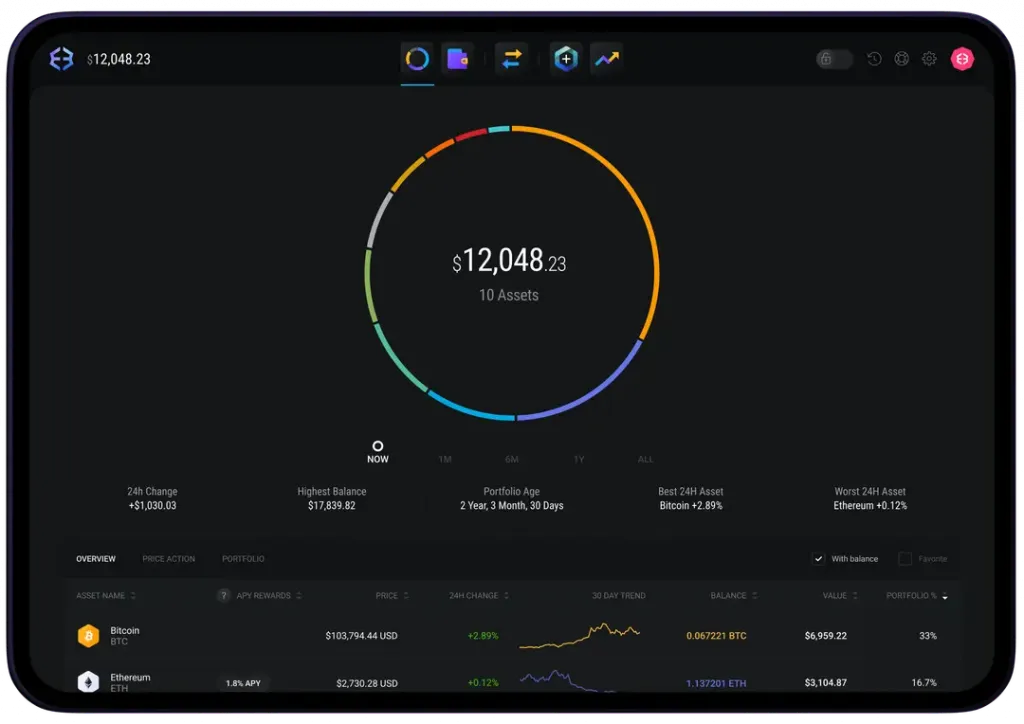
Exodus Overview:
- Type: Hot, non-custodial
- Chain Coverage: 10+ networks
- Platforms: Desktop (Windows, macOS, Linux), Mobile (iOS, Android), Browser extension (Chrome, Brave)
- Fiat Support: Yes
- Usability: ⭐4.5/5, clean and intuitive, works well for tracking and managing a portfolio
- Drawbacks: Built-in swaps often include higher spreads than external exchanges
Exodus is one of the strongest choices among the best software crypto wallets 2026 for desktop-first users.
9. Phantom – Strongest Inside the Solana Ecosystem
Phantom is a wallet originally built for Solana, with later support for other chains. It handles NFTs, staking, and app interaction with minimal friction. The interface is fast and consistent across supported features.

Phantom Overview:
- Type: Hot, non-custodial
- Chain Coverage: Solana, Ethereum, Polygon, Bitcoin
- Platforms: Mobile (iOS, Android), Browser extension (Chrome, Firefox, Edge, Brave)
- Fiat Support: Yes
- Usability: ⭐4.5/5, very smooth and fast, especially within the Solana ecosystem
- Drawbacks: Feature set varies depending on network
Phantom is not for everyone, but it belongs in best crypto wallets 2026 lists because Solana users keep picking it for speed and ease of use.
10. Electrum – Maximum Control for Bitcoin Users
Electrum is a Bitcoin-only wallet with a much more technical interface than mainstream apps. Its appeal is control: fees, wallet structure, and cold storage workflows are all more configurable than in beginner-friendly wallets. That makes it useful for experienced Bitcoin users who know exactly what they want.

Overview
- Type: Hot, non-custodial
- Chain Coverage: Bitcoin
- Platforms: Desktop (Windows, macOS, Linux), Mobile (Android)
- Fiat Support: No
- Usability: ⭐3/5, powerful but not beginner-friendly, feels outdated
- Drawbacks: Interface is complex and easy to misconfigure
Electrum ranks among the best software Bitcoin wallets 2026 for advanced users, even though it is nowhere near the easiest best wallet crypto option for beginners.
What Is a Crypto Wallet
A crypto wallet is an interface that lets you access and manage your funds on a blockchain. It doesn’t store coins inside the app. Instead, it holds the private keys that prove ownership and allow you to send transactions.
In practice, a wallet is what you use to check balances, send assets, connect to apps, or sign transactions. Some wallets handle everything in one place, while others require connecting to external services depending on the network or use case.
The main difference between wallets is who controls the keys. In custodial wallets, the provider holds them. In non-custodial wallets, you control access through a seed phrase or another recovery method. This determines what happens if you lose access.
Hot wallets stay connected and are used for trading, payments, or interacting with apps. Cold wallets keep keys isolated on a separate device and are typically used for storage. Most people end up using both, depending on what they need to do. That is why many comparisons split the field between the best cold crypto wallets 2026 and the best software crypto wallets 2026.
How to Choose a Crypto Wallet
The best crypto wallets 2026 are the ones that reduce avoidable mistakes while still letting users move assets when needed. Pick a wallet based on how you actually use crypto and which networks you work with:
- Start with the use case. If you are holding long term, hardware wallets like Ledger Stax, Trezor Safe 7, or SafePal S1 make more sense. If you are using DeFi or NFTs, wallets like MetaMask, Phantom, or Trust Wallet are easier to work with. Cold wallets keep keys isolated. Hot wallets are faster and easier to access.
- Look at network support early. If the wallet does not support your network, you will not be able to use your funds. MetaMask is built around EVM networks, Phantom is focused on Solana, and Electrum only works with Bitcoin.
- Think about how you will handle keys. Any best non-custodial crypto wallets 2026 comparison should focus on this first, because recovery is where most self-custody mistakes happen. Most wallets use a seed phrase. Zengo works differently and uses MPC instead
- Losses rarely come from the wallet itself. In most cases, it is phishing, fake apps, or approving the wrong transaction. Check MetaMask’s security guidance before interacting with new apps.
- Consider how much control you need. Hardware wallets and Electrum take more effort to set up and use. Trust Wallet, Coinbase Wallet, and Zengo are simpler, but you give up some control. That is the tradeoff at the center of any best secure crypto wallets 2026 discussion.
Many people end up using more than one wallet. One for storage, another for everyday use. The setup depends on how you actually interact with crypto.
Best Hardware Wallets 2026
The best hardware wallets 2026 are designed for users who want stronger protection than a browser or mobile app can provide. Devices such as Ledger Stax, Trezor Safe 7, NGRAVE ZERO, and SafePal S1 keep private keys away from connected environments and require physical confirmation before transactions are signed. They are slower than software wallets, but that tradeoff makes sense for long-term holders, larger balances, and anyone who prioritizes security over convenience.
Best Hot Wallet for Crypto
The best hot wallet for crypto depends on how the user interacts with blockchain apps. MetaMask remains the strongest pick for DeFi and EVM networks, Phantom is the smoother choice for Solana users, and Trust Wallet works well for mobile-first asset management. Hot wallets are convenient because they connect directly to apps, exchanges, swaps, NFTs, and staking tools, but they also require more caution because phishing links and malicious approvals remain common risks.
Best Cold Wallet for Crypto
The best cold wallet for crypto is usually the one that makes offline storage simple enough to use correctly. Ledger Stax offers a polished interface and broad asset support, Trezor Safe 7 appeals to users who want open-source firmware and recovery flexibility, while SafePal S1 keeps signing fully isolated through QR codes. For most long-term holders, a cold wallet should be used for storage, while a separate hot wallet handles smaller amounts needed for everyday activity.
Methodology
This list looks at 28 crypto wallets across both hardware and software. The comparison is based on official docs, supported networks, and how each wallet handles custody and recovery.
The idea here is not to score features one by one. Wallets are built for different things. Some are meant for storage, others for regular use. The ranking reflects that and shows where each option fits depending on how it is used. In other words, it is an attempt to sort the best cryptocurrency wallets 2026 by use case.
Conclusion
Ledger Stax, Trezor Safe 7, and SafePal S1 all solve the same problem, but in different ways. Ledger leans on its own ecosystem and interface. Trezor focuses on open firmware and recovery options. SafePal keeps the device isolated by using QR codes for signing.
For everyday use, MetaMask and Trust Wallet are more practical. They are faster to work with and connect directly to apps across different networks. In most cases, people use both types of wallets together. That is why the best crypto wallets 2026 are rarely all hot or all cold. The real winners usually combine strong storage with practical daily access.
For Bitcoin holders, the best Bitcoin wallets 2026 are usually the ones that make address checks, fee control, and recovery handling clear.
Most losses are not caused by the wallet itself. They usually come from user mistakes. Keep recovery data safe and pay attention to what you sign before confirming any transaction.
Disclaimer: This content is provided for informational purposes only and should not be considered financial or investment advice. Cryptocurrency assets carry risk, and users are solely responsible for managing their wallets, private keys, and transactions.
FAQ
What is the best crypto wallet in 2026?
The best crypto wallet should match how often you transact, how much you hold, and how comfortable you are with self-custody. If the goal is storage, hardware wallets like Ledger Stax, Trezor Safe 7, and SafePal S1 make more sense because they keep keys offline. For everyday use, wallets like MetaMask or Trust Wallet are easier to work with.
Do I need a hardware wallet or a software wallet?
It depends on how you use crypto. Hardware wallets are used to hold funds, while software wallets are used to send transactions, access DeFi, and interact with NFTs. Most people end up using both.
What happens if I lose access to my crypto wallet?
Access depends on your recovery method. If you have your seed phrase or backup, you can restore the wallet. If you lose it, there is no way to recover funds.
Which crypto wallet is best for beginners?
Trust Wallet and Coinbase Wallet are easier to start with because they require less setup. Zengo is another option if you want to avoid dealing with a seed phrase. These are the wallets that usually top the best crypto wallets for beginners 2026 and best Bitcoin wallets for beginners 2026 searches.
Can crypto wallets be hacked?
In most cases, the wallet itself is not the issue. Losses usually happen when users approve malicious transactions or interact with fake apps and websites.
What is the best hardware crypto wallet 2026?
The best hardware wallets 2026 stand out because they keep private keys away from internet-connected devices while still allowing clear transaction verification. If the goal is maximum key isolation, Ledger Stax is the strongest option in this ranking. It combines offline storage, on-device transaction verification, and broader asset support than most rivals. Trezor Safe 7 and SafePal S1 are also strong picks.
What is the best crypto for 2026?
That is a different question from choosing a wallet. A wallet is just the tool you use to access and secure assets. Which crypto is “best” depends on risk tolerance, time horizon, and what you want to achieve.
What are the top 3 crypto wallets?
Based on this ranking, the top three are Ledger Stax, Trezor Safe 7, and SafePal S1. They lead because they keep keys offline and reduce exposure to common online threats. For users comparing the best crypto wallets 2026, those three are the clearest choices for storage-first use.
Should I keep my Bitcoin in a cold wallet?
The best Bitcoin hardware wallets 2026 are made for users who hold BTC long term and want fewer online attack surfaces. A best Bitcoin hardware wallet 2026 candidate should make receiving addresses and outgoing transactions easy to verify on the device itself. If you intend to hold your Bitcoin long term, consider Ledger Stax or Trezor Safe 7.
Should I put my XRP in a cold wallet?
If you plan to hold XRP rather than move it often, a cold wallet makes more sense. Hardware devices reduce exposure by keeping private keys off internet-connected systems, which is the safer setup for long-term storage. That is why many users choose the best safe crypto wallets 2026 or the best non-custodial crypto wallets 2026 when storing assets like XRP for the long term.