Out of nowhere, AI slipped into smart contract safety checks. Suddenly, reviews speed up, costs drop, flaws get spotted by machines, while systems watch live traffic. Teams in crypto find this comforting. A single overlooked error might empty everything within moments. Hence, start-ups often hire the services of an AI code auditor.

Here’s the thing – spotting Solidity flaws and bugs isn’t beyond AI. That ship has sailed. What remains unclear? Whether it can step into the shoes of a seasoned smart contract auditor. Fast forward to 2026, and humans still hold that seat. Tools powered by AI lend a hand, sure. Yet when the stakes rise, trust lands elsewhere. Judgment rests with people, not patterns.
Contents
- Smart Contracts And The Importance Of Security
- What Does a Smart Contract Auditor Actually Do?
- How AI Changes Smart Contract Audits
- Can AI Take Over From Humans in Auditing Smart Contracts?
- AI and Human Auditors: How They Differ
- Real examples of AI in Smart Contract Security
- Better Accuracy With AI In Smart Contract Checks
- Risks and Challenges in AI Auditing of Smart Contracts
- FAQ
Smart Contracts And The Importance Of Security
Smart Contracts Enable DeFi NFTs Web3
On blockchains, smart contracts run autonomously, following predefined rules. When conditions match, actions happen automatically, no boss needed. Swaps move when terms align, and loans open under certain triggers. Staking locks value if timing allows it. NFT ownership shifts after verification passes. Token sales release units once funding goals are hit. Votes count only if participants hold rights. Bridges transfer data between systems quietly. Web3 tools wake up when users interact. Rules stay fixed unless code changes.
Read more: What Are Smart Contracts in Crypto — Simple Explanation of How Smart Contracts Work
Wrong code means trouble – that much becomes clear fast. Money behaves strangely when software runs wild. Because rules live inside programs now, mistakes shift cash without asking. Strong power comes with sharp edges showing through.
Smart Contract Flaws Cause Big Losses
Most apps allow updates to block threats or lock accounts. Yet once live, a smart contract resists changes. When flaws exist, hackers might act fast – recording damage permanently before detection kicks in.
Bugs hide in smart contracts more than people think. Reentrancy slips through when functions call back too soon. Access checks might fail if roles shift without warnings. Prices get twisted when oracles trust shaky data. Upgrades go wrong unless safeguards lock things down. Math errors mess up totals one number at a time. Signatures break from tiny coding slips. Tokens act strangely when rules forget edge cases. A few flaws show right away. Many only pop up once pools start swapping. Bridges sometimes reveal hidden cracks. Governance moves can expose sleeping risks.
The Rising Need for Speed and Intelligence in Security Audits
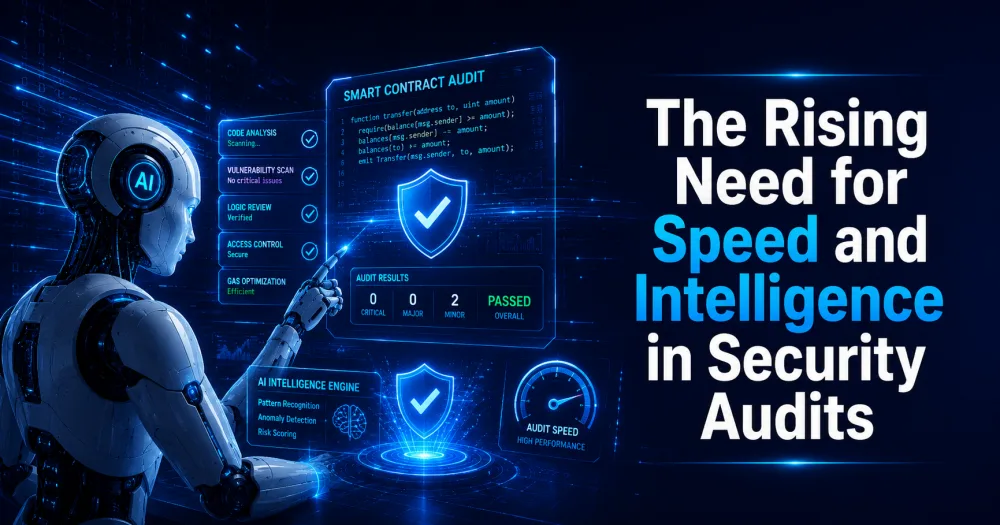
These days, Web3 groups launch things quicker, spreading work over many blockchains. One system might tie into trading pools instead of just one exchange. Lending setups could link up too, feeding data through outside sources that report real-world events. Bridges move value back and forth while assets get reused in new roles. Messages hop between networks, stitching functions together beyond a single line.
Now comes a surge in requests for blockchain security audits. With that shift, interest grows in using artificial intelligence to review smart contracts. Some teams prefer quicker reviews ahead of release, while others value stronger oversight once live.
What Does a Smart Contract Auditor Actually Do?
Manual Code Review and Finding Vulnerabilities
Reading code, a smart contract auditor thinks like someone trying to break in. It goes beyond checking if Solidity runs without errors. Value flow – how it gets in, shifts around, leaves – is what they examine closely. AI is also used for hunting down other smart contract vulnerabilities.
A close look at crypto code often begins by hand, checking every line carefully. Alongside that, automated tools scan for hidden issues in the structure. Fuzz tests throw random inputs at the system just to see where it breaks. Invariant checks watch if certain rules hold during operation. Threat modeling imagines possible attacks before they happen. Formal methods step in only when extreme confidence matters. Mistakes in logic sit alongside programming errors as prime targets. Each method chases a different kind of flaw hiding in plain sight.
Related: Top 5 High-Growth DeFi Projects in 2026: Where Smart Money Is Moving
Common Smart Contract Risks Seen by Auditors
Missing access controls catch an auditor’s eye. Reentrancy issues show up often during reviews. External calls that aren’t handled safely raise red flags. Storage overlaps can slip through if not watched. Upgrade paths bring their own set of concerns. Return values left unexamined? That gets noticed. Predictable random sources fail every time. Poor input checks rarely go unseen.
Looking closer at how money systems might break. Things like rigged price feeds, borrowed cash floods, messed-up sell-offs, taken-over voting, drained pools, and broken rewards. Code that looks fine on paper might fall apart when real markets push it.
Why Human Auditors Still Matter in Crypto Security
Most people overlook this, yet human reviewers bring something that code alone cannot. Not every line runs on its own – contracts live within systems. Someone sharp will question the purpose behind each function, not just scan syntax. Power hides in roles; spotting it takes thought. Failure points emerge where pieces interact, rarely at first glance. Clever harm often comes from stacking routine steps in ways rules didn’t foresee.
Patterns get spotted by AI during code checks. Yet meaning still needs a person to see it.
| Category | AI Auditing Tools | Human Auditors |
|---|---|---|
| Audit Speed | Minutes to hours | Days to weeks |
| Scalability | Can scan thousands of contracts | Limited by team size |
| Cost | Lower upfront cost | Higher cost |
| Known Vulnerability Detection | Strong | Strong |
| Economic Logic Analysis | Limited | Strong |
| New Attack Vector Detection | Reactive | More adaptive |
| Final Trust Level | Support tool | Industry standard |
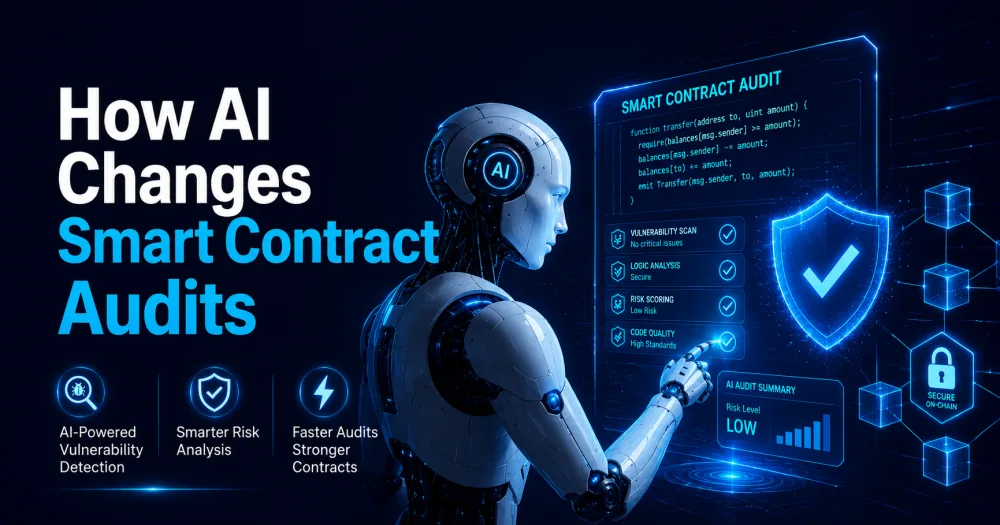
How AI Changes Smart Contract Audits
AI Tools That Analyze Code
Often, AI has been used for smart contract audits recently. Code checks happen through smart tools that hunt down flaws, point out risks, spot corrections, and then break down how contracts behave. A few act much like high-level scanners spotting issues before runtime. Meanwhile, certain systems apply language patterns to turn complex results into clear insights for coders.
Early review works well here. Before spending on a complete smart contract audit, developers might try an AI vulnerability scanner. That way, simple problems are gone when people start reviewing. What matters comes first – catching flaws ahead of time.
Machine Learning Finds Security Weaknesses
Out of repeated flaws in smart contracts, machine learning finds hidden signals. When flawed designs repeat, artificial intelligence begins spotting them – almost like habit recognition. Patterns emerge where humans might miss details. Learning happens through exposure, not rules. Past mistakes guide future warnings. Recognition builds quietly across examples. Similar structures raise alerts without loud alarms. Experience shapes what stands out. Repetition trains precision.
When it comes to common Solidity flaws and vulnerabilities, this works well. Not so much when attackers mix protocol rules, funds flow, and split-second moves in ways never seen before.
AI Monitors and Predicts Threats in Real Time
Security for AI smart contracts doesn’t stop before launch. Live oversight continues after deployment. Unusual transactions might signal risk – systems watch for them constantly. Liquidity shifts get flagged when sudden. Oracle data movement draws attention if erratic. Governance updates are scanned as they happen. Bridge interactions receive scrutiny with each transfer. Contract calls stand out when behavior turns strange.
This is important since several smart contract attacks rely on when things happen. When liquidity dips, prices swing wildly, or governance shifts occur, even secure systems can become vulnerable – though they usually work fine under steady circumstances.
Related: Top 5 AI Crypto Coins to Watch in June 2026
Can AI Take Over From Humans in Auditing Smart Contracts?
Where AI Outperforms People
Computers handle repeated tasks more quickly than people do. When examining piles of software, they spot matches in structure without slowing down. Updates trigger automatic reviews behind the scenes. Patterns get logged before anyone notices a change.
Startups might spend less at the beginning when using artificial intelligence to check contracts. Audit companies could cut down repetitive tasks, letting experts look into serious issues instead.
The Limits of AI in Smart Contract Safety
Here’s where things get tricky. Context shapes everything. A system might spot something odd about a function yet fail to judge if it can truly be abused. Sometimes what looks risky turns out safe once you see the bigger picture. Other times danger hides in plain sight – like flaws tied to how tokens work, or weak spots in price feeds. Liquidity matters too. So do backdoor permissions coded by developers. Even connections between blockchains carry hidden risks most tools overlook.
Most flaws in smart contracts aren’t just one mistake sitting alone. Instead, they emerge when separate issues link together.
Why Context Logic and Intent Need Human Review
Someone checks the system more closely. Never skip asking tough questions. Only certain people get to stop things. Upgrades need approval from specific roles. Oracle failure must have a backup plan. Liquidity vanishing changes everything. Governance taken over breaks trust.
Thinking through these matters takes care. While artificial intelligence might assist in shaping the conversation, it falls short when left to handle them alone.
AI and Human Auditors: How They Differ
Speed and Scalability
Speed gives machines an edge here. Scanning lines of code takes mere moments, sometimes less. People need more time when checking blockchains by hand – often stretching into days. Complex DeFi setups? Those stretch further, up to weeks.
Accuracy Meets Deep Logic
Most of the time, artificial intelligence spots familiar coding errors well. When it comes to complex reasoning or financial exploit paths, though, people still outperform machines. Uncommon system setups? Human minds handle those better. Odd rules baked into protocols also tend to trip up algorithms more than engineers.
Cost Efficiency for Crypto Projects
Some smaller groups find AI-powered checks useful ahead of official reviews. These tools might cut down both effort and expense when preparing software. Even so, relying only on automatic checks leaves gaps. One overlooked flaw might drain more cash than the whole review was meant to save.
AI Tools Check Smart Contract Code
What if a tool could read contract code like a human? Machines now spot flaws, sort dangers by type, then break down results plainly. A few push fast summaries straight to coders. Meanwhile, deeper systems mix logic engines with math-backed analysis.
Funds feel the impact when problems arise – good tools show exactly where those issues hide, clarify their importance, and then trace the path to financial consequence.
Automated Audit Bots and Static Analysis Tools
Most smart contract checks still start with static analysis. Fast tools like Slither show up everywhere since they get results quickly. While these aren’t fully intelligent reviewers, you’ll usually find them working behind smarter systems.
Fuzzers show up alongside symbolic executors when checking blockchains. Tools that test invariants appear together with continuous integration scanners, too. Scanners built into development pipelines work hand in hand with analysis methods using code path exploration. Symbolic engines join forces with mutation-based testers more often than you’d expect. Invariant checkers tag along with automated inspection systems regularly.
How Crypto Teams Use AI and Human Audits Together
Most top teams bring AI into play ahead of, alongside, and beyond human checks. Right at the start, problems like typos or clear bugs get spotted by machines. As work unfolds, patterns in the code begin to emerge through smart tools. Ideas for tests often come from what the system notices along the way. Once live, quiet watchers keep an eye on how things run.
Here comes the truth about AI compared to people checking smart contracts – out with total takeover, in with smoother work steps.
| Vulnerability Type | AI Detection Effectiveness | Human Review Needed |
|---|---|---|
| Reentrancy Attacks | High | Medium |
| Access Control Errors | High | Medium |
| Unsafe External Calls | High | Medium |
| Integer and Math Issues | High | Low |
| Oracle Manipulation | Medium | High |
| Flash Loan Attacks | Medium | High |
| Governance Exploits | Low | High |
| Economic Design Flaws | Low | Very High |
Real examples of AI in Smart Contract Security
Cases Where AI Found Security Flaws
Most of the time, spotting old types of bugs is where artificial intelligence helps. Missing permission checks often show up through its scans. External calls that look odd tend to get flagged, too. Token transfers without proper safeguards? Those appear regularly in reports. Past attack methods also leave traces that it recognizes.
Most of these victories feel dull – yet they matter more than they seem. Fixing a flaw early means spending less, plain and simple.
Smart Contract Breach Despite AI Safeguards
Most times, artificial intelligence misses flaws tied to how systems are built. When it comes to oracle manipulation, problems often slip past basic checks. Bridge verification breaks down in ways scanners fail to catch. Liquidity attacks hide in behavior patterns that look normal at first glance. Governance misuse unfolds slowly, escaping quick reviews. Cross-contract timing issues appear harmless until they’re not.
A single agreement might be checked by artificial intelligence, yet overlook risks hiding in combined terms. When documents connect, problems can slip through even sharp digital eyes.
Read more: DeFi Security Pioneer Says AI Makes All Smart Contracts Unsafe
Lessons From Major DeFi Hacks
One thing stands out. Security works best when built in layers. A project should have solid design, alongside well-written code. Outside reviews help spot flaws others miss. Testing catches problems early. Rewarding finders of bugs brings extra eyes. Watching systems while they run reveals hidden risks. When something goes wrong, having a plan makes recovery faster. One piece at a time gets better with AI. The full system stays human-built.
Better Accuracy With AI In Smart Contract Checks
Faster Audit Turnaround Times
Most of the early checks finish faster now. Teams catch basic errors automatically, well ahead of any person getting involved. This way, reviewers shift their attention where it matters most – tricky code paths others might miss.
Lower Costs for Startups and Web3 Builders
Spending less at first matters when funds are tight. Because it checks code quickly, artificial intelligence offers a smarter start than waiting. Security gets stronger without draining budgets right away.
This works well when building early models, trying out test networks, or running compact Web3 tools. When it comes to systems managing large amounts of user money, though, the setup falls short.
Continuous Security Monitoring After Deployment
Long after launch, safety stays active. With time, admin keys shift. As needs evolve, integrations update. When flows adjust, liquidity shifts. Under pressure, market conditions transform.
When odd patterns show up, AI keeps watch. It spots trouble before things get worse. Quick alerts mean teams move fast. Machines notice what people might miss. Early warnings change outcomes. Speed matters when issues arise.
Risks and Challenges in AI Auditing of Smart Contracts
AI Mistakes and Wrong Security Beliefs
Wrong answers dressed as truth? That happens with AI. In security work, risk spikes fast when confidence masks error. One flawed solution might open another door for trouble. When clarity falters, someone building code gets sent off track.
Attacking AI Systems With Adversarial Methods
Hidden rules might slip past smart machines. Code written by hackers could dodge detection by mimicking normal behavior. Some tricks target gaps in how models see data. Clever inputs sometimes unlock unintended actions.
When AI defends crypto, attackers push harder. Resistance rises as systems evolve.
Too Much Trust in Automated Systems for DeFi Safety
Overconfidence poses the greatest danger. Should teams see automated reports as evidence of safety, DeFi security weakens. Discipline must guide automation – never let it vanish beneath a tool.
Regulatory and Liability Concerns
Someone might overlook a flaw. When that happens, questions surface. Was it the team’s doing? Could blame land on the coder? Perhaps the software maker played a part. Maybe the auditing group bears some weight. Fault lines stay blurry.
Expect tougher questions once artificial intelligence locks into blockchain security routines.
FAQ
Can AI Actually Audit Smart Contracts Better Than Humans?
Most of the time, spotting familiar flaws goes quicker when machines handle it. Yet, reasoning through complex rules inside protocols? That still leans on people. Economic dangers sit outside its strong points too.
What AI Tools Are Used for Smart Contract Auditing?
Some teams rely on AI scanners alongside static analyzers to catch issues early. Fuzzers come into play when testing unpredictable inputs. Formal verification tools help confirm logic correctness under strict rules. Monitoring platforms keep an eye on live behavior after deployment. Automated code review systems support consistency across changes. Each tool fits a different part of the workflow.
Is AI Auditing Smart Contracts Reliable?
Most of the time, it holds things together well. Still, counting on it alone instead of people who check work won’t work out.
What About ChatGPT and Solidity Vulnerability Detection?
Most of the time, ChatGPT breaks down code in simpler terms while flagging potential issues. Still, it does not replace an expert review using Solidity knowledge. Only a skilled auditor catches what automated tools miss.
Why Do DeFi Projects Still Hire Human Auditors?
People get hired because sharp thinking, background awareness, and financial logic matter in securing smart contracts.
What Price Tag Comes with Checking a Smart Contract in 2026?
Price changes depending on the job. A basic check might run several thousand bucks. Big jobs, like those for complicated DeFi systems, often go into six figures.
What Are the Biggest Smart Contract Security Risks Today?
Most dangers come from weak access rules. Sometimes the data feeds get twisted in harmful ways. Bridges between systems might collapse unexpectedly. Updates can carry hidden glitches. Power shifts inside protocols may turn risky. One contract misreading another’s actions creates chain reactions.
Will AI Reduce Crypto Hacking Incidents in the Future?
Mistakes might fade under AI’s watch – yet hackers won’t stop shifting ground. New tools arrive, still, clever threats reshape their path.