A blockchain bridge is a protocol that allows for the transfer of assets, information, or messages between one blockchain and another. Simply put, a crypto bridge explained in basic terms, is a tool that connects otherwise isolated blockchain networks. An intrinsic issue with the Ethereum, Solana, and BNB▲$723.81 Chain ecosystems is that there is no interoperability between them.

Contents
- What Is a Crypto Bridge?
- How Crypto Bridges Work
- Types of Crypto Bridges
- Why Crypto Bridges Are Important for Web3
- Most Popular Crypto Bridges in 2026
- Step-by-Step Guide to Using a Crypto Bridge
- Main Risks of Crypto Bridges
- Biggest Crypto Bridge Hacks in History
- Best Practices for Using Crypto Bridges Safely
- Crypto Bridges vs Cross-Chain Swaps
- The Future of Blockchain Bridges
- FAQ
What Is a Crypto Bridge?
Definition of Blockchain Bridges Explained
Most crypto bridges work by locking value on one side to create a representation of that value on the other side to enable the transfer without involving a centralized cryptocurrency exchange.
Why Crypto Bridges Exist in Web3
Web3 is highly fragmented. Users, liquidity, and applications exist on multiple networks. Without blockchain interoperability, assets would be confined to their home chains and would not be able to access DeFi and other on-chain ecosystems on other networks.
Cross-chain bridges are a critical part of the current blockchain ecosystem, since they allow users to transfer their own funds across networks and participate in the growing multi-chain economy with minimal reliance on third-party swapping services.
Related: How AI Agents Trade Crypto: Autonomous Trading Bots Explained
How Crypto Bridges Connect Different Blockchains
To understand how do crypto bridges work, remember that every blockchain has separate validators and a separate transaction history, with the bridge acting as a communication layer between them by confirming and broadcasting events on one chain to another using smart contracts, validators, or messaging protocols.
In general, cross-chain bridges ensure that the asset is locked, deposited, or burned on the source chain before an equivalent asset is unlocked or minted on the target chain. This allows users to bridge crypto assets across chains that do not natively interact with each other.
As Web3 evolves, a bridge between blockchains is increasingly used to shift liquidity, support decentralized applications, and improve interoperability between networks.
How Crypto Bridges Work
Lock-and-Mint Bridge Mechanism
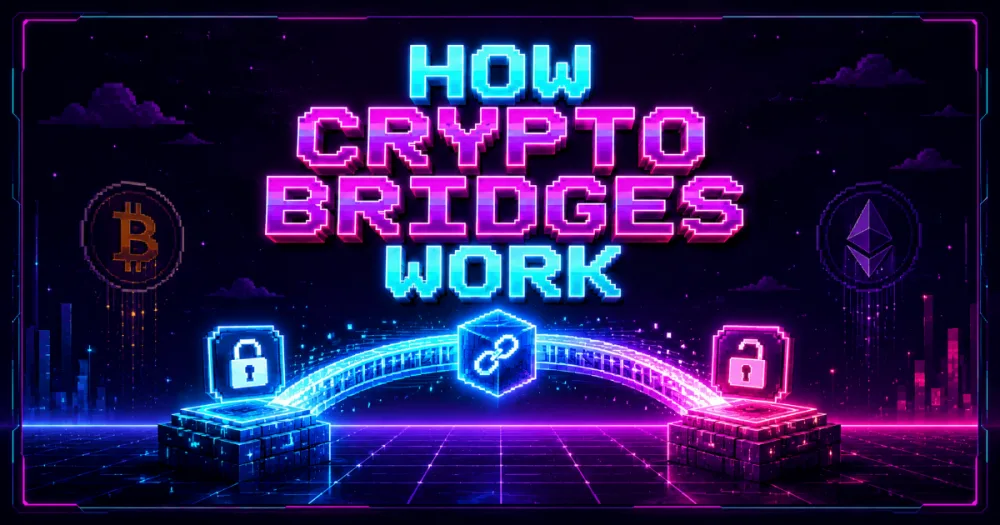
The lock-and-mint model is the most common crypto bridging model. It requires a user to lock some or all of their tokens in a smart contract/custody on the source network when sending tokens to a different network. Once a transaction is confirmed, an equivalent amount of tokens is minted on the destination chain.
This allows cross-chain bridges to preserve value when cross-chain activity is brought to other ecosystems and is typically used to migrate liquidity from two large networks that do not share a native asset standard.
Burn-and-Release Bridge Model
In contrast, in the burn-and-release approach, when the user wishes the tokens to be sent back to the original chain, the tokens have to be burned on the destination chain.
After verification, the locked assets on the source chain are released. This approach creates an accurate representation of token supply and prevents double-spending across blockchains. Many blockchain interoperability protocols rely on the lock-and-mint and burn-and-release mechanisms to allow for two-way transfers.
Wrapped Tokens and Cross-Chain Transfers
Many bridges create wrapped tokens, which are representations of third-party assets on the blockchain. Wrapped Bitcoin (WBTC), for example, allows value from the Bitcoin network to be used on the Ethereum network.
Wrapped assets can be used within decentralized applications, lending and borrowing, and liquidity pools on blockchain platforms that do not natively support the underlying asset. Though wrapped assets increase interoperability, they are subject to the security of the bridge on which they are based.
Smart Contracts Behind Blockchain Bridges
Most modern bridges operate as a smart contract bridge, using automated code to accept deposits, validate transactions, and issue tokens on other networks without manual mediation.
Because of the abundant value locked under these contracts, blockchain bridges are a common target for attacks, making blockchain bridge security heavily dependent on code audits, monitoring, and verification procedures.
| Bridge Mechanism | What Happens to the Original Asset | What Happens on the Destination Chain |
| Lock-and-Mint | Assets are locked | Equivalent tokens are minted |
| Burn-and-Release | Tokens are burned | Original assets are released |
| Wrapped Assets | Assets remain locked in reserve | Wrapped tokens are issued |
Types of Crypto Bridges
Centralized vs Decentralized Bridges
Crypto bridges may be centralized or decentralized. Centralized bridges use an intermediary company or organization as custodians for the tokens they hold, with the operator being responsible for validating transfers across several blockchain protocols.
Decentralized bridges use smart contracts, validators, or consensus mechanisms to govern transfers without the need for a central entity, which is more in line with Web3, but these bridges are still vulnerable to risks based on their protocol design.
Related: What Is Restaking? EigenLayer & LRTs Explained
Trusted and Trustless Blockchain Bridges
With a trusted bridge, a custodian, federation, or third-party operator manages and verifies the locked assets and transactions on behalf of the parties involved.
Read Also: How KelpDAO Lost $292M: Inside 2026’s Biggest DeFi Hack and What Went Wrong
A trustless bridge does not depend on intermediaries. Such a bridge may use cryptographic proofs, smart contracts, or decentralized validators, and may provide improved transparency, as well as being vulnerable to technical flaws.
Native Bridges Built by Blockchain Networks
Some blockchains also build and maintain bridges for easy cross-chain asset transfers, like Ethereum bridge, continuing its own bridges to Layer 2 blockchains such as Arbitrum and Optimism.
Native bridges are typically safer because to their networked design, but the best practice is to check audits, documentation, and security history before sending funds.
Cross-Chain Messaging Protocols Explained
Not all interoperability systems are token-centric, however. A modern cross-chain protocol can be used to send information, instructions, and contract calls between blockchains.
Protocols such as LayerZero and Chainlink CCIP have also extended blockchain interoperability by enabling dАpps to communicate with each other across different blockchains and networks. This has resulted in the creation of omnichain and cross-network DeFi.
| Bridge Type | How It Works | Main Advantage | Main Risk |
| Centralized Bridge | Assets are managed by a third-party operator | Simple user experience | Custodial risk |
| Decentralized Bridge | Uses smart contracts and validators | Greater transparency | Smart contract vulnerabilities |
| Native Bridge | Built by a blockchain ecosystem | Strong network integration | Ecosystem-specific limitations |
| Cross-Chain Messaging Protocol | Transfers data and instructions between chains | Advanced interoperability | Protocol complexity |
Why Crypto Bridges Are Important for Web3
Improving Blockchain Interoperability
One of the biggest issues holding back the digital asset market is the lack of interoperability among independent blockchains, such as Ethereum, Solana, and BNB Chain, each having its own consensus mechanisms and without the ability to transfer assets or data among them.
Bridges, or crypto bridges, aim to solve this early problem by improving blockchain interoperability, allowing assets and information to move from one native blockchain to another, permitting users to interact with multiple ecosystems rather than a single-chain environment.
Moving Assets Between Ethereum, Solana, BNB Chain, and More
Today, many DeFi investors and users regularly use several different blockchains and associated applications, liquidity pools, and other services. Without a bridge, these users would need to rely on centralized exchanges or other intermediaries to move value.
Cross-chain bridges allow tokens to be transferred between major ecosystems, and the user will always remain in control of the underlying tokens, creating a method for users to transfer assets across ecosystems. This is seen as a growing need due to an increase in multi-ecosystem activity.
Lower Fees and Faster Transactions Across Chains
Other blockchains make trade-offs on security, speed, or transaction costs, and users may opt to use these blockchains in case a network is experiencing congestion issues, due to their cheaper or faster transactions.
Through bridging across ecosystems, users can connect themselves to a chain that better meets their needs. Moving from a more expensive to a less costly chain network can lower costs or raise transaction speed for a given application.
Expanding DeFi and Multi-Chain Ecosystems
Since the advent of decentralized finance, demand for interoperability has increased for users who wish to move capital freely between lending protocols, decentralized exchanges, staking platforms, and others across several blockchains.
Thus, bridges have become one of the main components of a modern multi-chain ecosystem. A good DeFi bridge allows liquidity to be easily shared across multiple networks, letting users access a wider market as well as developers to build apps over different blockchains.
Most Popular Crypto Bridges in 2026

Wormhole Bridge
Wormhole remains one of the most popular interoperability protocols, bridging dozens of blockchain ecosystems, including Ethereum, Solana, Avalanche, Base, Arbitrum, Optimism, and BNB Chain.
The protocol is focused on cross-chain messaging rather than moving tokens, allowing applications to exchange data across multiple blockchains. As a result, Wormhole is frequently mentioned among the safest crypto bridges in 2026 by users focusing on interoperability and ecosystem support.
Read Also: DeFi Security Pioneer Says AI Makes All Smart Contracts Unsafe
The Wormhole documentation states that the network has moved billions of dollars in value and supports hundreds of applications.
After passing beyond the original Solana-Ethereum bridge, the protocol infrastructure is used by DeFi applications, token issuers, and institutional blockchain applications that aim to provide cross-chain capability that is not limited to the Solana and Ethereum ecosystems alone.
LayerZero
LayerZero is a messaging-oriented interoperability protocol that allows data from various blockchain-based applications to be sent between them using a single protocol, aimed at permitting developers to create cross-chain or omnichain applications that incorporate more than just asset bridging.
As of 2026, LayerZero continues to be one of the most utilized cross-chain protocols in the DeFi space, supporting token bridging and omnichain liquidity protocols that aim to reduce network fragmentation across several networks.
Arbitrum Bridge
The official Arbitrum Bridge is one of the most popular Layer 2 bridges on Ethereum, enabling low-cost and fast transactions when moving crypto assets to and from the Ethereum mainnet and the Arbitrum Layer 2 rollup.
Arbitrum is one of the largest Layer 2s by TVL, and its native Ethereum bridge serves as the main source of liquidity from Ethereum to Layer 2s.
Polygon Bridge
Polygon Bridge continues to be a major connection between Ethereum and the Polygon scaling network, allowing cheaper transactions and compatibility with Ethereum applications, whilst maintaining the free movement of assets between the two networks.
As Polygon looks to expand its ecosystem further with zkEVM and other scaling solutions, the bridge is still a useful possibility for users looking for cross-chain transfers while remaining on Ethereum.
Stargate Finance
Stargate Finance is one of the most recognized liquidity bridging applications built on the LayerZero infrastructure. Unlike customary bridging solutions that require wrapped assets, Stargate was developed to support native asset transfers through unified liquidity pools.
Its capability to simplify liquidity movement between major blockchain networks has helped position Stargate among the best crypto bridges for DeFi users pursuing efficient cross-chain capital deployment.
Synapse Protocol
Synapse Protocol, an interoperable network that sends assets and messages across several blockchains, is deployed as a bridging and liquidity infrastructure between the supported networks.
As demand for blockchain interoperability solutions has continued to grow, Synapse hopes to remain relevant by supporting a growing number of networks, dApps, and cross-chain liquidity needs in the DeFi space.
| Bridge | Primary Function | Supported Ecosystems |
| Wormhole | Cross-chain messaging and asset transfers | Ethereum, Solana, Base, Arbitrum, BNB Chain and others |
| LayerZero | Omnichain messaging infrastructure | Multiple EVM and non-EVM networks |
| Arbitrum Bridge | Ethereum ↔ Arbitrum transfers | Ethereum, Arbitrum |
| Polygon Bridge | Ethereum ↔ Polygon transfers | Ethereum, Polygon |
| Stargate Finance | Unified liquidity transfers | Multiple LayerZero-connected chains |
| Synapse Protocol | Cross-chain liquidity and messaging | Multiple blockchain ecosystems |
Step-by-Step Guide to Using a Crypto Bridge
Connecting a Wallet to a Bridge
The first step is to connect a crypto wallet to any of the supported blockchain networks. The wallets supported vary by asset, and include MetaMask, Rabby, Phantom, and Trust Wallet. Most bridge interfaces allow users to connect directly through a browser extension or a mobile wallet application.
A key element of how to use a blockchain bridge safely is confirming the URL is the official bridge web address and the correct network is selected before performing the transaction, as many phishing sites impersonate real bridges to steal assets.
Choosing the Right Blockchain Network
After connecting the wallet, the user is prompted to select the source and destination blockchain, where the funds will be sent from and where the bridged funds will arrive.
Chain selection depends on transaction fees, application availability, and liquidity. Users utilize a cross-chain bridge to move their funds between Ethereum, Arbitrum, Base, Solana, Polygon, or the BNB Chain after assessing their specific needs and requirements.
Sending Tokens Across Chains Safely
Before sending tokens, users must review the network, wallet address, token type, and the amount of tokens to be received. Transactions sent on an incorrect network, to a wrong address, or in tokens unsupported on the target network may fail to be sent or result in permanent loss of tokens.
Read Also: Bitcoin DeFi Protocol Echo Loses $816K After Admin Key Hack
To minimize some of the risks of using crypto bridges, when doing higher-value swaps, experienced users may choose to do a smaller test transaction first to ensure their wallet at the receiving end has received their cryptocurrency correctly.
How Long Cross-Chain Transactions Take
The time it takes to finalize transfers varies depending on the bridge architecture as well as the blockchains used. Protocols based on liquidity are able to transfer funds in seconds to minutes, while lock and mint bridges can take longer, depending on the delay.
For example, while most Layer 2 transactions on Arbitrum are processed nearly instantly, some canonical bridges take several days for withdrawals based on fraud-proof challenge periods.
Common Fees When Bridging Crypto
The main components of total transaction fees for transferring between different flows are protocol fees and blockchain gas fees. According to a survey of crypto bridges in 2026, protocol fees range from 0.04% to 0.30%, depending on the specific protocol and flow of the bridge.
Gas fees for using the underlying network vary. In 2026, under normal usage conditions, Arbitrum transactions cost less than $0.01 on average after protocol upgrades. However, bridging from Ethereum to Arbitrum may incur several dollars of gas fees during periods of high network congestion.
Typically, liquidity-focused protocols such as Stargate charge a protocol fee of around 0.06% applied to most transfers made between supported destinations, and some network-related fees depending on the source chain and token.
As crypto bridge fees change between different services, one should check the final amount quoted.
Main Risks of Crypto Bridges
Smart Contract Vulnerabilities
Many bridges are built using smart contracts, which can contain code vulnerabilities that attackers could exploit. Bridges are also often seen as attractive targets because they hold value in large collections of assets or control these assets on behalf of users.
Some of the biggest hacks in recent years have exploited bridge vulnerabilities within the logic, validation, or permissioning systems of cross-chain protocols. Cross-chain bridges are still one of the biggest threats to the security of the crypto space to this day.
Bridge Hacks and Exploits
Cross-chain infrastructure is historically one of the largest exposure points in DeFi. Blockchain security firms like Chainalysis estimate billions of dollars in funds have been stolen via bridge hacks since 2021. Bridges are one of the largest sources of stolen funds in the cryptocurrency space.
These hacks involved exploiting the code of the validator, signature verification, or the smart contract. Each hack, including the Ronin, Wormhole, and Horizon hacks, also showed how blockchain bridges can endanger users and the blockchain networks themselves.
Centralization Risks in Custodial Bridges
Not all bridges are fully decentralized, and a custodial crypto bridge may instead rely on a company, federation, or a small number of validators holding the assets and approving cross-chain movements.
However, centralized models can create a single point of failure for users who may get slowed down, denied access to their funds, or otherwise face counterparty risk should the operators experience technical issues, a hacking incident, or a governance failure.
Fake Bridges and Phishing Scams
Additionally, scammers set up fake websites for the bridges that look similar to the legitimate protocols. They do this by imitating branding, domain names, and interface design to trick users into connecting wallets or approving malicious transactions.
Scams targeting crypto bridges are common. Users should validate any bridge’s URL in the project’s documents, website, or a known social media account. These scams even impact experienced users via advanced social engineering attacks.
Liquidity and Slippage Issues
Some bridges rely on liquidity pools, so the value transferred may be lower than expected if market liquidity is low or prices have not fully adjusted to the bridge’s exchange rate at the time.
This can be especially important for large transfers of illiquid assets, as low liquidity can result in expensive and slow settlement, or even limited amounts received after tokens bridging, especially in times of high market activity.
Biggest Crypto Bridge Hacks in History

Ronin Bridge Hack Explained
The Ronin Bridge hack was one of the largest cryptocurrency hacks ever. It was perpetrated in the March 2022 attack on the Ronin Network validator nodes protecting the popular blockchain game Axie Infinity, from which hackers stole 173,600 ETH and 25.5 million USDC, which was worth a total of $624 million at that time.
U.S. authorities later attributed the attack to North Korea’s Lazarus Group. The hack highlighted a potential flaw in bridges due to the centralization of validators, where a small number of nodes would endanger the entire bridge ecosystem.
Wormhole Exploit Overview
In February 2022, Wormhole was exploited by a hacker after they circumvented a signature verification process in the Solana portion of the Wormhole protocol, resulting in the creation of 120,000 wrapped ETH without any collateral on Ethereum network.
As assets worth more than $320 million were drained from Wormhole, it remains one of the largest blockchain bridge hacks in cryptocurrency history. Wormhole continued to operate, as Jump Crypto backfilled the funds to restore protocol liquidity.
Harmony Horizon Bridge Attack
In June 2022, the Horizon Bridge suffered a hack, with the hacker using compromised private keys from a bridge validator, and $100 million of assets were stolen in the hack.
Subsequent analysis found it to follow the Lazarus Group methodology, and the attack was used as evidence for the vulnerability of bridge architectures reliant on a small number of validators/signing keys.
Lessons Learned From Cross-Chain Exploits
These major bridge attacks have led to the revelation of several common vulnerabilities in various bridges, including compromised validator keys, false assumptions about transaction verification, and problems with bridge smart contracts rather than the underlying blockchains.
Read Also: Top 5 DEX Wallets in 2026: Which Crypto Wallet Is Best for DeFi and Swaps?
These incidents accelerated the development of security blockchain bridge strategies, including better auditing, bug bounty programs, decentralized validator networks, and immediate threat detection. They also showed that understanding risks related to crypto bridges is as important as understanding the blockchains they connect.
Best Practices for Using Crypto Bridges Safely
Verify Official Bridge URLs Before Connecting Wallets
Phishing is still a common threat to bridge users, who may interact with phishing websites that impersonate real bridges and request users to approve transactions that will ultimately be malicious.
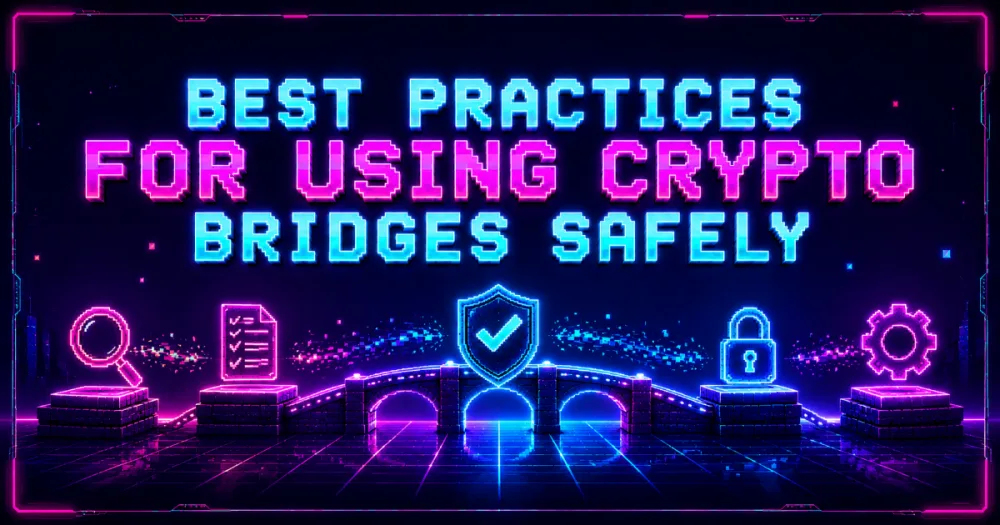
Users should always access a listed bridge via official project documentation, verified social media accounts, and trusted ecosystem resources prior to connecting a wallet, as simply checking the URL is one of the easiest ways to defend against crypto bridge scams.
Use Trusted and Audited Cross-Chain Protocols
Not all bridges are built to the same security standard. Best practices have been identified, including a third-party smart contract audit of the bridging protocol and public security documentation, among others.
To improve crypto bridge security, users should consider a protocol’s security history when comparing cross-chain protocols, including crypto bridge audit history.
Start With Small Test Transactions
Users can still make mistakes on these well-established protocols, for example, selecting the incorrect network, attempting to swap tokens that are not supported on either network, or wallet connection errors.
For this reason, it is common practice for experienced users to send a small test transaction first before sending larger amounts to ensure that the bridge, address, and network are correct.
Monitor Gas Fees and Network Congestion
Because blockchain activity can impact transaction fees and processing times, bridge transactions may be delayed during periods of high network usage.
Users could check the estimated price before submitting a transfer to circumvent unexpected crypto bridge fees, or wait for the network congestion to lower, mainly transferring assets from chains with greater gas price fluctuations.
Protect Wallets With Hardware Security
No matter how strong the bridge may be, if an attacker can obtain a wallet’s private key, they can access any funds in that wallet, regardless of the protocol.
Hardware wallets further protect the private keys by keeping them isolated from the computer and requiring a manual confirmation from the owner for any transaction. For users who bridge large assets, the protection by hardware wallets is one of the most secure.
Crypto Bridges vs Cross-Chain Swaps
Key Differences Between Bridging and Swapping
Bridging and swapping are not the same. A bridge transfers an asset from one blockchain to another while protecting the asset itself. A user can transfer USDC from Ethereum to Arbitrum while the underlying token does not change.
A cross-chain swap is a network transfer and a swap in which a user on the source chain receives a different asset upon reaching the destination chain. This distinguishes crypto bridges from swap-based alternatives.
Which Option Is Safer for Beginners?
Cross-chain swaps are often considered simpler for beginners, as they may be able to perform several actions in a single transaction, and liquidity and routing are often automatic.
In all cases, security is always a matter of protocol rather than implementation, and users should adhere to crypto bridge security best practices wherever possible.
When Traders Should Use Bridges Instead of DEXs
Bridges are frequently favored by users who wish to retain the same asset after moving to the new blockchain, for example, by using stablecoins or ETH in DeFi applications on another blockchain without having to swap the coin.
Cross-chain bridges may be more efficient than creating a series of trades on a decentralized exchange (DEX), especially for those who wish to avoid unwanted conversions to keep their exposure to any given asset.
The Future of Blockchain Bridges

AI and Automation in Cross-Chain Security
As bridges grow more complex, security teams utilize automated tools to monitor suspicious activity across networks, whereas advanced security monitoring tools can track transaction behavior and validator activity in real time.
Because AI is in its early adoption phase, it could improve blockchain bridges’ security through better risk detection and faster responses.
The Rise of Omnichain Applications
As a result, many developers are creating omnichain applications that use interoperability protocols to transfer or synchronize assets, data, and users across multiple blockchains instead of building solely on a single blockchain.
This is helping to create a better-connected multi-chain ecosystem wherein applications become the primary focus, rather than the blockchain itself.
Interoperability as the Future of Web3
Most Web3 experts believe that interoperability is required for long-term Web3 growth, as without it the liquidity and users are split between different networks.
This may ease friction for users and provide access to more decentralized applications across multiple blockchains, strengthening the importance of interoperability in Web3.
How Bridge Technology May Evolve Beyond 2026
Future generations of bridges are expected to focus more on cross-chain messaging or smart contract interoperability, which is already the focus of some existing interoperability networks.
Future projects specific to blockchain interoperability solutions may include improved security models and more decentralized verification mechanisms, with the result that the role of the cross-chain bridge in Web3 expands.
FAQ
Are Crypto Bridges Safe for Everyday Users?
Crypto bridges are not risk-free, but following known audited protocols and some best practices can make them quite secure. Each crypto bridge will have some level of technical and operational risk.
How to Minimize Risks While Bridging Crypto
To reduce risks, bridge through a reputable wallet or website, confirm the legitimacy of the destination website, start with a small quantity, and consider using a hardware wallet.
Why Blockchain Interoperability Matters for Mass Adoption
Without interoperability, blockchains will remain siloed, with assets and applications confined to specific blockchains. Better interoperability could enable a fluid experience across blockchains and help further advance Web3 adoption.
What Is the Difference Between a Bridge and a Cross-Chain Swap?
A bridge is the movement of an asset from one blockchain to another, whereas a cross-chain swap is a transfer of an asset from one chain to another in exchange for a different asset.
Do Crypto Bridges Require KYC?
Because they are principally controlled through smart contracts, most decentralized bridges do not require KYC, although some custody or regulated bridges may ask for it.
Which Blockchains Support Cross-Chain Bridges?
Most major networks, including Ethereum, Solana, BNB Chain, Polygon, Avalanche, Arbitrum, Optimism, and Base, usually support the bridge infrastructure. Bridged chains depend on the protocol.
How Can I Avoid Bridge Scams and Phishing Attacks?
Always access bridges via official links and verify links before connecting your wallet. Avoid these unsolicited links and ensure you verify transaction details before proceeding.