DEX wallets interact with DEXs via smart contracts and do not involve intermediaries. Users may trade on decentralized exchanges such as Uniswap or Jupiter while retaining access to their private keys. That being said, what is a DEX wallet is becoming a more pressing topic in 2026.

Contents
- What Is a DEX Wallet and Why It Matters in 2026
- How We Ranked the Best DEX Wallets for 2026
- Top 5 DEX Wallets in 2026 (Full Ranking Overview)
- 1. Best Overall DEX Wallet in 2026
- Best DEX Wallets Ranked (2026 Edition)
- Unity Wallet Review — Why It’s Entering the Top DEX Wallets List
- DEX Wallet Comparison Table (2026 Edition)
- Best DEX Wallet by Use Case
- Are DEX Wallets Safe in 2026?
- Final Verdict — Which DEX Wallet Is Best in 2026?
- FAQ
What Is a DEX Wallet and Why It Matters in 2026
How Decentralized Wallets Work With DEX Platforms
In the context of DEX trading, crypto wallets (not just storage), such as the top wallets, offer swaps, staking, portfolio tracking, and cross-chain support within a single UI, making them complete DeFi gateways.
Non-Custodial Security and “Not Your Keys, Not Your Coins”
The phrase “not your keys, not your coins” still represents crypto self-custody with a non-custodial wallet 2026 model, where users have sole possession of recovery phrases and funds during exchange freezes or insolvencies.
Security has also greatly improved, with hardware wallets, phishing detection, biometric login, and MPC-based recovery now standard features in the best crypto wallets for DeFi 2026.
Why DeFi Traders Are Moving Away From Centralized Exchanges
As self-custody becomes more common, there is a growing desire for greater control over assets and on-chain activities, with reports noting movement from custodial exchanges to decentralized wallets and from these wallets directly into DeFi.
Non-custodial wallets allow crypto traders more expedient access to swaps, staking, NFTs, and liquidity protocols without the need for approval from a central party. During times of extreme volatility in the cryptocurrency market, self-custody is increasingly seen as the best way to store crypto for DeFi purposes.
Key Features Modern DEX Wallets Must Have (Multi-Chain, Swaps, Staking)
The best crypto wallet platforms additionally support Ethereum and other ecosystems such as Solana, Base, Arbitrum, and Avalanche from the same interface, as cross-chain compatibility was a necessity with liquidity spread across time.
Execution is another consideration. The fastest crypto wallet for DeFi trading platforms integrates decentralized exchange (DEX) aggregators, which route trades across multiple sources of liquidity to minimize slippage and trading costs.
Read Also: Best Bitcoin Wallet in 2026 – Safe & Easy Options
Modern wallets should natively support staking, dApps, and passive yield tools. The best wallet for DeFi and swaps is evolving to combine self-custody security with the ability to manage all your assets in one ecosystem.
How We Ranked the Best DEX Wallets for 2026
Security Standards and Self-Custody Model
In 2026, the most important ranking factor for the best DEX wallets is security, favoring those with proven self-custody design, open security approach, hardware wallet support, biometric authentication, and phishing detection and protection.
Industry studies show a growing demand for wallets with less custodial risk and direct ownership of digital assets.
We studied how wallets store seed phrases, recovery, and approval flows for signing transactions. Several newer wallets use MPC technology or a transaction simulator to protect against approval risks for active DeFi users.
Multi-Chain and Cross-Chain Compatibility
With liquidity across Ethereum, Solana, Base, Arbitrum, Avalanche, BNB▲$572.56 Chain, and other blockchain ecosystems, the best multi-chain crypto wallet platforms allow users to access all networks in one place, without being forced to switch between networks or go to another application.
These wallets were prioritized as they supported several major blockchains natively, had bridges, and even had a mechanism to ease cross-chain swaps that most DeFi applications require. Ecosystem compatibility is important for retail traders and institutional DeFi users.
DEX Aggregation and Swap Efficiency
Another important factor is swap execution quality. The best crypto swap wallet now usually has routing technology to find the best price and lowest slippage by querying multiple pools, not just whichever one the user chose to swap on.
Factors such as gas optimization, transaction speed, and built-in aggregation systems were also discussed, but it was decided that the ideal DeFi trade wallet ought to prioritize reliable swap execution despite market volatility over simplicity in the user interface.
UX, Speed, and Mobile vs Browser Performance
With the pace of user experience evolution in recent years, we looked at onboarding, wallet responsiveness, portfolio tracking, mobile-friendliness, and browser extension stability for newcomers and and advanced traders.
However, the fastest crypto wallet for DeFi trading was not always the most feature-rich because thinner interfaces and faster signing architecture were often more efficient for signing transactions and interacting with dApps.
Read Also: Binance Wallet Launches Prediction Markets via Predict.fun Integration
DeFi Ecosystem Integration (Staking, NFTs, dApps)
Wallets are becoming full Web3 gateways. We preferred wallets that offered in-wallet staking, NFT support, WalletConnect integration, a dApp browser, and an integrated DeFi dashboard.
In 2026, the best DeFi and swaps wallet options were those that made it easy to trade, stake, lend, and engage with NFTs within the DEX wallet’s ecosystem. Deep integration with dApps is the key characteristic of the best DEX wallets today.
Top 5 DEX Wallets in 2026 (Full Ranking Overview)
Quick Comparison Table of All Wallets
The top DEX wallets 2026 are multi-chain wallets with self-custody and swap networks, with MetaMask keeping its dominant position in Ethereum DeFi. Phantom has expanded beyond Solana’s network and into more cross-chain DEX functionality.
Similar DeFi wallets, such as Trust Wallet and Rabby, are increasingly used by active wallet users; Rabby, for instance, gained popularity for its transaction simulation and automatic chain detection features, designed for high-frequency on-chain usage.
| Wallet | Best For | Main Chains | Key Strength | Main Limitation |
| MetaMask | Ethereum DeFi users | Ethereum, Arbitrum, Base, Polygon | Deep dApp compatibility and strong DeFi support | Limited non-EVM support |
| Phantom | Solana ecosystem | Solana, Ethereum, Polygon, Bitcoin | Fast swaps and polished UX | Strongest features remain Solana-focused |
| Trust Wallet | Mobile multi-chain users | 100+ blockchains | Broad asset support and integrated staking | Browser experience is less advanced |
| Unity Wallet | Emerging multi-chain DeFi access | Ethereum, BNB Chain, Solana | Simplified interface and integrated swaps | Smaller ecosystem than market leaders |
| Rabby Wallet | Advanced DeFi traders | EVM-compatible networks | Transaction simulation and security tools | Less beginner-friendly |
What Makes a Wallet “Best for DEX Trading” in 2026
Wallets continue to evolve: in 2026, the leading DeFi trading services and platforms compete in terms of their speed of executing swaps, cross-chain routing, and staking, and compatibility with decentralized applications across multiple ecosystems.
Security is a key differentiator. Traders want wallets with hardware wallet support, phishing detection, simulation previews, and destination permission visibility. These features will be essential when DeFi features start spilling over to Ethereum Layer-2 networks and Solana-based protocols.
For DeFi and swapping use cases, to be considered a top multi-chain wallet, a smooth and unified user experience across mobile and browser user experiences, as well as a fast signing architecture, low-friction, and solid dApp integration, are expected.
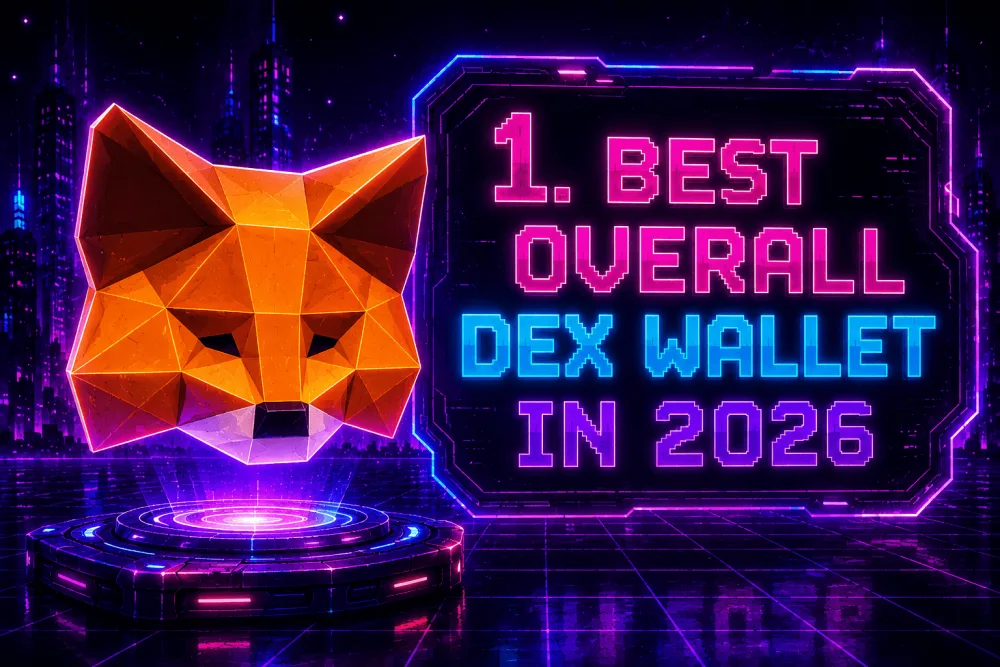
1. Best Overall DEX Wallet in 2026
Core Features and Why It Leads the Market
MetaMask continues to be the most well-rounded DeFi wallet offering in 2026 because of its Ethereum ecosystem dominance, Layer-2 support, and dApp infrastructure.
While competitors such as Phantom and Rabby exist, it is known to have some of the most wide-ranging interoperability with other DEXs, lending protocols, NFT marketplaces, and staking platforms.
Besides expanding its multichain capabilities through native bridging, portfolio tracking, and swap routing, MetaMask has also been seen as one of the top DEX wallets, as it offers a combination of ease of use, breadth of supported ecosystems, and a reputation for security.
Strengths for DeFi Trading and Swaps
MetaMask remains the leading Ethereum DeFi wallet because it supports all major DeFi protocols, including Ethereum’s leading projects (Uniswap, Aave, Curve) and Layer-2 projects, which can be accessed without any changes from the user.
The integrated swap engine improves price and reduces slippage by aggregating liquidity from multiple decentralized exchanges, making MetaMask one of the stronger options for crypto wallet swaps.
It is a top selection for users swapping cryptocurrencies or trading on DEXs. Its security features include transaction simulation, phishing protection, and compatibility with hardware wallets.
Read more: How to Create a Crypto Wallet: Step-by-Step Guide for Beginners
Supported Chains and Ecosystem Integration
MetaMask has since added support for most of the major EVM ecosystems, including Arbitrum, Optimism, Base, Avalanche, BNB Chain, and Polygon networks, leading to the consolidation of wallets across DeFi ecosystems.
The ecosystem effects of MetaMask are hard to beat; almost all dApps take the approach of serving MetaMask first. MetaMask is the leading best wallet for Ethereum DEX trading.
Pros and Cons for Active Traders
The reasons most commonly reported for MetaMask’s popularity are its support for most dApps, ease of use on web browsers, Layer-2 support, and its interoperability with hardware wallets such as Ledger and Trezor.
It does have weaker native non-EVM support, and complex DeFi users who use advanced strategies or value transaction simulation and security tooling expect Rabby to continue being the best.
Best DEX Wallets Ranked (2026 Edition)
Phantom — Best Wallet for Solana & Fast Swaps
Phantom has expanded from a Solana wallet to include Ethereum, Polygon, and Bitcoin in addition to the native Solana ecosystem, but speed remains its defining feature.
This makes it among the most user-friendly wallets for on-chain trading on Solana, where active traders are lured by low fees and fast transactions.
The added features of its built-in swap engine, NFT management, and staking further the claim of Phantom being the best wallet for Solana swaps. Additionally, Phantom is one of the most beginner-friendly wallets due to its simple user interface and fast onboarding.
Read more: How to Create a Crypto Wallet: Step-by-Step Guide for Beginners
Trust Wallet — Best Multi-Chain Mobile Wallet
The flexibility and ease of managing multiple assets on Trust Wallet have secured its spot at the forefront of mobile crypto wallets, powering over 100 blockchains and millions of assets, placing it firmly in the running for best multi-chain crypto wallet.
Trust Wallet’s focus on mobile and features such as in-app staking, a dApp browser, and a swap function allows it to stand out as a decentralized wallet for crypto users not requiring the advanced functionality of a desktop cryptocurrency wallet.
Unity Wallet — Rising Multi-Chain DEX Wallet for 2026
In 2026, the DeFi sector continued to attract new users, and Unity Wallet rose to prominence with its simple multichain wallet offering native swaps and portfolio management. The wallet’s philosophy was simplicity, with wallet storage, trading, and cross-chain capabilities all being handled through self-custody.
Unlike many legacy wallets which originated from browser-based add-ons, Unity Wallet focuses on a simplified mobile-based experience with a focus on new user onboarding.
Powered by its growing range of supported protocols, Unity Wallet has been seen as a leader among the new breed of DEX wallets 2026 platforms seeking to create a simplified DeFi experience.
Read more: Top 10 Crypto Wallets (May 2026): Hot & Cold Options Reviewed
Rabby Wallet — Advanced Security for Power Users
Rabby Wallet is also popular among DeFi traders and is developed and designed by DeBank with a focus on security while trading. It can automatically detect the chains, preview the contracts that the user is connecting, and notify them if there is an unintended approval.
Now more commonly used by power users who hop between DeFi protocols and Layer-2 networks for its risk analysis functionality, Rabby is generally recognized as one of the best wallet for DeFi trading workflows, especially if a user requires execution traceability and wallet-level protection features.
Unity Wallet Review — Why It’s Entering the Top DEX Wallets List
What Is Unity Wallet and How It Works in DeFi
Unity Wallet is a self-custody crypto wallet that acts as a gateway for decentralized finance applications across multiple blockchains, combining token repository, swapping, staking, and decentralized application (dApp) functionality into a mobile-first user experience aimed at new DeFi users.
The wallet also gives users direct access to their private keys and funds, clearly illustrating the difference between custodial and non-custodial wallet models. This is in keeping amid a growing demand for non-custodial wallet 2026 solutions as trading goes on-chain.
Key Features (Multi-Chain Support, Swaps, UX Focus)
The Unity Wallet supports Ethereum, BNB Chain, Solana, and other EVM-compatible networks, and a built-in swap function allows users to exchange crypto assets without leaving the Unity Wallet app.
The wallet’s key selling point compared to its more technical counterparts is that it includes intuitive onboarding, ample portfolio management, and a strong user interface, rendering it accessible for DEX trades.
Related: Why Solana Is Dominating Crypto Payments in 2026
Strengths vs Competitors (MetaMask, Trust Wallet, Phantom)
By comparison, while Unity Wallet has a simpler mobile interface than rival competitor MetaMask, it has a more integrated trading service than rival competitor Trust Wallet, while also having worse Solana-optimized integration than rival competitor Phantom.
Its biggest strength is balance in offering multichain access, swaps, and staking without burdening more novice users, and is considered part of the top DEX wallets 2026.
Limitations and What to Improve in 2026
Unity Wallet lacks features and protocol support found in MetaMask or Phantom, and advanced users may find their transaction analysis and manipulation needs unmet by Rabby’s security-oriented set of features.
The platform could further improve hardware wallet integration, browser extension stability, and transparency into swap routing infrastructure as competition increases.
Who Should Use Unity Wallet
Unity Wallet is suitable for anyone new to DeFi who is looking for a simple multichain solution with self-custody. It is especially attractive to mobile-first traders looking for swapping, staking, and simpler access to DeFi in one mobile app.
For users learning how to trade on DEX using wallet platforms, Unity Wallet offers easy access to the multichain DeFi ecosystem.
DEX Wallet Comparison Table (2026 Edition)
Security, Chains, Swap Tools, and Usability Comparison
As the DEX wallets market of 2026 matured, security architecture, multichain compatibility, swap routing capabilities, and dApps support became the most important differentiators between wallets as opposed to branding or the sheer presence of core DEX functionality.
MetaMask continues to dominate Ethereum DeFi due to its protocol compatibility and the mature state of web infrastructure, while Phantom remains one of Solana’s fastest wallets.
Trust Wallet remains the most popular wallet by active mobile users thanks to its support for asset variety and user experience, while Rabby has become a trusted wallet for advanced DeFi protocol traders using its multi-chain support.
Best Wallet for Beginners vs Advanced Traders
Usability and onboarding are mentioned most often as positive features by users who are beginners. They view Phantom and Trust Wallet as having simpler UIs and navigation, especially when compared to more technical-focused alternatives. These features specifically make it easier for beginners to learn how DEX wallets work.
Read Also: Crypto Wallet MetaMask Rolls Out One-Click Approval for Recurring Trades
Advanced users generally prefer more visibility into their execution, security features, and cross-chain support. Rabby has developed as a power user wallet through its use of transaction simulations and automatic risk profiling, while MetaMask remains the default ethereum-native DeFi wallet.
| User Type | Best Wallet | Main Advantage |
| Beginners | Phantom | Fast onboarding and intuitive UX |
| Mobile users | Trust Wallet | Broad chain support and simple navigation |
| Ethereum DeFi traders | MetaMask | Deep dApp and Layer-2 integration |
| Advanced DeFi users | Rabby | Strong transaction security tooling |
| New multichain users | Unity Wallet | Simplified cross-chain experience |
Best DEX Wallet by Use Case
Best for Beginners in DeFi
Phantom is one of the top DeFi wallets for beginner users thanks to its user-friendly interface, minimal setup, and simplified portfolio management. Additionally, the wallet allows users to easily swap tokens, stake, and interact with NFTs without advanced trading interfaces.
Trust Wallet is another strong option and is more beginner-friendly than other wallets, being mobile-focused and supporting a wide range of blockchains. It can be a good first wallet for those learning about decentralized finance wallet explained topics or self-custody wallets for the first time.
Best for Advanced Traders and Whales
Rabby Wallet has become popular among advanced DeFi users due to its transaction preview, approval monitoring, and automatic chain detection features. It is developed by DeBank and is popular for its ability to ease advanced multi-protocol transactions on Ethereum and Layer-2 Ethereum networks.
MetaMask’s dominance among larger traders is thought to be due to its capacity for nearly all Ethereum-based protocols and its support for institutional-grade hardware wallets. For most professional users, MetaMask remains the best wallet for lending protocols (lending markets), perpetual DEXs, and liquidity protocols.
Best for Low Fees and Fast Swaps
Phantom’s advantage is that it can offer some of the fastest execution speeds possible, as retail swap volumes across the market, as Solana has extremely low fees and high throughput capabilities. If gas fees on Ethereum are high, trading regularly shifts to liquidity ecosystems on Solana.
For those who value low fees, Phantom has become a top wallet for crypto swaps low fees, thanks to its Solana-native infrastructure and built-in routing. The Jupiter aggregation service with Solana has allowed for both better pricing and user slippage for active traders on Solana.
Best for Multi-Chain Portfolio Management
Trust Wallet supports over 100 blockchains and millions of assets in a single mobile wallet interface and is the industry leader in multichain wallets. The service includes staking, swapping, NFTs, and dApps, so users can manage all their crypto activities in one place.
Read Also: Wallet in Telegram Adds Support for Perps With 50x Leverage by Lighter
For the best multi-chain crypto wallet, users need compatibility among many ecosystems as liquidity has now become more fragmented and is split between Ethereum, Solana, Base, Arbitrum, Avalanche, and BNB Chain.
Best for Long-Term Holding + DeFi Yield
MetaMask is still one of the best long-term wallets, given its deep integration within the Ethereum ecosystem, support for hardware wallets like Ledger and Trezor, staking, dApp integration, and interoperability with a wide range of applications. It remains an ideal wallet for long-term DeFi activity as a base layer wallet, supporting a variety of dApps.
For DeFi users searching for the safest way to store crypto, self-custody wallets combined with hardware-level protection remain the most secure option available as of 2026.
Are DEX Wallets Safe in 2026?
Common Risks (Phishing, Approvals, Smart Contract Exploits)
In 2026, phishing attacks remain one of the biggest threats that DeFi users face, with fake wallet extensions, malicious dApps, and fraudulent dApp approval requests plaguing Ethereum and Solana-based traders.
According to blockchain security firms, wallet drainers and approval exploits rank among the most common attacks in decentralized finance.
Smart contract vulnerabilities are another major risk. Even if the user’s wallet is secure, using DeFi protocols that have been exploited may allow malicious approvals or liquidity stealing. This is why the discussion around are DEX wallets safe has increasingly shifted toward protocol-level security.
How to Safely Use DeFi Wallets
Most security depends on transaction and user behavior management. Recommendations comprise verifying URLs, avoiding untrusted dApps, revoking unused approvals, and storing recovery phrases offline. Users who ask how to use crypto wallet for swaps should check permissions before signing contracts.
As DeFi matured to include Layer-2 and cross-chain ecosystems, many wallets began to include phishing warnings, transaction simulation, and warnings before signing a transaction.
Hardware Wallet Integration for Extra Security
Hardware wallets are one of the best ways to protect DeFi users from long-term risks. Hardware devices, such as the Ledger and Trezor, need to connect to a browser, but store private keys offline and are less susceptible to browser exploits and malware.
For users looking for the safest crypto wallet for DeFi 2026, the industry best practice is to combine the security of a software wallet with self-custody via a hardware wallet, with MetaMask, Rabby, and other large wallets providing a hardware wallet option for high-value wallets.
Final Verdict — Which DEX Wallet Is Best in 2026?
Overall Winner for DeFi and Swaps
MetaMask is the best overall DEX wallet for DeFi users in 2026 because of its incorporation with the Ethereum ecosystem, Layer-2 compatibility, and support for the majority of dApps. The combination of swap aggregation functionality, hardware wallet support, and a highly advanced browser infrastructure makes it the best DEX wallet.
Despite this update, MetaMask remains the most compatible within the EVM ecosystems, keeping it one of the most complete self-custody options for active DeFi users.
Best Balanced Wallet for Most Users
For most people looking for a simple wallet with DEX trading capabilities, Phantom is one of the best choices because of its fast and easy-to-use nature. It has a clear user interface and relatively fast swap and trading times, which helps answer the question of which crypto wallet is best for DEX trading. It is popular among new DeFi investors.
Trust Wallet’s advantages include broad blockchain coverage and an integrated staking feature.
Best Niche Wallets Depending on Strategy
Over time, Rabby Wallet has become the choice of DeFi power users as it offers transaction simulation, approval visibility, and security tooling for Ethereum-based DeFi ecosystems, establishing itself as one of the strongest contenders in the best wallet for DeFi trading category.
The Unity Wallet is promoted as a simplified multichain wallet with native swap functionality.
FAQ
Can a decentralized wallet be hacked?
The wallet itself is rarely the direct target, and attacks often occur through phishing websites, malicious smart contracts, and compromised wallet recovery phrases.
Do I need KYC to use a DEX wallet?
Most decentralized wallets do not require KYC to create or access a wallet. However, some custodial services that offer a wallet service may require a know your customer policy depending on their jurisdiction.
What happens if I lose my recovery phrase?
Unless the wallet recovery phrase or backup used to access the wallet is retained, the wallet and funds are usually irretrievable. This is why it is important to secure seed phrases offline.
Are mobile wallets safe for DeFi trading?
Mobile wallets can be secured with biometric locking, verified builds, and good transaction hygiene, but for larger portfolios, hardware wallets are often still considered the most secure option.
What causes high fees on some wallet swaps?
Swap costs depend on congestion, blockchain structure, liquidity, and routing effectiveness. On the Ethereum side, it is more expensive during periods of high on-chain activity.