This is a guide on how to create your crypto wallet in a way that is relevant to a first-time user in the US. You will learn about the basics of the crypto wallet, the different types of crypto wallets, the process of creating one, and the security process involved in the creation of the crypto wallet. The process of creating the crypto wallet is not limited to the app installation process; it also includes the process of storing the seed phrases, the security process involved in the creation of the crypto wallet, and the test transaction process.
This guide is educational content, not investment advice. Wallet choice, network fees, and asset risk depend on your goals, experience, and loss tolerance. Always verify every transaction independently before sending funds.
Contents
- What is a Crypto Wallet and How It Works
- Crypto Wallet Types
- How to Choose the Best Crypto Wallet for Your Needs
- What to Prepare Before How to Set Up a Crypto Wallet
- How to Create a Wallet for Crypto: Step by Step Guide
- How to Get Crypto Wallet with Funding and First Transaction
- Safest Crypto Wallet: Security Settings to Enable at Once
- Can You Create an Anonymous Crypto Wallet or No KYC Crypto Wallet
- Beginner Mistakes When Creating a Wallet
- Which Path Should a Beginner Choose: Best Crypto Wallet for Each Scenario
- How to Set Up a Crypto Wallet Without Any Mistakes
- FAQ
What is a Crypto Wallet and How It Works
Many new users ask what is a crypto wallet before they download anything. The answer is that the wallet does not store the coins in the device. Instead, the device stores the keys needed to access the coins recorded in the blockchain. The public key helps in generating the wallet address. The private key shows ownership. The seed phrase acts as a backup in case the device is lost. The above explanation is necessary before the user downloads the wallet because the actual purpose of the wallet is key management.
According to Vitalik Buterin, co-founder of Ethereum, self-custody will reach more people only when recovery becomes safer. His view is practical for beginners: a wallet setup is not finished when the app opens, but when recovery can survive device loss.
Crypto Wallet Types
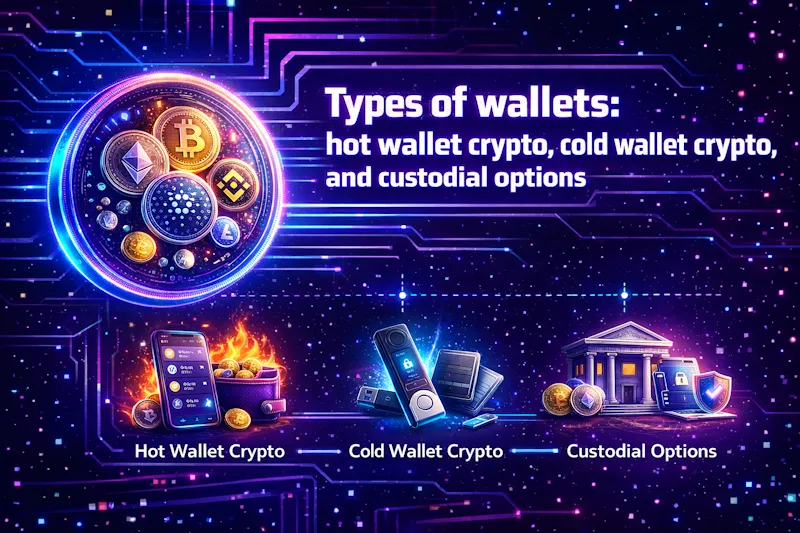
Before you can select a tool for your cryptocurrency wallet, you have to be aware of these types. The first is a custodial wallet. This kind of wallet offers control for you. The second is a software wallet. This offers you control. The last one is a hardware wallet. This offers you control as well. These wallet crypto types are for different purposes. The first one is for a beginning account. The second one is for daily use. The last one is for long-term storage.
| Parameter | Custodial wallet | Self-custody software wallet | Hardware wallet |
|---|---|---|---|
| Key control | 2 out of 10 | 9 out of 10 | 10 out of 10 |
| Setup time | 5 to 10 min | 5 to 15 min | 20 to 45 min |
| Typical upfront cost | 0 USD | 0 USD | 50 to 250 USD |
| KYC likelihood | 8 out of 10 | 1 out of 10 | 0 out of 10 |
| Mobile use | 9 out of 10 | 10 out of 10 | 5 out of 10 |
| dApp access | 3 out of 10 | 9 out of 10 | 7 out of 10 |
| Recovery responsibility | Low | High | High |
| Trading convenience | 10 out of 10 | 6 out of 10 | 3 out of 10 |
| Long-term storage fit | 4 out of 10 | 7 out of 10 | 10 out of 10 |
| Phishing exposure | Medium | High | Medium |
How to Choose Online Crypto Wallet or Exchange Wallet
An exchange-based wallet is easier to create. It comes with buy, sell, and withdrawal features all in one account. In the U.S., identity verification is usually required when buying cryptocurrencies through a regulated system or a payment processor. This is the trade-off. You get the convenience, but you do not get to control the keys. FinCEN makes a distinction between hosted and unhosted wallets. U.S. tax law treats digital assets as property.
This model is normally appropriate for the following situations:
- You want the fastest first purchase route
- You want bank card or ACH support
- You want to trade more than store
- You are not yet ready to handle seed backups
- You are okay with the service potentially restricting access or requiring verification
That is why this route is normally appropriate for first-time users, with their funds later being moved to a self-custody wallet crypto solution.
That fits this section well: an exchange wallet can be useful, yet users should understand the custody trade-off before funding it.
When to Choose a Crypto Wallet App for Phone or Laptop
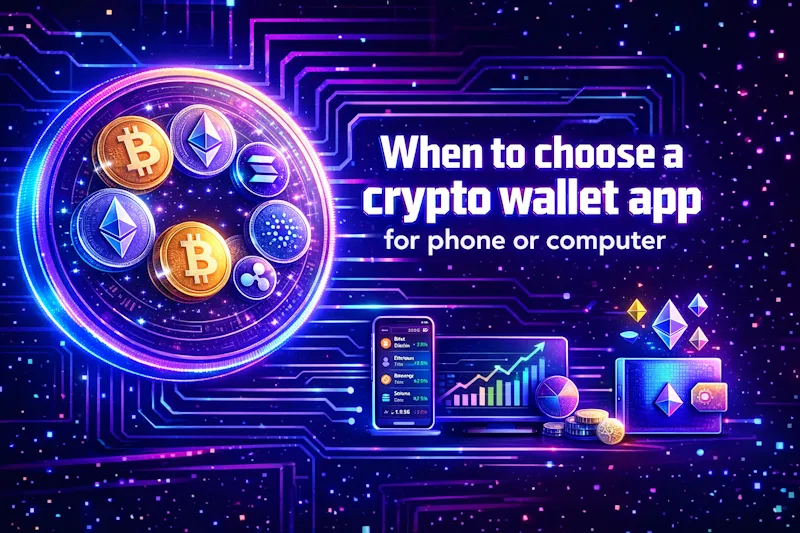
A phone or desktop wallet is perfect if you need to use it frequently. It is often the middle ground between usability and independence. This type of wallet can connect to dApps, make transactions quickly, and support several networks. However, you are your own recovery system. If you lose your seed phrase, support cannot help you. This is the true cost of self-custody, and it is what your crypto should be used for.
It normally suits these cases:
- You want self-custody but do not want to buy a device
- You want to use DeFi or NFT tools
- You frequently send or receive money
- You want control over your private keys
- You can store your recovery data offline
When You Need Hardware Crypto Wallet
Hardware wallets store the signing keys offline. This minimizes the exposure to malware, false browser prompts, and clipboard attacks on the internet-connected device. However, the process is time-consuming, and the device has a cost. Nevertheless, for high amounts, the hardware wallet crypto option is more popular because the exposure of the keys decreases. A crypto cold wallet approach works best for those who do not require daily transactions. Simply put, the hardware wallet crypto setup sacrifices speed for better isolation between keys and the internet.
It usually fits these use cases:
- You expect to hold for months or years
- You need a device for signing only
- You have enough in your balance to offset the cost of the device
- You do not need constant dApp activity
- You want one level of abstraction between your daily browsing and your keys
As Pascal Gauthier, Chairman and CEO of Ledger put it, too many people lose assets through hacks or third-party failures. His point supports one clear rule here: hardware storage makes more sense when the amount or holding period starts to matter.
How to Choose the Best Crypto Wallet for Your Needs
There is no such thing as the best crypto wallet answer. The answer is the one that is best suited for what you need it to be used for next week, not just next day. The idea is simple. It is used for one type of transaction. It is used for storage. The term best wallet for crypto is used in conjunction with the actual case or device or risk factor.
| User need | Better fit | Why it fits | Typical cost |
|---|---|---|---|
| First purchase and learning | Custodial wallet | Easy account flow and payments | 0 USD |
| Daily transfers | Software wallet | Fast access and self-custody | 0 USD |
| DeFi and dApps | Software wallet | Browser or mobile connection | 0 USD |
| Long-term storage | Hardware wallet | Offline signing | 50 to 250 USD |
| Large balance split storage | Software plus hardware | Access and storage separation | 50 to 250 USD |
A good practice for users in the U.S. is to keep buying and storing separate. You can buy on a regulated platform and then store in a self-custody crypto wallet when you are ready.
What to Prepare Before How to Set Up a Crypto Wallet
Preparation begins before creating the wallet by using the official website or a legitimate app store. Additionally, it’s a good idea to update your operating system. Remove browser extensions that you’re not sure about. Prepare a password and a paper backup location for the seed phrase. Preparation begins before the recovery phase. According to the FTC, “impostor scams” and “fake platforms” are common in the crypto world. So, your first decision in the process of creating a secure wallet will be where to download the wallet.
How to Create a Wallet for Crypto: Step by Step Guide
The screens will switch from one app to another, but the idea is similar. You will download the official tool, create a new wallet, set local protection, write down the seed phrase, confirm it, and then make a small transaction. This section is showing how to create a crypto wallet for most non-custodial apps. It is also useful as a guide to those searching how to create a crypto wallet without getting lost.
Step 1. Download the Official Crypto Wallet App or Prepare the Device
Start only on the developer’s official site or a prominent app store listing you can trust. False wallet apps can be found in search ads, copycat sites, and imitation social media posts. To use a device wallet, you can buy directly from the manufacturer or authorized seller. This will minimize tampering before you even open the box. This is also the first step in learning how to create a crypto wallet app safely as a user, as you want to keep your downloads clean before you ever have a wallet. There are still warnings on impersonation and scam schemes coming out from the FTC and FBI.
This is a checklist of things to look at before installing:
- Exact domain name
- No wallet links in chat or email
- Publisher name in store
- Update your phone or computer first
- For hardware, packaging and firmware prompts
A small detail to note is that some phishing websites have logos that match well, but the domain name is off by one character.
Step 2. Tap Create Wallet and Make a New Wallet
Most apps have three options on the first screen. You will usually be given the option to create a new wallet, import a wallet, and sometimes even connect an existing wallet. New users should be given the option to create a new wallet. Import is usually meant for those with an existing wallet and an old seed phrase. Many users make mistakes by rushing through this process and making the wrong choice. This is why this stage is important in any guide to create a wallet.
Common options on the start screen include:
- Create a new wallet
- Import from seed phrase
- Connect hardware wallet
- Restore from cloud backup, if available
- Skip analytics/data sharing prompts
At this point, your crypto is only held in the wallet in an insecure state until the next steps.
Step 3. Create a Password and Local Protection
Next, you will set the local lock for your device or application. This can be a password, PIN, or even a combination of all these. There are many misconceptions for new users regarding wallet recoveries and app security. They are two completely different things. The password will protect your device, while the seed phrase will restore your wallet on another device. This is where you have to be careful while creating a crypto wallet app safely, as recovering a lost password is easier compared to a lost seed phrase.
Basic local protection should be enabled from the outset. This means:
- Create a unique password
- Enable device PIN or biometric unlock
- Lock screen with short idle time
- Password manager autofill limited
- Do not reuse your exchange password
This is where a second crypto wallet mistake begins. You think the app password is an alternative to the recovery phrase. It is not.
Step 4. Write Down the Seed Phrase
This is the key point. The seed phrase is your master backup of your money. You write it down by hand. You store it offline. You do not screenshot it. You do not send it to yourself in an email. You do not store it in your notes or cloud storage or chats. Your hot wallet crypto setup is probably secure enough for your daily life, as long as the handling of the seed is ultra-strict. This step might be the make-or-break point for the user retaining control of the crypto in their wallet.
Follow the process without any shortcuts:
- Write the words in the correct order
- Double-check the spelling of the words
- Store the paper in a dry location
- Store the second copy in a different location
- Avoid typing the phrase in support chat
Another lesser-known fact is that the theft of seeds occurs not during setup, but after setup. The phrase is then revealed in the form of a false restore.
Step 5. Confirm the Recovery Phrase
Once you’ve typed out the phrase, you’re normally asked to confirm it. You may be asked to put words in order or select word numbers from a list. This isn’t just a formality. This is actually a test to make sure you really saved the backup. If you fail here, stop and enter the correct phrase. It’s worth a few minutes now to save money later. With wallet crypto, this step actually proves you have a backup, instead of just assuming you have one.
This stage can be used as a self-test:
- Rebuild the order slowly
- Compare with your written copy
- Do not rush the confirmation screen
- Restart if one word looks wrong
- Keep the phrase out of camera view
Once you have completed this stage, you will have the basic framework for your cryptocurrency wallet.
Step 6. Set the Network, Address, and Basic Wallet Functions
Then you will engage in receiving, sending, and possibly swapping. You will encounter multiple networks and, likely, multiple token lists. It is here that the novice will often learn the hard way that addresses vary by network. Sending assets to the wrong network is one of the first mistakes new users will make. A hot wallet crypto interface is easy to move your assets around with, which is why it is so easy to rush into the first mistake. Make sure to read the network label before each copy-paste.
Essential basics to focus on:
- Find the receive button
- Copy the address only after checking the network
- Note the supported chains in the app
- Note where fees are displayed
- Avoid using swap until the first transfer
One useful tip for users in the U.S. is that the buy or swap feature may be subject to state and provider restrictions even in the same application.
How to Get Crypto Wallet with Funding and First Transaction
Once the setup process is complete, the next step to consider is how to go about getting your crypto wallet funded. This can be achieved by purchasing on an exchange and withdrawing, receiving funds from someone else, or using the in-wallet purchase method if the facility is supported in your country. For U.S. citizens, the process seems to require identification during the purchase step, even if the wallet was not created requiring such. Consider using a small amount. This will allow for a chance to correct a network or address error before the main funds are transferred.
How to Make the First Transfer into a Crypto Wallet Safely
The first transfer you will send should be boring. That’s the goal. Copy the address, confirm the network, send a small amount, and then confirm. Next, compare the amount and network. Finally, the larger amount will be sent. This process will also answer the question of how to get a crypto wallet ready for use because the test transfer will be the final confirmation.
Here’s a simple procedure to follow in a transaction process:
- Copy the receive address
- Check the network on both ends
- Send a small amount first
- Wait for blockchain confirmation
- Verify the asset was received on the correct network
- Then send the main amount
The mistake to avoid in a transaction process is to select a cheaper network fee on the sending end but the receiving wallet’s crypto does not support the network.
Safest Crypto Wallet: Security Settings to Enable at Once
Safest crypto wallet isn’t necessarily about the brand but about the user. Get the latest updates for the application and device. Enable 2FA if the feature is available, especially on exchanges used for purchase. Steer clear of public Wi-Fi when accessing the wallet. Verify the URLs before accessing dApps. Token approval requests and wallet permissions should be reviewed. The FBI and FTC continue to caution users about scams in the world of cryptocurrency.
Marek Palatinus, co-founder of Trezor, has argued that open-source, community-driven development is the right path for stronger wallet security. For readers, that means updates, transparency, and verified firmware matter as much as device form factor.
Can You Create an Anonymous Crypto Wallet or No KYC Crypto Wallet
A non-custodial wallet can sometimes be created without providing identification or even an email. This is the wallet layer. The purchase layer is quite different. If you are buying through an exchange, processor, or on-ramp, there can be KYC required based on the provider’s policies and U.S. compliance. Thus, it can be an anonymous crypto wallet for creating a wallet, but it is not for the funding method. No kyc crypto wallet is for creating self-custodial wallets, not for buying cryptocurrencies.
Beginner Mistakes When Creating a Wallet
Big losses are usually due to mistakes rather than attacks. People get tricked by fake apps, share their seed phrase online, or forget to send a test transaction. Some are tricked by network formats or think they can use a password instead of seed data. Another mistake is over-exposing their money by keeping it all in hot wallets or keeping it all in cold wallets. It is better to spread their money over different methods rather than just relying on one method.
| Mistake | What happens | Typical impact | Better move |
|---|---|---|---|
| Downloading a fake app | Seed phrase theft | Full balance loss | Use official site or store |
| Saving seed phrase in cloud notes | Remote exposure | Full balance loss | Keep offline only |
| Sending without a test amount | Unchecked error path | Partial or full loss | Send 5 to 20 USD first |
| Mixing up network and address | Funds sent wrong way | Often irreversible | Match chain before send |
| Trusting password as backup | Recovery failure | Lockout risk | Save seed phrase offline |
| Keeping all funds in one wallet | Single point of failure | Large loss exposure | Split daily and long-term storage |
The last risk applies especially after some time has passed. Many people start with one wallet and then eventually have different purposes for different wallets, including spending, DeFi, and storing.
Ian Andrews, Chief Marketing Officer at Chainalysis warns that phishing, hacks, and wallet drainers remain a core user-experience problem in Web3. That makes beginner mistakes costly, especially when a new wallet is connected to unknown dApps or approval requests.
Which Path Should a Beginner Choose: Best Crypto Wallet for Each Scenario
A first-time user might require a custodial wallet to purchase things and a self-custody wallet to learn. A user might require a mobile or desktop wallet if they are going to be active in the system. For DeFi, a user might require software wallets with robust permission capabilities. If a user wants to hold assets long-term, they might require a crypto cold wallet setup. If a user has precious items, they might require a split storage solution. The second-best crypto wallet is better than the best because a user will learn the basics by the end of the first month.
How to Set Up a Crypto Wallet Without Any Mistakes
The clean way is simple:
- Select the type of wallet that suits your purpose.
- Only download the official tool.
- Create a new wallet instead of importing one.
- Store the recovery phrase offline.
- Enable local security.
- Fund the wallet with a small test amount first.
- Then use it for bigger transactions.
That is the basic idea of how to set up a crypto wallet for a U.S. beginner who desires control without forgetting the security aspect.
FAQ
Does a crypto wallet store coins on my phone or computer directly?
No. Your wallet does not store coins; it stores or manages the keys.
Can I use one wallet for Bitcoin, Ethereum, and stablecoins at once?
Mostly, yes. But support varies by wallet and network. Make sure the network supports the asset first, as the wallet application can support many assets but not all network versions.
Is a hardware wallet worth buying for a small first balance in crypto?
Mostly, no. A software wallet is sufficient for beginners. A hardware wallet is better when your balance is higher or long-term storage is necessary.
What happens if I lose my phone after wallet setup is complete?
Write down your seed phrase correctly so you can recover access to your wallet. Otherwise, you cannot recover your wallet.
Do I need ID verification to create and fund a wallet in the U.S.?
No verification is necessary for most self-custody wallets. Buying cryptocurrency can trigger verification through bank or card access.
How small should the first test transfer be before sending more funds?
Send an amount that can be lost, like 5 to 20 dollars. Do not worry about the amount; worry about sending the crypto.