Now, halfway through 2026, USDC▲$0.9999 carries an identity sharper than many in the crypto space. Rather than chasing wild price swings, its aim sits firmly on being the reliable digital version of the US dollar. Think payments first, then moving money between systems, handling corporate cash flow, and even reimagining financial tools built online.
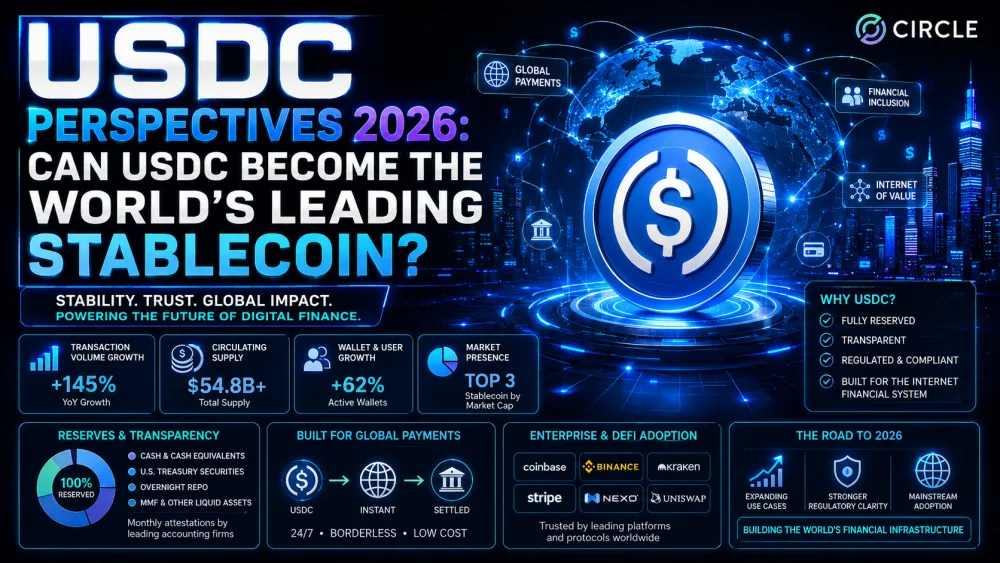
What remains uncertain? Whether Circle can use openness, rules compliance, and partnerships with payment networks to grow large enough. Only time will tell if that mix can rival Tether’s firm market grip.
USDC Views 2026 How the Stablecoin Scene Shifts
One step ahead, the stablecoin landscape in 2026 shifts ground – no longer just tools for exchanges but building blocks of finance. Instead of only aiding trades, they back DeFi pools, power fintech platforms, move money across borders, handle remittances, and even mirror physical assets in digital form. Because of this change, USDC’s role in 2026 matters more than how one company performs.
Stablecoins Growing Into Essential Financial Systems
Most stablecoins act fast, yet stay priced steadily. They shift like digital money, though they hold value like paper bills. Volatility pushes traders toward these coins. Firms experiment on quicker payouts using them. USDC spots its real chance here. It aims to be a trusted version of the greenback online. A digital buck built for big banks and daily systems.
Read more: Why Millions in USDT and USDC Are Suddenly Being Unfrozen on TRON and Ethereum
Institutional USDC Adoption Fuels New Stablecoin Phase
Money moves quicker when big players step in. Not just individuals now – funds, tech finance tools, and company wallets are shifting too. They seek speed but stay clear of wild price swings found in most digital coins. That gap fits USDC well. Circle made its dollar coin with rules in mind, backed by cash behind each unit, and trusted by large users. Stability like that pulls more adopters in.
Why Regulation Still Matters Most in 2026
One thing changed by 2026 – stablecoin rules now shape market moves. Who backs the coin matters, just like where money sits behind it or how you get cash out. Approval flows faster when law experts give a nod. Because of that, coins under supervision gain ground.
Contents
- The Rising Rivalry: USDC vs USDT
- Circle Moves Deeper Into Institutional Financial Services
- USDC and USDT Market Position Comparison
- Circle Aims to Expand USDC Global Use
- Institutional Adoption Seen as Key USDC Factor?
- Why Banks and Fintechs Choose USDC
- Challenges Stopping USDC From Surpassing Tether
- USDC in the Crypto Economy
- FAQ
The Rising Rivalry: USDC vs USDT
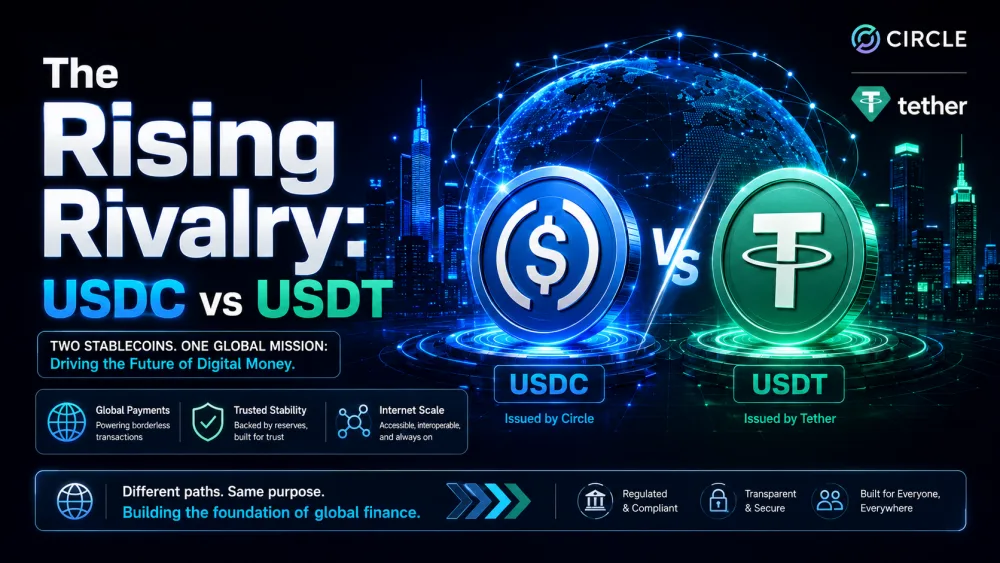
Still, the biggest stablecoin competition sits between USDC and USDT▲$0.9991. Liquidity favors Tether, along with wider stablecoin market access worldwide in 2026. USDC wins on image – seen as cleaner by regulators. These days, stablecoins aren’t racing just to grow bigger. They’re proving where they work, who trusts them, and how far they spread.
What Drives USDC Growth in 2026?
Now sitting much larger in the stablecoin space, USDC moves more with every passing week. Behind this rise? Not luck – clear steps taken by Circle to stay visible and active. Instead of waiting, they built bridges through payment ties that reach further each time. Access across many blockchains helps too, opening paths others leave closed. When banks step away, digital dollar interest grows – timing works in their favor. Activity spikes show people want availability beyond traditional hours.
| Factor | USDC | USDT |
|---|---|---|
| Issuer | Circle | Tether |
| Main role | Regulated digital dollar for institutions, fintechs and payments | Dominant trading stablecoin for global crypto liquidity |
| Key strength | Transparency, compliance and enterprise trust | Deep liquidity, exchange presence and trading volume |
| Main users | Institutions, fintechs, regulated exchanges, DeFi users | Retail traders, market makers, offshore exchanges |
| Liquidity | Strong, especially in regulated venues and DeFi | Very strong across centralized exchanges |
| Regulatory perception | Stronger fit for regulated stablecoins | More dominant in crypto-native markets, but under scrutiny |
| Payment use | Stronger narrative through Visa, Stripe and B2B settlement | Widely used for crypto transfers and exchange activity |
| Blockchain integration | Broad multi-chain support with CCTP interoperability | Broad multi-chain support and deep exchange integration |
| Biggest weakness | Smaller liquidity base than USDT | Transparency and regulatory concerns |
| Best use case | Institutional settlement, stablecoin payments, tokenized finance | High-volume trading, global transfers, exchange liquidity |
| Long-term outlook | Could become the preferred digital dollar for institutions | Likely to keep trading dominance unless liquidity shifts |
Circle Moves Deeper Into Institutional Financial Services
Now viewed more as a payments backbone than a crypto venture, Circle shapes how USDC moves forward. Because banks and firms must justify their tools to oversight bodies, trust matters. A digital dollar built on shaky ground would not survive scrutiny. Confidence in the system keeps the idea alive.
USDC Transaction Volume Rises Along with USDC Market Share
Every time USDC moves, it tells a story beyond just numbers. What counts isn’t only how much exists but how frequently it changes hands. Activity in payments hints at real-world traction. Across DeFi platforms, usage reveals trust. On exchanges, a steady flow signals reliability. Even corporate treasuries shifting to USDC adds weight. Movement like that builds quiet confidence. Belief in its role tomorrow grows each time it’s put to work.
Related: USDT vs EU Regulation: Why Tether Is Facing Legal and Compliance Challenges in Europe
Visa, Stripe, and Payment Network Integrations
Payments through Visa, Stripe, and similar firms are nudging stablecoins into regular use. Backed by real dollars, USDC finds favor since it runs smoothly in digital setups. When businesses start accepting stablecoin transfers routinely, adoption may pick up fast. Should company-to-company transactions shift this way, demand for USDC might rise sharply, along with the USDC blockchain integration.
Enterprises Choose Regulated Stablecoins
Most businesses lean toward regulated stablecoins – they’re safer that way. Moving big money? You’ll want solid backing, trust in cashing out, plus rules neatly followed. USDC tends to sail through internal checks, unlike murkier options floating around.
USDC and USDT Market Position Comparison
Market Cap Comparison 2026
Still ahead when it comes to size and trading volume, USDT holds its ground. Liquidity keeps Tether at the front in numerous exchanges worldwide. When confidence among big financial players matters most, though, USDC stands taller.
Trading Volume and Liquidity Differences
Most trades happen in USDT since so many markets list it, plus its order pools run deep. Where rules matter more, USDC shows up often – banks, blockchains built for firms, and decentralized apps prefer it. One leans on fluid movement, the other on permission paths. Split isn’t sudden; it reflects where trust gets defined.
Transparency Reserve Audits Regulatory Compliance
What sets USDC apart? Clear visibility into its backing. Circle shows how each token ties directly to real cash reserves, updated often. Because of this openness, firms that track exposure closely tend to lean toward it. Big players in finance notice when numbers are checked and shared like clockwork.
Institutional Shift Toward USDC Amid Retail Use of USDT
Most people buying crypto pick the digital dollar that works everywhere, moves quickly – so they go with USDT. Big companies care more about rules, who they’re dealing with, and what backs the money. Because of that, USDC fits better where laws are strict.
Which Stablecoin Do Banks Trust More?
Most old-school financial players lean toward investments already matching their risk rules. Because Circle talks about compliance, reporting, and payments in ways institutions recognize, USDC feels more familiar to them. Easier acceptance doesn’t mean zero danger, just smoother entry. Still, comfort isn’t safety.
Circle Aims to Expand USDC Global Use
Expansion Across Multiple Blockchains
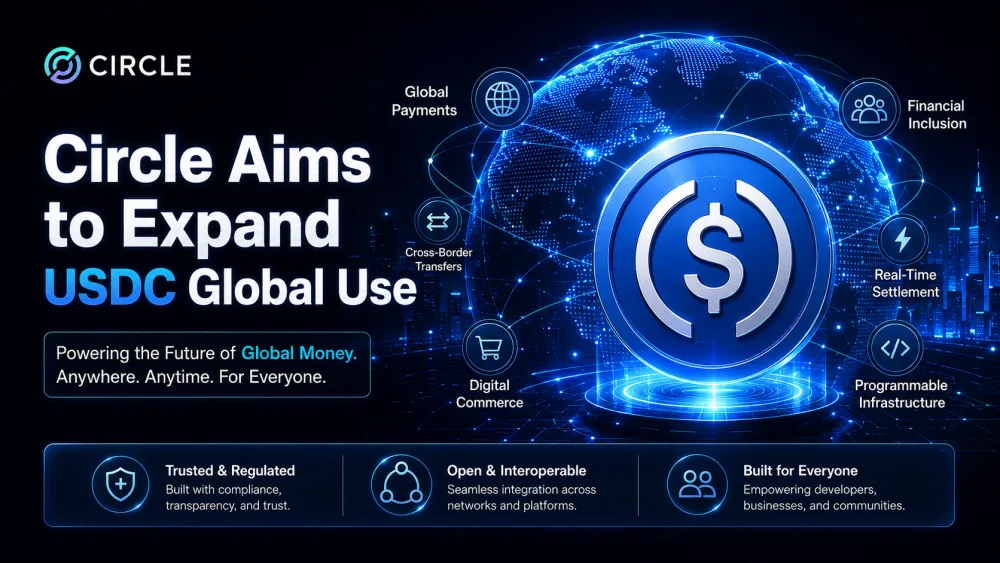
Circle puts blockchain links at the heart of its plan. Because USDC works on various systems, builders of tools like wallets or payments can connect with people using separate networks. One single chain won’t hold the top stablecoin of tomorrow.
Cross-Chain Transfer Protocol and Interoperability
One way USDC jumps across different blockchains? Circle’s system burns coins on one chain, then mints them fresh on another. This sidesteps the need for wrapped versions floating around. Liquidity stays more unified, less scattered. Institutions gain smoother bridges between networks – fewer tangled pathways to manage.
Circle Expands in Tokenized Money and Smart Payment Tech
Out of everything floating around, tokenized pieces of property still require something steady to close deals. Meanwhile, machines handling payments lean on code-friendly cash to function smoothly.
Sitting right between those two worlds – USDC holds its ground by tracking the dollar, moving easily across platforms, staying common where it matters. Pulling from that mix, its role mirrors key directions shaping stablecoins deep into 2026.
Circle Prepares USDC for Worldwide Payment Use
One step at a time, Circle aims to make USDC the go-to digital dollar for banks, startups, and money-transfer systems worldwide. Rules come first, then secure backing, smooth tech links – trust in cashing out keeps it real. A bigger goal? Gaining traction where USDT already runs deep. Growth there takes patience, not just promises.
Institutional Adoption Seen as Key USDC Factor?
Hedge Funds Use USDC for Treasury Management
Now think of hedge funds – they might keep USDC ready for quick moves on blockchain. Treasury teams see another angle: shifting money between storage spots, trading sites, and DeFi gets easier. When crypto swings hard, USDC still holds its place.
Why Banks and Fintechs Choose USDC
Most banks plus financial tech firms lean toward stablecoins built to pass strict checks. Clearer paths through red tape? USDC often wins there, thanks to Circle’s open approach and tight rule-following. Because of this, institutions frequently see it as a top pick when rolling out coin-based services.
Related: Best Crypto Exchange Platforms in the US 2026 — Picks for Fees, Liquidity, and App Access
Stablecoins Used in International Business Payments
Most international business transfers are still slow and cost more than they should. When clocks tick past five, these digital bucks keep walking – no coffee breaks. Where do firms want faster greenback handoffs without legacy bank chains? That is ground ripe for USDC to tread.
Could USDC Be the Go-To Digital Dollar for Banks and Big Companies?
Should rules keep backing clear operators while cash flow grows, USDC might just slide into place as the go-to digital buck for big players. When markets twist tight, trust in Circle’s payback promise needs to hold firm. It can happen. Yet Tether’s grip on existing habits runs deep. Real progress? Possible. Still, old patterns stick hard.
Challenges Stopping USDC From Surpassing Tether
USDT Holds Most Exchange Liquidity
Most of its power comes from being everywhere right now. When people trade, they pick it because others do too. Exchanges keep offering it since so many want it. That cycle of constant use blocks USDC from taking the top spot. Nothing shifts easily when habits run this deep. So far, USDT dominance prevails in the stablecoin market.
Stablecoin Rivals Rise in 2026
More coins are joining the race besides USDC and USDT. There have been a lot of institutional stablecoins issued lately. Backed by PayPal, their digital dollar steps into finance differently. Ripple’s RLUSD▲$0.9999 version moves through payment networks naturally. Synthetic dollars mimic cash but work on blockchains instead. Banks now issue digital forms of deposits, too. Even money market funds appear as tokens these days. Each fills a separate niche somehow. Growth for USDC remains possible even as rivals multiply steadily.
Revenue Tied to Coinbase
Nowhere else does Circle rely so heavily on a single player like Coinbase. Yet that link spreads USDC fast through trusted platforms. Revenue ties raise eyebrows among backers who track imbalance risks. Growth cannot hinge only on one path, especially when dominance skews visibility. Reaching the top means weaving connections far beyond just one name.
Regulatory and Political Challenges for Circle
Still, rules open doors for Circle even as they tighten the screws. Fresh demands on reserves, banks pushing back, caps on overseas issuers – each twist might redraw the landscape. Clearer laws lift USDC, yet every policy turn carries risk. Policy swings keep shaping its path.
Central Banks Worry About Stablecoin Risks
One wrong move might shake deposit patterns, thanks to coins like USDC growing fast. Payment routes may shift – watchful eyes grow sharper with each milestone reached. Balancing trust among digital natives and cautious rule keepers defines its tightrope walk now.
USDC in the Crypto Economy
DeFi Liquidity and Stablecoins
Most DeFi runs on stablecoin flow. Without steady assets, lending pools wobble. Swap venues rely on them too. So do systems built for complex bets. Trust keeps USDC in play – its link to value holds firm. Developers plug into it often. People can trade it back easily when needed.
Stablecoins Underpin Crypto Trading Activity
Most crypto trades start with stablecoins. Moving away from wild price swings becomes possible without exiting digital currency systems. Right now, USDT holds the top spot here. Yet in places like official marketplaces and big investor hubs, USDC shows a growing presence.
USDC Used in Digital Real World Assets
Out of everything that moves off paper into code, value needs to land somewhere trustworthy. When treasury bills change hands, when loans settle, when shares shift – each moment depends on a steady reference point. Not just any digital token works; it must speak the same financial language. Dollar alignment matters, so does built-in flexibility, along with access across platforms. That’s where USDC steps in, already wired into systems people use every day.
AI and Automated Payments Shaping Stablecoin Evolution
Money must flow freely for machines acting on their own. Without human banking delays, tasks like timed payouts or small-scale transactions gain speed. USDC might handle these exchanges between devices quietly, behind the scenes. Think recurring access fees, held funds released by code, tiny transfers piling up. Growth here would push USDC well past its current role in digital asset trades.
FAQ
Can USDC Become the World’s Leading sStablecoin in 2026?
One way USDC might rise in 2026 is by focusing on institutions. Still, passing USDT in overall market availability won’t be simple. Exchange presence gives Tether an edge that’s hard to match. Instead of chasing volume, stepping into structured finance could work better. Banking links plus payment networks open doors. Tokenized real-world assets may matter most. Progress depends less on speed, more on trust built slowly.
USDC and USDT Compared?
Most people trade USDT more often around the world. When it comes to clear rules and official approval, USDC stands out. Big companies tend to pick USDC for payments and formal setups. Trust matters more here than speed. Which one works better? That hinges on what someone values – smooth movement of funds or following strict guidelines.
Why Circle’s USDC Matters for Stablecoin Payments?
Stability tied to the dollar shows up right away in Circle’s USDC. Moving across blockchains happens without getting stuck on one. You can check what backs it – no guessing games there. Built-in tools let it slide into payment systems smoothly. This setup fits how crypto payments are handled today. Fintech apps find it plugs in without hassle. Crossing borders with value? It works quietly behind that, too.
What Might Limit the USDC Expansion?
One reason USDC might grow more slowly? USDT already holds a strong position. New players entering the market add pressure, too. Reliance on Coinbase creates vulnerability over time. Rules getting tighter may limit expansion paths. Earnings from reserves shrinking can weaken stability. Central banks watching closely might act if risks pile up.
Is USDC the Safest Stablecoin?
Most people see USDC as a safer choice among approved stablecoins, yet safety isn’t guaranteed anywhere in this space. Holding it means thinking about who issues it, how you get cash back, where it’s held, what rules apply, and the risks tied to the network running it.