One dollar once matched one token. Speed mattered back then. Banks felt slow by comparison. Now things shift underfoot. By 2026, stability isn’t so stable anymore. Headlines aren’t just tracking size, movement, or where coins flow. Power plays creep into view. Who holds the strings? That question grows heavier.

Here’s the thing. Someone out there holds the power to lock up digital cash – no warning, no notice. That same hand might undo it just as fast. Lately, tons of USDT▲$0.9991 and USDC▲$0.9999 have poured onto TRON and Ethereum. Nobody talks about where it comes from. The real puzzle sits quietly beneath the surface.
A fresh surge of cryptocurrency enforcement actions centers on Tether, TRON, and their partners. Instead of fading, scrutiny grows through tools built with TRM Labs. Over four hundred fifty million dollars in tainted USDT now sits locked by the T3 Financial Crime Unit. This group was formed through a collaboration between Tether, TRON, and analytics firm TRM.
Related: Stablecoins Explained: USDT, USDC, and DAI Compared
Contents
- Half a Million USD-Backed Stablecoins Unfrozen
- Stablecoin “Freezes” Explained Simply
- TRON Central to USDT Narrative
- Ethereum USDT Addresses Show Something Else
- USDT and USDC Resuming Activity
- The Circle Compliance Perspective
- Tether Compliance Shapes Market Dynamics
- The Centralization Debate Returns
- Frozen Crypto Wallets and Their Impact on Users
- How Crypto Rules Are Changing
- FAQ
Half a Million USD-Backed Stablecoins Unfrozen
Criminal probes span hacking incidents, dirty funds movement, dodged penalties, plus digital-era organized offenses. Activity surfaced mainly across blockchain trails linked to TRON’s network.
Just then, systems tracking blockchain bans spotted another surge of frozen stablecoins getting unblocked. Hundreds of old blocked addresses on TRON and Ethereum started showing signs of thawing, according to USDTBanList. The move involves over 75 million dollars worth of USDT and USDC suddenly been unfrozen again. The crypto community is now having heated debates about what they call “USDT freezes” and Tether-based frozen addresses. And it drives them furious, raising talks again about centralized crypto versus decentralized Bitcoin.
It turns out frozen stablecoins might just be frozen – not gone forever. Behind the scenes, companies track money trails, platforms handling trades, plus government agents weigh options before moving forward. What feels sudden often has hidden steps unfolding quietly.
Stablecoin “Freezes” Explained Simply
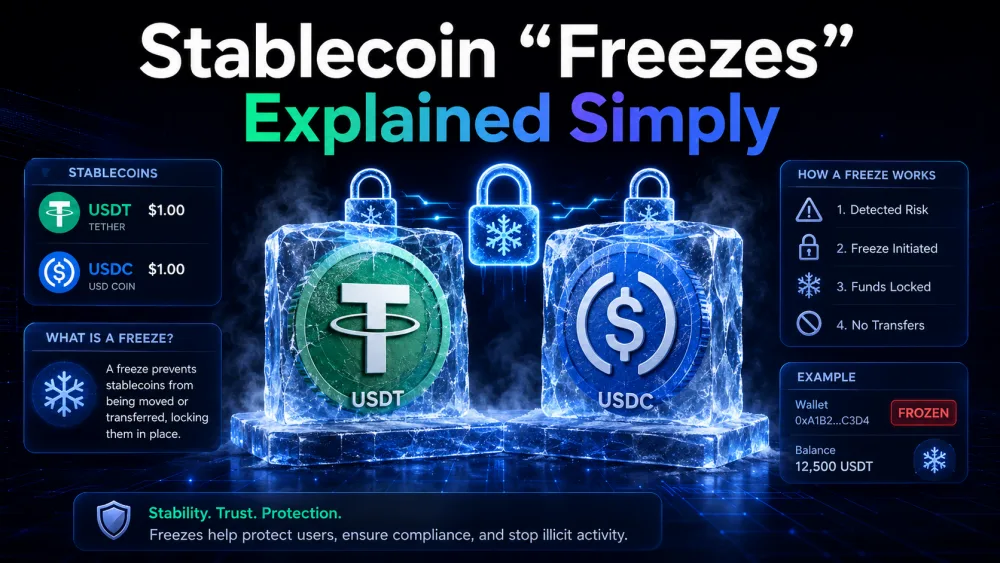
A locked stablecoin wallet does not undo what happens on chain. Blockchains like TRON and Ethereum keep running forward. Their history stays unchanged. Only the smart contract blocks transfers from one particular address.
Most folks don’t realize – blocking a USDT address doesn’t erase it. Tether steps in, flags the spot on their ledger. That wallet sits right where it was. Numbers show up just fine when you check. Yet moving those tokens becomes impossible, as long as the hold stays. People call these cases frozen wallets, banned spots, locked addresses – the names shift. What’s happening underneath never changes.
Out of nowhere, movement returns to a frozen Tether account once it’s cleared from the blocked list. Those dollars were already there – no fresh coins appear. Nobody rewrites the ledger. Just like that, sending USDT becomes possible again from that spot.
Related: USDT vs EU Regulation: Why Tether Is Facing Legal and Compliance Challenges in Europe
What sets it apart is real. A lot of people think a freeze locks things forever. Actually, outcomes shift with each situation. Certain accounts remain locked for long stretches. Later on, certain funds get wiped out through court orders. When an address turns out to just be passing money along – or swept up by accident – those assets often come back following scrutiny.
TRON Central to USDT Narrative
USDT on Tron takes center stage since Tron now handles massive volumes of dollar-pegged tokens. Low costs drive its appeal, speed keeps users coming back – emerging economies lean into it heavily. Exchanges move funds through it often, while peer-to-peer trades rely on its backbone just as much. Remittance flows follow suit, drawn by the efficiency few alternatives match.
Criminals find these traits useful, too. Because costs stay low, moving money between countless addresses becomes simple. When transfers finish quickly, thieves shift loot faster than authorities can respond. Stories about crackdowns keep mentioning Tron-USDT wallets for that reason.
Now, according to fresh reports, the T3 FCU brings together TRM Labs’ tools for tracking crypto activity, insights into transactions on the TRON chain, along with Tether’s built-in power to halt USDT movements when needed. Because of this mix, odd money patterns can be spotted and stopped more quickly compared to standard bank methods.
This doesn’t turn TRON into something illegal. What it does is give it weight. Huge flows of stablecoin move through the system – when that happens, shady dealings take up space too, just by scale. Even a tiny share of dirty money becomes big numbers fast.
Read more: TRON Price Prediction 2026: Can TRX Reach $0.5? TRX Price Forecast & Market Analysis
Ethereum USDT Addresses Show Something Else
Picture of USDT on Ethereum looks distinct. Though TRON tends to carry more blacklisted spots, Ethereum’s situation dives deeper. Cases here link to DeFi setups instead of just surface transfers. Bridges show up in traces now and then. Custody wallets appear tangled within flows. Exchanges pop into view across chains. Phishing trails weave through some accounts. Smart contracts sometimes bear marks of misuse.
Outsiders struggle to follow what’s happening inside. Following a trail on TRON? Often just wallets passing funds back and forth. Ethereum tells another story – smart contracts lead into swaps, then deeper into shared reserves, bridges hopping between chains. The path twists more than it seems at first glance.
This moment explains the weight behind today’s unfreezing update. When a group holds both TRON and Ethereum spots, it rarely tells just one clear tale. With certain spots tied to closed probes, others sit active – frozen mid-trace. Movement might allow cash shifts toward recovery hubs, trading platforms, or paths cleared by authorities.
Most people notice when someone gets added or removed from the list. Usually, they do not get access to the complete court documents explaining why. Hidden paperwork stays out of view, even if the outcome is clear.
USDT and USDC Resuming Activity
There are several reasons why stablecoins may be released after being frozen.
A fresh start happens when an inquiry wraps up. Once authorities say the hold isn’t necessary, the provider lifts the block on its own. Another reason pops up when something gets flagged by mistake. Big sweeps might snag active exchange wallets, firms handling payments, or linked entities – later sorted out.
One thing people often overlook? Victim recovery. Money might sit frozen until it can shift to a safe wallet someone controls. Here’s another angle: administrative batching. When paperwork clears, checks pass, and several confirmations line up, issuers group those actions instead of handling them one by one.
This does not mean every wallet is cleared of suspicion when many USDT restrictions are lifted. Nor does it confirm systems meant to catch risks fell short. What it reveals instead is how stablecoin oversight now moves in cycles – pause, examine, free, erase, shift.
The Circle Compliance Perspective
Circle handles USDC with rules that look familiar, yet their approach sets them apart. When a legitimate government body issues a legal directive, the firm might have to lock up tokens – dollar backing could even be handed over. This comes straight from Circle’s stated policies on its website.
Here lies the core of how circles stay within rules. Often, it acts more like a company that follows legal signals instead of jumping into instant crisis fixes. On the flip side, Tether now ties closely to fast reactions, sharp blockchain tracking, plus working hand-in-hand with police forces.
This difference weighs on the USDC thaw discussion. When frozen addresses get unlocked, people look for clues – was it a judge’s order, a check by internal rules, pressure from regulators, or just fixing an error? Control lives with the issuer in centralised stablecoin systems. Decisions about using that control come down to policy choices.
Most people see things much alike. If Circle locks a USDC balance, it stays put till they say otherwise. When Tether freezes a USDT account, movement stops until they act. One uses lawyers, the other might use forms. Still, waiting feels identical either way.
Tether Compliance Shapes Market Dynamics
What stands out is Tether’s growing role in global financial oversight. Instead of just moving money, its data aids probes on several continents. Authorities have used it to halt flows linked to dirty cash, trade-ban evasion, digital theft, online gangs, and shadow systems. All of these point to a shift few saw coming. The scale became clear through recent findings by analysts.
Back in April 2026, Tether mentioned helping U.S. officials lock up $344 million in USDT. That amount sat on two TRON addresses flagged by law enforcement. The move came after those accounts got spotted during an investigation. Details appeared later on tether.io.
Now stablecoin makers do different work. Not just creating or taking back coins anymore. Because they help follow rules deep in how crypto moves money. Their job shifted right into the center of where value flows.
Happy days for watchdogs chasing quick fixes when thefts, fraud, terror cash trails, or rule dodging pop up. Tougher spot for people diving into digital money, hoping nothing big could freeze their holdings.
The Centralization Debate Returns
Freeze features spark tension where old crypto ideals collide. Some folks believe blocking addresses keeps things safe. Otherwise, criminals might pick these coins when moving stolen cash, hiding profits, or dodging government rules. What looks like protection feels like control to others. Power to stop payments divides the room every single time.
Some people point out another issue entirely. Should a company lock funds at will, that asset fails the test of free exchange. What looks like digital cash turns into a regulated IOU, run by boardroom decisions.
One side sees truth, yet so does the other. A business cannot lock up Bitcoin. The Ethereum Foundation holds no power to freeze native ETH▲$1,761.17 either. Still, firms that issue USDT and USDC maintain control – these tokens answer to central authorities.
Stablecoins sit a bit outside the core spirit of cryptocurrency when compared to Bitcoin. Yet they fit more easily into systems like banking, legal oversight, accounting, trading platforms, and government rules. People are not picking just one approach here. Both models stay active at once. Hard money still lives in Bitcoin. Fast-moving digital dollars? That role belongs to stablecoins.
Frozen Crypto Wallets and Their Impact on Users

Most people should pay attention. Wallets holding cryptocurrency sometimes freeze up – it happens more than before. It hits regular traders, big transaction desks, firms moving payments, trading platforms, those using decentralized finance, and even companies taking stablecoins from shaky sources.
Somebody looking up how to unfreeze a USDT wallet after getting funds locked is likely stressed. Getting money back might mean showing where it came from, maybe bank statements or trade logs, old transfer details, purchase receipts, saved images of transactions, identity papers used during sign up, perhaps even reaching out – carefully – to the platform behind the tokens or authorities if needed.
Read more: Top 10 Crypto Wallets (May 2026): Hot & Cold Options Reviewed
Stopping trouble early works best. Before adding funds to accounts, exchanges ought to review incoming deposits. When handling big transfers, OTC desks need to verify who they are dealing with first. Every business must maintain clear logs for each stablecoin transaction. Even innocent recipients might face complications if their wallet gets marked by a compromised USDT or USDC transfer. Problems arrive quietly – awareness helps avoid them.
Fast, stablecoins remain. Useful too. Yet come 2026, neutrality fades. Not digital cash anymore. Tied to dollars now – rules tag along. Blacklists live inside them. Control sits with those who issue.
How Crypto Rules Are Changing
One step ahead, regulators may tighten rules around digital money. Proof matters now – authorities need to see crypto working widely without hiding illegal cash. Instead of waiting, stablecoin creators prove control by tracking transactions and pausing funds if needed.
Maturity shows when organizations accept it. Yet privacy supporters see danger ahead. Some of the smoothest digital cash moves fast – but halts just as quickly.
When accounts freeze, it reveals how fast banks move. Yet when they unfreeze, it highlights checks needed – proof required – even backtracking. Same momentum, different phase.
FAQ
USDT Unfreeze Meaning Explained?
When a USDT freeze gets lifted, it just means a wallet once blocked can now send USDT. No new coins appeared. History on the chain stayed exactly as it was. What shifted was only the access flag set by the issuer in the smart contract.
USDT Wallets Get Frozen For Security Or Legal Reasons?
When a USDT wallet is tied to hacking, fraud, or dodging sanctions, it might get locked. Locked funds sometimes reopen after checks by authorities. If dirty money passes through, access often stops fast. Stolen coins trigger holds just like laundering does. Law enforcement steps in, then movement halts until the reviews finish. Blocks on accounts happen quietly – no warnings given first. After the investigation closes, some restrictions will be lifted without notice. Ties to criminal probes mean temporary holds could stretch longer.
Could a Wallet Tied to USDT Be Clean Even After Being Unblocked? Maybe Not.
True, a wallet tied to USDT might show up as unblocked. Yet that status could come from asset retrieval processes, court decisions, or even routine system updates. People watching blockchain data rarely get access to complete background details.
Can USDC Get Locked, Then Unlocked Again?
True. Circle holds authority over USDC, which operates under central oversight. When restrictions lift following regulatory checks, frozen funds may resume movement. Control remains with the issuing entity at all times.
Could It Be That Stablecoins Carry More Risk Than They Let on?
True, but not quite. For moving money, settling trades, or paying others, stablecoins still work just fine. Here’s what really matters: USDT and USDC can be shut down at any time. These aren’t free from control – they’re digital versions of the dollar built to follow rules. Authorities can lock them up whenever needed.