This might be the most practical quantum defense yet seen in crypto. We break down Ethereum’s new protection plan.
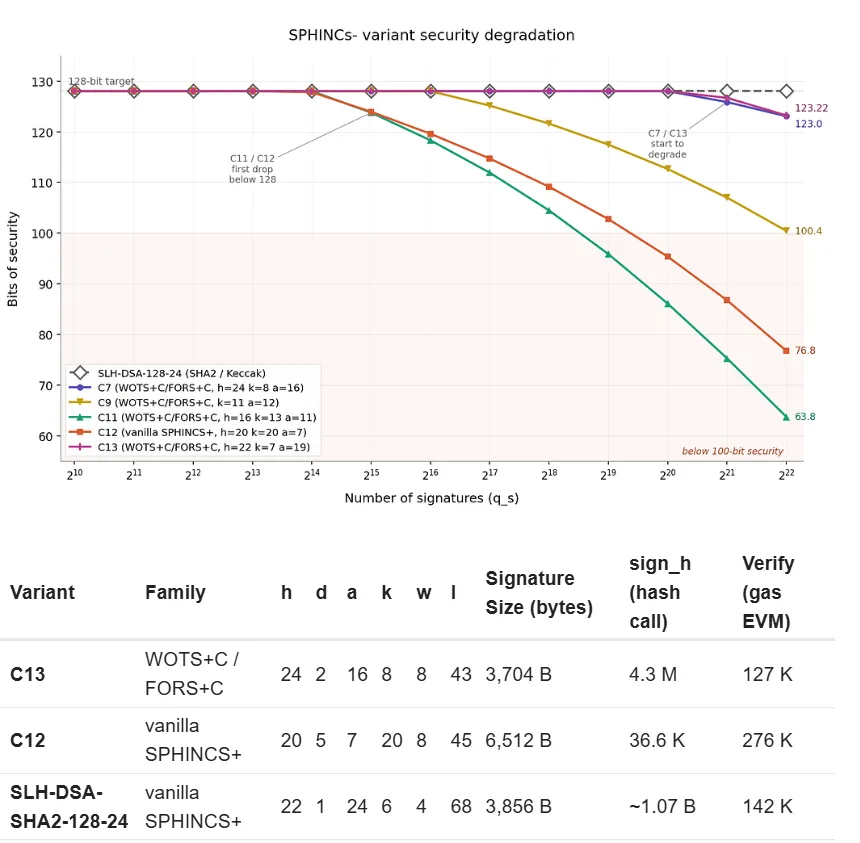
Ethereum Foundation’s Kohaku project lead, Nicola Consigny, has unveiled a solution called SPHINCS-. It lets users protect their wallets against future quantum attacks right now—at a cost of about $0.07. No hard fork. No protocol changes.
Hot topic: Bitcoin Price Hits Two-Week High amid Hormuz Deal
The method is based on the SPHINCS+ signature standard developed by the US National Institute of Standards and Technology. Consigny adapted the algorithm to run efficiently on Ethereum (ETH), cutting the cost of on-chain signature verification.
SPHINCS- is designed as a stepping stone to a more advanced system called leanSPHINCS, which would reduce costs further through data aggregation.
Contents
Why the Quantum Threat Just Got Closer: Google Cut Its Estimate by 20x
In March 2026, Google Quantum AI researchers published a paper concluding that breaking Ethereum’s cryptography would take just 1,200 logical qubits—not “tens of thousands.” That’s a 20x reduction, moving the threat from theoretical to something worth planning for.
The Ethereum Foundation formed a dedicated post-quantum team in January 2026, led by Thomas Corthier. The foundation also established the Poseidon Prize, offering $1Ь for improvements in hash-based cryptographic primitives.
EIP-8141, which enables native account abstraction, is already on the roadmap. It would let users choose their own signature scheme and is targeted for the Hegotá hard fork in the H2 of 2026. Full protocol readiness is expected around 2029—the same timeline Google set for its own systems.
Read more: What Is Account Abstraction? ERC-4337 Explained
Other Blockchains Are Falling Behind: Bitcoin and Solana at Risk
According to Glassnode, about 1.92 million Bitcoins (BTC)—nearly 10% of the supply—are “structurally vulnerable” to a future quantum attack due to old P2KP addresses with exposed public keys. Another 4.12 million BTC▲$62,630.00, about 20.6%, are “operationally vulnerable” due to key management practices. That means roughly 70% of bitcoin’s supply remains outside the risk zone.
But neither Bitcoin, Solana (SOL), nor any other major network has formed dedicated post-quantum teams or published comparable roadmaps. Ethereum remains the only blockchain with an institutional-level response to the quantum threat.
For users who want to act now, the Kohaku project lets you deploy a quantum-resistant smart account based on the ERC-4337 account abstraction standard—no hard fork required. The cost on L1 testnet is about $0.07. That makes post-quantum protection accessible today, regardless of when a quantum computer finally reaches 1,200 logical qubits.
Learn more: What Is XRPL Update — Is It Finally Ready to Beat Ethereum in RWA and DeFi?