The Ethereum’s Glamsterdam upgrade follows Pectra on Ethereum’s roadmap. Not about new user-facing tools. This one digs into how blocks are built. It’s about speed under the hood. Scaling gets sharper at layer one. Efficiency inside execution tightens up. The MEV conversation shifts again, quietly. Foundations change without fanfare.
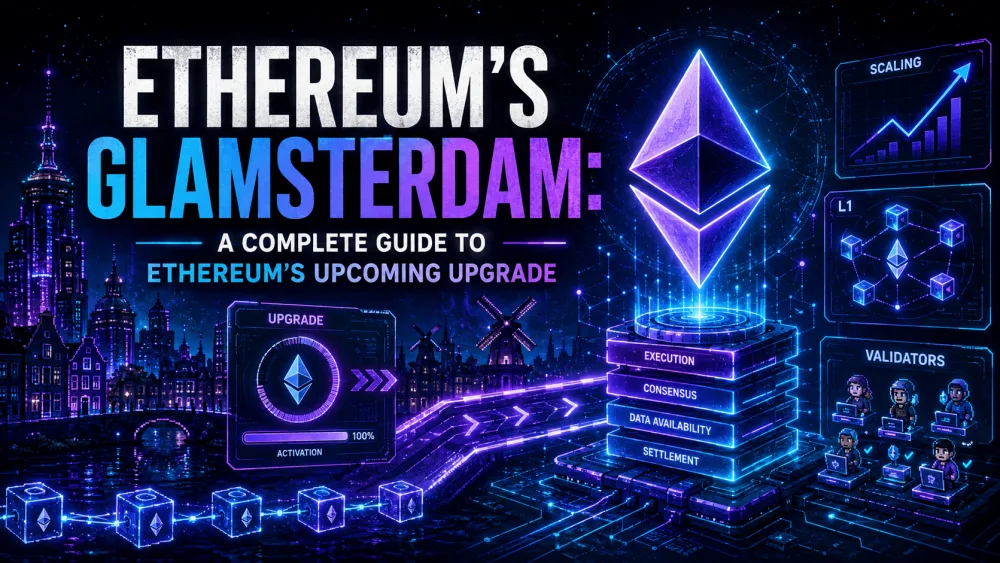
By the end of May 2026, the Ethereum Foundation confirms Glamsterdam devnets are now running. Stability in ePBS emerged after tests using multiple client setups. Shipping Glamsterdam takes priority right now, though work on Hegotá moves ahead at the same time.
Contents
What Is Ethereum’s Glamsterdam
Glamsterdam isn’t just another Ethereum update – it’s what happens when changes below meet shifts up top in 2026. Picture it: consensus tweaks whispering to execution upgrades in one breath. That label? It sticks two places together – Gloas tugged from the base, Amsterdam pulled off the surface layer.
Here’s the most straightforward take on Ethereum’s Glamsterdam: built to boost efficiency at the core of Ethereum. Efficiency shifts happen when predictability improves under new rules. External systems that build blocks matter less once changes roll through. Less reliance emerges where dependency once sat heavily. A different rhythm settles into place beneath the surface.
Related: Why Crypto Whales Are Accumulating Ethereum Again in May 2026
Why Ethereum Chose Glamsterdam
Glamsterdam shows up just as Ethereum’s scaling issue grows beyond low-cost rollups. A tidier foundation becomes necessary, too.
Right now, Ethereum’s block creation leans heavily on external setups – MEV being a big part of that picture. Specialized outfits frequently handle assembling blocks instead of validators doing it themselves. It functions well enough. Still, this setup brings along reliance on certain trusted players. Over time, such dependence nudges things toward concentration of control.
Inside the protocol, more steps shift under Ethereum’s Glamsterdam update. Ahead of time, certain areas touched by a block become clearer through Block-Level Access Lists added here.
Where It Stands on Ethereum’s Path
After Fusaka comes Glamsterdam, then later Hegotá shows up on Ethereum’s roadmap. Early 2026 is when Glamsterdam appears, according to official timelines online. Two big pieces stand out inside this phase for users to notice closely. One piece splits block building tasks directly into the system rules. Another introduces new ways to manage access at the individual block layer.
Now here comes Glamsterdam – more backbone than front-end, shaping how Ethereum handles block creation. Not a splashy rollout for users, but a shift under the hood. Pectra stepped in with smoother tools for wallets and validators. Then Fusaka leaned into data flow and lifted gas limits further. This latest turn zooms in on construction, verification, and strength.
Glamsterdam Upgrade’s Features
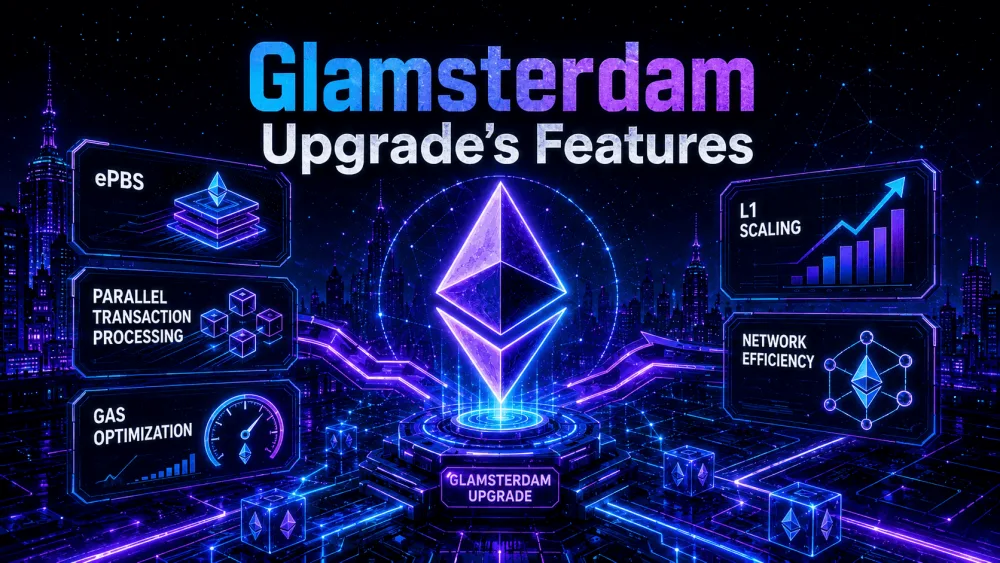
What stands out most? ePBS Ethereum plus Block-Level Access Lists. Behind those, teams tweak gas costs while improving how code runs at the base layer. Focus spreads beyond just peak features.
Related: Vitalik Buterin’s Top Statements: How ETH Price Reacts to Ethereum Founder’s Words
Enshrined Proposer Builder (ePBS) Separation
Block proposal and payload assembly split happens when Ethereum assigns these tasks to different roles. One validator picks the block. Another entity puts together what goes inside it. This division becomes official through enshrined rules. Separation ensures builders cannot also be proposers by design. The system treats them as distinct functions. Rules lock this structure into the protocol itself.
Splitting blocks into two roles happens when consensus picks who runs execution. That setup comes from EIP-7732, shaping how Ethereum handles tasks separately. In-protocol builders appear under this rule, changing old workflows. The person deciding the block agreement now selects the one handling transaction details.
Here’s a twist. Ethereum aims to lean less on outside networks that pass along data. Blocks keep getting built just fine. Yet now the system inside handles who committed what, when things happen, and how payments move. The rules shift underfoot, quietly.
Here’s why it counts: shaping blocks on Ethereum now holds serious sway across the system.
Ethereum Layer One Scaling Upgrades
Out in the open, Ethereum’s core level gets a quiet boost. Not here to swap out rollups – just giving them better ground to stand on. Strength flows upward, lifting how validators confirm, wallets connect, and apps run. A sturdier base means everything built on top moves more smoothly.
Starting off, block-level access lists lay out state needs early. According to Ethereum.org, quicker syncing becomes possible because of them. Execution happening at the same time is supported, which changes how tasks flow. Disk reading in parallel mode also fits into this setup naturally. Apps that rely heavily on state might see reduced gas fees. Cost predictability around gas improves too, making planning easier down the line
This matters since Ethereum struggles not just with processing power. Accessing stored data takes a toll, too. Because retrieval spans many distant locations, performance drags, making improvements tricky.
Parallel Transaction Processing
Execution at the same time on Ethereum grabs plenty of talk in Glamsterdam, yet demands precise phrasing.
Overnight changes? Not how Glamsterdam works when it comes to Ethereum’s setup. Before things run, clients get clearer data through Block-Level Access Lists instead.
Midway through a block’s run, BALs start noting which accounts and storage spots get touched. Because of EIP-7928, that tracking happens at the same time as reading data from disks. Validation of transactions is split into chunks, done side by side. Computing the state root? That also runs in parallel threads now. Even updating the state can move forward without full execution kicking in first
A shift like that carries weight. Knowing the state layout ahead of time allows clients to pull needed information early, run checks faster, while cutting down idle moments – simply because everything flows smoother when timing lines up right.
Reducing Transaction Costs on Blockchain
Glamsterdam won’t cause Ethereum gas fees to vanish overnight. Thinking otherwise sets up false hopes.
One way to look at it: Glamsterdam could bring clearer gas cost forecasts while boosting efficiency in apps relying heavily on state. At the same time, efforts to reprice gas gain backing here – pushing Ethereum’s fees closer to actual node strain.
Maybe this helps developers build sharper contracts. At the same time, some app routines might stop feeling like a chore. Yet right away on the mainnet, ETH▲$2,518.27 users won’t see every swap, mint, or bridge drop in cost.
Related: Best Ethereum Tokens and Projects to Invest in 2026
Glamsterdam Might Change Things for Ethereum Users
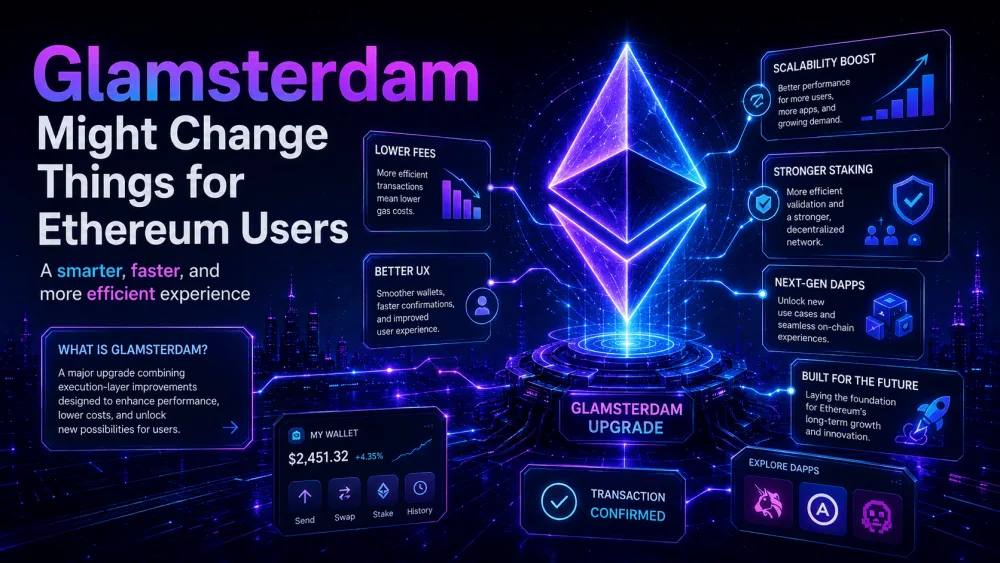
At first, many people might find Glamsterdam a bit hard to notice. A fresh button inside your wallet probably won’t show up. Instead, things like smoother performance could slip in quietly. Hidden choices about how blocks form tend to shrink. Over time, growing bigger becomes more stable underneath.
How ETH Owners Are Impacted
ETH owners wonder if the Ethereum 2026 hard fork strengthens ETH as a lasting investment. Because changes could shift how value builds over time.
Should Glamsterdam boost Ethereum’s position in handling DeFi, stablecoins, digital assets, along with rollup systems, optimism could grow. Smoother block creation plus more reliable processing might shore up trust among large-scale users. With time, these shifts tend to matter most when consistency shows.
Still, nothing promises a price surge yet. What moves ETH? Liquidity shifts matter. So do ETF inflows. Macroeconomic tides play a role too. Staking interest adds pressure. Layer 2 economic models feed into it. Risk mood across crypto sets the stage.
Effects on Validators
Closest to the changes brought by the update sit those who validate.
Instead of sticking to old off-chain setups, ePBS shifts how validators connect with builders. Direct handling within the system takes over part of that link.
This could lower certain trust demands. Still, it might reshape how validator software runs, where MEV profits go, and along with daily operations. Client updates matter now more than ever – validators plus staking services must watch testnet outcomes closely while tracking official fork guidance right up to the switch.
Related: Top Ethereum Gas Fee Solutions in 2026: How Cheap Is ETH Now?
How Developers and dApps Are Impacted
For developers, Glamsterdam could matter more than it first appears. Some BALs could help users manage state access better. Because gas prices shift, contracts dealing with large amounts of state might face new expenses. Where storage demands are high, revisiting how contracts are built becomes necessary when weighing deployment and runtime factors.
Building DeFi? Or crafting NFT systems, rollup tools, wallets, even fast blockchain apps? For those teams, Glamsterdam opens up a rare chance to tweak things deep in the stack. Think of it like tuning an engine mid-race – sudden gains where you least expect them. This isn’t about flashy updates; it’s quiet refinement at ground level. Teams already pushing limits might find their next edge here. Not loud. Just effective.
| What Glamsterdam Brings | What It Means for Ethereum | Why It Matters |
|---|---|---|
| ePBS Ethereum | Moves proposer-builder separation into the protocol | Reduces reliance on external block-building infrastructure |
| Better Ethereum block building | Makes block production more transparent and structured | Helps limit centralization pressure in the MEV market |
| Block-Level Access Lists | Shows which accounts and storage slots a block will touch | Allows clients to process blocks more efficiently |
| Ethereum parallel execution support | Helps clients prepare for more parallel transaction handling | Improves long-term Ethereum scalability |
| Ethereum L1 scaling improvements | Strengthens the base layer instead of relying only on L2s | Makes Ethereum a stronger settlement network |
| Gas fee optimization | Improves gas predictability for state-heavy applications | May help developers build more efficient dApps |
| Validator workflow changes | Adjusts how validators interact with builders and blocks | Could make staking infrastructure more protocol-native |
| Foundation for Hegotá | Prepares Ethereum for the next roadmap phase | Keeps Ethereum’s upgrade cycle focused on decentralization and scale |
Ethereum Glamsterdam Compared to Past Upgrades
What looks like luck isn’t. Every update aimed its own roadblock. Pectra made handling accounts and staking feel smoother. Because of Fusaka, the system can grow faster, particularly when it comes to rollups. Now Glamsterdam is diving into core tasks like building blocks, reaching state data, and making execution more reliable. The same goes for parallel execution on Ethereum.
Glamsterdam versus Pectra
Pectra Launched on Ethereum Mainnet on May 7 2025. What stood out most was EIP-7702, letting regular user accounts act more like smart contracts. Because of that shift, wallets could start supporting batched transactions, gas sponsorship, and improved usability.
Money moves more easily here. Underneath sits a system doing quiet work. One update taught wallets to follow rules. This one teaches blocks new habits. Behavior shifts happen below the surface. Blocks start listening now.
Glamsterdam versus Fusaka
Fusaka launched on December 3, 2025. According to ethereum.org, Ethereum’s plan calls it a big step forward – mixing PeerDAS, changes focused only on blob settings, along with tweaks to gas limits and stronger defenses against denial-of-service attacks.
Fusaka? It focused on getting data out there, boosting throughput with rollups, and expanding room. On the flip side, Glamsterdam tackles how blocks are made at the base layer, reaching into state info, streamlining what happens during processing.
Fusaka gave Ethereum a boost by moving extra rollup details along. The structure of the base layer gets clearer because Glamsterdam steps in.
| Ethereum Upgrade | Main Focus | Key Features | Expected Impact |
|---|---|---|---|
| Pectra | Wallet and validator UX | Account abstraction features, staking improvements, usability upgrades | Made Ethereum accounts and validator operations more flexible |
| Fusaka | Rollup scaling and data availability | PeerDAS, blob scaling, gas-limit and DoS-hardening work | Helped L2 networks process more data efficiently |
| Glamsterdam | L1 block building and execution efficiency | ePBS, Block-Level Access Lists, gas optimization, parallel execution support | Aims to improve Ethereum scalability, block production and gas predictability |
| Hegotá / Hegota | Future protocol resilience | FOCIL, censorship-resistance work, further roadmap upgrades | Expected to strengthen decentralization and prepare Ethereum for later scaling phases |
Benefits and Possible Risks
What makes Glamsterdam bold? It reaches into Ethereum’s most critical layers. Not just touching them – living inside block creation, verification steps, how gas gets counted, even how clients run. These aren’t edge cases. They sit at the center of how the whole system holds together.
Benefits of Scaling Up
What stands out isn’t just a lone trait. Together, they make the difference. Out of the blue, ePBS clears confusion between builders and proposers. Clients see clearer network conditions because BALs draw a sharper picture. When gas adjusts itself, usage matches reality a little closer. Step by step, these updates help Ethereum grow while keeping its core intact.
Should Glamsterdam succeed, Ethereum might boost efficiency without pushing out everyday users.
Decentralization and Security Tradeoffs
The risk is complexity. Back in April 2026, the Ethereum Foundation said ePBS turned out more complex than they first thought – handling clashes or breakdowns between builders and proposers wasn’t straightforward. Each layer had to make sense of incomplete blocks, plus work through shared decisions involving two sides.
For this reason, Glamsterdam advances step by step – from devnets toward mainnet. Testing the upgrade spans different clients, runs through validators, touches builders, and handles rare situations. Moving too fast could cause bigger issues than waiting longer.
What Happens After Glamsterdam?
Out of the blue, the Hegotá Ethereum upgrade appears post-Glamsterdam – sometimes spelled without the accent. Search trends show people typing Hegota instead of Ethereum more each week. This shift might ride along with Ethereum’s planned updates in 2026. The momentum builds quietly beneath older network changes.
Short Path to Ethereum’s Future Scalability
Down the road, Ethereum builds on layers. Most users interact through rollups instead. The base chain keeps things settled, safe, and tied together anyway.
So L1 improvements aren’t irrelevant. Cleaner block creation at the base lifts rollup performance by default. When accessing data on L1 gets faster, later expansion steps find smoother paths ahead.
Future Upgrades and Development Focus
Back in April 2026, the Ethereum Foundation mentioned Hegotá picked FOCIL to lead the consensus layer. Meanwhile, efforts around account abstraction were under review but didn’t make the headline group.
Later on, Ethereum’s path includes stronger shields against blocking messages. Work will shift toward leaner setups without full local data. Abstracted user handles may reshape how wallets behave. Bigger transaction loads could test current gas ceilings. New math-backed checks might tighten layer-2 trust layers. Progress also leans on cleaner proof formats. System bloat remains a quiet target over time.
Glamsterdam isn’t where Ethereum L1 scaling stops. That moment comes later – on another path entirely.
FAQ
What Is Ethereum’s Glamsterdam About?
Ethereum’s Glamsterdam dives into a new phase, bringing changes to how blocks are built – ePBS takes center stage here. One part tackles access rules at the block level, reshaping interactions step by step.
Scaling gets attention too, aiming to stretch what Layer 1 can handle day after day. Instead of just patching fees now and then, it works toward steadier gas costs over time. Reform weaves through block construction, shifting weight from old habits to fresher logic.
When Does Glamsterdam Launch?
Ethereum.org names Glamsterdam for early 2026. Still, the real launch hinges on how smoothly DevNet runs. Testnets need to hold steady, and clients must roll out fully. Security checks have the last word. Lately, the Ethereum Foundation notes clear devnet movement – just no set switch to mainnet yet.
Will Glamsterdam Reduce Gas Costs?
Who knows what happens next – gas could get steadier for certain heavy-use cases, yet nobody said every Ethereum fee would drop across the board. Blob markets play a role now, just like L2 pricing, how crowded the mainnet gets, and whether apps suddenly spike usage. Surprises still hide around corners.
What Is ePBS?
Block creation gets a new role under ePBS – short for enshrined proposer-builder separation. Inside Ethereum’s core, proposers and builders link directly now. This shift cuts dependence on outside relays. Agreements about blocks become baked into agreement rules instead. Commitments form through shared understanding, step by step.
Is Glamsterdam Positive for Ethereum?
Should Glamsterdam boost confidence in Ethereum’s ability to scale without losing decentralization, optimism could grow. Yet price swings won’t hinge on that alone. How well it rolls out matters just as much. So does the appetite for holding ETH. Staking returns play a role, too. Activity across secondary networks adds weight. Money moving globally sets the backdrop. Each piece shifts perception differently.