Large holders became highly active in May 2026 near Ethereum’s key support area, as on-chain data showed that addresses holding more than 10,000 ETH▲$1,761.17 purchased more than 140,000 ETH within days, continuing a trend of Ethereum whale accumulation in the market.

Contents
- Why Ethereum Whales Are Buying Again in May 2026
- What Is Driving Ethereum Accumulation in 2026?
- Ethereum Whale Wallets Explained
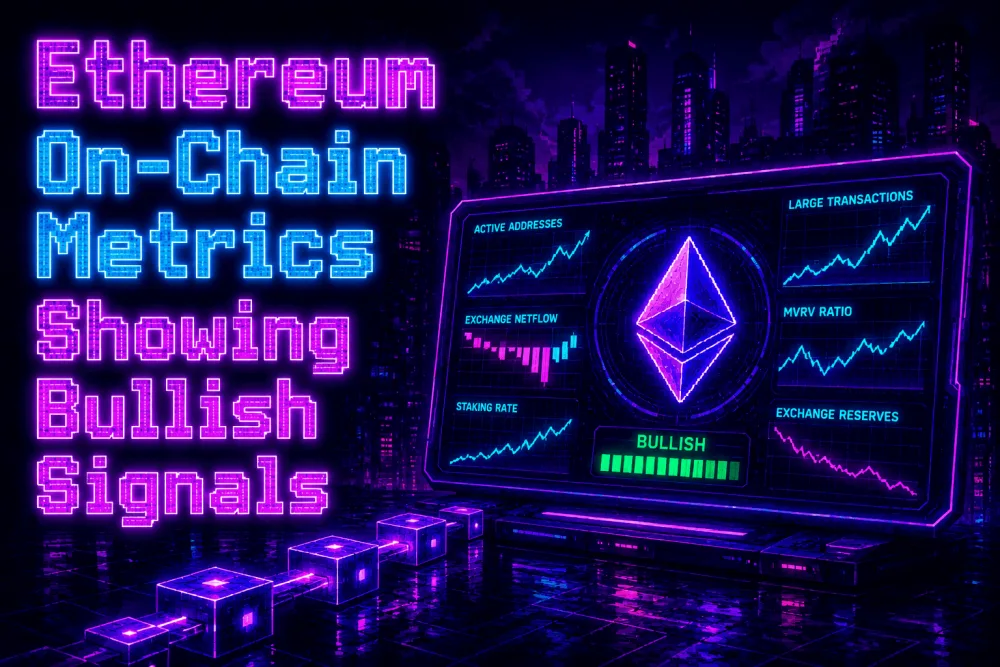
- Ethereum On-Chain Metrics Showing Bullish Signals
- Why Ethereum Still Dominates DeFi and Smart Contracts
- Ethereum vs Solana: Where Are Whales Positioning?
- How Ethereum ETFs Are Changing Market Dynamics
- Are Ethereum Whales Preparing for a Bull Run?
- Risks That Could Stop Ethereum’s Momentum
- Ethereum Price Prediction if Whale Buying Continues
- FAQ
Why Ethereum Whales Are Buying Again in May 2026
Recent Spike in Large ETH Transactions
Also, transfers greater than $1 million increased along with derivatives volumes and liquidity status. Overall, analysts believe the activity pattern made by ETH whales is more typical of the early recovery, rather than that of the current late recovery stage.
What On-Chain Data Reveals About Whale Activity
According to recent Ethereum on-chain analysis, exchange reserves are declining, and consistent ETH deposits to long-term holding wallets continue. In previous cycles, persistent outflows from exchanges have reduced the growth of short-term selling pressure and strengthened bullish sentiment.
However, the fact that numerous whales have moved large ETH amounts to Binance during pullbacks shows that whales are actively reallocating their ETH, which is why whale wallets’ crypto metrics are still monitored.
Why Institutional Investors Are Returning to Ethereum
Developments in the second quarter point to improving institutional demand, with flows into spot Ethereum ETFs returning to positive territory, with SoSoValue and Farside-linked trackers’ net inflows concentrated on BlackRock’s offering.
Ethereum’s institutional adoption is also ascribed to its leadership in the tokenization space, stablecoins, and DeFi infrastructure, and is increasingly seen by companies as a long-term blockchain exposure rather than a speculative trade.
Related: Top 5 Altcoins Whales Are Buying Aggressively in May 2026
Key Signals Traders Are Watching Right Now
Market participants are paying attention to ETF inflows, staking growth, exchange netflows, and derivatives positioning to confirm this trend change. Funding rates remain low despite increased open interest, suggesting that leverage is not yet excessive.
Analysts will also watch for whether crypto whales buying Ethereum can weather macro pressure from interest-rate uncertainty and a risk-off environment, and whether continued outflows from exchanges strengthen Ethereum’s market outlook.
What Is Driving Ethereum Accumulation in 2026?
Ethereum ETF Inflows and Institutional Demand
After a local bottom in early 2026 for spot Ethereum ETF products, inflows resumed through Q2. According to data from Farside and CoinGlass, there were several days of consecutive inflows, with the BlackRock and Fidelity products making the most purchases.
Analysts say the recent influx of institutional capital helps explain why whales are buying Ethereum, with customary finance firms and pension funds increasingly viewing ETH as long-term infrastructure exposure.
Expectations Around Interest Rate Cuts
Crypto markets have reacted to expectations regarding Federal Reserve policy. Despite several views on Wall Street that rate cuts may come later in 2026, investors remain positioned for monetary easing and better monetary conditions.
In the past, falling rates have favored risky assets and crushed bond yields, and this storyline keeps fueling a potential Ethereum bull run. However, rising inflationary forces still affect macro markets as a whole.
Read more: Top 5 Wild Ethereum Price Predictions for 2026: From Realistic to Moonshot Scenarios
Growing Confidence in Ethereum’s Long-Term Utility

Ethereum remains the most popular platform for tokenization, stablecoins, and decentralized finance (DeFi). A number of sector reports expect tokenized real-world assets and DeFi liquidity to continue to grow on Ethereum in 2026.
Overall, developers and institutions as well remain focused on Ethereum’s scalability roadmap and staking economy, and mature ETH staking products, including yield-bearing institutional products, will improve Ethereum’s value proposition as a technology platform and a yield-bearing asset.
How Macro Conditions Are Affecting Crypto Markets
Inflation concerns, rising Treasury yields (interest rates), and geopolitical risks were also driving sentiment in the wider crypto market in 2026. Regular selloffs in equities and bond markets also led to sharp selloffs in cryptocurrencies like Ethereum.
Read Also: JPMorgan: Ethereum and Altcoins Will Continue to Lag Behind Bitcoin
In addition, experts observe that the rise of institutional players has made the price of cryptocurrencies more sensitive to macroeconomic-related data. For example, Ethereum news 2026 is focused less on speculation-fueled momentum and more on ETF flows, central banking policies, and liquidity status.
Ethereum Whale Wallets Explained
What Counts as a Crypto Whale?
While a crypto whale in general is defined as a person or institution that holds enough crypto to influence liquidity and market prices, Ethereum whales are commonly defined as wallets that hold more than 10,000 ETH, according to analysts and on-chain data services.
Most Ethereum whales are early investors, cryptocurrency investment firms, centralized cryptocurrency exchanges, staking providers, and institutional custodians. With the blockchain’s public nature, large transactions act as immediate signals of market mood to traders.
How Whale Wallets Influence ETH Price Action
Ethereum can also be influenced by whales making transactions into exchanges, large over-the-counter trades, or prolonged periods of accumulation. Transfers to exchanges are generally considered signals of selling pressure, while transfers to cold wallets are considered signals of trust in future price movement.
Another impact of heavy ETH whale activity is in derivatives markets, as funding rates, liquidity, and overall market outlook are affected. In illiquid markets, whales can push up volatility with just a few large orders.
Tools Used to Track Ethereum Whales
Traders also employ platforms such as Glassnode, Nansen, CryptoQuant, Whale Alert, and Etherscan to track accumulation in large wallets, dormant wallets becoming active, and wallets moving assets between exchanges and private wallets.
As institutional players have entered, Ethereum on-chain analysis has become more important. Advanced Ethereum on-chain analytical tools allow near-immediate tracking of labeled wallets, including funds, exchanges, and major trading counterparties.
Why Retail Traders Follow Whale Movements
Retail investors monitor whale movements, which may be more responsive to cash flow conditions and macroeconomic conditions than the average market participant. Moreover, there is a wide interest in the periods of accumulation (i.e., purchasing).
Despite the availability of whale wallets’ crypto trends through public dashboards and automated alerts, analysts have cautioned against assuming that whale movements can accurately predict future price movements.
Ethereum On-Chain Metrics Showing Bullish Signals
Exchange Outflows and Reduced Selling Pressure
Ethereum exchange reserves continued to decline into early 2026, as large holders withdrew coins from exchanges to leverage private wallets and staking protocols.
According to CryptoRank data, over 31.6 million ETH moved out of centralized exchanges in February. This was one of the largest removals per month since 2022, and Binance saw its total ETH balance fall to 3.46 million ETH, the lowest since 2020.
It has also been noted that the decline in exchange balances reduces supply at current levels, which weakens near-term selling pressure, and that recent Ethereum exchange outflows have become increasingly viewed as structural bullishness rather than as a short-term speculative trade.
Related: Vitalik Buterin’s Top Statements: How ETH Price Reacts to Ethereum Founder’s Words
Rising ETH Staking Activity
As of 2026, Ethereum staking is at an all-time high, with several market tracking websites reporting between 37 million and 38 million ETH (30-33% of the total supply) in contracts.
The development has led to the total amount of liquidity in Ethereum market being reduced, and to Ethereum’s role as a proof-of-stake economy being established. Institutional staking offers and liquid staking services such as Lido have attracted liquidity from retail and institutional investors.
Meanwhile, staking returns of around 3% have helped Ethereum perform well against other yield-bearing assets. According to CoinDesk analysts, staked Ethereum continues to be in demand despite validator queues becoming largely normalized earlier this year.
Dormant Wallet Reactivations
Also, on-chain analysts confirmed that dormant Ethereum wallets returned to activity during the turbulent periods in Q2, 2026. Dormant wallets tend to respond to periods of volatility, such as a harsher selling period, as long-term holders reposition their capital.
Large dormant transfer increases have coincided with strong ETH whale activity is changing due to institutional participation and ETF demand.
Read Also: Vitalik Buterin’s Top Statements: How ETH Price Reacts to Ethereum Founder’s Words
As for what these reactivations signify, blockchain intelligence firms have speculated they were for accumulation, profit-taking, or internal fund moves.
Stablecoin Liquidity Entering Ethereum
The aggregate liquidity of stablecoins across Ethereum provides one of the strongest measures of market support, as Ethereum continues to dominate all other blockchains in stablecoin settlement through DeFi, tokenization, and institutions.
Analysts at Ethereum DeFi flows observed that increasing on-chain stablecoin balances have increased decentralized trading and lending within Ethereum, crediting the growing liquidity of USDT▲$0.9991, USDC▲$0.9999, and yield-generating stablecoin products as a core driver of upward price momentum in Ethereum markets in 2026.
Why Ethereum Still Dominates DeFi and Smart Contracts
Ethereum’s Role in the DeFi Ecosystem
Ethereum remains the largest blockchain ecosystem for decentralized finance, though facing competition from several other Layer-1 projects.
According to DefiLlama, Ethereum is the leading blockchain for DeFi protocols by total value locked, spanning lending platforms, decentralized exchanges (DEXs), liquid staking, and tokenized asset exchanges.
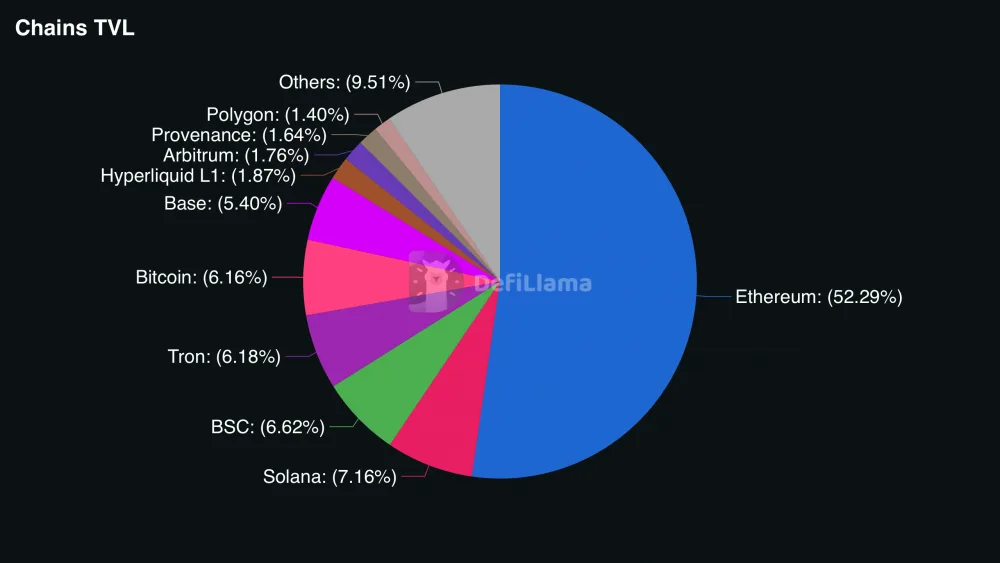
Even considering the competition of other networks with similar benefits, Ethereum’s deep liquidity and production-ready stack make it a primary target for building DeFi applications. For example, protocols like Aave, Uniswap, Maker, and Lido continue to use Ethereum for securing billions of dollars of on-chain activity.
Layer-2 Growth Supporting ETH Adoption
Layer-2 ecosystems such as Arbitrum, Base, Optimism, and zkSync that lowered fees while still anchoring to Ethereum mainnet, saw tens of billions of dollars in bridged value flow through in 2026 as adoption continued to rise, according to data from L2Beat.
The growth of rollups has expanded the addressable market for Ethereum smart contracts to retail users in DeFi, gaming, and payments. Layer-2 scaling has become one of the main pillars of Ethereum’s long-term scaling strategy, where the technology is no longer perceived as a threat to Ethereum ecosystem.
Read more: Top Layer 2 Coins With the Highest Growth Potential
Why Developers Continue Choosing Ethereum
Ethereum remains the leader in blockchain developer activity thanks to existing tooling, documentation, and a large developer community, with Electric Capital’s latest report showing the platform leading all smart contract platforms in terms of ecosystem activity.
Many of Ethereum’s other builders have found its composability and institutional legitimacy attractive. Ethereum’s open-source ecosystem, liquidity depth, and long-term devotion to developing these themes have continued to support a range of Ethereum institutional integration in finance and tokenization.
Institutional DeFi Use Cases Expanding in 2026
The growth of institutional interest in on-chain finance began in 2026. Tokenized Treasuries, stablecoins, and blockchain collateralization began gaining traction. Companies like BlackRock, Franklin Templeton, and JPMorgan expanded their on-chain blockchain projects directly or indirectly tied to Ethereum.
Analysts have said that Ethereum is increasingly seen by institutions as the key settlement layer for regulated DeFi products, a view that has fueled the overall market outlook, as customary finance seeks faster and more transparent infrastructure for their assets.
Ethereum vs Solana: Where Are Whales Positioning?

Comparing Capital Flows Between ETH and SOL
Ethereum and Solana saw institutional and whale inflows in 2026, too, but on a vastly different scale.
CoinShares reported total net inflows of over $2.2 billion across Ethereum investment products in the first few months of 2026, compared to less than $300 million in Solana investment products.
On-chain liquidity is also heavily skewed in favor of Ethereum: according to DefiLlama, Ethereum has over $60 billion of total value locked (TVL) in decentralized finance (DeFi) protocols, as compared to Solana’s $8-$10 billion in Q2 2026.
They continue to inform the larger Ethereum vs Solana debate among institutional traders and allocators.
Risk vs Reward for Large Investors
Solana continues to attract aggressive capital because fees are cheap and it has greater throughput. On large market upswings, SOL▲$82.41 has historically outperformed ETH on a relative and percentage basis, providing higher-beta exposure for interest-bearing products.
Read Also: Top Ethereum Gas Fee Solutions in 2026: How Cheap Is ETH Now?
Regardless, Ethereum is still viewed as a less risky investment by larger players due to its more liquid markets, more substantial institutional interest, and a more developed infrastructure. The recent whale accumulation on Ethereum may indicate a preference for exposure to infrastructure over pure speculation.
Why Some Whales Prefer Ethereum Stability
Ethereum’s market structure is far larger and far more liquid. ETH derivatives volumes, ETF exposures, and staking provide institutions with hedging and yield opportunities for ETH exposure that do not exist at a comparable scale on Solana.
Some Ethereum whales prefer Ethereum over Solana, citing its longevity and lesser perceived ecosystem risk. Despite Solana being able to eliminate outages on its network and outperform Ethereum in many areas, Ethereum is still considered the dominant smart-contract settlement layer for tokenization and DeFi.
Can Solana Challenge Ethereum’s Dominance?
Continued growth in trading volume, meme activity, and consumer applications, along with Solana’s rapid growth in development activity and transaction volume, is cementing Solana’s position as Ethereum’s primary Layer-1 competitor.
Ethereum remains the dominant platform for institutional finance, DeFi liquidity, and tokenized assets. Most analysts believe Solana can keep gaining market share without dethroning Ethereum smart contracts or institutional blockchain infrastructure.
| Metric | Ethereum | Solana |
| DeFi TVL (2026) | $60B+ | $8B-10B |
| Institutional ETF Exposure | High | Limited |
| Staking Participation | 30%+ supply | Lower |
| Main Strength | Institutional infrastructure | High-speed retail activity |
| Whale Preference | Stability & liquidity | Higher-risk growth |
How Ethereum ETFs Are Changing Market Dynamics
Spot Ethereum ETF Growth in 2026
Spot Ethereum ETF products continued to develop and launch into 2026 as institutional investment in Ethereum increased following the United States approval.
According to SoSoValue and CoinShares data, U.S. spot ETH ETFs saw inflows of several billion dollars in the first half of the year, driven by products from BlackRock and Fidelity.
The growing ETFs assets have helped in the mainstream Ethereum institutional acceptance as a digital asset, with analysts indicating that Ethereum ETF demand replaces ETH trading driven by speculation among retail investors.
Wall Street’s Increasing Exposure to ETH
Traditional financial institutions increased their exposure to Ethereum via ETFs, custody, staking, and tokenization products, with firms such as BlackRock, Franklin Templeton, and JPMorgan developing various blockchain products and services on Ethereum Infrastructure throughout 2025 and 2026.
Ethereum’s increasing adoption by institutions has altered the view among many Wall Street firms. Rather than being seen mainly as a speculative crypto asset, many now view it as infrastructure supporting stablecoins, tokenized securities, and decentralized financial settlement.
ETF Demand vs Exchange Supply
Combined with ETF accumulation, Ethereum balances on centralized exchanges have dropped drastically. According to CryptoQuant and Glassnode, exchange reserves have trended downwards into Q2 2026 as long-term holders and institutions purchase supply.
Meanwhile, staking participation continues to draw liquid supply from the market, ETF buying continues increasing demand, and staking locks, along with outflows from other Ethereum exchanges, continue reducing supply.
Could ETFs Trigger an Ethereum Supply Shock?
Furthermore, some analysts believe a continuing structural supply shortage could arise from sustained ETF inflows, since over 30% of currently circulating ETH is staked, and additional volumes are kept in long-term cold wallets and institutional custody.
Moreover, bullish proponents argue that a high concentration of Ethereum held in ETFs and large holders may also result in increased upside volatility during periods of high demand.
However, macroeconomic shocks and regulatory uncertainty might disrupt this process even in a context of persistent tight supply in the long term.
Are Ethereum Whales Preparing for a Bull Run?

Historical Patterns Before Major ETH Rallies
The biggest indicators before previous Ethereum bull markets have been declining exchange supply, increasing open interest, and the return of institutional investment. Similar indicators appeared ahead of Ethereum’s breakout in 2021, when the price jumped from below $1000 to the then all-time high of almost $4900 within a few months.
On-chain, a similar story is playing out: ETF flows are returning, staking participation stays strong, and exchange balances continue to fall, all fueling optimism for a new Ethereum bull run.
Similarities Between 2026 and Previous Cycles
Some experts see 2026 as similar to previous cycles, where Ethereum initially lagged Bitcoin before rotation into ETH and large-cap altcoins got underway. Per Amberdata, ETH increased by about 10% per week in January 2026, and crypto derivatives open interest expanded by 11% on the week.
Read Also: Best Ethereum Tokens and Projects to Invest in 2026
Several other market researchers indicated that the increase in whales on Ethereum at times of extreme fear was similar to the market bottom in 2022, and that whale buying among fear usually preceded medium-term market rebounds.
Market Sentiment and Fear-Greed Indicators
Despite on-chain fundamentals improving, crypto sentiment indicators remained low throughout much of Q1 and Q2 2026. Crypto Fear & Greed indexes aggregated Ethereum-specific values between 15 and 26 among the major drawdowns, denoting a market consensus of “extreme fear” during the two large downdrafts.
At the same time, ETF flows and increasing stablecoin liquidity are signs that institutional positioning is still constructive despite negative sentiment. Ethereum whales’ May 2026 activity shows that this difference between fear indicators and accumulation signals is one of the market’s most closely watched signals right now.
Technical Levels Ethereum Traders Are Watching
On the technical side, analysts identify the $2,150-2,200 area as a key support zone after it failed to break under the region multiple times earlier in the year. Resistance near $2,350 and $2,500 may be the key for ETH to break out if ETF demand and derivatives positioning improve.
Funding rates and RSI momentum indicators will also be closely watched. Ethereum price prediction 2026 will depend on ETH sustaining higher lows and whether institutional inflows continue to support market liquidity.
| Bullish Factors | Bearish Risks |
| ETF inflows | Regulatory pressure |
| Falling exchange reserves | High interest rates |
| Rising staking activity | Layer-1 competition |
| Institutional adoption | Macro uncertainty |
Risks That Could Stop Ethereum’s Momentum
Regulatory Pressure on Crypto Markets
Regulatory risk remains another risk to Ethereum in 2026, as U.S. regulators continue to discuss rules for staking, DeFi protocols, and tokenized assets, whereas Europe is enforcing tougher rules with the MiCA regulation.
Analysts warned that stricter action or regulatory restrictions on crypto investment vehicles would slow Ethereum’s adoption within institutional investors despite high demand for ETFs.
Competition From Alternative Layer-1 Networks
Despite Ethereum remaining predominant in DeFi and token issuance, blockchains such as Solana, Avalanche and Sui began to take market share across 2026 due to cheaper fees and faster transaction throughput, particularly for trading applications.
The developing Ethereum vs Solana competition remains an important factor for the liquidity and developer migration in smart-contract ecosystems.
Ethereum Scalability Concerns
While Ethereum’s Layer-2 ecosystem has helped towards scalability efforts, Ethereum’s fragmented and expensive state during high-demand periods leads to some transactions still being cheaper and smoother on alternate chains.
The debate still affects the sentiment concerning long-term Ethereum smart contract adoption, regardless of technical progress.
Potential Macro-Economic Headwinds
Likewise, macro risks such as inflation, high Treasury yields, or slowing global growth could put pressure on risk assets such as Ethereum in 2026.
Ethereum market outlook models today take into account liquidity status, expected Federal Reserve monetary policy, and the risk appetite of investors.
Ethereum Price Prediction if Whale Buying Continues

Bullish ETH Scenarios for H2 2026
Ethereum price prediction in late 2026 depends on ETF capital inflows, staking growth, and diminishing exchange supply. The majority of models indicate that ETH may trade between $3,500 and $5,000 in late 2026, assuming institutional demand and macroeconomic conditions improve.
However, exact institutional bull predictions such as Fundstrat’s Tom Lee have remained aggressive, reiterating mid-2018 price targets above $7,000 in the long run, assuming strong liquidity and adoption trends.
This is supported by Ethereum whale accumulation, rising staking participation, and increasing tokenization activity on Wall Street.
Bearish Risks Traders Should Watch
Analysts at Capital.com and crypto exchange Phemex warned against an ETH downtrend despite improved fundamentals, noting that a sustained breakdown below the $2,100 support zone could push ETH to $2,000 or even $1800 if ETF inflows and macro headwinds were to diminish.
Nonetheless, regulatory pressure, inflation, and global liquidity tightening will remain key concerns. Furthermore, weak risk appetite in customary and crypto markets may also obstruct broader Ethereum bull run narratives, despite positive on-chain metrics.
Can Ethereum Reach a New All-Time High?
Ethereum would need to exceed its previous peak near $4900 in price to set a new all-time high, which institutional analysts have said is possible if ETF buying demand increases and Ethereum increases its share of tokenized finance from 2026 to 2027.
However, analysts still say this may require the liquidity ETH environment to improve considerably from its current state, as well as considering the speed at which Ethereum attracts additional institutional investment and other macroeconomic factors.
Analyst Forecasts for Ethereum in 2026
ETH price forecasts were widely varied among research firms and sector analysts, with Capital.com reporting in 2023 that Citi-linked forecasts ranged from $3000 to $5000. Analysts from Standard Chartered Bank have estimated a bullish scenario of around $7500 under the best market conditions.
In comparison, more conservative predictions from CoinCodex and Binance estimate ETH price ranges from $2,600 to $3,600. In general, Ethereum price prediction 2026 is based on ETF flows, staking, and Federal Reserve policy rate expectations.
FAQ
What makes large investors buy Ethereum again?
Ethereum is seen as the leading infrastructure network for tokenization, stablecoins, and DeFi, which has attracted institutional and high-net-worth investors, building bullish sentiment with increased ETF inflows and declining exchange reserves.
How do traders track whale activity on Ethereum?
Most traders use on-chain analytics tools such as Glassnode, Nansen, CryptoQuant, or Whale Alert to offer real-time information on large wallet transfers, exchange inflows/outflows, and staking activity.
Why are Ethereum ETFs important for the market?
Spot ETFs would provide customary investors and institutional investment vehicles with exposure to Ethereum, which could reduce its liquid supply if large ETH amounts are held for an extended period.
Can Solana compete with Ethereum smart contract dominance?
Trading and consumer applications are growing on Solana while Ethereum continues to be a leader in institutional finance, decentralized finance (DeFi) liquidity, and tokenized assets, as most consider Solana to be an Ethereum competitor.
What factors could hamper Ethereum’s growth in 2026?
Major downward risks include strict crypto regulation, adverse macroeconomic conditions, high inflation, and competition from other blockchain networks. Market liquidity and Federal Reserve policies are also important to crypto prices.