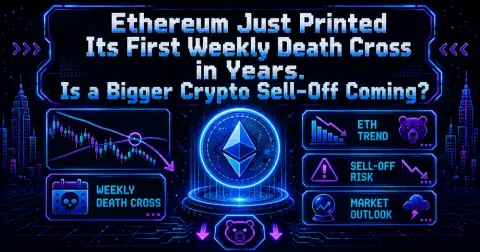
Ethereum provides back-end infrastructure to most DeFi liquidity, tokenized assets, and Layer-2 usage, while layer-2 networks like Arbitrum, Base, and Optimism process an increasing number of transactions, and Ethereum is the main settlement layer for Ethereum ecosystem.
It allowed Ethereum ecosystem coins to keep demand, despite competition from other blockchain networks.

Contents
- Why Ethereum Remains the Center of Crypto Innovation in 2026
- Arbitrum — The Layer-2 Scaling Leader
- Chainlink — The Oracle Network Powering Web3
- Lido DAO — The Giant of Ethereum Staking
- Uniswap — Ethereum’s Most Important Decentralized Exchange
- EigenLayer — The Restaking Project Reshaping Ethereum Security
- What Makes an Ethereum Project Worth Investing In?
- Risks of Investing in Ethereum-Based Tokens in 2026
- FAQ
Why Ethereum Remains the Center of Crypto Innovation in 2026
Ethereum’s Dominance Across DeFi, NFTs, and Layer-2s
Ethereum retained its position as the leading layer-1 NFT and institutional blockchain infrastructure, with many of the most valuable NFT collections, stablecoin issuances, and major Web3 apps relying on Ethereum for security and liquidity.
How ETH ETFs Changed Institutional Interest
Spot ETH▲$1,761.17 ETFs have helped widen institutional access to Ethereum. Other causes contributing to ETH’s interest from customary investors include staking yields, an increase in tokenization, and Ethereum’s role as public infrastructure.
Instead, the focus moved to the best Ethereum investments in staking projects, Layer-2 scaling projects, and other projects that provide blockchain infrastructure.
The Impact of Ethereum Scalability Upgrades
Ethereum scalability was greatly improved by Ethereum’s Dencun upgrade, introducing EIP-4844 and blob transactions, reducing Layer-2 fees by 90-99% for some Layer-2 networks.
The rollout additionally cemented Ethereum’s long-term rollup strategy, spurring increased interest in Ethereum layer-2 projects, where cheaper and faster on-chain applications are being developed.
Read more: Ethereum Analysis May 2026: Vitalik Buterin, ETH Accumulation & Bullish Price Forecast
Why Developers Still Choose Ethereum First
Ethereum remains the platform with the most developer attention, tooling, and ecosystem maturity, with most major DeFi protocols, wallets, and token standards having been built there and benefiting from the first-mover network effect.
Many startups still find Ethereum the most practical environment for accessing liquidity, infrastructure, and institutional capital simultaneously, which keeps Ethereum at the center of talks around top crypto projects 2026.
Arbitrum — The Layer-2 Scaling Leader
How Arbitrum Reduces Ethereum Gas Fees
Optimistic rollups, as utilized by Arbitrum, process activity off-chain and release compressed transaction data on-chain, ensuring lower fees and congestion yet leveraging Ethereum’s security model.
The model made Arbitrum one of the leading Ethereum layer-2 projects, as DeFi users sought lower fees and faster speed without leaving Ethereum ecosystem.
Read more: Arbitrum Price Prediction 2026: Is ARB the Next 10x Crypto?
Arbitrum Orbit and the Rise of Custom Chains
The Arbitrum Orbit scaling solution extends the Arbitrum ecosystem by adding support for Layer-3 and application-specific chains. Projects on Arbitrum Orbit can choose their own gas tokens, governance, and execution environment while still using Ethereum’s security model below them.
The Orbit success has driven development of the larger Arbitrum crypto ecosystem in gaming, enterprise infrastructure, and niche DeFi products, with some industry publications reporting plans for over 100 Orbit chains in 2026 alone.
Why DeFi Protocols Prefer Arbitrum Liquidity
As the first rollup that offered the deepest liquidity from Ethereum while also providing considerably lower fees, Arbitrum soon became the first choice of DeFi protocols. The largest applications like Uniswap, Aave, and GMX moved to the rollup soon after.
Its EVM compatibility also made it easier for Ethereum-native projects seeking to port their smart contracts to Arbitrum to do so with little changes to contract code, which made it one of the top ETH projects tied to Ethereum scaling.
ARB Token Utility and Governance Potential
The ARB▲$0.0808 token, which governs protocol upgrades, treasury spending, and ecosystem incentives through the Arbitrum DAO, saw increased governance activity in 2025 and 2026 as many new Orbit chains and new infrastructure products were released by the project.
Read Also: Ethereum Analysis May 2026: Vitalik Buterin, ETH Accumulation & Bullish Price Forecast
Recent DAO proposals have also explored profit-sharing mechanisms based on sequencer revenue, alongside active discussions about how ARB will be used and captured in comparison to other Ethereum projects in 2026.
Chainlink — The Oracle Network Powering Web3
Why Smart Contracts Need Reliable Oracle Data
Smart contracts cannot access off-chain data, and this limits use cases for DeFi, insurance, tokenized assets, and other areas. Oracle networks solve this by delivering real-world data such as prices, interest rates, weather, and market events to smart contracts on the blockchain.
Due to its decentralized design and longevity, Chainlink has become the largest oracle provider, and its price feeds now provide the underlying infrastructure for much of DeFi, making it one of the most important projects on Ethereum in 2026.
Chainlink CCIP and Cross-Chain Communication
In addition to being an oracle, Chainlink’s Cross-Chain Interoperability Protocol (CCIP) allows blockchains to securely transfer both digital assets and data to each other in a regulatory and security-compliant manner used in institutions.
The uptake of CCIP rose sharply in 2026, when a number of DeFi protocols migrated off of other crypto bridges onto Chainlink’s infrastructure amid bridge security issues. These trends secured Chainlink as a key middleware for cross-chain finance and tokenization.
Read more: Chainlink Price Prediction May 2026: LINK Market Analysis
Institutional Adoption of Chainlink Infrastructure
Chainlink is now powering decentralized finance (DeFi) and customary finance alike, with Swift, Mastercard, UBS, AIA, Siemens, and Fidelity International adopting or testing Chainlink technologies for use cases such as tokenized assets, cross-chain settlement, and proof-of-reserve use cases.
Analysts continued to track LINK▲$7.97’s role in top crypto projects 2026 and the evolution of on-chain finance as the protocol saw institutional adoption and onboarding.
LINK Staking and Long-Term Token Demand
LINK staking allows owners to lock tokens to ease oracle services in exchange for rewards, helping secure the network against fraudulent data submissions and other forms of attacks.
CCIP and oracle use cases could fuel long-term LINK demand, resulting from transaction fees and other activities, thereby influencing market outlook on Chainlink price prediction and driving the currency adoption in Web3 applications.
Lido DAO — The Giant of Ethereum Staking
How Liquid Staking Works on Ethereum
Liquid staking allows ETH holders to stake without locking their funds. Instead of performing block validation or depositing ETH in a smart contract, holders deposit ETH into liquidity staking pools like Lido and receive tokens representing their staked position and accrued rewards, called stETH.
Consequently, it became one of the fastest-growing segments of DeFi; in addition to trading and being used as collateral, stETH itself can be used to create additional liquidity on lending protocols, while simultaneously earning staking yield, fueling additional demand for Ethereum staking and liquid staking by lending protocols.
Why stETH Became a Core DeFi Asset
stETH then became one of the most widely used assets in Ethereum DeFi, with deep liquidity across many decentralized exchanges, lending markets, and yield strategies, as well as an increasingly used collateral that gave exposure to Ethereum and staking rewards.
Its growing popularity has positioned Lido as an important player in Ethereum ecosystem coins space, particularly among institutions seeking liquid ETH yield-bearing products.
Lido’s Role in Ethereum Validator Growth
Lido remains the largest liquid staking application on Ethereum blockchain with the highest share of staked ETH and validators. The protocol has also released Lido V3, incorporating distributed validator technology with the goal of achieving greater validator and infrastructure diversity.
On a network level, the protocol has become one of the main components of Ethereum’s staking ecosystem, with Lido DAO staking increasingly tied to ETF-linked custodial products as institutional participation grows in 2025 and 2026.
Risks and Decentralization Concerns Around Lido
Lido’s high Ethereum network share has led to criticism from some Ethereum researchers and developers, who argue that this threatens governance centralization and network centralization by concentrating too much Ethereum staking on a single protocol.
Read Also: Top 5 Wild Ethereum Price Predictions for 2026: From Realistic to Moonshot Scenarios
Liquid staking also has several risks: stETH can lose its peg to ETH in extreme crypto market conditions, while other technical and market risks also exist. This can lead to liquidation pressures in DeFi lending markets and leveraged positions.
Uniswap — Ethereum’s Most Important Decentralized Exchange
How Uniswap Continues to Dominate DEX Trading
Uniswap remains the largest DEX on Ethereum by trading volume, liquidity, and protocol recognition, and is being helped by Ethereum’s strong stablecoin ecosystem and wide-ranging Layer-2 offerings with Arbitrum, Base, and Optimism.
Its non-custodial nature and deep token liquidity helped Uniswap to maintain its position within the top ETH projects as regulators turned their attention to centralized exchanges globally.
Read more: Top 5 High-Growth DeFi Projects in 2026: Where Smart Money Is Moving
Uniswap V4 Features and Liquidity Hooks
Additionally, a major feature in Uniswap V4 is that liquidity pools can be customized with “hooks” that allow external smart contract logic to be executed, enabling new features with liquidity pools, for example, variable fees, yield protocols, and on-chain orders.
This upgrade is seen as a strong signal that Uniswap v4 is likely to be one of the most important infrastructure developments in decentralized trading.
The Importance of UNI Governance
The UNI▲$3.25 governs treasury spending and protocol upgrades, as well as other ecosystem development proposals. Governance activity spiked after the Uniswap Foundation expanded grant and infrastructure funding on Ethereum and Layer-2s.
Investors disagree over whether governance changes may lead to UNI holders sharing more fees among themselves, which could make the token more useful long-term.
Why Ethereum Traders Still Prefer Uniswap
Uniswap continues to be favored by traders for its deeper liquidity, a larger selection of trading pairs, and consistent compatibility with Ethereum wallets and decentralized finance (DeFi) applications.
Uniswap also tends to list assets before they are traded on centralized exchanges and is used as the primary launchpad for new best Ethereum tokens and on-chain markets.
Since it is part of the wider Ethereum ecosystem, it helps users access lending, staking, and derivatives protocols more easily.
EigenLayer — The Restaking Project Reshaping Ethereum Security
What Is Restaking and Why It Matters
Restaking allows Ethereum validators and stakers to use already-staked ETH on Ethereum blockchain to collateralize additional decentralized protocols beyond Ethereum base layer. Instead of spinning up a separate validator set, protocols can leverage Ethereum economic security using EigenLayer.
This gained popularity because it improved the capital efficiency of the entire ecosystem and allowed validators to earn additional rewards for securing new infrastructure. Eigenlayer crypto quickly became one of the fastest-growing sectors of Ethereum’s staking economy.
How EigenLayer Expands Ethereum’s Security Model
EigenLayer expands Ethereum’s security model to a variety of protocols and applications through Actively Validated Services (AVSs), including middleware, bridges, oracle systems, data availability layers, and decentralized sequencing infrastructure secured using restaked ETH.
The framework would enable Ethereum to be used as a security layer for applications built elsewhere. Developers consider restaking another step in the evolution of a blockchain that will reduce the cost and complexity of deploying a new blockchain.
AVSs and the Future of Shared Crypto Infrastructure
AVSs allow projects to gain access to Ethereum-backed security without having to build a validator ecosystem from scratch, possibly accelerating progress across interoperability, rollup infrastructure, and decentralized cloud.
EigenLayer’s ecosystem grew quickly in 2025 and 2026, as more infrastructure providers explored shared security, leading to EigenLayer being frequently cited in discussions on top crypto projects 2026 and next-generation Ethereum middleware.
Risks Associated With Restaking Protocols
Restaking, while popular, comes with various risks. For instance, validators deployed on multiple AVSs might face more slashing conditions, and they might also have exposure to more outages and malicious behavior.
Research has also identified tightly coupled restaking systems, in particular, as a source of contagion risk to the wider Ethereum ecosystem in the event of failure of major infrastructure providers or AVSs, and as an important area of focus for long-term decentralization and protocol security.
| Project | Main Sector | Key Strength | Main Risk |
| Arbitrum | Layer-2 Scaling | Low fees and deep DeFi liquidity | Sequencer centralization concerns |
| Chainlink | Oracle Infrastructure | Cross-chain and real-world data | Dependence on external integrations |
| Lido DAO | Liquid Staking | Dominant ETH staking liquidity | Centralization criticism |
| Uniswap | Decentralized Exchange | Largest Ethereum DEX liquidity | Regulatory pressure |
| EigenLayer | Restaking Infrastructure | Shared Ethereum security | Restaking contagion risks |
What Makes an Ethereum Project Worth Investing In?
Token Utility vs Speculative Hype
The biggest difference between a sustainable and an ephemeral project is the purpose of its token. Tokens that create an actual demand through governance, staking, transaction fees, or accessing infrastructure are more likely to maintain long-term ecosystems than speculative tokens.
Read Also: Major Ethereum Updates 2026: Institutional Ownership, ETF Holdings, and Other Changes
Instead, investors, especially for the best Ethereum tokens, are funneling money into protocols generating real on-chain activity, as many speculative areas in crypto have collapsed over previous cycles.
Developer Activity and Ecosystem Growth
Another long-term leading indicator of success is activity by developers. Ethereum has the largest number of active developers, open source toolkits, and protocol integrations, making established ecosystems hard to compete with.
On the other hand, these network effects do help robust ecosystems attract liquidity, users, and institutional capital more easily, which is why many analysts still point toward broader Ethereum ecosystem coins.
Revenue, Fees, and Sustainable Tokenomics
Protocols offering predictable revenue streams through fees are seen as attractive during unstable market conditions, and treasury balances, staking demand, token emissions, and actual usage are now more closely watched than the narratives used to assign value.
Projects with sustainable tokenomics intend to minimize excessive inflation and create clearer long-term value capture mechanisms that are based on protocol utilization and ecosystem growth.
Institutional Adoption Signals to Watch
While institutional adoption has taken center stage in 2026, strategies such as tokenization, ETF exposure, custodial integration, or enterprise blockchain infrastructure partnerships are often better long-term indicators than speculative behavior.
Big-money financial institutions are beginning to target Ethereum-based infrastructure, with growing interest in top ETH projects focused on staking, interoperability, and decentralized finance.
Risks of Investing in Ethereum-Based Tokens in 2026
Smart Contract Vulnerabilities
In spite of advances in blockchain security, smart contract hacks are a leading risk in decentralized finance. A bug in the code of a protocol, bridging infrastructure, or oracle can greatly affect even established blockchain projects.
These restaking complexities, along with the rise of Layer-2 infrastructures and cross-chain applications, can create new vulnerabilities to other projects within Ethereum 2026 ecosystem.
Regulatory Pressure on Ethereum Ecosystems
Around that time, regulators across the crypto markets began examining staking, stablecoins, and decentralized finance. Some jurisdictions still debate whether and how existing securities, custody, and anti-money laundering regulations apply to Ethereum-related services.
These developments added additional uncertainty for some Ethereum staking platforms, including those focused on institutional products and liquid staking services.
Competition From Solana and Other Chains
Ethereum is the largest blockchain platform for DeFi and infrastructure, but Solana and layer-2 blockchains have been gaining traction. Developers, memecoins, and consumer-facing applications, such as NFTs, have flocked to platforms with low fees and fast transaction speeds.
Read Also: How to buy Ethereum: Complete guide to buying ETH
At the same time, Ethereum’s Layer-2 scaling solutions reduced some of the pressure by lowering costs while keeping the ecosystem secure.
Market Volatility and Liquidity Risks
Crypto continues as a volatile asset class and tends to show greater volatility in periods of macro uncertainty and when leverage in crypto markets grows quickly. Even fundamentally sound projects can endure painful corrections with liquidity changes, ETF flows, and risk-off markets.
However, the best Ethereum investments with lower liquidity can display greater volatility in periods of market downturns, particularly in the DeFi and infrastructure sectors.
FAQ
Is Ethereum still the leading smart contract blockchain in 2026?
Ethereum continues to lead in developer activity, DeFi liquidity, and institutional adoption. Its Layer-2 ecosystem is growing more rapidly, representing the best path to scale the core Ethereum network.
Why are Layer-2 networks important for Ethereum?
Layer-2 solutions can reduce transaction fees and increase transaction throughput by processing transactions outside Ethereum mainnet, enabling Ethereum protocol to support a larger number of users and applications at a lower cost without sacrificing security.
What makes staking popular on Ethereum?
Ethereum staking allowed individual participants and corporations to be rewarded for helping secure the network, while liquid staking protocols allowed staked assets to be used inside DeFi and earn yield.
Is there risk in investing in Ethereum?
Ethereum projects are also subject to risks such as the security risk of smart contracts, the volatility of cryptocurrency prices, regulatory crackdown, competition from other blockchains, and price manipulation of recognized protocols.
What causes this interest in Ethereum?
Some institutions see Ethereum as an ideal infrastructure for tokenization, decentralized finance, and blockchain settlement layers, especially with the launch of ETH ETFs and staking products that enable customary institutions’ participation.