Out there among today’s tangled web of digital money, one puzzle stands taller than most: who really dreamed up Bitcoin? When that paper dropped back in 2008, everything changed quietly but completely. The name Satoshi Nakamoto shows up everywhere, like a shadow cast by lightning.
Though countless eyes have searched, no one has pinned down whether it’s one mind or many hiding beneath those letters. By now, deep into 2026, chasing this truth isn’t just some online pastime. It cuts right to what independence means without central control.
Contents
- Who Is Satoshi Nakamoto? The Mystery Behind Bitcoin’s Creator
- Why Satoshi Nakamoto’s Identity Still Matters
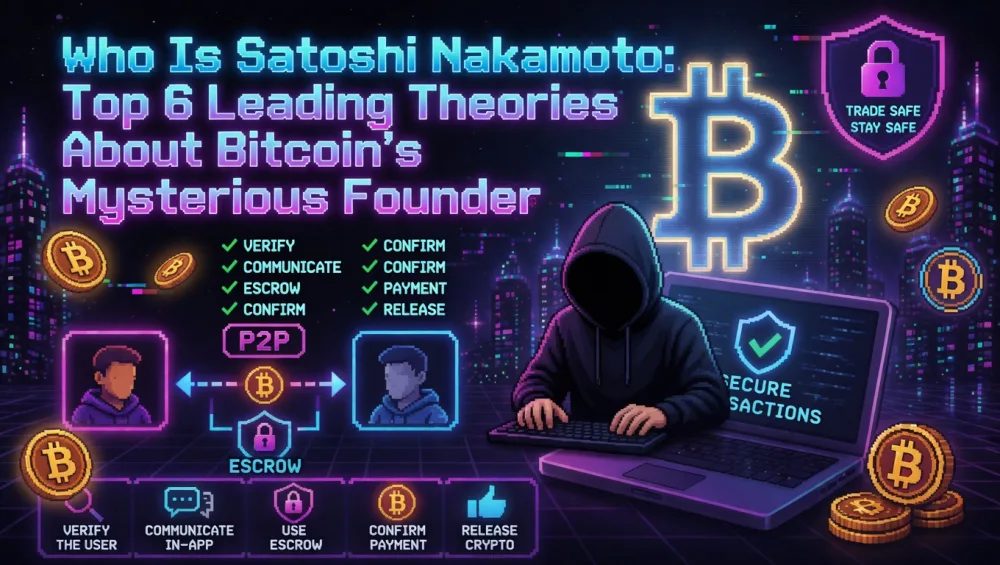
- Top 5 Theories on Who Satoshi Nakamoto Might Be
- Theory One: Hal Finney
- Theory Two: Nick Szabo
- Theory Three: Dorian Nakamoto
- Theory Four: Craig Wright
- Theory Five Involves Organization Or Authority
- Theory Six: Adam Back
- Common Traits of Satoshi Nakamoto
- Why Satoshi Nakamoto Remains Unknown
- What It Means for Bitcoin If Satoshi’s Identity Is Exposed
- FAQ
Who Is Satoshi Nakamoto? The Mystery Behind Bitcoin’s Creator
Back then, money felt broken after the crash shook everything. Banks lost people’s faith just when they needed it most. Out of that mess came something strange yet promising. A different idea about how value could work started taking shape.
The Birth Of Bitcoin And The 2008 Whitepaper
One Halloween night in 2008, a person going by Satoshi Nakamoto shared a document called “Bitcoin: A Peer-to-Peer Electronic Cash System” on an online BitcoinTalk forum for code experts.
Instead of relying on banks or middlemen, the idea tackled how digital money could be spent only once through clever design. The system leaned on a public record spread across many computers – later known as blockchain – alongside a method where users compete to validate transactions. That post set off what would become the first working form of decentralized digital currency. Most people now see that exact event as the starting point when Bitcoin truly began.
Related: Top 5 Crazy Bitcoin Price Predictions: Will BTC Hit $1M?
Why Satoshi Nakamoto’s Identity Remains Unknown
Most inventors chase attention or money, yet Bitcoin’s unseen creator stepped away long before anyone noticed. Hidden through tools like Tor and private email setups, Satoshi blocked trails that could reveal where they were or who they were. Staying out of sight meant Bitcoin never relied on a single leader – no face for authorities to pursue, no weak point for attackers. It entered the world without ownership, shared freely, built so anyone could use it, but nobody could claim it.
Satoshi’s Activity in 2008–2011
Out of nowhere, the story kicks off during Satoshi’s busiest stretch. Between late 2008 and early 2011, work on Bitcoin’s core code took up most of their time. Replies popped up in BitcoinTalk threads, while messages flew back and forth with coders such as Mike Hearn and Gavin Andresen.
The earliest chunks of data on the chain were pulled straight from their efforts. Then came April 23, 2011 – when one last note landed in an inbox: “I’ve moved on to other things. It’s in good hands with Gavin and everyone.” After that, silence settled in fast. Whoever stood behind it never spoke again.
Why Satoshi Nakamoto’s Identity Still Matters
Even though Bitcoin became a massive financial force with no clear founder, figuring out who actually made it still matters – for more than just curiosity’s sake.
Bitcoin Credibility and Decentralization Affected
Who made Bitcoin? Nobody knows for sure. That mystery gets called its pure beginning sometimes. Suppose the truth came out – say, one person or some big company stood behind it. Problems might follow. Lawsuits maybe. Government orders to hand over information. Or people are starting to idolize the inventor too much. Either way, attention shifts from the system to the person. Lots of folks think not knowing who Satoshi Nakamoto is actually helps keep things balanced. The unknown part works. It fits.
Theories About Lost Access vs Intentional Disappearance
Still, people wonder: was vanishing part of the plan, or did something else happen? Maybe keys slipped into oblivion. Or maybe time simply closed the door. Hidden behind silence fits a belief in secrecy, distrust of power. Yet those untouched stacks since day one hint at an absence deeper than choice. Fifteen winters passed without a single move. What once felt like principle now carries the weight of finality.
Bitcoin Ownership Estimates And What They Mean
One key idea behind the Satoshi Nakamoto mystery centers on what people call the “Satoshi stash.” Early records from the blockchain point to around 1.1 million BTC▲$62,630.00 mined by this person. That amount, valued at current rates, would rank among the largest fortunes worldwide. Should those coins shift hands someday, markets might react sharply due to sudden movement. Such an event could spark debate over how much Bitcoin truly remains in circulation. For experts studying trends over time, knowing the size of Satoshi’s holdings matters deeply.
Related: Why Are Bitcoin Fees So High? Full Explanation of BTC Transaction Costs
Top 5 Theories on Who Satoshi Nakamoto Might Be
One by one, names surfaced across ten years. Though nobody signed a message using Satoshi’s secret key – proof that would settle it – the list narrows through clues, writings, and code style. These stand out: people whose background matches the footprint left behind.
What People Talk About Most When Guessing Who Did It
Some think one genius cracked it alone, others whisper about hidden state labs. Peeking behind these guesses reveals clues – how words are used, code is built, beliefs line up – all pointing fingers without proof.
Theory One: Hal Finney
Could Hal Finney be Satoshi Nakamoto? That idea carries a quiet kind of beauty among crypto fans.
First Person to Receive Bitcoin
Back when Bitcoin was just starting, Hal Finney helped build it. The first time someone sent Bitcoin, it went straight to him – from Satoshi themself. Not many talked with Satoshi early on, but he did.
Related: “Finding Satoshi” Names Bitcoin’s Creators: Hal Finney and Len Sassaman
Cryptography Roots And Early Bitcoin Participation
Living just a short walk from someone called Dorian Satoshi Nakamoto might have given Finney an idea. He built Reusable Proof of Work, something that came before how Bitcoin verifies transactions. That neighbor’s name, popping up years later, felt oddly convenient. Some people think it handed him the ideal alias without trying.
Arguments Supporting And Rejecting The Theory
What stood out most was how much like Satoshi he wrote. His mind worked with sharp precision – few ever doubted that. A trailblazer emerged early in the Cypherpunk world, shaping ideas before they caught fire.
Though Finney always said he wasn’t Satoshi, messages between him and the mysterious figure exist – timing makes self-communication unlikely. His death in 2014 lines up with the untouched status of those early Bitcoin holdings. That silence adds weight to his claim.
Theory Two: Nick Szabo
Some folks tracing the ideas behind Bitcoin often point to Nick Szabo. Ideas in the original document echo his earlier work. People notice how closely the concepts align with what he explored before. Thought patterns match up in ways that feel more than coincidental. Those digging into origins find his influence hard to ignore.
Bit Gold Idea Formed
Back in the day, well ahead of Bitcoin showing up, there was Bit Gold – crafted by Nick Szabo. It ran without central control, pulling together ideas later seen in Bitcoin. Think proof-of-work, for instance. Timestamps played a role, too. Each piece snapped into place like parts of a puzzle already solved.
Related: What Are Smart Contracts in Crypto — Simple Explanation of How Smart Contracts Work
Similarities in Writing Style and Ideology
Oddly enough, studies of word habits show Szabo’s style – like those odd double spaces after dots – fits the Bitcoin paper better than nearly anyone else’s. What stands out is how his phrases line up so tightly with that document. Most comparisons fall short when stacked next to his. The spacing thing alone turns heads. Few writers even do that anymore. Yet there it is, clear in both places.
Evidence Linking and Disconnecting Szabo from Satoshi
That silence when Bitcoin first appeared? Szabo never explained it, though he’s said plenty since. His earlier work on Bit Gold feels less like a prototype and more like a stepping stone someone would take if they kept moving forward alone.
Theory Three: Dorian Nakamoto
A single name can spark a firestorm when curiosity meets print. This case shows how fast assumptions spread once published. Not every clue leads to the truth, even if it looks convincing at first glance. Rumors gain strength not through proof but through repetition. What seemed solid quickly unraveled under a closer look. Attention arrives suddenly and rarely leaves quietly. Facts matter most only after damage has already taken place.
Media Speculation and Newsweek Controversy
A man in California turned out to be at the center of a Newsweek report back in 2014. This piece claimed he was the hidden force behind Bitcoin. Though quiet for years, his real name surfaced – Satoshi Nakamoto. A past career in physics and engineering shaped much of his later life.
Why The Idea Spread
That name matched perfectly. Classified defence jobs filled his past. When pressed by a journalist, words slipped out – “I am no longer involved in that, and I cannot discuss it.” People heard guilt between the lines. He insisted he only meant engineering tasks. Later came explanations.
Why Most Experts Don’t Accept It
Dorian Nakamoto seemed unfamiliar with coding or cryptographic systems. When news spread, a post showed up under Satoshi’s name at the P2P Foundation site – just one line: “I am not Dorian Nakamoto.”
Theory Four: Craig Wright
Most people stay quiet, yet Craig Wright – claiming to be Satoshi Nakamoto – chooses noise. His path bursts with lawsuits, drawing eyes not by whispering but by shouting. Where others step back, he pushes forward, stirring debate at every turn.
People Claiming to Be Satoshi Nakamoto
Ever since 2016, one Australian tech expert named Craig Wright says he headed up the group behind Bitcoin. Legal fights followed – anyone calling him dishonest found themselves facing court papers.
Legal Battles and Controversies
One case after another, Wright found himself tangled in legal battles – especially the one involving Dave Kleiman’s estate. By 2024, a ruling out of Britain cut through the claims: records made it plain he hadn’t written the whitepaper nor ever been Satoshi Nakamoto. He never moved even one Satoshi from an old block linked to Nakamoto.
Theory Five Involves Organization Or Authority
Maybe it wasn’t just one person behind Bitcoin. Some folks think the design is too layered, too sharp – it feels like more than a solo act. A single mind might not carry all those pieces.
The possibility of a collective identity
One topic inside the document is how money systems behave when people interact. A guess floats around that top experts in secret codes joined forces using one fake name. Their goal might have been building a perfect form of digital cash. Ideas about trust between machines also appear throughout the pages. Coding details written in a complex version of C++ show up, too. Instead of many names, just one alias stands behind it all, some believe.
NSA Cryptographers – Early Bitcoin Developers
Some think the NSA built Bitcoin to trap money movements, maybe even keep a backup system ready. Not everyone agrees, though – another idea says people like Finney, Szabo, and Adam Back worked together on it, part of that Cypherpunk crowd.
Why This Theory Continues to Persist
Surprisingly detailed, the Bitcoin 0.1 code showed strong structure – spelling leaned on British forms like “colour,” yet certain forum messages chose American versions such as “color.” That mismatch hints at more than one person shaping things behind the scenes.
Theory Six: Adam Back
Hashcash came from Adam Back – its design appears right there in the Bitcoin whitepaper. Leading Blockstream today, he holds weight wherever crypto talks happen. People keep saying he might be Satoshi, even though he says flat out that he isn’t.
Read more: The New York Times Names Adam Back as Most Likely Bitcoin Creator
Early emails with the mysterious creator plus sharp coding skills fuel the guesses. Some lists claim five suspects, then sneak in a sixth – Back usually sits among them. He won’t take credit, yet still shapes how Bitcoin works behind the scenes. That quiet role? It only thickens the haze around who started it all.
Common Traits of Satoshi Nakamoto
Who really stands behind the name Satoshi Nakamoto becomes clearer when examining traces found in old messages. Not just guesses, but actual clues tucked into code and timing point toward answers hidden in plain sight.
Technical Expertise in Cryptography and Economics
Out of nowhere, someone who knew deep economics also mastered code. That person saw inflation could wreck trust. A limit on supply – exactly twenty-one million – was their answer. Few ever blend those minds. It shows how the system works.
Writing Style and Communication Patterns
Clear sentences came naturally to Satoshi, each shaped with care. Little chat appeared in their messages, just deep focus on how the system worked. The word “we” showed up now and then – maybe more than one person was involved, though scholars often write that way alone. Technical details filled every reply, never drifting into casual remarks.
Time-zone Analysis and Online Activity Clues
Looking at when Satoshi posted on forums, early analysts noticed gaps in activity. From 5 to 11 each morning, Greenwich Mean Time, nothing showed up. That quiet stretch hints at possible locations – maybe Eastern or Pacific zones in North America, perhaps somewhere across Europe. Then again, the person might just have stayed awake late into the night.
Why Satoshi Nakamoto Remains Unknown
Hidden away while the world watches closely – Bitcoin’s nameless creator pulled off a quiet triumph. A maker unseen, slipping past constant tracking, built something that lasts.
Strong OpSec Practices
Not once did Satoshi reuse an IP tied to any real-world spot. Personal tidbits stayed hidden – nothing on relatives, animals, or pastimes slipped out. Total control marked every move they made.
No Spending of Early Bitcoin Holdings
Staying still kept Satoshi safe. Every time others pulled money through banks or exchanges, they left traces – Satoshi did not. Motion draws attention; absence blocks it. That silence became armor. Stillness, in this case, built an unbreakable wall.
Possible Reasons for Staying Anonymous
Hidden away, Satoshi stays clear of legal reach – yet that shield also guards Bitcoin itself. Without a figurehead, outside forces can’t push rule shifts through demand or threat. The act of vanishing sealed decentralization for good.
Is Satoshi Nakamoto Identity Still Unknown?
One day, someone might crack the code behind Satoshi Nakamoto’s name – yet it could just as easily stay buried forever. Even though tools such as AI-powered writing analysis or digital trail tracking keep improving, nothing beats holding those first cryptographic keys. Only they can truly settle the question.
What It Means for Bitcoin If Satoshi’s Identity Is Exposed
Should Satoshi show up now, shockwaves would ripple through markets. Whoever stands behind the name might send prices soaring – alternatively, spark a steep drop. Still, Bitcoin kept running long before any founder stepped forward. Its soul lives not in one person but across everyone building, using, and mining. Maybe the truest reply to who built Bitcoin isn’t a name – it’s us. “We are all Satoshi,” the crypto community loves saying on X. Perhaps there’s actual truth in this.
FAQ
Is Satoshi Nakamoto’s Status Still Unknown?
Who can say for sure? When big disputes hit, plenty figure Satoshi’d have spoken up, just to show they’re real.
CIA Knowledge of Satoshi Identity?
It seems unlikely, yet plenty believe spy groups have leaned on stylometry to shrink suspect pools. Still, nothing official confirms it.
Can Satoshi’s Bitcoin Be Hacked?
Those coins of Satoshi? They’re safe right now. The whole system runs on SHA-256, the same shield protecting his stash. Without the private keys, nobody shifts a single Satoshi.
Why Did Satoshi Choose the Name?
Wise thoughts often begin where meaning hides. Clear thinking shows up in the name Satoshi. Inside every word, like Naka, is space, not just emptiness. The part called Moto stands firm beneath it all. Put them together, and wisdom takes root without saying a thing.
What Is a Satoshi Unit?
Bitcoin breaks down into tiny pieces. That tiniest piece has a name – Satoshi. You get one hundred million of them in a single Bitcoin. Each Satoshi moves separately on the network.