Right now, the battle between BlackRock and Fidelity shapes how Bitcoin ETFs move. Once regulators allowed spot Bitcoin ETFs, traditional finance got an easier entry into BTC▲$62,630.00 – no exchanges, keys, or personal storage needed.
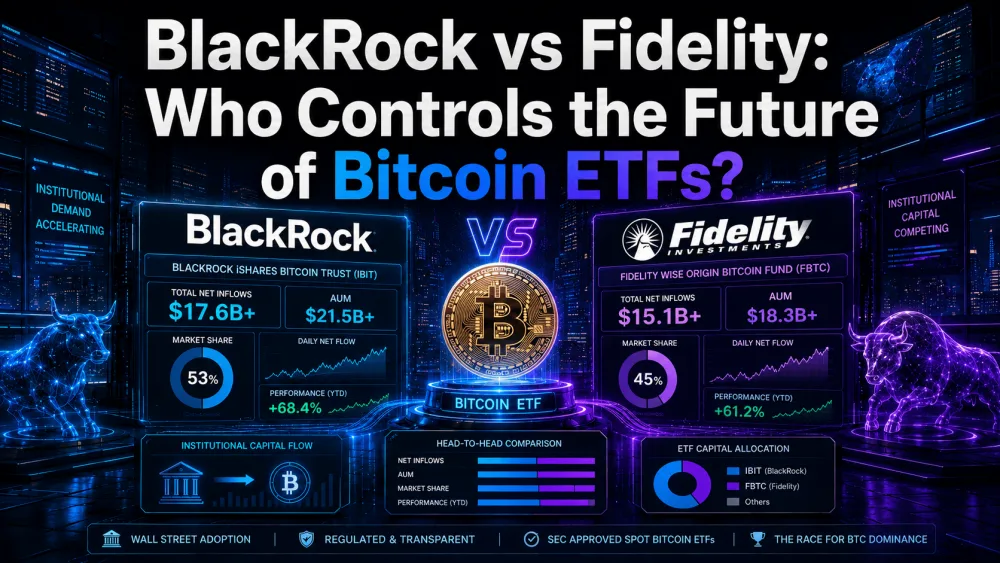
Leading in size, trading activity, and portion of the market, BlackRock’s IBIT pulls ahead. Yet Fidelity’s FBTC stands firm as the top rival, bolstered by strong brand recognition, deep roots in asset protection, and years of experience with cryptocurrency.
Contents
- BlackRock and Fidelity Compete for Bitcoin ETF Lead
- Bitcoin ETFs Gain Popularity on Wall Street
- BlackRock's Entry Into The Bitcoin ETF Space
- Fidelity's Approach to Holding Bitcoin Over Time
- Bitcoin ETF Approval Influences Institutional Investment
- BlackRock Bitcoin ETF Compared with Fidelity Bitcoin ETF
- Fidelity Custody and Bitcoin Holdings
- BlackRock and Fidelity Shape Bitcoin Market Moves
- Institutional Bitcoin Adoption Through ETFs
- BlackRock and Fidelity Move Past Bitcoin ETFs
- Bitcoin ETF Trends 2026
- FAQ
BlackRock and Fidelity Compete for Bitcoin ETF Lead
Now, big money can touch Bitcoin without holding it directly. BlackRock plus Fidelity opened doors through new financial wrappers. Instead of wallets and keys, institutions get ticker symbols. What used to feel risky now fits inside standard portfolios. Daily pricing shows up like stocks.
Oversight comes built in. Middlemen adapt fast when rules apply. Familiar tools handle what once seemed foreign. Reporting lines stay clean. Liquidity settles each trading day. Old systems absorb the new thing quietly.
Related: What Does Strategy Do? How Michael Saylor Built a Bitcoin Corporate Empire
Bitcoin ETFs Gain Popularity on Wall Street
A Bitcoin ETF caught on by fixing everyday hassles. Without needing wallets, seed phrases, or trading platforms, people found an easier entry. Buying into real Bitcoin now happens through regular investment accounts. Exposure still ties to Bitcoin’s swings – just simpler to reach. Access changed, not the underlying gamble.
BlackRock’s Entry Into The Bitcoin ETF Space
Out of nowhere, BlackRock showed up with the iShares Bitcoin Trust, IBIT. Not long after, its Bitcoin ETF let people follow Bitcoin’s swings using a familiar exchange-traded fund setup. With it, came deep networks, smooth trading access, plus credibility from big-name finance players. Soon enough, IBIT stood at the front as Wall Street’s go-to Bitcoin ETF.
Fidelity’s Approach to Holding Bitcoin Over Time
One thing stands out about the Fidelity Bitcoin ETF, known as FBTC – it carries a distinct character. Years passed between when Fidelity first looked into Bitcoin and when regulators cleared ETFs. Long before permission arrived, work on digital systems had begun. Because of that timeline, FBTC does not feel like a rush to join a trend. People who already trust Fidelity with their retirement accounts or trading activity see this product differently. Their past choices shape how they view this new offering.
Bitcoin ETF Approval Influences Institutional Investment
Approval of a Bitcoin ETF in 2024 shifted how the market works. Because of it, spot Bitcoin ETFs could operate within standard financial regulations, opening a legal path for big investors to get exposure to BTC. Still, Bitcoin didn’t become safer or less volatile. Familiarity grew instead, making it easier for institutions to move faster into cryptocurrency investing.
BlackRock Bitcoin ETF Compared with Fidelity Bitcoin ETF
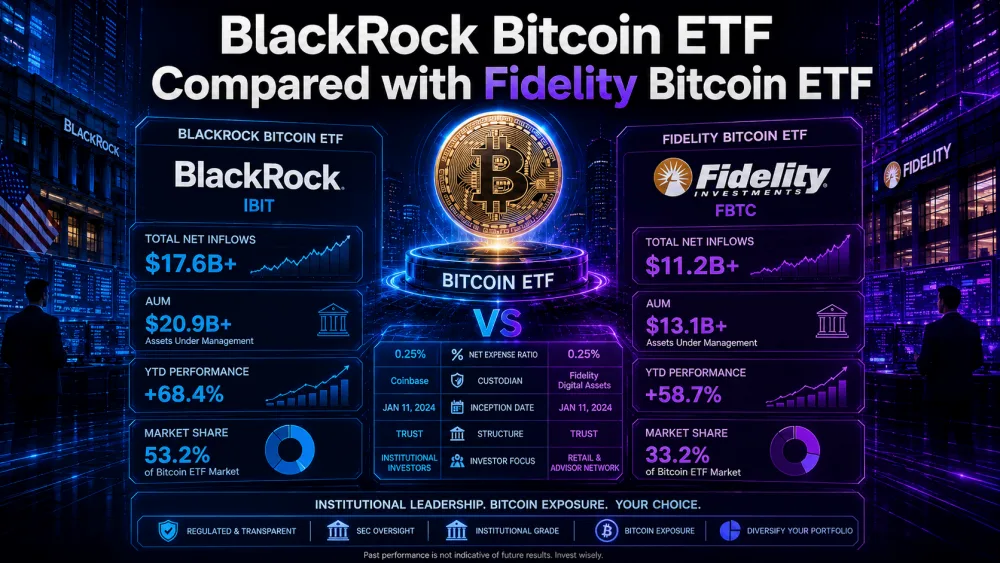
One big name against another: BlackRock versus Fidelity, both offering a Bitcoin ETF. Tracking the same asset, yes, yet shaped by very different forces behind the scenes. What sets them apart isn’t just price – it’s the flow of money moving in and out. Liquidity builds where traders gather, and trust forms around known names.
Access depends on tools investors already use daily. Custody choices reveal who holds the keys, and how tightly. Fees add up quietly, even when they look small at first glance. Attention follows size; bigger funds pull more eyes, more trades. Not every detail shouts, but together they shape what feels solid.
| Feature | BlackRock iShares Bitcoin Trust (IBIT) | Fidelity Wise Origin Bitcoin Fund (FBTC) |
|---|---|---|
| Issuer | BlackRock (iShares) | Fidelity Investments |
| Ticker | IBIT (NASDAQ) | FBTC (Cboe BZX) |
| Launch Date | January 5, 2024 | January 10, 2024 |
| Expense Ratio | 0.25% | 0.25% |
| AUM | ~$64–67 billion | ~$14–15.5 billion |
| Bitcoin Holdings | ~821,000+ BTC | ~189,000–190,000 BTC |
| Custodian | Coinbase Prime / Custody | Fidelity Digital Assets (self-custody) |
| Benchmark | CME CF Bitcoin Reference Rate (NY Variant) | Fidelity Bitcoin Reference Rate |
| Structure | Spot Bitcoin Trust (100% BTC exposure) | Spot Bitcoin Trust (100% BTC exposure) |
| Liquidity / Volume | Significantly higher (often 30–50M+ shares daily avg.) | Strong but lower than IBIT |
| Key Advantage | Largest AUM, highest liquidity, tightest spreads, strong institutional appeal | Integrated Fidelity ecosystem, self-custody by reputable provider |
| Performance | Tracks Bitcoin price (minus fees); nearly identical to FBTC | Tracks Bitcoin price (minus fees); nearly identical to IBIT |
Assets Under Management Compared
Out front in the Bitcoin ETF race sits BlackRock’s IBIT. Years rolled by before BlackRock’s entry climbed to dominate spot offerings, swelling past dozens of billions. Close behind trails Fidelity’s FBTC – large, yet still short of the leader. When a fund grows big, narrower gaps between buy and sell prices tend to follow, along with stronger trading activity.
ETF Money Flow and What Investors Want in 2026
Nowadays, money moving into Bitcoin ETFs acts like a pulse check for the market. When these flows grow, it often means financial advisors, investment firms, wealthy families, or broker customers are buying in. On days when cash pulls out, it can point to caution or fading trust.
By 2026, whether people keep pouring into Bitcoin ETFs will hinge less on hype and more on how BTC itself performs, along with broader money supply trends, interest rate shifts, and overall mood.
Related: Best Crypto Exchange Platforms in the US 2026 — Picks for Fees, Liquidity, and App Access
Trading Volume Versus Liquidity Variances
Most days, IBIT moves more than any other Bitcoin ETF. When trading flows heavily, slippage tends to shrink – helpful when filling big tickets. Though FBTC supports solid turnover, pros lean on IBIT when precision matters. Its depth stands out where it counts: market impact during rapid trades.
Bitcoin ETF Fees and Costs
Fee-wise, Bitcoin ETFs look much alike among top providers. Though IBIT matches FBTC on surface pricing, picking one isn’t just about the lowest cost. Spreads matter. So does how closely each follows Bitcoin’s price. Where coins are held plays a role too. Liquidity during trades shapes decisions. Access through different broker platforms weighs in. Each factor shifts the balance slightly.
ETF Popularity Among Institutional Investors?
Most people choose IBIT when looking at Bitcoin ETFs, thanks to its bigger share of assets and daily trades. Thanks to BlackRock’s wide-reaching iShares system, getting IBIT out there is easier than for nearly any competitor. Those who stick with FBTC often do so because they already work with Fidelity – their history in digital assets makes some feel more comfortable staying put.
IBIT Compared with FBTC: What Investors Notice
BlackRock iBit Portfolio Breakdown
Here comes BlackRock’s IBIT – built to track how Bitcoin performs, once costs are taken out. Not mining shares, not blockchain companies, certainly not a mix of digital coins. People choose it when they’re after straight-up Bitcoin access through an ETF setup. Liquidity runs deep. The packaging feels familiar, thanks to the iShares name showing up on statements.
Fidelity Custody and Bitcoin Holdings
Holding real Bitcoin sits at the core of Fidelity FBTC. Built on years of company effort in digital asset storage, its edge grows quietly. Some see it as tied more tightly to how crypto began. Comfort comes more easily through the name alone, though.
Transparency Through On-Chain Verification
Holding details of Bitcoin ETFs matters now more than before. What sits inside each fund, down to the last coin, draws attention. Custody names come under scrutiny just as fast. Proof methods get examined closely by those watching. Reports from issuers serve some well enough. Others look straight to the blockchain for their answers. Trust shifts when data lives out in the open. Seeing it themselves changes how people judge safety.
Performance Comparison Since Launch
Most of the time, how Bitcoin does decides what happens to its ETFs. When BTC climbs, IBIT and FBTC tend to climb too. A drop in BTC usually pulls those funds down as well. Slipping into an ETF doesn’t soften the core gamble – just makes entry easier. Thanks to size, IBIT often catches more tailwind. Still, FBTC holds ground by leaning on Fidelity’s reach.
Risk Factors for Bitcoin ETF Investors
Bitcoin stays risky even inside an ETF. Still, there are price jumps, legal questions, storage worries, gaps in performance, and shifts in mood. Do you think rules make it safe? That belief causes trouble. What changes is just how you keep it.
BlackRock and Fidelity Shape Bitcoin Market Moves
Bitcoin ETF Holdings and Market Supply Shifts
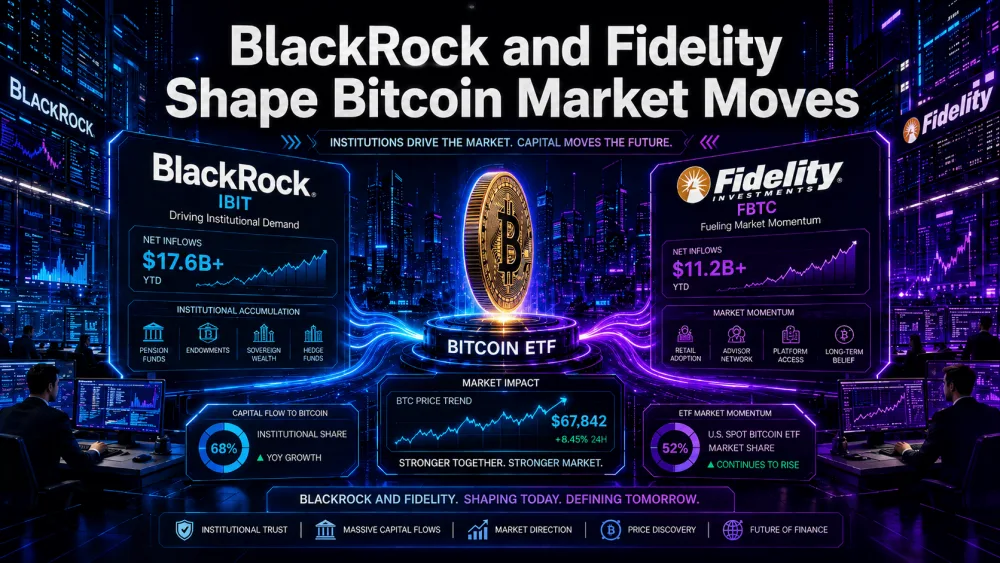
Bitcoin ETFs pull money in. Then, companies need actual Bitcoin to match it. Buying builds up slowly, shrinking what’s easily traded. People watch these funds carefully. The stash inside tells where coins go – held tight by big players or floating on trading sites.
Bitcoin ETFs and Their Impact on BTC Supply?
When ETF buying grows and at the same time, available Bitcoin shrinks, a supply squeeze might emerge. Institutions piling in while stubborn owners refuse to trade could tilt the balance quickly. Yet that outcome isn’t guaranteed. Big moves upward may bring sellers out – miners waking up, giant wallets shifting, investment pools cashing out, or old-timers finally letting go.
How ETF Money Movements Affect Bitcoin Price Swings
Out of nowhere, fresh money pouring into ETFs lifts prices higher during upswings. When interest spikes, buying surges follow, nudging trends upward. On the flip, heavy withdrawals show up right when markets wobble. Because of this pattern, forecast tools today weigh ETF appetite just as much as wallet holdings, coin issuance levels, futures setups, and wider economic signals.
Read more: Bitcoin Price Prediction 2026: Will BTC Finally Rally to 100k?
Bitcoin ETFs Changing Crypto Exchange Power?
Some investors now rely less on crypto exchanges because of Bitcoin ETFs. Getting access to BTC no longer means opening an account on a trading platform. Active traders keep using exchanges, along with those dealing in altcoins or holding stablecoins. People who manage their own keys also stay tied to them. For financial firms, though, ETFs offer a simpler path than before.
Institutional Bitcoin Adoption Through ETFs
Some Hedge Funds Choose Bitcoin ETFs Instead of Owning BTC Directly
Most hedge funds like using Bitcoin ETFs since buying and selling happen fast, plus managing risk or tracking trades feels simpler. Getting in or out of a position works smoothly when there is no need to set up complex cryptocurrency storage. When it comes to moving with Bitcoin’s market swings, tools such as IBIT and FBTC behave like fluid entry points that respond quickly. Easy access shapes much of their appeal.
Pension Funds, Banks Move Into Crypto With ETFs
Pension money touches Bitcoin carefully, yet exchange-traded funds make it easier. Instead of holding coins outright, one plan might test the waters using an approved ETF. Since banks offer guidance, professionals shape choices by matching share amount, swings in price, and comfort with uncertainty.
The Influence of Conventional Banking on Bitcoin Expansion
Deep pockets in old-school finance now reach into Bitcoin. BlackRock steps in, Fidelity follows – both widen the playing field while leaving native systems untouched. Seen through fresh eyes lately, it shifts shape in minds. Not just a digital gamble anymore, but a volatile force tied to larger economic tides.
Bitcoin ETFs Shift Wall Street Attitudes Toward Crypto
Bitcoin ETFs shifted things entirely. Institutions aren’t asking if they can invest anymore. Now it’s about how much fits right. For some, Bitcoin feels like digital gold does. Some view it as moving cash around. Doubters still exist, yet big finance treats Bitcoin like a real business today.
BlackRock and Fidelity Move Past Bitcoin ETFs
Ethereum ETF Hopes and Broader Crypto Investment Options
Out past BTC, Ethereum ETFs nudge the scene forward. Not just a leader, Bitcoin stands tall while Ethereum slips in smart agreements, lending talks, locked-up coin choices, and digital app tokens. Down the road, crypto-based exchange funds could hold mixed baskets, niche slices, or broad digital indexes.
Tokenized Assets Reshaping ETF Systems
One way things might shift: tokenized assets changing how funds work. Settlements, ownership logs, collateral handling, fund shares – these could run on blockchain systems. Happening like that, firms such as BlackRock or Fidelity might tap crypto setups not just for offering Bitcoin access, yet revamping how they manage investments.
BlackRock and Fidelity May Shape Future of Digital Finance?
One thing is clear: BlackRock might lead the pack when it comes to official channels. Huge teams handle rules, big names draw trust, while wide systems push products fast. Yet control won’t rest solely in their hands. Out beyond those walls sit crypto markets, dollar-linked tokens, open lending apps, wallets you run yourself, and storage services not tied to banks. A mix seems inevitable down the road.
Related: Top 10 Crypto X Influencers to Follow in 2026. Best Twitter Accounts for Signals & Insights
Bitcoin ETF Trends 2026
Bitcoin ETFs See Shift in Market Leadership?
Out front at the moment: IBIT. Claiming more of the Bitcoin ETF pie than anyone else, it pulls ahead with the heaviest trading and the biggest assets under management. Even so, FBTC stays close – yet BlackRock’s offering stands tallest in this group. What shows up on the screen reflects that lead clearly.
Bitcoin ETF Growth Forecasts by Analysts
Bitcoin ETFs might see wider use once extra platforms allow them, while financial advisors slowly warm up to holding BTC. A rise in demand could come from modest investments by big players, some argue. On the flip side, money may exit fast should Bitcoin fail to deliver strong returns.
Bitcoin ETF Issuers Face Regulatory Hurdles
Still, rules keep shifting. Holding assets brings disclosure needs, tax issues, oversight demands, plus hurdles for new products down the line. Because the SEC moves slowly, approval isn’t guaranteed – speed won’t come just because others came before. Not every digital asset fund gets a green light fast.
Bitcoin ETF Investors Face Shifting Dynamics Amid Competitive Pressures
Most folks watching money moves see perks when firms race for attention. Fees on Bitcoin ETFs stay small thanks to that push. Markets flow more easily, and details about what funds hold show up faster. Size gives IBIT an edge in the eyes of active buyers. Clients already working with Fidelity often lean toward FBTC without thinking twice.
FAQ
IBIT versus FBTC Size Comparison?
True, IBIT holds far more in assets, trades more heavily daily, and moves a larger piece of the Bitcoin ETF market. Still, FBTC stands close behind as a serious player.
Comparing Fees Between IBIT and FBTC?
Most top fees look nearly identical at first glance. Yet spreads matter just as much, along with how smoothly you can reach the market. Access isn’t everything – watch how well orders follow prices. Liquidity shifts often go unnoticed until they cause slippage.
Is a Spot Bitcoin ETF Safer Than Buying Bitcoin Directly?
Just because it’s easier doesn’t mean danger disappears. Skipping the hassle of holding keys won’t shield anyone from wild swings in Bitcoin’s price or broader financial uncertainty.
Can Bitcoin ETF Inflows Cause a Supply Shock?
True, these factors might tighten Bitcoin availability should buying continue alongside shrinking market liquidity. Still, that outcome isn’t certain.
What Makes One Bitcoin ETF Stand Out From Others by 2026?
Out front, when it comes to cash flow, IBIT also holds more assets than others, plus grabs a bigger slice of trading volume. For those already using Fidelity’s tools, FBTC fits naturally into their setup. Which Bitcoin fund works best? That shifts based on how you get in, what fees apply, the ease of trade, and comfort with price ups and downs.