Nowhere near the frenzy of previous cycles, chatter about altseason signals is creeping back into crypto discussions. Still, this is not just another wave of “everything pumps” like last time around. Liquidity remains close to Bitcoin, refusing to spread out fully yet. Big money mostly sticks to established names, ignoring much of the noise below.

Regular buyers have not rushed back in droves either; caution still lingers. Hidden shifts are happening, though, as some traders quietly move into mid-cap cryptocurrencies again. Their thinking is simple: the math feels less risky now than it did months ago.
This is not proof that altseason is here yet. It only suggests that traders are starting to bet Bitcoin’s strongest run may be slowing down. Once that shift takes hold, money tends to spread outward. Ethereum usually gets attention first, followed by larger alternative coins. Next come the better mid-cap projects. The riskiest smaller tokens usually wait until much later.
Right now, what matters is not whether all altcoins go up. That idea takes too little effort. What actually counts is whether altseason signals point to a strong mid-cap moment, making careful picks reasonable again.
Contents
Altseason Signals Gain Relevance Once More
Most times, after a market drop, Bitcoin bounces first. When money returns slowly, it pulls in big players more easily than other assets. Its story feels clearer when people hesitate. Other cryptocurrencies often lag because risk appetite remains thin during shaky recoveries.
When Bitcoin is no longer the only believable option, the next phase starts to take shape.
Related: Why Crypto Whales Are Accumulating Ethereum Again in May 2026
It is rarely a sudden spike that kicks things off. Usually, tiny clues show up first: Bitcoin’s grip on the market plateaus, while activity in smaller coins quietly picks up. Ethereum might stop drifting against Bitcoin, holding steadier than before. Mid-sized projects start moving ahead, even when no one is shouting about them. Traders keep an eye on these shifts because altseason signals often arrive well ahead of any noise hitting the headlines.
Here is where mid-cap cryptocurrencies really show their role. They are not as wild as the smallest tokens, yet they are more agile than Bitcoin when markets shift. They are big enough to draw consistent interest and volatile enough to outpace slower assets. Sitting between safety and risk, they give traders a balanced option without leaning too far either way.
Traders Shift Focus Past Bitcoin

Most of the crypto space still orbits around Bitcoin. That makes sense. Backed by spot ETF interest, shaky global economics, and big players leaning its way, Bitcoin holds firm as the go-to digital asset. When things get rocky, money does not rush into every project with a chat group and a hastily drawn emblem.
Yet change tends to catch up with markets eventually.
After a long climb, some traders wonder whether Bitcoin’s relative gains are shrinking. Meanwhile, those cashing out on Bitcoin glance sideways at assets that have not moved much. That pause is when mid-sized coins catch attention.
Related: Bitcoin Pizza Day 2026: Top 5 Biggest Celebrations in Crypto History
When Bitcoin surges, smaller tokens usually fall behind. Yet they can rebound fast once money shifts elsewhere. This shift is not just mood-driven. Numbers play their part too. A mid-cap coin with smoother trading flow, stronger price patterns, and a clear story can jump faster because it takes less capital to reprice it.
Because of this, the return of altseason signals is not just noise. It marks a shift in what traders think might outperform next.
Mid-Caps Are Drawing Investment Before Others
Most of the time, mid-sized coins offer the best balance between risk and movement. When large cryptocurrencies gain attention, they tend to become steadier but leave less room for sharp upside. Smaller ones can jump hard, yet they often struggle with thin trading activity, shaky foundations, and sometimes sketchy handling. The middle range fits better: enough momentum without the worst downsides.
Betting on mid-caps feels less extreme.
Some of these projects already function, host active communities, appear on major trading platforms, show developer updates, or target specific niches. Even so, their size remains small enough that solid buying pressure can still push prices up noticeably. That is what pulls traders back toward mid-sized coins once altseason signals grow stronger, but before confidence returns fully enough to gamble on the riskiest picks.
Related: Arthur Hayes Market Outlook 2026: Why He Still Thinks Bitcoin Can Go Parabolic
Most top contenders have a few things in common:
- Rising volume without a blow-off candle
- Clean recovery from multi-month support
- A story tied to what is happening in markets right now
- Improving liquidity across major exchanges
- Outperformance against both Bitcoin and sector peers
This is not like grabbing something just because its price dropped by eighty percent. Just because a chart looks lifeless does not mean it is a steal. Often, it is simply refusing to show any sign of movement at all.
Bitcoin Dominance Explained Simply
Bitcoin dominance tells a clear story. When it climbs, cash tends to pool in Bitcoin instead of drifting toward smaller coins. Momentum building in Bitcoin’s favor often pulls investors back, keeping funds concentrated. When that grip slips, movement spreads out. Confidence grows beyond the top player, so money starts exploring corners it skipped before.
Even so, Bitcoin’s share of the market is not a perfect signal. Sometimes it shifts because of changes in stablecoin totals, movements in ETFs, or uneven performance across different altcoin groups. Just because dominance dips slightly does not mean an altcoin surge is happening.
Confirmation means watching several signs at once. When Bitcoin’s grip slips, altcoin trading picks up, Ethereum holds steady, and smaller coins start gaining faster, the picture gets clearer. That is when altseason signals start making sense. Traders pay attention only when these shifts happen together, not when a single line moves on a screen.
Volume Matters More Than Hype
Most times, price climbs alone mean very little. When little money trades an asset, pumps fade fast once someone actually tries to sell. Smaller coins feel this harder than others.
Volume must back up the shift before mid-caps gain traction. Only when trading activity rises does the transition start making sense. A change in focus shows its strength through participation, not slogans.
Volume holding steady hints at growing trader interest, with liquidity slowly creeping back as platforms log consistent moves instead of quick bursts. This is one of the clearer altseason signals because it reflects actual behavior, not just talk floating around.
Later on, steady growth over several sessions builds strength when prices show higher lows. This pattern often points to quiet buying. A sharp jump after online noise is different. It may offer trading chances, but it is less stable. Durable shifts take time; rushed spikes fade faster.
Sector Rotation Gets Picky
Most traders today are not just buying everything like before. During past altcoin surges, nearly all coins could rise at once. This time, moves feel tighter and more focused. Later on, wild swings might return and lift even weak projects. Right now, though, choices seem sharper and less random.
Expect money to flow into areas with active narratives. Infrastructure might catch interest, followed by digital versions of physical assets. Crypto systems tied to artificial intelligence could draw attention, while decentralized finance projects with stronger revenue models may stand out. Blockchain gaming may rise, along with layers built around Bitcoin. Some memecoin liquidity hubs might also hold a spot.
Right now, one thing stands out: not every new coin gets attention just because it belongs to a trendy group. Traders are focusing on assets where story, ease of buying, and price movement fit together well. Because of that, the current altseason signals help more with narrowing choices than making broad market predictions.
Related: What Is a Crypto Faucet? How Free Bitcoin and Crypto Rewards Work in 2026
Why This Is Not a True Altseason Yet
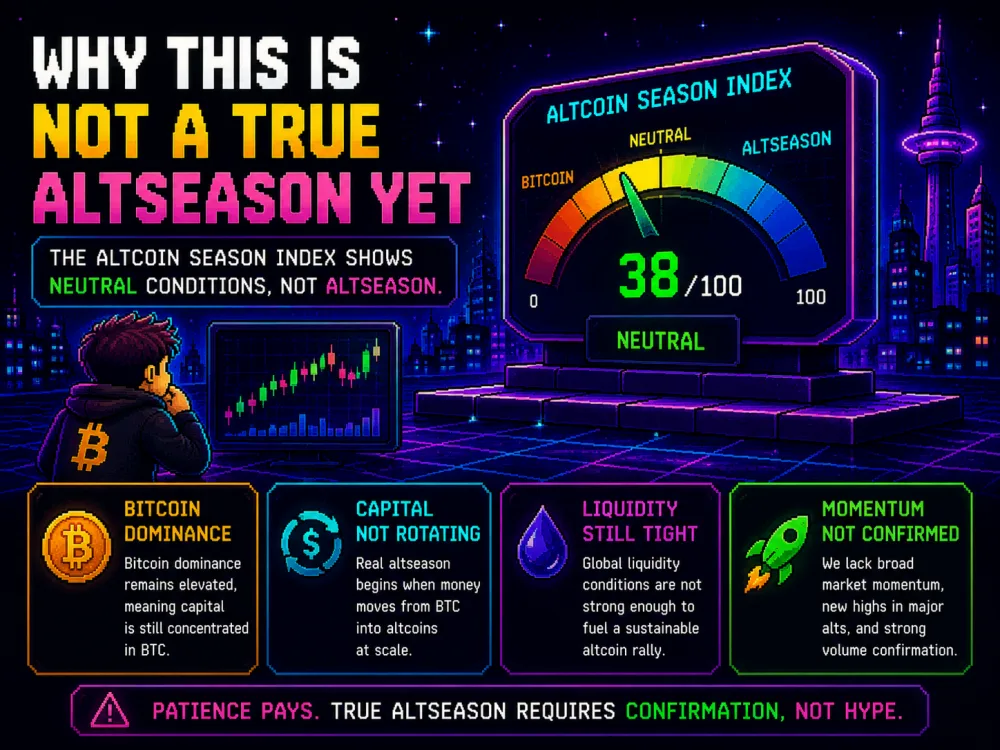
Here is where things start to slow down. Most altcoins need to keep rising together for the market to count this as a real altseason. At this point, it seems more like a first shift than anything solid.
Several risks remain.
If macro conditions get rougher, Bitcoin might take charge once more. When big money shifts back into just one place, that place is likely to be BTC. Strength in Ethereum may not show up clearly this time. Moves in mid-sized coins might stay scattered, never really joining forces. If traders keep jumping in and out fast, the fuel for bigger moves could vanish almost overnight.
For now, labeling it a sure altseason misses the mark. A clearer picture shows altseason signals reappearing, but real proof needs wider spread, stronger activity, and staying power.
Traders Look Ahead
Mid-cap momentum must spread beyond a few names if the trend is to last. A couple of quick spikes will not confirm anything. Watch how many smaller assets begin climbing above prior peaks against Bitcoin. See if leading sectors continue pulling in trading activity. Notice whether dips draw buyers rather than heavy selling pressure.
A steady Bitcoin could mean less pressure to keep setting daily records if Ethereum gains ground at the same time. When smaller coins rise independently, it hints that money is moving between assets instead of chasing one leader. Stability like this often shows that internal shifts matter more than top-tier noise.
The weaker version is simple: a sudden spike in trading, then a fast fade. Volume drops. Breakout attempts fall apart. This pattern hints at hesitation. Traders are not committing; they are just skimming edges with altcoins. Quick moves without follow-through speak louder than temporary excitement. Confidence remains thin, masked by brief flashes of action.
Right now, signs suggest a shift just beginning. Altseason signals are not shouting certainty, yet they are clear enough to show why some traders are edging toward mid-cap coins again. Not bold leaps. Just quiet moves guided by faint pulses.
Rotation Returns With Discipline
Surging interest in mid-sized cryptocurrencies comes as investors seek growth that Bitcoin might lack this far into the market phase. They are not walking away from Bitcoin. They are shifting focus toward fresh potential elsewhere. Movement builds slowly, yet momentum grows where smaller players start drawing attention once reserved for giants.
Altseason is not really about all alts rising. What is happening now shows that selective confidence is coming back. Mid-sized coins happen to show it first because they often react sooner than others when market mood shifts.
Most gains do not come from chasing each rising tick. Strength appears when dominance, trade flow, relative momentum, and sector leadership move together. If those deepen, today’s shift might grow into real movement. But if they weaken, few will remember this beyond a brief lift tied to Bitcoin swings.
Mid-caps are back on the board.
FAQ
What are altseason signals?
Altseason signals are market clues suggesting that altcoins may begin outperforming Bitcoin. These can include a dip in Bitcoin dominance, rising altcoin trading volume, stronger Ethereum performance, and mid-sized projects gaining ground.
Could it be that altseason is already here?
Maybe not. Right now, the market feels like it is in the early rotation phase, not a confirmed altseason. For a real altseason, smaller coins need to keep outperforming widely and consistently.
Why are traders rotating into mid-caps?
Mid-caps offer stronger growth potential than giants while usually having steadier footing than tiny tokens. When investors begin reaching for risk again, these assets often catch attention first.
Does Bitcoin dominance still matter?
Yes. Watching Bitcoin’s share gives a useful clue about where money flows: into Bitcoin itself or out into other cryptocurrencies. It works best when paired with trading activity and momentum shifts.
Which mid-cap tokens stand to gain?
The strongest candidates tend to be tokens with growing trade activity, a clear story, solid market depth, and recent outperformance against both Bitcoin and sector peers.