Tiny bits of digital money arrive through online tools when people do basic tasks. Sometimes, solving puzzles leads to rewards sent straight to a personal storage spot. Watching short videos unlocks fractions of coins placed into accounts automatically.
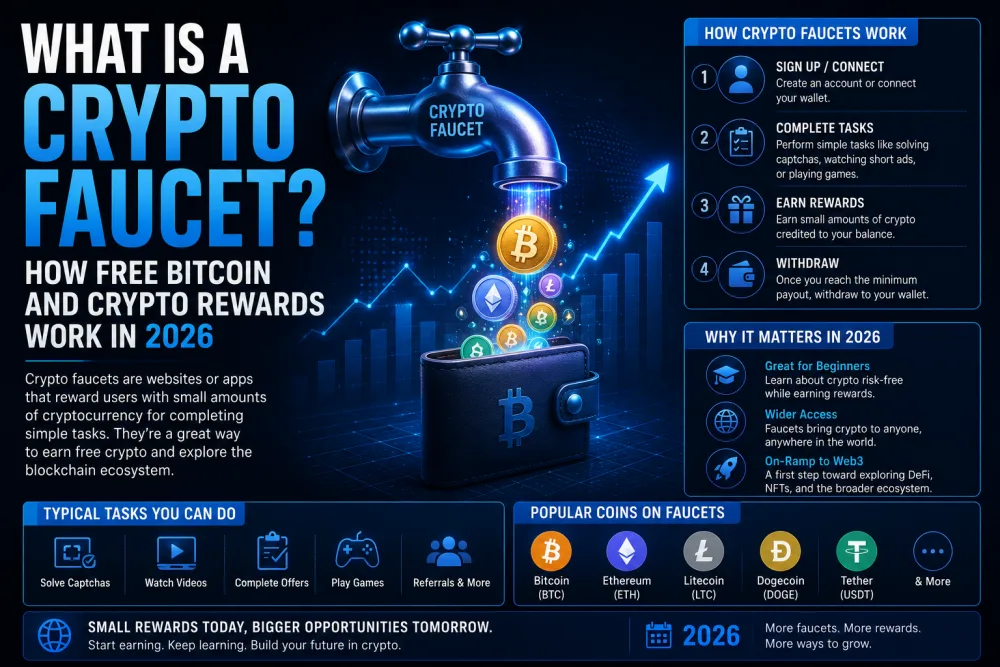
Completing forms brings micro-payments delivered without delay. Testing new software earns credits transferred within moments. Joining events triggers token drops assigned directly to participants. Claiming test funds results in instant deposits showing up right away.
Most people using crypto faucets in 2026 treat them like practice grounds – rarely as real paydays. Tiny rewards pop up often, yet cashing out usually comes with waiting limits. Behind the scenes, ads fuel many of these sites; some toss in mini-games, referral chains, or app downloads just to keep the lights on.
A few actually deliver coins, though never much at once. Then there are traps disguised as giveaways – sites eager to grab your keys, private words, login details, even money you’ve already sent.
Read more: Top Crypto Airdrops in 2026: A Practical Guide for Beginners
Contents
What Is a Crypto Faucet?
A drip here, a drop there – that is how these systems hand out digital coins. Think of water droplets by slow droplet, not a flood at once.
Crypto Faucet Meaning
Some people get tiny bits of cryptocurrency just by showing up online. These little payouts might show up as Bitcoin or Ethereum. Sometimes it is Solana, Dogecoin, or Litecoin. Other times, stablecoins sneak into the mix instead. Doing simple actions unlocks these drops. Points appear, too, floating around like digital dust. Even test versions of coins land in user wallets now and then.
A small task like solving a puzzle might be needed before getting Bitcoin from a faucet. Getting Ethereum this way typically gives fake coins used only on practice networks. Sometimes you play something quick just to receive experimental Solana tokens meant for developers.
Crypto Faucets Gained Attention Over Time
Back then, faucets caught on fast – offering free crypto bits without asking anything in return. Early Bitcoin days? A faucet meant new users could grab small amounts, check how wallets worked, or watch money move live across the network.
Even now, that job holds weight. People starting can explore addresses, balances, transaction checks, gas costs, and claim rewards, or pull funds through a faucet instead of spending money first.
How Crypto Faucets Function Within Digital Currency Systems
Faucets link onboarding with ad strategies, yet also serve as tools for early users. Instead of jumping straight in, newcomers try things out through small rewards. Advertisers find value here, since tiny payouts draw real engagement. Projects spark movement by offering free bits, which pull people in. Developers run tests using these micro-payments, checking how systems respond under live conditions.
Related: Top Staking Coins for Passive Crypto Income in 2026
Difference Between Crypto Faucets and Airdrops
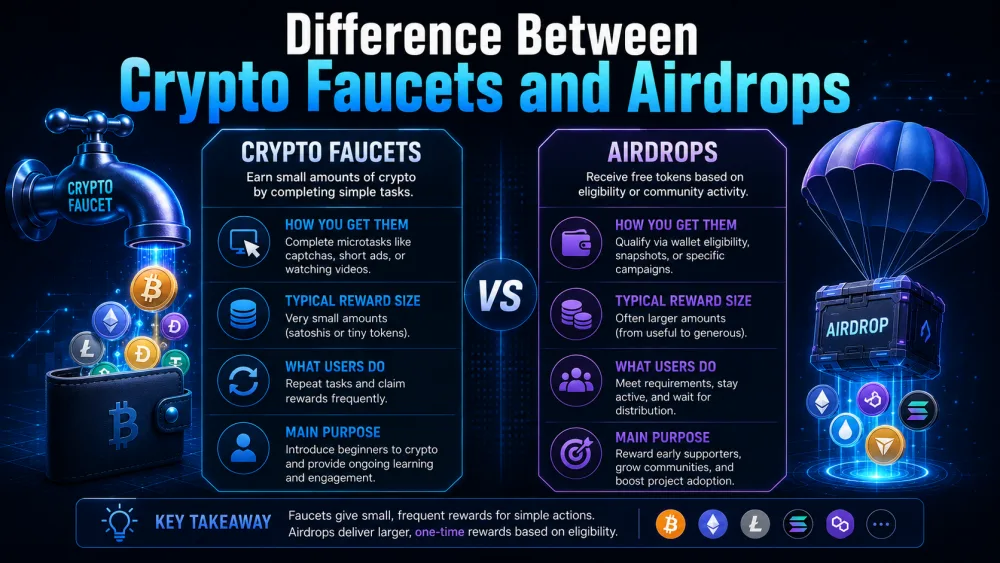
Most times, a faucet hands out tiny bits again and again when you finish something. Tokens from crypto airdrops go out during launches, campaigns, votes, or as thanks later on.
Fewer surprises come from faucets, yet they’re small. Larger amounts might arrive through airdrops, though nothing is guaranteed. In 2026, people start grabbing testnet coins while doing chores – maybe something good follows later.
How Crypto Faucets Work?
After doing a task, people show they’re human – then get a tiny payout. Sometimes it sticks around in the app; other times it lands straight in their wallet. Not every system handles coins the same way.
Doing Tasks for Free Cryptocurrency
Start here: people grab free Bitcoin by doing small tasks every day. Sometimes they type codes from images instead of just clicking buttons. Other times, it’s answering questions that feel like pop quizzes in school. Watching short video clips pays a bit, but so does installing apps you might delete later.
Completing forms about habits works too, especially when linked to special challenge pages inside reward hubs. Playing simple mobile games adds tiny amounts over time. Inviting friends? That sends extra coins into wallets slowly. Trying new blockchain networks through trial runs counts as a valid effort. Even following social media steps on platforms leads somewhere. Each method feeds the same result – slow accumulation without spending.
Captchas Ads Surveys Microtasks
Bots get blocked by captchas. Revenue flows in through ads. Advertisers reach people via surveys and offer walls. Completing small jobs – like testing apps, signing up, answering quick questions, or finishing a game level – falls under microtasks.
A fraction of what advertisers pay gets passed to people using the site, making payouts quite modest. Rewards remain limited because only a slice of income flows to users.
Wallet Links and Rewards Shared
Faucet websites handle tokens in different ways. One kind keeps track inside the platform itself. Another type sends straight to your address. For Web3 versions, linking a wallet helps spot which chain is needed – then they drop trial coins accordingly.
Some faucets just need your public wallet address. Others might push for risky permissions instead. Sharing private keys? That is never normal. Watch out if they request seed phrases. Broad access demands are red flags. Real ones won’t ask for that.
Related: What Is Crypto Slang? Most Popular Crypto Terms Every Trader Should Know in 2026
Faucet Claim Limits and Cooldowns
Some faucets set how often you can collect. One might let you grab funds each hour. Another could make you wait a full day between tries. Waiting periods keep automated scripts from draining the supply.
Most of the time, long waits between actions, along with small returns and steep withdrawal limits, add up to a bad deal.
Instant Withdrawals Compared to Minimum Payout Limits
Not every faucet pays out right away. A few need you to reach a set amount before cashing out. Look into how much you must earn to get paid. Fees might take a slice – find out if they do. See which cryptocurrencies actually work on the site. Speed varies wildly between services. Some ask for ID, others don’t. Your country could block access without warning. Fine print often hides surprises nobody mentions upfront.
Crypto Faucets in 2026
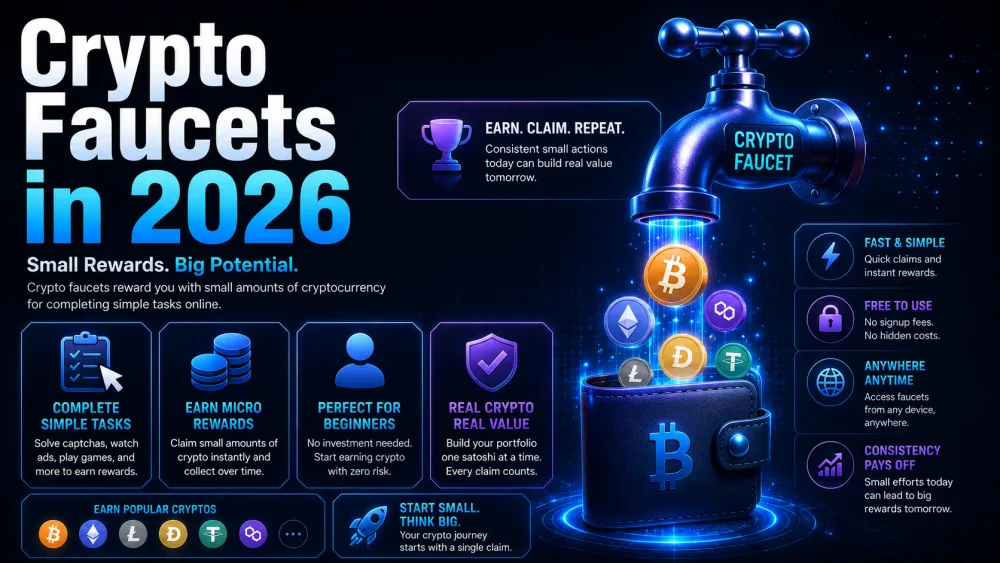
These days, crypto faucets show up in many shapes. Not all chase actual payouts – some just help coders test things out. A few latch onto internet jokes dressed as coins. You’ll find others inside the phone software. Referrals keep certain ones running. Then there are those tuned for grabbing free token drops.
Bitcoin Faucets
Some folks hand out tiny bits of Bitcoin through faucets. By 2026, those websites will barely deliver any real value. Learning how wallets work? Sure, they help there instead. Making money off them, though – don’t count on it.
Ethereum Faucets
Sometimes a faucet hands out small bits of actual ETH, though that happens rarely since Ether carries weight these days, and running moves on mainnet burns through cash fast. Usually, instead, you get fake coins on a trial network meant for checking how code behaves before going live.
Solana Faucets
Most of the time, a Solana faucet gives out devnet or testnet SOL▲$82.41. These coins go to builders checking how wallets work, along with games. Testing happens on NFT kits, too, sometimes swapping systems. Other times it’s about payment setups. DeFi experiments need them just as much.
Litecoin and Dogecoin Faucets
Even though they’re old, Litecoin and Dogecoin drip sites still pull attention since many beginners recognize them. Memes pop up a lot on DOGE▲$0.0778 claim pages, sometimes mixed with mini challenges. What stands out with LTC▲$44.99 is how fast it moves small amounts, making sign-ups feel quick. The vibe stays basic across most of these spots.
Developer Testnet Faucets
Free test tokens come from a testnet faucet, helping builders work on blockchain apps. Developers use them as tools because they’re part of the setup, not earnings.
Memecoin Faucets and Viral Rewards
Now and then, a memecoin faucet tosses out small amounts of joke coins just to grab attention. These little giveaways can spark interest in a project without much fuss. Not every one of them means trouble – some simply spread awareness like flyers on a street corner. Yet danger hides in others, quietly waiting behind flashy promises. Trust doesn’t always belong here.
Watch out for faucets needing money first. Some want you to approve contracts before giving anything back. Others ask you to connect your wallet too soon. A few pile up social media chores just to get paid later. Withdrawals shouldn’t come with long strings attached. If it feels like a maze, step away.
| Faucet Type | Main Use | Reward Type | Best For | Main Risk |
|---|---|---|---|---|
| Bitcoin faucet | Claim small BTC▲$62,630.00 rewards | Satoshis or points | Beginners learning wallets | Low payouts and high thresholds |
| Ethereum faucet | Test Ethereum apps | Mostly testnet ETH | Web3 developers | Fake wallet connection sites |
| Solana faucet | Test Solana apps | Devnet or testnet SOL | Developers and testers | Phishing copies |
| Litecoin/Dogecoin faucet | Small casual rewards | LTC, DOGE or points | Simple crypto practice | Ads and weak rewards |
| Testnet faucet | Get tokens for development | Test tokens with no market value | Developers and airdrop hunters | No guaranteed real profit |
| Memecoin faucet | Viral token campaigns | Small meme token rewards | Speculative users | Scams and unsafe approvals |
| Mobile faucet app | Claims, games, surveys | Points or crypto rewards | Casual mobile users | Excessive permissions and ads |
Do Crypto Faucets Actually Pay Out?
True, though “money” means different things. Earning tiny payouts happens sometimes. A steady paycheck? Not here. Reliable extra earnings won’t show up either. Building real financial backing isn’t likely at all.
Most people make almost nothing from faucet apps since payouts run on slim margins. Ads, surveys, partner deals, user tasks, and web traffic bring income to companies – yet barely any trickles down to individuals using them.
Some people using faucets earn almost nothing since every new person brings in just a bit. Costs like stopping scams, network charges, coding work, help services, server rent, and company gains eat up most returns, leaving tiny payouts.
Read more: What Is AI Mining in Crypto? Top 5 Best AI Mining Platforms to Earn in 2026
Crypto Faucets in 2026: Are They Still Relevant?
Most people find crypto faucets useful when learning the basics. For trying out new platforms, they can be helpful too. Yet relying on them to make money doesn’t pay off in practice. Experimenting without pressure? Good fit. Building income? Not really. Worthwhile only if expectations stay small.
Starting out? Crypto makes sense bit by bit. Building code? Safety fits right into the flow. Hunting rewards? Testnets open doors without risk.
Crypto Faucet Scams and Security Risks
Surprisingly, fake faucet schemes thrive where cash feels invisible. Since coins appear at no cost, caution slips away. A quick tap replaces careful thought. Wallets link before doubts surface. Red flags get brushed aside without a second look.
Fake Wallet Connection Attacks
Sometimes a phony faucet wants you to link a wallet, then approve a message. Try using an empty wallet when dealing with faucets. A wallet with real value should never touch unfamiliar crypto faucet websites.
Malware and Phishing Found on Some Faucet Sites
One trick involves counterfeit download buttons, sneaky browser add-ons, imitation phone apps, or deceptive login screens. Another swaps real website addresses with ones that look almost identical.
Most taps work without needing secret codes, recovery words, or sketchy add-ons in your browser.
Withdrawal Scams and Hidden Terms
Out of nowhere, some sites display a rising balance that catches your eye. Yet when it comes time to take money out, things get blocked without warning. Instead, they demand payment – maybe a fee, an upgrade, or even more cryptocurrency. Hidden behind shiny numbers, the promise vanishes unless you give something first.
Most real faucets set a small threshold. Before sending coins, they never ask you to pay first.
What to Check Before Accessing a Faucet
Start fresh each time. One wallet just for small tasks, nothing more. A different email every round – no repeats. Main savings stay far from test zones. Shut off access when trials wrap up. Getting something free? Could take minutes, bandwidth, or maybe trouble.
Difference Between Mainnet and Testnet Tokens
Real coins live on the mainnet. These move between people for actual worth. Pretend tokens stay inside trial systems. One works like money, others just help check how things run.
Just because it gives out coins does not mean those coins are valuable. Learning how things work happens here instead – on testnets.
Developers Use Testnet Faucets to Access Free Tokens
Testing on mainnet costs a lot, so developers turn to testnet faucets instead. When something goes wrong with a smart contract, actual money disappears.
Testnet Faucets and Airdrops Connection
Some testnet faucets help people collect tokens ahead of potential airdrops. Claiming test coins lets users try out a protocol early. Doing tasks on the network might matter later should a real token arrive. Activity now could be noticed when a project goes live. Tokens today may have meaning tomorrow if the launch goes through.
Things might work out like that; still, there’s no promise they will.
Faucets tie into airdrop farming in 2026. Some people grab testnet tokens to try out new systems ahead of any potential release.
Why Airdrop Farmers Use Faucets
Farmers grab coins from faucets since testnets need fuel to run. When there is no ETH on a trial network, basic moves like swapping or voting hit a wall. Moving assets across chains stops dead without tokens in the wallet. Minting new items, pushing code, or trying apps – none of it works empty-handed.
Earning Testnet Tokens for Future Rewards
It sounds good, though nobody really knows yet. A few programs did pay those who tested at first. Others skipped that step completely.
Start with curiosity, then let guesses follow behind. Learning leads when taps drip slowly. Watch each drop before chasing streams. First comes understanding, only after does wondering tag along. Begin by listening to what flows, not where it might go.
Does Using Faucets Actually Make Money?
Faucets can help you learn, plus they’re useful for testing things out. Occasionally, though not often, you might get something extra down the line. Exploration comes first; rewards sometimes follow. Rare surprises appear, but never count on them.
Crypto Faucets Pros and Cons
Crypto faucets offer some actual perks – yet come with obvious drawbacks, too. Still, users often overlook the trade-offs involved when chasing small rewards early on.
Benefits of Using Crypto Faucets
Start here if you are new to digital money – faucets hand out small amounts so you can explore. These tools show how wallet IDs work, along with what a balance means. Getting funds involves making requests, then waiting for network approval. Each step reveals something: sending, receiving, even those tiny service charges that apply.
Cons and Hidden Downsides
Spending minutes on these sites eats into your day. Privacy takes a hit when forms demand personal details. Tiny payouts show up after long waits instead of real value. Some platforms load pop-ups that mimic scams just to keep clicks coming. Rewards barely cover effort, while data collection grows behind the scenes.
Some taps pretend there’s money when there isn’t, then freeze your access. Not every fixture plays fair – traps hide behind shiny knobs. A broken spigot holds back what should flow freely.
Faucet Economics Explained
Most folks overlook how tiny rewards add up over time. Since eyeballs equal income, companies spend cash to reach people online. Clicks, sign-ups, video views – each move counts toward profit. A cut goes straight to the operator; another slice gets passed down. What users collect seems small, yet it stems directly from what advertisers fund.
Are Crypto Faucets Legal?
Most places do not ban crypto faucets outright, yet rules shift based on where you are, what coin is involved, how money moves, and what the site actually does. Still, location often decides whether it crosses a line.
Global Legal Standing of Cryptocurrency Faucets
A single tap could act like a giveaway system or short-term promo. When tied to betting, loans, trading, big-return offers, or holding assets, that same tap might draw heavier oversight.
It depends on where you live – crypto rules differ by location, so look up your area’s stance. Some places limit ads about digital money, along with trading platforms. Token handouts might be blocked there, too. Holding assets for others could also fall under restrictions. Rules shift from one region to another without warning.
Tax Rules for Money Earned from Faucets
Some nations treat faucet payouts as taxable. Tiny returns might fall under income rules – think perks, odd jobs, digital coin gains. Rules differ by location. What seems minor could still matter come tax season.
KYC Rules at Faucet Sites
One tap might just need your email address. When bigger payouts come into play – like real money transfers or linked cards – proof of identity could be next. Withdrawals through exchanges often bring extra steps, too.
Regional Rules and Legal Requirements
Some faucets shut out people based on where they live. Sanctions can be one reason. Ads might not allow it either. Crypto laws differ by place, which matters too. Payment providers sometimes say no. Rules from partners often shape access.
The Future of Crypto Faucets
Faucets in crypto aren’t just taps anymore – now they hand out rewards, help builders code faster, while quietly pulling new users into the world of Web3.
AI-Powered Reward Platforms
Picture this: rewards shaped by where you are, what you’ve done, and how you play. A system that shifts with your moves might show different steps each time. Location matters. So does what’s been bought before. Skill nudges the path forward, too.
Gamified Web3 Faucets
One way to see it: gamified faucets might stick around longer now. Rather than just hitting a claim button, people could finish small missions. Learning how DeFi works becomes part of the path forward. Testing new tools fits into the flow, too. Badges show up when tasks add up. Points pile on slowly, tied later to something useful down the line.
Faucet Links DeFi and SocialFi
Faucets might soon link up with decentralized finance and social platforms. Starting fresh, someone can grab trial currency, dive into loan experiments, take part in community drives, and finish mini challenges – all while building credibility through actions. Each step flows into the next without pauses or extra steps.
Who Uses Crypto Faucets?
Starting small? That kind of user often finds crypto faucets fit just right – think new learners, code builders, trial runners. Folks who want steady paychecks won’t get far here. Instead, it’s more about testing the waters without risk. Patience matters, since rewards trickle slow. Not everyone stays interested once that hits. Some move on fast when real effort shows up.
Strategies That Work When You’re Starting Out
Hold back when you’re new – faucets can wait. Dip a toe first, guard what you have, skip the too-good claims, because free coins are really just lessons in disguise.
Try a fresh wallet when grabbing test coins. Main balances stay safer away from that. Check how withdrawals work before diving in. If someone asks for your recovery words – walk away. Official testnets make sense first, especially when you’re just getting used to Web3.
FAQ
What Is a Crypto Faucet?
Faucets hand out tiny bits of digital money when people finish actions like watching videos, grabbing rewards, or trying new tools on test networks. Sometimes they show up just to help folks practice without risk.
What Is the Best Crypto Faucet in 2026?
One size does not fit all when it comes to crypto faucets. Look at how payouts work before anything else. Reputation matters just as much as speed. Withdrawal caps can surprise users who aren’t careful. Not every coin works on each platform. Security checks shouldn’t wait until after you sign up. Past user comments often reveal hidden issues. Wallet access requests need close attention, too.
Testnet Faucet Explained?
Faucets on a test network hand out trial coins at no cost. Because developers need them, they run experiments like launching code or checking how programs behave under load. Running those tests takes small amounts of coins to cover simulated processing costs.
Are Crypto Faucets Safe?
Just because a few seem harmless doesn’t mean most aren’t dangerous. Try a temporary wallet instead of the one where you keep your main stash, skip putting funds in, yet always guard your recovery words closely.
Are Crypto Faucets Legal?
Faucets handing out cryptocurrency? They’re not banned everywhere, yet laws shift depending on where you are and what kind of site it is. Depending on the setup, taxes might matter. Identity checks could come into play. Ads shown there may face limits. If games of chance appear, gambling rules whisper nearby. Rules for digital money platforms often stretch their reach here, too.
How Much Can I Earn from Crypto Faucets?
Some people get just a tiny bit back. What you receive ties to where you are, what you do, how many friends join through you, when things reset, how often claims open, plus what the site allows taking out.