Yesterday, April 13, bitcoin resumed its rally and tested the $74,800 level.
At the time of writing, the leading cryptocurrency was trading at around $74,500, up more than 5% over the past 24 hours.
Read also: Y Combinator Sends Its First Seed Investment in USDC Only
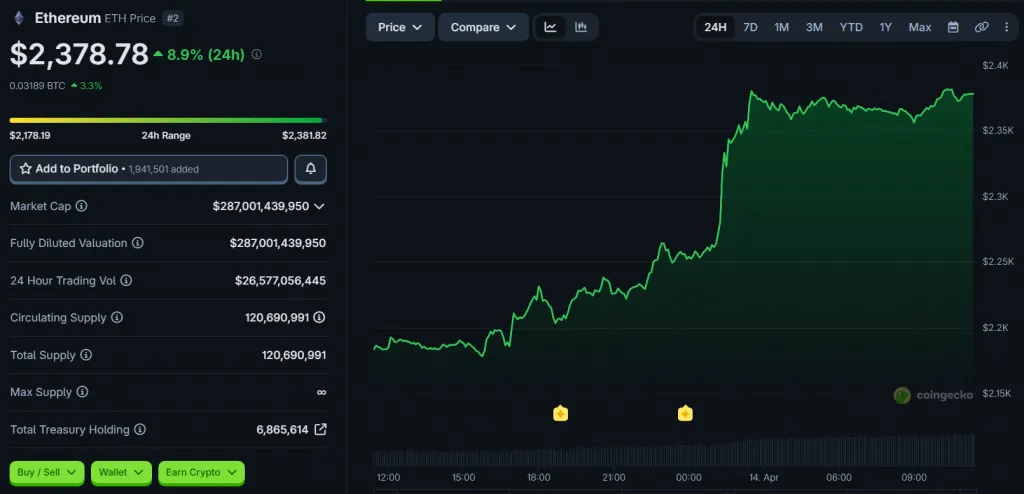
Ethereum (ETH) also moved higher and traded at around $2,366, up 9% on the day.
All top 10 cryptocurrencies by market capitalization closed the session in positive territory.
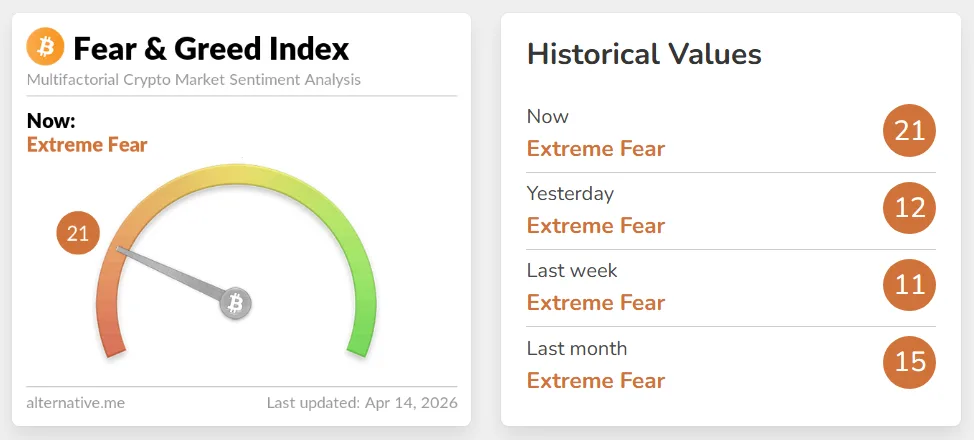
The Crypto Fear & Greed Index rose from 12 to 21. It still remains in extreme fear territory.
What is moving BTC today?
Investors continue to watch talks between the United States and Iran. The weekend brought little real progress. Still, sentiment turned cautiously optimistic after news that the second round of negotiations is set for April 16.
The market also drew support from four proposals on easing tensions in the Middle East put forward by Chinese President Xi Jinping.
Read also: Crypto ETP Inflows Accelerate to Fastest Pace Since January—Here Are the Main Reasons
Against this backdrop, oil futures closed their upward gap, while major U.S. stock indexes continued to recover. At the same time, bitcoin’s (BTC) price rebound triggered $325.7 million in outflows from spot BTC ETFs, following $240.4 million in inflows a day earlier.
Market Microstructure
Glassnode analysts say the market still shows the key traits of a bull cycle, though with signs of caution and a shift toward greater stability. Santiment data shows that since Sunday, wallets holding between 1 and 10,000 BTC added 27,652 BTC. This group now controls 21.3% of bitcoin’s total supply, or more than 4.25 million BTC.
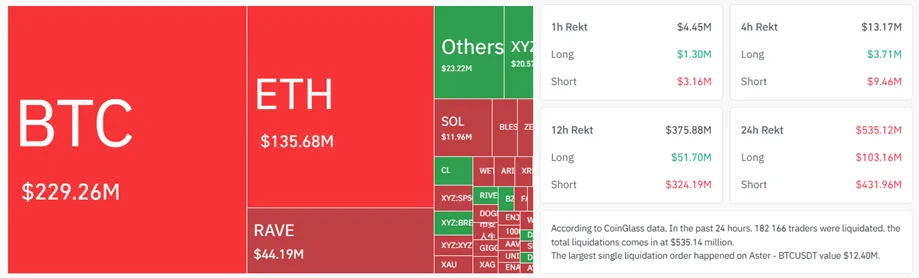
Strong buying on Wall Street added momentum. A wave of short liquidations in the derivatives market also pushed prices higher. Over the past 24 hours, traders liquidated $218.2 million in short positions, while long liquidations reached just $11 million.
Today at 1:30 p.m. UTC, the U.S. will release producer inflation data. The report may offer more clarity on how geopolitical tensions could affect the Federal Reserve’s monetary policy.
Read also: Developer Proposes Quantum-Resistant Bitcoin Protection Without a Soft Fork