Building a crypto wallet no longer means creating every signing, recovery, and blockchain connection layer from scratch. A modern crypto wallet API can handle wallet creation, key management, transactions, and multi-chain infrastructure while developers focus on the product itself.

Contents
- What Is a Crypto Wallet API?
- How to Choose a Crypto Wallet API
- 7 Best Crypto Wallet APIs in 2026
- Best Crypto Wallet APIs Compared
- Crypto Wallet API Use Cases
- How to Integrate a Crypto Wallet API
- Crypto Wallet API Security
- Crypto Wallet API Pricing in 2026
- Crypto Wallet API vs Building a Wallet From Scratch
- FAQ
What Is a Crypto Wallet API?
A crypto wallet API lets applications create and manage blockchain wallets programmatically. Apps can generate addresses, sign transactions, retrieve balances, and monitor wallet activity.
Modern crypto wallet APIs often include authentication, key management, policies, and smart account features. Some platforms also provide complete crypto Wallet-as-a-Service infrastructure.
Read more: Best Crypto Wallets: Hot & Cold Options Reviewed
How Does a Crypto Wallet API Work?
A wallet API exposes an application to secure wallet infrastructure through defined endpoints. Developers can request wallet creation, signing, or blockchain operations via authenticated requests.
The provider handles sensitive cryptographic processes behind the interface. Applications can interact with blockchain networks without directly managing every private key operation.
Crypto Wallet API vs Wallet SDK
A crypto wallet API usually works through server requests and standardized endpoints. A crypto wallet SDK provides libraries that developers can install directly into their applications.
Many providers offer both options. The API handles backend wallet infrastructure, while a crypto wallet SDK simplifies client-side authentication and transaction flows.
Crypto Wallet API vs Wallet-as-a-Service
Wallet-as-a-service provides a broader infrastructure layer than a basic wallet API. WaaS crypto platforms can include key management, recovery, policies, and monitoring.
A crypto Wallet-as-a-Service provider may also handle embedded wallets and authentication. The distinction has become less clear as the wallet API providers expand their products.
Crypto Wallet API vs Blockchain API
A blockchain API usually provides access to nodes, balances, transactions, and blockchain data. It does not necessarily create or control wallets.
A blockchain wallet API adds signing and key management to that infrastructure. Developers often combine both layers when building complex multi-chain products.
How to Choose a Crypto Wallet API

Choosing the best wallet API requires more than comparing the number of supported networks. Security architecture, pricing, custody, and developer tooling are often more important.
Teams should define their wallet model before comparing providers. A consumer wallet has different requirements than an exchange or automated trading system.
Blockchain and Multi-Chain Support
A multi-chain wallet API should support every ecosystem your product needs today. It should also provide a realistic path toward additional networks.
EVM support alone may not be enough. Applications increasingly require Solana, Bitcoin, Sui, Cosmos, or other ecosystems.
Wallet Creation and Key Management
Wallet generation should happen quickly without exposing sensitive keys to application servers. Strong platforms isolate signing materials through MPC, TEE, or similar systems.
Developers should also examine export and recovery options. Vendor lock-in becomes a serious issue when millions of user wallets already exist.
Transaction Signing and Broadcasting
A strong crypto wallet API should simplify signing and broadcasting without hiding essential controls. Developers need predictable transaction states and reliable error handling.
Some providers handle broadcasting automatically. Others focus on secure signing and let applications choose their own RPC infrastructure.
Wallet Data and Transaction History
Wallet applications need more than addresses and signatures. Balance data, token holdings, and transaction history often determine the quality of the user experience.
Not every wallet API provides full indexing. Teams may still need a separate blockchain data provider for advanced analytics.
Webhooks and Real-Time Notifications
Webhooks notify applications when deposits, withdrawals, or transaction states change. They remove the need to poll blockchain networks continuously.
Real-time events become especially important for exchanges and payment applications. A delayed deposit notification can create poor customer experiences.
Security and Compliance
Security should remain the priority when evaluating crypto wallet APIs. Teams should examine key isolation, audits, access controls, and policy engines.
Regulated businesses may also need KYT, audit logs, transaction screening, or approval workflows. Consumer applications can have very different compliance requirements.
SDKs and Developer Experience
Good documentation can reduce integration time from months to days. TypeScript support remains especially important for Web3 applications.
Mobile teams should check React Native, Swift, Kotlin, Flutter, and gaming SDK availability. Clear examples also make debugging significantly easier.
Related: Top 5 DEX Wallets in 2026: Which Crypto Wallet Is Best for DeFi and Swaps?
Pricing and API Limits
Wallet API pricing can depend on monthly users, signatures, wallet operations, or transaction volume. Enterprise providers often negotiate custom contracts.
Rate limits also matter at scale. A cheap plan becomes less attractive when traffic spikes constantly hit restrictive API ceilings.
7 Best Crypto Wallet APIs in 2026
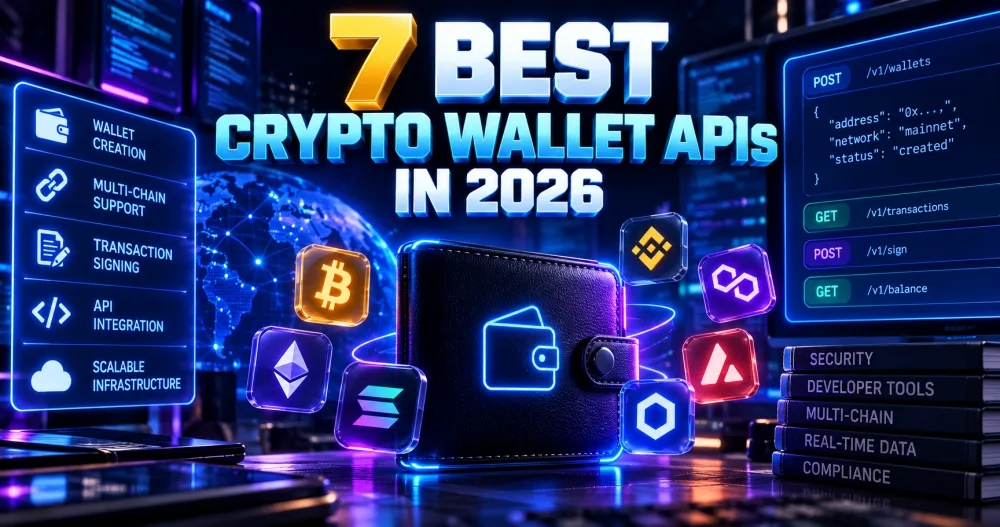
The best crypto wallet APIs serve different parts of the market. Some prioritize consumer onboarding, while others focus on cryptographic security or enterprise controls.
These seven providers offer strong options for developers building wallets, fintech products, games, exchanges, and automated applications.
1. Privy — Best Crypto Wallet API for Consumer Apps
Privy is one of the strongest choices for consumer-facing embedded wallets. It combines authentication, wallet creation, signing, gas sponsorship, and transaction controls.
Users can join through email, social accounts, SMS, or passkeys. Apps can create wallets without exposing seed phrases during onboarding.
Privy offers full functionality across EVM and Solana ecosystems. It also provides wallet abstractions for Bitcoin, Cosmos, Stellar, Sui, Tron, and several other networks.
Its developer tools suit fintech, social, and consumer applications particularly well. Privy also supports smart wallets and programmable transaction policies.
2. Turnkey — Best Crypto Wallet API for Key Management
Turnkey focuses heavily on secure key management and cryptographic signing. Its architecture makes it attractive to developers who need granular wallet policies.
Private key operations occur inside secure enclave infrastructure. Applications can define exactly which users or systems may authorize specific wallet actions.
Turnkey supports multi-chain signing and provides strong EVM and Solana tooling. Developers can also integrate chain-specific infrastructure around its core signing layer.
Pricing primarily follows signature usage, which can suit backend-heavy applications. The platform also supports key import, export, policies, and transaction management.
3. Coinbase CDP — Best Crypto Wallet API for Developers
Coinbase Developer Platform provides wallet infrastructure for consumer applications, server workflows, and AI agents. CDP supports both EVM networks and Solana.
Developers can create standard accounts or programmable smart accounts. Smart accounts add features such as transaction batching and gas sponsorship.
Server wallets suit automated systems, trading tools, and treasury applications. Embedded wallets target user-facing products with familiar login methods.
CDP also integrates with broader Coinbase developer infrastructure. That makes it attractive for projects using payments, onramps, trading, or stablecoin services.
Read more: How to Create a Crypto Wallet: Step-by-Step Guide for Beginners
4. Fireblocks — Best Crypto Wallet API for Enterprise
Fireblocks targets institutions, exchanges, fintech companies, and large digital asset businesses. Its infrastructure emphasizes security, governance, and operational controls.
The platform uses MPC-based key management to avoid a single private-key failure point. Policy engines can enforce approval rules before transactions leave wallets.
Fireblocks supports more than 150 blockchain integrations across major ecosystems. Bitcoin, Ethereum, Solana, TRON, XRP▲$1.13, and many EVM networks appear within its infrastructure.
Enterprise features make Fireblocks powerful but relatively expensive for small projects. Large organizations may value its controls more than low monthly costs.
5. Web3Auth — Best Crypto Wallet API for Social Login
Web3Auth has evolved into MetaMask Embedded Wallets, but many developers still know the infrastructure by its original name. Its main strength remains Web2-style authentication.
Users can create wallets through email, SMS, passkeys, social accounts, or existing authentication systems. That model removes much of the usual onboarding friction.
The platform offers native EVM and Solana support, plus broader blockchain integrations. Bitcoin support also forms part of its expanding multi-chain wallet infrastructure.
MPC and threshold cryptography protect user-controlled keys. Native account abstraction can add gasless transactions and programmable wallet features.
6. Dynamic — Best Crypto Wallet API for Multi-Wallet Apps
Dynamic combines embedded wallets with external wallet connections and user authentication. That flexibility works well for applications serving both crypto-native and mainstream users.
A customer can use an embedded wallet or connect an existing wallet. Applications can also associate multiple wallets with the same user identity.
Dynamic supports EVM, Solana, Sui, and additional signing environments. Its infrastructure also provides options for Bitcoin and Cosmos integrations.
Smart account integrations enable gas sponsorship, batching, and session-based actions. Server wallets additionally suit automation and AI agent use cases.
7. Openfort — Best Crypto Wallet API for Web3 Gaming
Openfort focuses on embedded wallet infrastructure for games, fintech products, stablecoin apps, and automated systems. Gaming remains one of its strongest use cases.
Players can receive wallets after signing in through familiar authentication methods. Session keys can then reduce repetitive transaction approvals during gameplay.
The platform supports more than 40 EVM networks and Solana. Smart accounts, gas sponsorship, programmable policies, and backend wallets come within the broader stack.
Openfort also provides a self-hostable signing option. Teams seeking additional infrastructure control may find that model attractive.
Read Also: Crypto Wallet MetaMask Rolls Out One-Click Approval for Recurring Trades
Best Crypto Wallet APIs Compared
No provider wins every category. A consumer app may prefer Privy, while a regulated institution may find Fireblocks more suitable.
| Provider | Best For | Main Chain Coverage | Key Model | Smart Wallets | Pricing Style |
|---|---|---|---|---|---|
| Privy | Consumer apps | EVM, Solana, Bitcoin and more | TEE-based secure wallets | Yes | MAU and usage |
| Turnkey | Key management | Multi-chain signing | Secure enclaves | Supported workflows | Per signature |
| Coinbase CDP | Developers and agents | EVM, Solana | TEE infrastructure | Yes | Usage-based |
| Fireblocks | Enterprise | 150+ integrations | MPC | Supported solutions | Enterprise |
| Web3Auth | Social login | EVM, Solana and more | MPC/TSS | Yes | Active wallets |
| Dynamic | Multi-wallet apps | EVM, Solana, Sui and more | MPC | Yes | MAU or operations |
| Openfort | Gaming and fintech | 40+ EVM chains, Solana | TEE/self-hosted options | Yes | Usage-based |
Supported Blockchains
Fireblocks provides the broadest institutional network coverage. Privy also supports several ecosystems beyond EVM and Solana.
Dynamic works well for applications combining multiple wallet ecosystems. Coinbase CDP remains strongest across EVM and Solana rather than Bitcoin wallet creation.
Custody and Key Management
Turnkey stands out when developers want detailed control over key authorization. Fireblocks focuses on institutional MPC and governance.
Privy, Dynamic, and Web3Auth prioritize smooth self-custodial user experiences. Coinbase CDP now supports multiple custody models within its wider platform.
Smart Wallets and Account Abstraction
Privy, Coinbase CDP, Dynamic, Web3Auth, and Openfort all support modern smart wallet experiences. Available implementations differ between platforms and chains.
Account abstraction can enable batching, permissions, recovery, and automated actions. Teams should compare actual network coverage instead of checking only a feature box.
Gas Sponsorship
Gas sponsorship lets an application pay blockchain fees for users. It can dramatically improve onboarding for users unfamiliar with native gas tokens.
Privy, Coinbase CDP, Dynamic, Web3Auth, and Openfort provide gasless transaction options. Availability can vary between EVM networks and Solana.
Security
Turnkey and Fireblocks emphasize cryptographic controls as core product features. Both provide strong policy systems for high-value transaction environments.
Consumer-focused services add secure enclaves, MPC, MFA, and recovery mechanisms. The best architecture depends on who ultimately controls wallet authorization.
Pricing
Privy and Dynamic use plans connected to active users or usage. Turnkey charges mainly around signatures, while Openfort emphasizes operation-based pricing.
Web3Auth uses active-wallet tiers. Fireblocks starts at a much higher enterprise price level than most consumer-focused providers.
Crypto Wallet API Use Cases
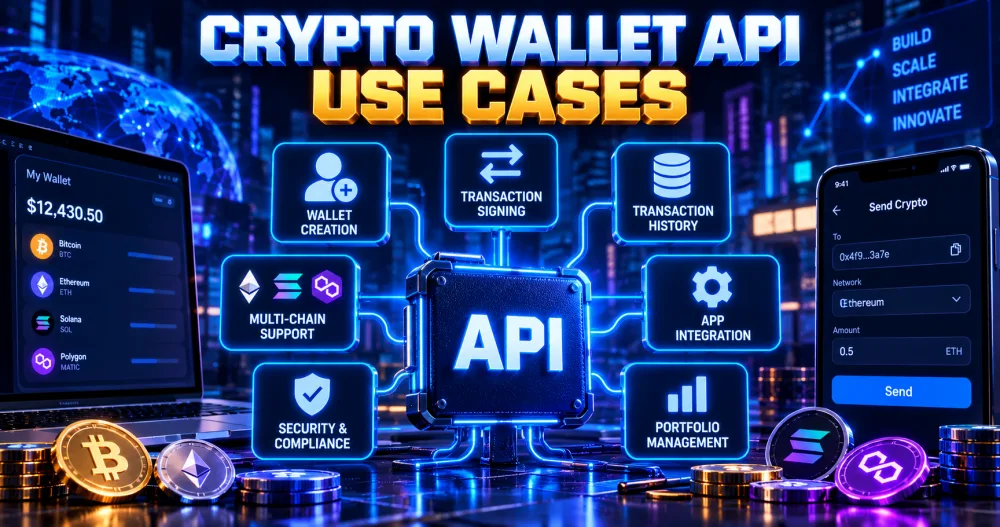
A Web3 wallet API can support much more than a standalone wallet application. Wallet infrastructure increasingly sits inside products where users barely notice it.
Different use cases require different custody and automation models. Choosing a provider should start with the product workflow.
Multi-Chain Wallets
A multi-chain crypto wallet API can generate addresses across several blockchain ecosystems. Users can then manage assets without switching applications.
Developers should check whether each chain gains full transaction support. Basic signing support differs greatly from complete wallet functionality.
Embedded Crypto Wallets
An embedded wallet API creates wallets directly inside an app. Users can authenticate with email, social accounts, or passkeys instead of seed phrases.
The best embedded wallet API 2026 options also include recovery and gas sponsorship. These features can make Web3 onboarding resemble a standard fintech experience.
DeFi Applications
DeFi apps can use a wallet API for developers to create seamless trading or lending experiences. Smart wallets can batch several contract interactions.
Session permissions may reduce repeated signatures during approved workflows. Risk controls can also restrict access to specific protocols or token amounts.
Crypto Exchanges and Trading Platforms
A crypto wallet API for exchanges must support deposits, withdrawals, policies, and high transaction volumes. Reliable monitoring becomes essential during market volatility.
Institutional platforms may prefer MPC wallet API infrastructure with approval workflows. Smaller trading applications can use server wallets with programmable limits.
Web3 Gaming
A crypto wallet API for gaming can create wallets without interrupting gameplay. Players should not need to understand seed phrases before starting.
Session keys and gas sponsorship improve repetitive blockchain interactions. Openfort and similar providers design infrastructure specifically around these experiences.
Stablecoin Payments
A crypto wallet API for stablecoin payments can generate accounts for customers, merchants, or employees. Applications can automate transfers while monitoring balances.
Gas sponsorship helps users send stablecoins without holding native tokens. Fintech teams should also evaluate compliance and reconciliation capabilities.
AI Agent Wallets
AI agents need programmable wallets rather than traditional interactive signing flows. Server-controlled accounts can execute approved transactions automatically.
Policy engines can restrict destinations, tokens, or daily spending. Coinbase CDP, Dynamic, Openfort, Privy, and other platforms increasingly target agentic use cases.
Related: MPC Wallet: Is Crypto Finally Moving Beyond Seed Phrases?
How to Integrate a Crypto Wallet API
Most wallet integrations follow a similar sequence. The exact SDK and authentication model vary between crypto wallet API providers.
Developers should test the complete transaction lifecycle before production. Recovery and failure cases deserve as much attention as wallet creation.
Create an API Account
First, create a developer project and obtain the required credentials. Backend secrets should never appear inside public frontend code.
Separate development and production environments where possible. Teams should also configure allowed origins and permissions before launching.
Generate a Wallet
Call the wallet creation endpoint after authenticating the user or backend service. The provider then creates the required cryptographic account.
Embedded products can automate this during signup. Server applications may generate wallets before users ever interact with the product.
Retrieve a Wallet Address
The API returns a public blockchain address after wallet creation. Applications can display this address or store it with the user profile.
Multi-chain products may generate several addresses. EVM-compatible networks can often share one address across multiple chains.
Sign and Send Transactions
Applications build a transaction and submit it for authorization. The wallet infrastructure then signs it according to configured security rules.
Some APIs also broadcast the signed transaction automatically. Others return a signature so developers can choose their own RPC provider.
Monitor Wallet Activity With Webhooks
Webhooks can report deposits, withdrawals, failed transactions, and confirmation changes. Applications should verify webhook signatures before processing events.
Production systems also need retry logic. Blockchain confirmations can arrive later than expected during network congestion.
Crypto Wallet API Security
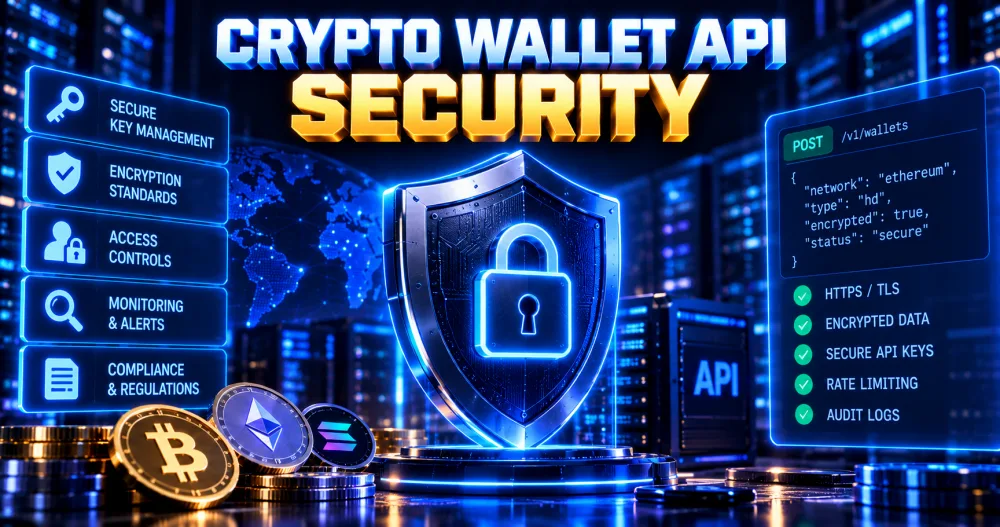
Security architecture should influence every wallet infrastructure decision. A convenient API cannot compensate for weak authorization or key protection.
Modern providers increasingly combine secure hardware, cryptography, and transaction policies. Developers remain responsible for configuring those controls correctly.
MPC and TEE Wallet Security
An MPC wallet API distributes signing responsibility across multiple cryptographic components. No single complete private key needs to exist during signing.
TEE systems isolate wallet operations inside protected execution environments. Both approaches aim to reduce single points of compromise.
Custodial vs Non-Custodial Wallet APIs
A custodial wallet API gives a company or regulated provider control over customer assets. This model can simplify recovery but may increase compliance obligations.
A non-custodial wallet API keeps users in ultimate control. Embedded infrastructure can still hide complex key management from the interface.
Private Key Management
Applications should avoid storing raw private keys in ordinary databases. Secure wallet infrastructure isolates keys from application servers and employees.
Exportability also matters. Users or businesses need a clear migration path if they later change infrastructure providers.
Transaction Policies and Spending Limits
Policies can block suspicious transactions before signing occurs. Teams may restrict addresses, contracts, token values, or transaction frequency.
Spending limits become particularly valuable for automated wallets and AI agents. A compromised application should not gain unlimited wallet authority.
Wallet Recovery and Key Rotation
Recovery mechanisms protect users when devices or authentication credentials disappear. Poor recovery design can make otherwise secure wallets unusable.
Enterprise systems may also require credential rotation and disaster recovery. Developers should test these processes before handling meaningful funds.
Compliance and Audit Controls
Regulated wallet infrastructure may need immutable logs and structured approval histories. Transaction screening can further support AML and risk programs.
Compliance needs vary by jurisdiction and custody model. A crypto wallet API for fintech often requires more controls than a gaming application.
Crypto Wallet API Pricing in 2026
Pricing differs widely across crypto wallet APIs. Comparing only monthly subscription fees can produce misleading results.
Teams should model active users, signatures, transactions, and gas costs. Rapidly growing products may cross pricing thresholds faster than expected.
Free Crypto Wallet APIs
A number of providers offer free developer tiers. Privy, Dynamic, Web3Auth, Turnkey, Coinbase CDP, and Openfort provide options to experiment with the infrastructure cheaply.
These plans typically have restrictions on the number of users, operations, or signatures, and are usually best suited for development and initial production experimentation.
Usage-Based Pricing
Usage-based pricing is based on the number of signatures, operations, or transactions. Turnkey has signatures as a primary billing measure.
Coinbase CDP and Openfort are also leaning towards the usage-based billing model, which can be appropriate when the number of created wallets significantly exceeds the number of transactions.
Per-User Pricing
Privy, Dynamic, and Web3Auth all have active-user or active-wallet measures in one of the billing tiers, and therefore, scale linearly with the number of engaged users.
This type of billing can be particularly appropriate for consumer applications, and for transaction-heavy applications it can be more cost-effective than signature-based billing.
Enterprise Crypto Wallet API Pricing
Enterprise-level crypto Wallet-as-a-Service contracts can have rate limits, support options, SLAs, and special compliance features. Fireblocks is focused primarily on the enterprise market.
High-volume customers can also negotiate custom terms with a consumer-oriented provider. Large-scale platforms should evaluate the total cost of ownership against the billing ceiling.
Hidden API Costs
Blockchain gas is a high cost outside of the API subscription. RPC, indexing, bridging, and compliance services also add to the total cost of ownership.
Gas sponsorship is not a replacement for transaction fees – they are passed on to the application, but not paid directly by the end user.
Crypto Wallet API vs Building a Wallet From Scratch
A self-hosted wallet infrastructure provides maximum flexibility but requires substantial maintenance and security expertise. The crypto wallet API for the Web3 industry shifts the complexity to a specialized infrastructure and allows developers to focus on the application itself.
Development Time
A crypto wallet API can be implemented in days or weeks – the creation of key-signing infrastructure from scratch can take months. Recovery, authentication, and multi-chain transaction support add to the development time. A mature crypto wallet API will have these features built-in.
Security
Internal wallet infrastructure requires in-depth cryptographic expertise to avoid exposing all user assets to a vulnerability. One compromised key in the internal infrastructure can result in the theft of all funds managed by the internal wallet API.
Wallet APIs from specialized providers are typically more secure and audited, but developers should still write secure application code and carefully handle the permissions.
Multi-Chain Support
The addition of a new EVM-based blockchain may seem simple at first, but the underlying RPC methods, addresses, and transaction formats change drastically. Non-EVM blockchains have unique address formats, transaction structures, and signing mechanisms.
The best multi-chain crypto wallet API abstracts all the complexity on the application side – developers only need to enable the desired networks. New chains can be added without modifying the entire wallet infrastructure.
Infrastructure and Maintenance Costs
The in-house infrastructure requires a team of engineers, regular security auditing, monitoring, node infrastructure, and incident response. All of these are ongoing expenses that affect the total cost of ownership. A crypto wallet API shifts some of the responsibility and cost to a monthly subscription.
Depending on the volume and specific use-case, the most cost-effective wallet API can vary significantly. Large-scale operations will want to evaluate enterprise options, while smaller projects can save costs by choosing a lower-tier developer plan.
FAQ
What Is a Crypto Wallet API?
A crypto wallet API allows developers to create and manage blockchain wallets. It abstracts away the complexity of key generation, signing, storing, and withdrawing funds. More advanced crypto wallet APIs also provide user authentication and recovery mechanisms.
This infrastructure is used to power a wide variety of crypto-native and Web3 applications. The most feature-rich APIs allow creating entire ecosystems around a particular wallet.
What Is the Best Crypto Wallet API in 2026?
Privy is generally the best option across most categories for a consumer-focused application; Turnkey – for key management; Fireblocks – for institutional-grade infrastructure; Coinbase CDP – for the best developer tools. The final choice depends on the particular use case and custody preferences.
Which Crypto Wallet API Supports Multiple Blockchains?
Privy, Fireblocks, Dynamic, Web3Auth, Turnkey, and Openfort all support multiple blockchains, but the level of functionality varies significantly between providers. Fireblocks has the largest number of supported institutional chains; Privy and Dynamic provide the best options for a consumer-oriented multi-chain application.
Are Crypto Wallet APIs Custodial?
It depends on the particular product, but most crypto wallet APIs abstract away the complexity around key management. A majority of embedded wallet solutions offer user-controlled wallets. Institutional APIs offer a range of custody options from smart contract management to custodial solutions.
Can a Crypto Wallet API Create Wallets Automatically?
Yes, most crypto wallet APIs can create new wallets on-demand when a new user signs up or performs a particular action. Server-side scripts can also generate new addresses when a user makes a deposit or initiates a withdrawal.
Such wallets can also be used for more traditional purposes such as payments, exchanges, gaming, and AI-driven financial applications.
Do Crypto Wallet APIs Support Bitcoin and Solana?
It depends on the product, but most major providers support at least one blockchain. Fireblocks provides multi-chain support including Bitcoin and Solana; Privy offers best-in-class support for both ecosystems; Coinbase CDP supports Solana wallets, but not native Bitcoin wallets.
How Much Does a Crypto Wallet API Cost?
A crypto wallet API can be free for a small team, or it can be a mid-six-figure expense for a large exchange. The cost depends on the number of users, wallets, transactions, and supported blockchains. Some APIs have a high entry cost but provide significant value for production-grade applications.
What Is the Most Secure Crypto Wallet API?
There is no one true answer, as different solutions are built around different security paradigms. Turnkey and Fireblocks are two of the most secure options for production-grade applications. Privy, Coinbase CDP, Dynamic, Web3Auth, and Openfort all provide strong security defaults, but may have different risk surfaces depending on the use case.
Do Crypto Wallet APIs Support Gasless Transactions?
Yes, most modern crypto wallet APIs support gas sponsorship, which can be crucial for end-user applications that cannot require users to pay for on-chain fees. Coinbase CDP, Privy, Dynamic, Web3Auth, and Openfort all allow gasless transactions with varying levels of functionality.
Gas prices can be set separately for each network. Smart accounts and paymaster contracts are recommended for gasless Ethereum transactions.