A single news story did not trigger the crypto drop in mid-2026. Instead, it unfolded when three pressures met head-on – money leaving ETFs, shrinking available funds, and leveraged positions collapsing in futures trading. This blend shifted what might have been a routine dip into something far steeper. The fall grew sharper because of how these elements overlapped.
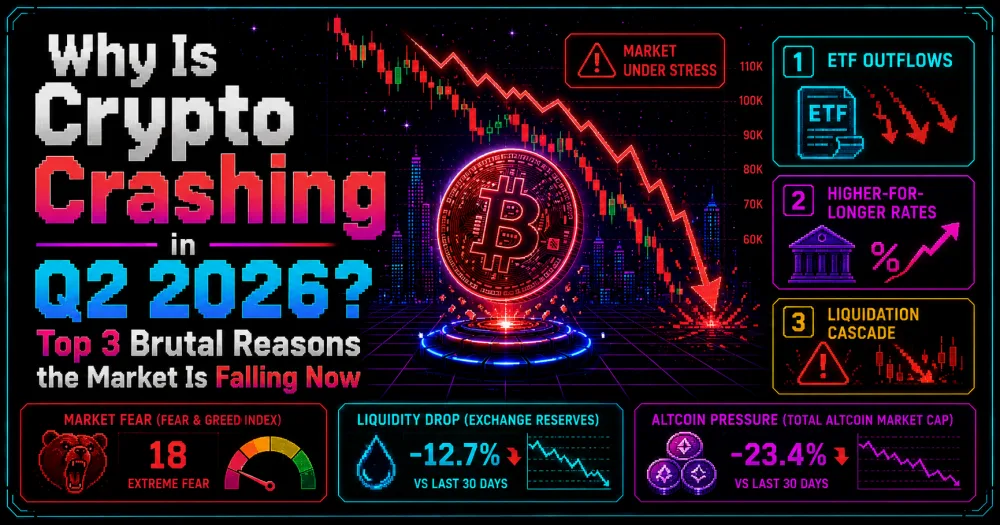
Still dominant, Bitcoin watches chaos spread beyond it. Altcoins dive quicker than ever before. Liquidity vanishes from smaller tokens, quietly slipping away. Traders keep wondering – what sparked this sudden fall across crypto? Here’s what happened. Institutional support weakened, pulling back slowly. Global economic shifts added pressure, stacking up over time. High leverage magnified each downward move, turning dips into drops.
Here’s what matters most: order. When ETF appetite fades, followed by tighter money conditions across markets, pressure builds. Weak spots get squeezed harder once borrowing backfires. Sudden drops? They’re not just dips – they’re chain reactions catching everyone off guard.
Related: Can Bitcoin Crash to $20K in 2026? What Could Trigger a Historic Crypto Market Collapse
Contents
Why Is Crypto Crashing in Q2 2026? Top 3 Brutal Reasons Behind the Market Sell-Off
ETF Outflows Reverse Institutional Demand
Back in 2026, one harsh truth sparked the crypto meltdown – ETF appetite suddenly dried up. Before that moment, real Bitcoin funds had built a base for big players. These vehicles soaked up available coins, pulled in money from classic finance lanes, while giving digital gold a polished image among corporate backers.
By mid-2026, that backing began to fade. Crypto feels ETF exits more now since these funds aren’t just background noise anymore. Instead, big players rely on them to shift money into or out of Bitcoin. Buying by ETFs lifts prices. Selling drags down the market as redemptions grow. Pressure builds when withdrawals stretch on.
Here’s what makes the 2026 Bitcoin dip stand out compared to past drops driven by regular buyers. Pressure isn’t just building from nervous investors dumping coins online. Big moves are showing up in official investment vehicles once thought to push prices higher. While those tools used to signal confidence, now they’re part of the sell-off too.
Still, Ethereum hasn’t helped much. Weak results from its ETF have shaken trust in big investors’ interest in crypto. When Bitcoin ETFs slow down while Ethereum ones pull little attention, prices find it tough to climb. The ground just isn’t solid beneath them.
Federal Reserve Higher-For-Longer Policy Tightens Liquidity
Here’s why things shifted. Crypto ran into trouble because of big-picture forces. Rates set by the Fed in 2026 started weighing on digital assets. Hopes were high – lower borrowing costs, looser money flow, signs of more cash entering the system. What actually came? A firm stance: elevated rates sticking around much longer.
When interest rates stay high, money parked in safe accounts pulls people away from riskier bets. Instead of chasing digital coins, folks lean toward steady returns without wild swings. Loans cost more now, so playing with borrowed funds gets tough. Big bets using debt start to fall apart under the weight. With no income coming from cryptos, nerves get shaky even if prices once soared. Waiting games feel heavier when patience earns nothing at all.
Stronger US currency shakes crypto movements, too. As it climbs, worldwide money flow tends to shrink. Outside America, many who buy digital coins rely on greenbacks or pegged tokens like USDT▲$0.9991. With the buck holding ground, hunger for risky plays fades. That weight often drags down speculative markets.
Most traders keep an eye on how DXY moves alongside crypto, even if the link isn’t exact each day – trends still count. A climbing DXY paired with tighter money flow tends to weigh on Bitcoin. On days when the dollar slips and cash begins flowing more freely, digital coins tend to find their footing again.
When fear spreads through markets, stress builds fast. Crypto offers few places to hide when things turn shaky. People often shift money into Bitcoin instead, sometimes park it in stablecoins or just sit on flat cash. This pulls funds away from smaller coins suddenly. Less trading activity follows – the whole system feels tighter.
Leverage Unwind And Massive Liquidation Cascade
What really moves prices isn’t just choice. A drop gains speed once automatic exits kick in. Pressure builds not from opinion but from necessity. When positions get wiped out fast, one closure pulls others down like falling dominoes. The real risk hides in that chain reaction.
Price falls start when highly leveraged long trades get shut down by the system. Because of these shutdowns, selling pressure builds. As values keep shrinking, fresh liquidations begin to stack up. This loop continues until most borrowed exposure vanishes or strong demand reappears.
Out of nowhere, prices began to slip as overconfidence cracked. Right before everything dropped, plenty thought Bitcoin wouldn’t fall past big round numbers. Instead of pulling back, futures players leaned into bets on recovery. When the floor gave way, their trades helped accelerate the drop.
What happened hit harder because there weren’t many orders on the books. When prices are rising, big sales often get swallowed up quietly by active buyers. But when confidence is low, a single sale can shove prices down fast. This explains why the meltdown in futures tied to digital coins made such a difference. Sentiment was already negative. Even worse, it was shaky.
When losses hit, those using heavy bets pulled out fast. That dip crushed smaller coins quicker than Bitcoin. Less cash ready to trade, bigger price gaps, riskier borrowing – altcoins had it all. As forced sales spread, movers grabbed what they could sell easily.
Why Altcoins Are Crashing Faster Than Bitcoin
Bitcoin Dominance Increases During Market Stress
When pressure builds, Bitcoin tends to stand out among digital currencies. Not that it avoids drops entirely. Just that its losses are typically milder compared to lesser-known coins. As tension spreads through markets, investors shift holdings – away from alts, toward BTC, stable assets, or physical money.
Bitcoin’s share climbs with every move like this. Meanwhile, the downturn for alternative coins in 2026 seems steeper than before. While Bitcoin could still be adjusting, many smaller cryptocurrencies have already given up. What sets them apart comes down to access to funds, trust levels, and how markets are built.
Institutional Investors Prioritize BTC Over Altcoins
Big players get Bitcoin more easily than nearly any other crypto. Its name hits harder, trading flows smoother, plus rules around ETFs feel less foggy. If markets turn shaky, tiny coins usually lose out fast. Either everything gets trimmed back, or just the original stays on the table.
When prices drop, Ethereum feels it. So do Solana and DeFi projects. AI-related tokens lose ground, too. Gaming assets slip without warning. Meme-based ones follow fast. Without actual usage behind them, growth stories fade. A shaky environment tests every promise made earlier. What seemed solid before may thin out when selling hits. Liquidity vanishes faster than expected.
Small-Cap Tokens Experience Fastest Capital Outflows
Tiny crypto tokens take the biggest fall when markets shift. Their low trading volume makes them fragile. Just one modest sale might snap a price floor. A handful of big holders hold power to twist trends. When money drains fast, regular buyers tend to bolt quicker since setbacks sting more, while bouncing back seems out of reach.
Though Bitcoin might slide fast, lesser-known tokens sometimes lose half their value overnight. When fewer people are trading, fear spreads quicker. A thin market means even small sell-offs push prices into freefall.
Is This a Bear Market or Just a Deep Correction?

Comparison with Previous Crypto Cycles (2022–2024)
Right now, the crypto drop feels familiar – yet somehow different. Back then, lenders fell apart; funds vanished overnight. This time around, things move slower. Exchange troubles aren’t spreading like before. Instead, attention sticks on new ETFs settling in. Halving aftermath lingers, too. Not chaos. More like quiet recalibration.
Later this year, shifts in ETF activity start shaping market moves alongside central bank choices. Big investors’ stances matter more than before. The crypto space has grown up a bit, yet risk remains high. New factors take center stage instead of vanishing. Watching trends now means tracking different signals. Maturity brings complexity, not comfort.
Now things tilt toward a full downturn if selling pressure stays strong. Each failed bounce adds more weight to that view. What happens next hangs on whether buyers step in near key levels. Without defense at these points, the path leads lower. Resistance forms faster than gains hold. Past strength means little once momentum flips. Watching price reaction there gives the clearest signal.
On-Chain Signals vs Price Action Divergence
It stays unsettled because chain data sometimes tells a different story than falling prices. Not every long holder is rushing to exit. Panic isn’t flooding into exchanges just yet. Some stablecoins are sitting idle, held back for now.
Price movements run the show day by day. When support cracks, selling kicks off fast – no waiting. Strong on-chain data might help prices bounce back. Still, even solid fundamentals won’t block each wave of forced exits or big fund outflows.
Key Support Levels Traders Are Watching
Should Bitcoin defend key support areas, traders may find some calm. Because BTC sets the pace, eyes stay locked on its moves. When it regains ground and keeps it, confidence sometimes follows. Yet each time those zones break, downward pressure builds a little more.
What holds an altcoin up isn’t just lines drawn on a screen. Liquidity does the real work. When selling hits and trading thins out, prices drop fast – no headlines needed. Charts might show strength, yet underneath, support crumbles quiet-like when depth fades.
What Could Reverse the Crypto Downtrend in 2026?

Federal Reserve’s Pivot or Liquidity Expansion
A shift might start if the Fed changes course. Rising crypto prices do not depend on interest rates hitting rock bottom, yet clearer signs of looser money help. When inflation eases and officials hint at lowering rates, risky markets may bounce back.
Liquidity grows, so stablecoin movement picks up, too. Should market mood lift, those coins often return to regular trading venues. Not saying prices will surge – just that panic dumps might ease. Confidence begins to piece itself together when things feel less shaky.
Return of ETF Inflows
Back comes the flow into Bitcoin ETFs – that’s what sparks it this time. When these funds start pulling in coins once more, eyes shift fast. Not just about buying pressure piling up. It whispers something deeper: big players are stepping back in.
Selling might just become a floor under Bitcoin’s price. Altcoins? They tend to wait their turn. First mover is almost always Bitcoin. Only then do Ethereum and bigger alts start shifting. The smallest coins crawl back once people stop worrying so much.
Improvement in Global Risk Sentiment
When world markets feel less shaky, things begin to shift. Should stocks settle down, the greenback loses steam, interest rates pause their climb, plus tensions overseas fade, digital coins find room to move. That kind of calm makes investors a bit bolder with chances.
FAQ
What Caused the Crypto Decline in Q2 2026?
Falling prices in crypto stem from money leaving ETFs, which weakened big investor interest. Meanwhile, the central bank’s extended tight-money stance squeezed market cash flow. As values plunged quickly, borrowed bets on rising prices collapsed one after another. One wave fed the next, speeding up the decline.
Most of the drop comes from shrinking ETF demand alongside strained financial conditions. When money pulled back from exchange funds, it stripped away key backing for Bitcoin prices. Rising interest levels added pressure, nudging investors toward safer options instead.
Do Altcoins Drop Sharply While Bitcoin Holds Steady?
Besides Bitcoin, smaller coins drop quicker when markets tighten – less money sits behind them. Institutions aren’t holding tight, which adds pressure. When things get shaky, people shift into safer pockets: Bitcoin often wins that race. Stable value tokens see inflows, too, pulling strength away from riskier assets. Cash becomes attractive again under strain, leaving altcoins exposed.
ETF Outflows and Bitcoin Impact?
Fresh money keeps leaving ETFs, which weighs on Bitcoin. That drain adds immediate sell orders while showing big players are less keen now. A rebound remains possible even so. Without steady fund inflows, though, climbing back gets tougher.
How Do Federal Reserve Rates Influence Cryptocurrency?
When interest rates climb, money tends to move away from volatile assets. Instead, people lean toward safer options like government debt. That shift hits digital currencies hard – confidence drops just when it’s needed most. Without strong investor enthusiasm, coins struggle to hold ground.
What Is a Crypto Liquidation Cascade?
When prices shift sharply, leveraged trades get shut down automatically. As those unwind, selling pressure builds, nudging prices further down. Downward movement pulls in additional forced exits, feeding the cycle. Each new drop opens space for yet another round of closures.
Can Crypto Rebound by Late 2026?
If ETF money starts flowing again, crypto might bounce back this year. A less aggressive Federal Reserve could help, too. When the dollar loses strength, digital assets often gain ground. Should global markets grow more optimistic, pressure eases on volatile assets. Bitcoin tends to lead during rebounds.
Is This A Bear Market?
Beyond today’s dip lies a possible shift, should Bitcoin continue forming lower peaks while failing to regain key levels amid steady ETF withdrawals. Right now, think a sharp pullback – shadowed by looming odds of a downturn.
Should Investors Buy When Prices Drop?
Betting on lower prices feels shaky when markets drain fast. Watching money move through ETFs helps spot direction. Clues from central bank comments matter more now than usual. When positions collapse rapidly, the numbers reveal pressure points. Price floors in digital currency need to hold firm. Exposure grows smarter by checking these pieces first.