Key Takeaways
- Bitcoin Layer 2 projects aim to make Bitcoin faster, cheaper, and more useful.
- Not all Bitcoin Layer 2 projects are the same. Some focus on payments, some on smart contracts, and some on rollup-style scaling.
- This ranking is based on TVL, daily transaction activity, security model, and adoption.
- The strongest names to watch in 2026 include Lightning Network, Stacks, Rootstock, Liquid, Citrea, Botanix, and Bitlayer.
- Some projects already have working ecosystems. Others are still early and should be watched more for potential than for current usage.
Bitcoin Layer 2 projects are built to make Bitcoin more useful. They aim to make transactions faster, lower costs, and add features that BTC▲$62,630.00 does not support well on its base layer.
This matters more in 2026 because Bitcoin Layer 2 has moved beyond theory. The space already includes live networks, growing ecosystems, and real onchain activity.
At the same time, the term “Bitcoin Layer 2” is still broad. It can include payment networks, sidechains, rollups, and smart contract layers. These projects do not solve the same problem, and they do not use the same security model.
In this guide, we focus on the Bitcoin Layer 2 projects that stand out in 2026 and explain why they matter. We rank them using four main factors: Total Value Locked (TVL), daily transaction activity, security model, and real adoption.
Contents
What Are Bitcoin Layer 2 Solutions?
Bitcoin Layer 2 solutions are systems that run on top of Bitcoin and handle part of the activity outside the main chain.
Instead of putting every transaction directly on Bitcoin, these solutions move some of the work off-chain or to a parallel environment. After that, they rely on Bitcoin to anchor results, settle transactions, or provide security.
This changes how Bitcoin is used in practice. Users can get faster transactions, lower fees, or access to features that are difficult to implement on the base layer.
The exact design depends on the type of solution. Some use payment channels, some operate as separate networks connected to Bitcoin, and others follow rollup-style models.
Because of this, Bitcoin Layer 2 is not a single technology. It is a group of different approaches that extend Bitcoin’s functionality while still depending on it as the underlying layer.
Types of Bitcoin Layer 2 Solutions
Bitcoin Layer 2 is not a single type of solution. It includes several approaches that extend Bitcoin in different ways.
Some focus on payments. Others add smart contracts. Some aim to scale Bitcoin with new execution models. Each type solves a different problem.
Payment Layers
Payment layers are designed to make Bitcoin transactions faster and cheaper.
The main example is the Lightning Network. It uses payment channels to move transactions off the main chain and settle them later. This allows near-instant transfers with very low fees.
These solutions are built for everyday payments rather than complex applications.
Sidechains
Sidechains are separate blockchains connected to Bitcoin.
They allow users to move BTC to another network, where transactions can be faster or more flexible. These networks can support additional features, such as asset issuance or smart contracts.
Examples include Rootstock and Liquid. They offer more functionality than Bitcoin itself, but they rely on their own rules and infrastructure.
Smart Contract Layers
Some Bitcoin Layer 2 solutions focus on running applications.
They allow developers to build apps, use smart contracts, and create new types of services around Bitcoin. These systems are designed to expand what can be done with BTC beyond simple transfers.
Stacks is one of the main examples in this category.
Rollups and New Architectures
Newer Bitcoin Layer 2 designs aim to scale the network using rollups or similar approaches.
These systems process transactions off-chain and then use Bitcoin as a base layer for verification or settlement. They are still developing, but they represent a new direction for Bitcoin scalability.
Projects like Citrea and Bitlayer fall into this category.
Bitcoin Layer 2 Comparison Table
| Rank | Project | Type | DeFi TVL | Bridged / Total Value | Daily TXs | Token | Security Model | TPS | Key Strengths | Main Use Cases |
| 1 | Lightning Network | State Channels | N/A (~5,000 BTC capacity) | ~$500M (channel liquidity) | Millions | None | Bitcoin L1 (HTLCs) | Very High | Fastest & cheapest payments | Micropayments, remittances, merchant payments |
| 2 | Stacks | Smart Contract L2 (PoX) | $129.5M | $37.1M | 300K+ | STX | Bitcoin-anchored (Nakamoto Upgrade) | 10-15 | Leading BTC DeFi & sBTC | DeFi, NFTs, yield, sBTC |
| 3 | Rootstock | Merge-mined EVM Sidechain | $109M | $56.8M | 50K+ | RBTC | Merge-mining + Bitcoin SPV | 20-30 | Most mature EVM on Bitcoin | Smart contracts, DeFi, dApps |
| 4 | Liquid Network | Federated Sidechain | Low (~$1-3M) | $4B+ (assets) | 10K+ | L-BTC | Federated multisig | High | Confidential transactions & asset issuance | Tokenization, fast settlement, trading |
| 5 | Botanix | EVM-Compatible Spiderchain | $4.1M | $13-14M | 15K+ | None | Decentralized federation (Spiderchain) | High | Native BTC yield (stBTC) | BTC staking, DeFi, yield farming |
| 6 | Bitlayer | Bitcoin L2 (EVM) | $2.0M | Significant (bridged) | 40K+ | BTR | Bitcoin security + EVM | High | Strong BTCFi focus | DeFi, yield, cross-chain |
| 7 | Citrea | ZK-Rollup (BitVM2) | $1.7M- $5M | Growing | 20K+ | None | BitVM2 (permissionless exit) | Very High | True Bitcoin-native ZK security | zk-DeFi, lending, trust-minimized apps |
Best Bitcoin Layer 2 Projects to Watch in 2026
This list focuses on the projects that stand out most in 2026. Some already have live networks and visible usage. Others are still earlier, but they matter because of their design, traction, or role in Bitcoin’s next growth phase.
We looked at metrics, adoption, and practical use cases, not just market hype.
Lightning Network — Best for Bitcoin Payments
The Lightning Network is a payment protocol built on top of Bitcoin. Joseph Poon and Thaddeus Dryja introduced it in 2015 to make Bitcoin payments faster and cheaper by moving transactions off-chain and settling them later on Bitcoin.
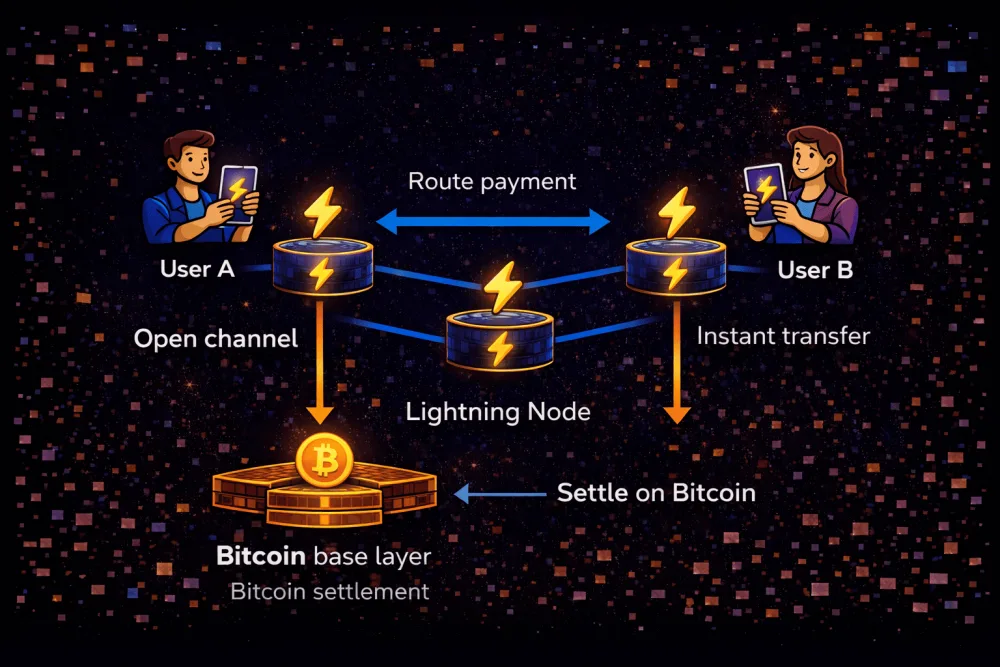
Its main use case is fast, low-cost BTC payments. This includes micropayments, retail payments, and cross-border transfers.
Lightning remains one of the most active Bitcoin Layer 2 networks in 2026.
Key metrics:
- Capacity: ~4,900 BTC (Amboss)
- Channels: ~45,000+
- Nodes: ~15,000+
- TVL: ~$300M-$350M (based on BTC locked in channels)
The network also has live merchant adoption. Square allows merchants to accept Bitcoin payments with 0% processing fees and settle in BTC or USD.
Lightning is also expanding beyond BTC-only transfers. Taproot Assets enables asset issuance and transfer over Lightning, including stablecoin-style use cases.
Why watch Lightning Network in 2026:
- leading Bitcoin payment layer
- high network activity (nodes, channels, capacity)
- real merchant adoption
- expanding beyond pure BTC payments
Stacks — Leading Smart Contract Layer on Bitcoin
Stacks is a smart contract layer built on top of Bitcoin. It was introduced in 2017 (originally as Blockstack) and later evolved into Stacks. The network connects to Bitcoin and uses its security while enabling applications, tokens, and smart contracts.
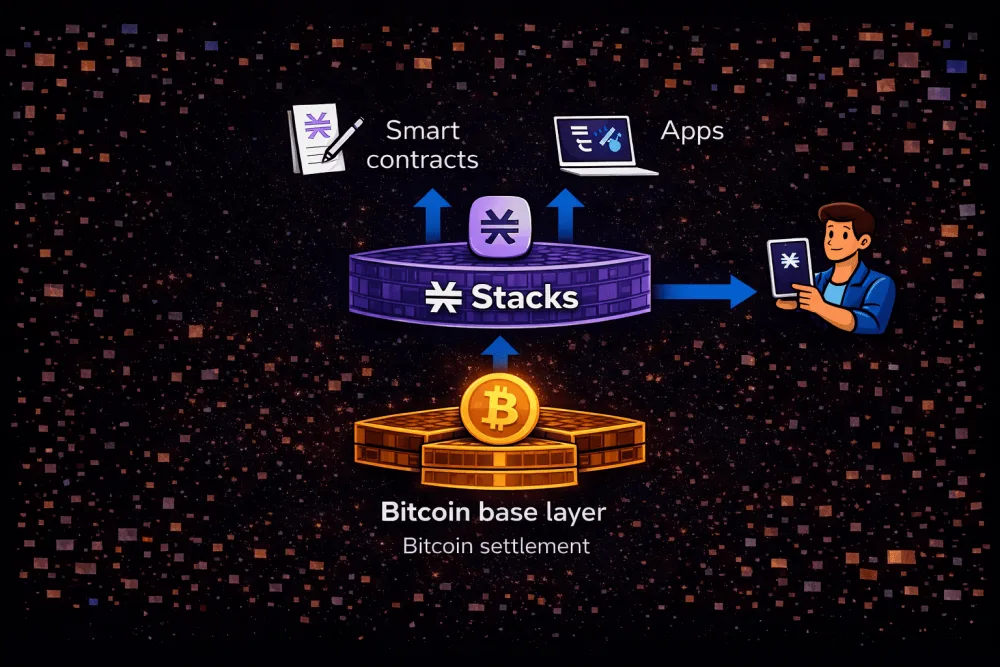
Its main use case is building apps and smart contracts on Bitcoin. This includes DeFi, NFTs, and other Bitcoin-based applications.
Stacks is one of the most developed ecosystems around Bitcoin programmability in 2026.
Key metrics:
- TVL: ~$100M-$150M (DeFiLlama)
- Apps: dozens of live dApps across DeFi and NFTs
- Active ecosystem: BTCFi-focused protocols and developer tools
- Consensus model: Proof of Transfer (PoX), anchored to Bitcoin
Stacks uses a different model from most Layer 2 solutions. It does not move transactions into payment channels. Instead, it creates a separate execution layer that settles to Bitcoin and uses BTC in its ecosystem.
The network allows developers to build applications that interact with Bitcoin without modifying the Bitcoin base layer.
Why watch Stacks in 2026:
- leading smart contract ecosystem on Bitcoin
- one of the strongest BTCFi narratives
- live applications and active developer ecosystem
- direct connection to Bitcoin through PoX model
Rootstock — Best Bitcoin EVM Sidechain to Watch
Rootstock is a Bitcoin sidechain built for smart contracts. The project first appeared as RSK and launched on mainnet in January 2018. Its goal was simple: bring Ethereum-style smart contract functionality to Bitcoin without changing Bitcoin itself.
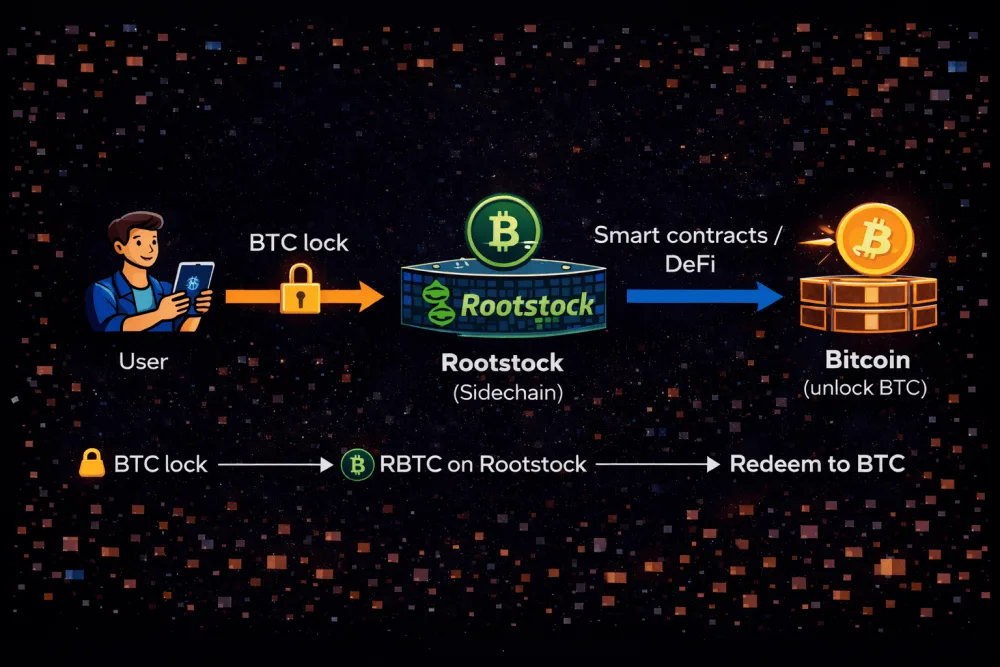
Its main use case is DeFi and EVM-compatible applications on Bitcoin. Rootstock lets developers use Solidity and other familiar Ethereum tools, but within a network connected to Bitcoin.
Related: Ethereum vs Bitcoin – Key Differences Explained
The project also says it is secured by over 80% of Bitcoin’s hash power through merged mining.
Key metrics:
- TVL: $109.03 million (DefiLlama)
- Bridged TVL: $56.82 million
- Stablecoins market cap: $12.95 million
Rootstock is not built for payment channels like Lightning. It is built for BTCFi, lending, swaps, staking-style products, and other smart contract use cases around Bitcoin. The official site calls it the home of DeFi on Bitcoin and says the ecosystem includes more than 150 partners.
Another reason to watch Rootstock in 2026 is maturity. The project has been live since 2018, claims 100% uptime on its official site, and positions itself as the longest-running Bitcoin sidechain for smart contracts.
Why watch Rootstock in 2026:
- one of the oldest live Bitcoin smart contract networks
- strong DeFi and EVM angle
- visible TVL and onchain activity
- direct connection to Bitcoin through merged-mined security
Liquid Network — Best for Bitcoin Asset Transfers and Issuance
Liquid Network is a Bitcoin sidechain built for faster settlement and digital asset issuance. Blockstream launched it in 2018 as a network for exchanges, traders, and financial platforms that needed something Bitcoin’s base layer could not offer on its own.
Its main use case is fast transfers of Bitcoin-based assets. Liquid is also used for asset issuance, including stablecoins, tokenized securities, and other financial instruments.
The network uses a 1-to-1 peg between BTC and LBTC, which is the version of bitcoin used inside Liquid.
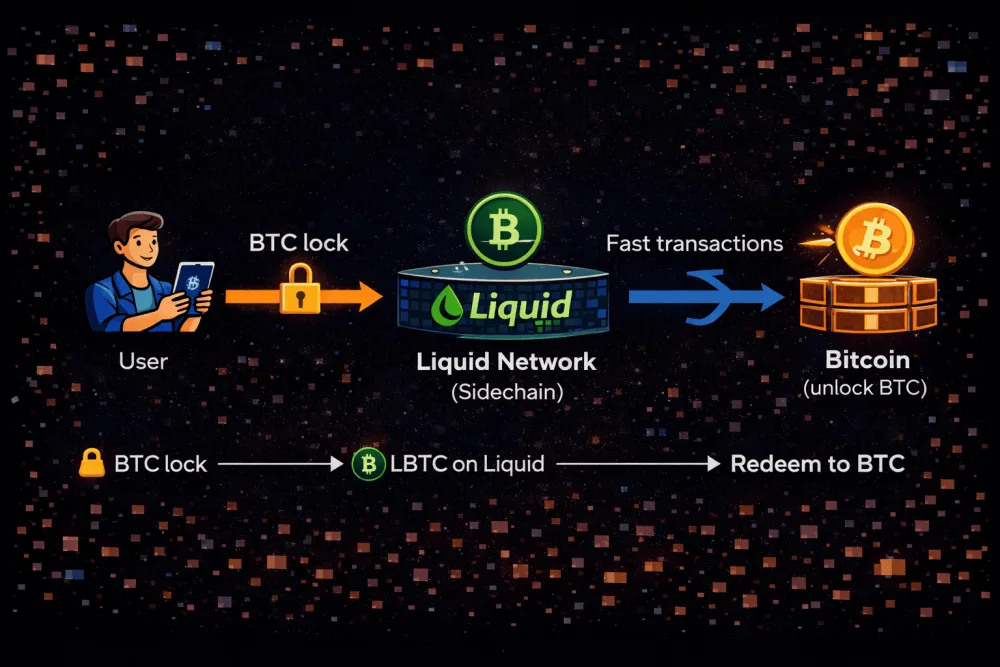
Liquid is not built for payment channels like Lightning, and it is not focused on DeFi in the same way as Rootstock or Stacks. It is built for settlement, privacy, and tokenization.
Key metrics:
- Launch year: 2018
- Federation size: 80+ members
- LBTC model: 1:1 peg with BTC
- Block time: ~1 minute
Liquid stays relevant in 2026 because it already has a clear role inside the Bitcoin ecosystem. It gives users faster transfers, confidential transactions, and a practical way to issue and move digital assets on Bitcoin rails.
Blockstream also continues to build on the network. In Q1 2026, it reported a production deployment of post-quantum signature verification on Liquid using Simplicity smart contracts.
Why watch Liquid Network in 2026:
- it remains one of the most mature Bitcoin sidechains
- it has a clear role in settlement and asset issuance
- it supports confidential transactions and tokenized assets
- it continues to develop at the infrastruct
Botanix — Best Bitcoin EVM Project to Watch
Botanix is a Bitcoin-based network built for EVM-compatible apps. Botanix Labs positions it as a way to bring Ethereum-style smart contracts and DeFi to Bitcoin. The project launched its mainnet on July 1, 2025.
Its main use case is running Bitcoin-based DeFi and EVM apps. That includes lending, trading, staking, and other app activity built around BTC. The main pitch is simple: use Bitcoin in a more app-friendly environment without leaving the Bitcoin ecosystem entirely.

Botanix is still earlier than Lightning, Stacks, or Rootstock. But it stands out in 2026 because it already has a live network and measurable onchain activity.
Key metrics:
- TVL: $4.16 million (DefiLlama)
- Bridged TVL: $14.53 million
The bigger reason to watch Botanix is not the current scale, but direction. Mainnet launched with live applications such as GMX and Dolomite, and the network went live with ecosystem partners including Chainlink and Fireblocks.
The network is also designed around Spiderchain, which is Botanix’s own Bitcoin-based architecture. Public coverage around the mainnet launch also highlighted 5-second block times and average fees of about $0.02.
Why watch Botanix in 2026:
- it is one of the clearest Bitcoin EVM plays
- it already has a live mainnet
- it is building around BTC-native DeFi use cases
- it has early, but visible, onchain activity
Bitlayer — Best Emerging Bitcoin Infrastructure Play
Bitlayer is a Bitcoin Layer 2 project built around BitVM. Its main goal is to expand what can be built on Bitcoin without changing Bitcoin itself.
The project presents itself as a computational layer for Bitcoin and focuses on scaling, programmability, and BTCFi use cases.
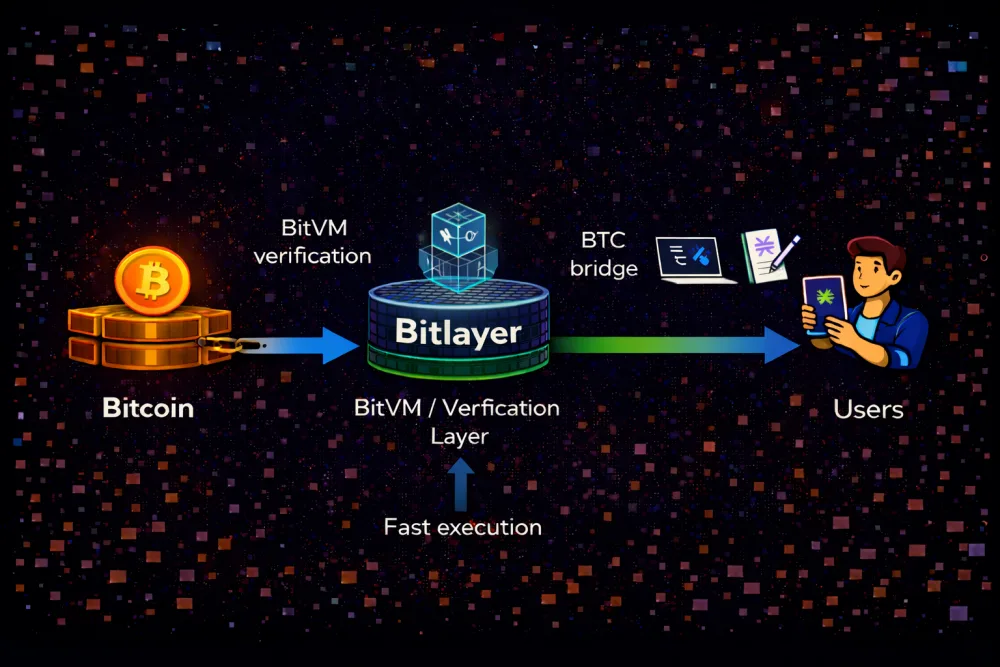
Its main use case is Bitcoin-based DeFi and smart contract activity. Bitlayer also puts strong emphasis on bridging Bitcoin into a more usable execution environment. Its docs describe the BitVM Bridge as a trust-minimized bridge for moving BTC into the Bitlayer ecosystem and using it in DeFi applications.
Bitlayer still looks early by Bitcoin L2 standards, but it already has live onchain activity in 2026.
Key metrics:
- TVL: $808,309 (DefiLlama)
- Stablecoins market cap: $364,960
The bigger reason to watch Bitlayer is not its current size, but its infrastructure direction. In its February 2026 monthly report, Bitlayer said the YBTC Family TVL reached $93.75 million, total transactions passed 97.27 million, and daily transactions spiked to 80,000-100,000.
That makes Bitlayer one of the more visible “next wave” Bitcoin Layer 2 projects. It is not in the same maturity tier as Lightning or Rootstock. But it is one of the clearest projects to watch if the Bitcoin ecosystem keeps moving toward rollups, BitVM-based infrastructure, and BTCFi.
Why watch Bitlayer in 2026:
- it is one of the clearest BitVM-based Bitcoin infrastructure plays
- it already has live chain metrics and BTCFi activity
- it is building around bridging, programmability, and Bitcoin-native DeFi
Citrea — Best Bitcoin Rollup to Watch
Citrea is a Bitcoin scaling project built around the rollup model. It positions itself as a layer for apps, trading, and settlement on top of Bitcoin. The project launched its mainnet on January 27, 2026.
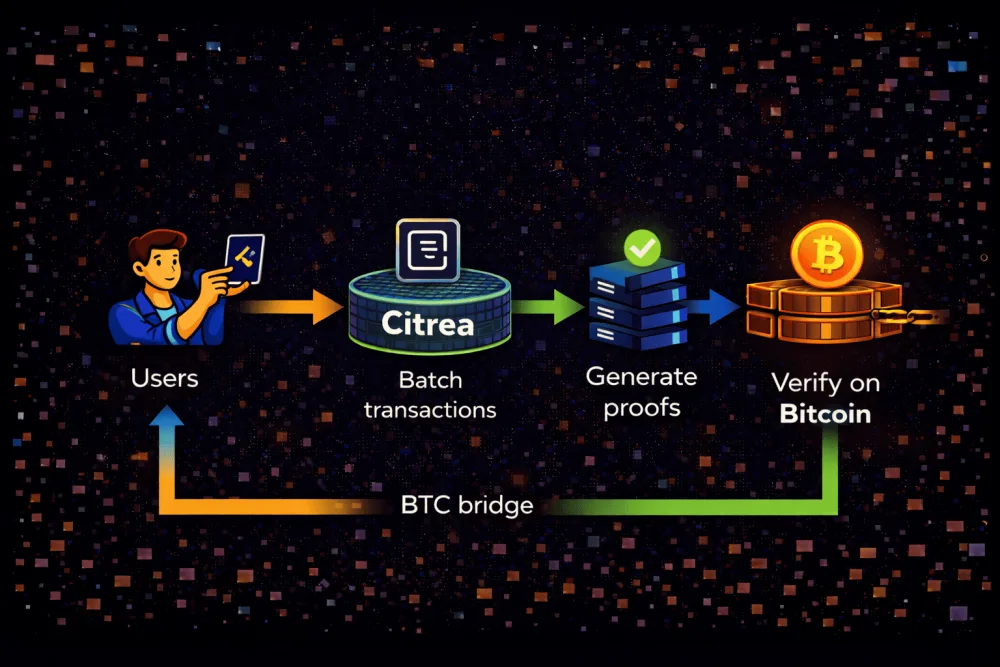
Its main use case is Bitcoin-based apps and capital markets. Citrea is built for lending, trading, settlement, and other financial activity that is difficult to run on Bitcoin’s base layer. The team describes it as an application layer designed to activate Bitcoin capital markets.
Citrea stands out in 2026 because it is one of the clearest rollup-style Bitcoin projects with live mainnet activity.
Key metrics:
- TVL: $1.9 million (DefiLlama)
- DEX volume (24h): $278,005
- Citrea Bridge TVL: $2.65 million
Citrea is still early compared with Lightning, Stacks, or Rootstock. But it already has live onchain activity, a working bridge, and a clear product direction. That makes it one of the most important Bitcoin rollup projects to watch in 2026.
The project also launched ctUSD together with mainnet. That gave the network a native dollar-denominated settlement asset for Bitcoin-based financial use cases.
Why watch Citrea in 2026:
- one of the clearest Bitcoin rollup plays
- mainnet is already live
- live TVL, bridge activity, and DEX volume are already visible
- strong focus on Bitcoin-based financial use cases
Risks of Bitcoin Layer 2 Investments and How to Choose a Project
Bitcoin Layer 2 projects can unlock new use cases. But they also add new risks. These risks are different from holding BTC directly.
The main point is simple. When you use a Bitcoin L2, you are no longer relying only on Bitcoin. You also rely on the Layer 2 design, its bridge, its validators, and its adoption.
Main risks to understand:
- Bridge risk. Many Bitcoin L2s rely on bridges to move BTC into their ecosystem. If the bridge fails, funds can be lost or frozen.
- Security model differences. Not all L2s inherit Bitcoin security in the same way. Some rely on multisig, federations, or their own validators.
- Smart contract risk. Platforms that support DeFi or EVM apps introduce bugs, exploits, and contract-level risks.
- Liquidity risk. Smaller ecosystems can have low TVL and shallow markets. This affects trading, exits, and price stability.
- Adoption risk. Some projects look strong on paper but have limited real usage. Low activity often means higher long-term risk.
- Tracking and execution risk. Some systems may not behave as expected under load or during market stress.
A Bitcoin L2 is not just “Bitcoin but better.” It is a separate system built around Bitcoin. That is why choosing the right project matters.
How to evaluate a Bitcoin Layer 2 project:
- Check real usage. Look at TVL, daily transactions, and active users. Avoid projects that only show announcements without activity.
- Understand the security model. Is it trust-minimized, federated, or validator-based? This defines your risk.
- Look at the bridge design. How does BTC move in and out? This is one of the most critical points.
- Review ecosystem activity. Are there real apps, liquidity, and integrations? Or just early-stage deployments?
- Check liquidity and volume. Low liquidity can make entry and exit harder.
- Track development progress. Active updates, partnerships, and releases matter more than marketing.
The best approach is simple. Do not treat all Bitcoin Layer 2 projects as equal. Some are payment layers. Some are DeFi platforms. Some are infrastructure experiments. They solve different problems. And they carry different risks.
In 2026, the space is still early. That creates opportunity. But it also means that careful selection matters more than hype.
Conclusion
Bitcoin Layer 2 is no longer just an idea. In 2026, it already includes live networks, real users, and growing ecosystems.
But the space is still uneven. Some projects, like Lightning, Stacks, and Rootstock, already have clear roles and visible activity. Others, like Botanix, Bitlayer, and Citrea, are earlier and should be viewed as emerging infrastructure.
The key point is simple. Bitcoin Layer 2 is not one category. It is a mix of payment networks, smart contract platforms, sidechains, and rollup-style systems. They solve different problems and should not be compared in the same way.
If you want fast payments, you look at Lightning. If you want apps and DeFi, you look at Stacks or Rootstock. If you are tracking where Bitcoin scaling may go next, you watch newer projects.
The opportunity is real, but so is the risk. The best approach is to focus on real usage, understand how each system works, and avoid treating all Bitcoin Layer 2 projects as equal.
FAQ
The top Bitcoin Layer 2 projects in 2026 are Lightning Network, Stacks, Rootstock, Liquid Network, Citrea, Botanix, and Bitlayer. The best choice depends on your needs: speed for payments, DeFi yield, or maximum Bitcoin security.
Yes, Lightning Network remains the most used Bitcoin L2 by far. It processes millions of transactions daily with near-zero fees and sub-second finality. While it doesn’t support complex smart contracts, it is the go-to solution for micropayments, remittances, and everyday Bitcoin usage.
Stacks uses Proof-of-Transfer (PoX) and Clarity language for Bitcoin-native smart contracts and sBTC. Rootstock is an EVM-compatible sidechain secured by merge-mining with Bitcoin miners. Stacks excels in true Bitcoin alignment and DeFi, while Rootstock is better for Ethereum developers who want Solidity compatibility.
Citrea is a ZK-Rollup that posts data and validity proofs directly to Bitcoin. It uses BitVM2 for a permissionless bridge, allowing users to exit without trusting third parties.
Yes. Projects like Botanix (stBTC), Stacks (via sBTC and stacking), Bitlayer, and several others offer native or wrapped BTC staking with attractive yields. Always check the security model of the bridge or wrapping mechanism before staking.
Security varies significantly. Lightning and Liquid are very secure but limited. Smart-contract L2s (Stacks, Rootstock) are generally safe but rely on bridges or anchoring mechanisms. Newer ZK solutions like Citrea aim for permissionless exits. Main risks include bridge exploits, smart contract bugs, and centralization in some federated models. Always use small amounts first and do your own research.
Stacks is currently the strongest for DeFi thanks to high TVL, sBTC liquidity, and active lending/DEX protocols. Rootstock and Bitlayer are also strong contenders, especially if you prefer EVM tools.
Bitcoin L2s prioritize security and Bitcoin-native liquidity but are generally slower in development and have lower total TVL than Ethereum L2s (Arbitrum, Base, etc.). Ethereum L2s offer more mature DeFi ecosystems, while Bitcoin L2s are growing rapidly in the BTCFi narrative in 2026.