Out front, the race around crypto rules in 2026 isn’t about ideals – it’s a tug-of-war between money flow, access to cash, and how markets are built. While America leads in ETF approvals, dollar-backed tokens and big-money investor presence, across the Atlantic Britain leans into its freedom from EU limits, crafting laws meant to pull fintech players.

Contents
- Why Crypto Regulation Became a Global Power Issue in 2026
- The US Crypto Rules in 2026
- The UK Approach to Crypto Rules in 2026
- US and UK Approaches to Crypto Rules Differ
- Power Shift Effects on Global Crypto Markets
- Winners and Losers in the 2026 Regulatory Shift
- Institutional Adoption Within the New US, UK Frameworks
- The Role of Stablecoins in Shifting Regulatory Power
- Market Scenarios 2026–2027
- What Traders and Investors Watch Next
- FAQ
Why Crypto Regulation Became a Global Power Issue in 2026
Because of this shift, decisions made in Washington and London aren’t isolated; they quietly set patterns others follow. Rules drawn up there often echo far beyond their borders.
One rule here, another there – soon it spills into power plays between nations.
Once, crypto companies could get approved in a single nation, keep funds elsewhere, and then operate worldwide. Now, oversight wants straight answers on who holds assets, what tokens are allowed, how backups work, and whether users are shielded. The old setup does not slide so easily anymore.
Read more: What Is a Crypto Faucet? How Free Bitcoin and Crypto Rewards Work in 2026
The Return of Regulatory Uncertainty After 2024–2025 Clarity Efforts
Still, the rush of ETFs plus first tries at stablecoins only scratched the surface. Clarity? Not really. What counts it as security, commodity, money tool, or digital thing – stays tangled.
US and UK Shaping Global Rules
Washington holds the money. London gets room to shape greener systems ahead of the coming shift. This shapes how American and British crypto laws compare – one could set patterns that others follow.
The US Crypto Rules in 2026
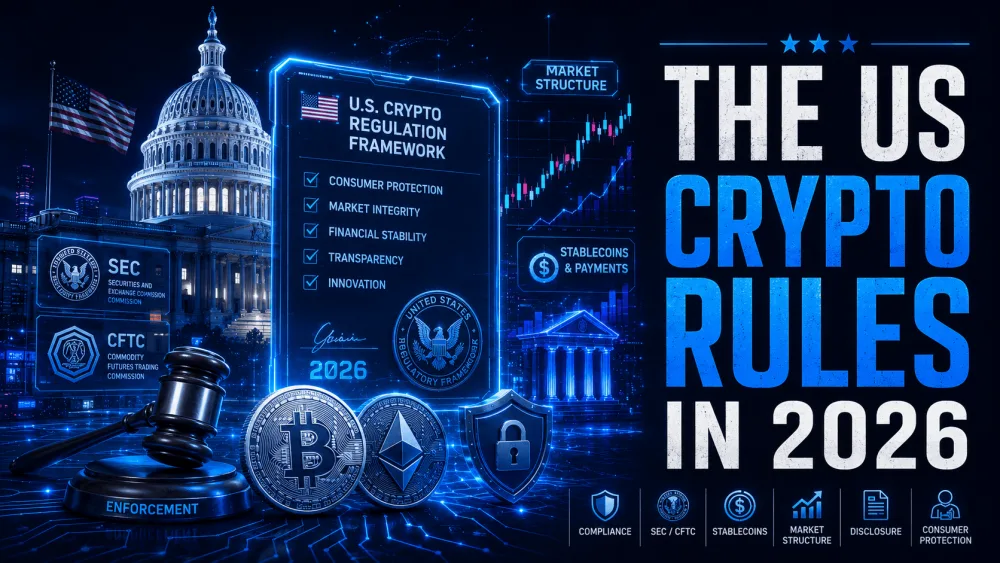
In 2026, the United States shifts its stance on cryptocurrency – less chaos, more structure. Not softer, just clearer in its demands. Rules tighten, yet direction sharpens. What was once scattered pressure becomes focused oversight. Expect less shouting, more paperwork. Still rigid, though now with fewer surprises. Movement isn’t away from control, but into deeper order.
SEC and CFTC Still at Odds Over Authority
Right now, the fight between the SEC and CFTC over cryptocurrency stays unresolved. While one watches stocks and what companies reveal, the other tracks raw materials and financial contracts built on them. In between, plenty of digital assets slip through the cracks.
Post-ETF Regulatory Tightening
Now holding digital coins feels different since Bitcoin and Ethereum funds joined regular investments. Yet closer eyes watch how assets are stored, tracked, handled, and shared. Questions grow about oversight gaps when markets shift fast without clear rules showing who did what.
Stablecoin Regulation Framework Expands
One thing stands out by 2026: stablecoin rules in the US take center stage. Because dollar-backed tokens fuel trading activity, underpin lending systems, and move money across borders, officials are pushing clearer reserve standards, stricter oversight checks, and tighter anti-money laundering safeguards.
Read more: BlackRock vs Fidelity: Who Controls the Future of Bitcoin ETFs?
How US Rules Affect Trading Platforms and Market Fluidity
Starting off, crypto trading rules in the US and UK hinge on how easy it is to buy and sell. Places that follow the rules might attract more trading activity. On the flip side, fewer stablecoins may get removed from platforms. Spreads could grow larger for those assets, too. Support from exchanges tends to shrink under such pressure.
The UK Approach to Crypto Rules in 2026
A fresh path emerges across the Atlantic. Not chasing wild experiments, Britain shapes a space where rules guide progress. Exchanges show up alongside custody providers, their work framed by existing finance laws. Stablecoin operators join them, fitting into clear legal lines. Token platforms take part too, all moving within structured oversight. This setup links new tech to long-standing regulation.
UK Aims to Balance Rules and Tech Growth
Out of nowhere, Britain’s post-Brexit path leans into crypto – but not by cutting corners. Firms showing up must still clear high bars: advertising rules are tight as ever, anti-money laundering checks are non-negotiable, and approval processes are firmly in place. London isn’t chasing wildcat players. It’s built for those who follow through.
FCA’s Evolving Approach to Crypto Assets
Now the UK’s approach to crypto isn’t just about tracking dirty money. Oversight shifts toward how assets are advertised, held, traded – where they sit, who manages them. Promotions get scrutiny, so do places people trade or earn through staking. Rules tighten around what firms must reveal. Market manipulation draws attention too.
Tokenization Comes First
London’s edge might lie in how it handles token rules. Built into its markets are things like digitized assets, funds turned into tokens, and settlement moving live on networks. The city already breathes this rhythm.
UK Stablecoin And Payments Framework
Payments shape the UK’s approach to stablecoins. Though dollar-backed versions lead globally, homegrown solutions might find space through sterling tokens. New forms of digital collateral could play a role here. Rules around transaction pathways may set Britain apart. Niche potential exists despite wider dominance elsewhere.
US and UK Approaches to Crypto Rules Differ
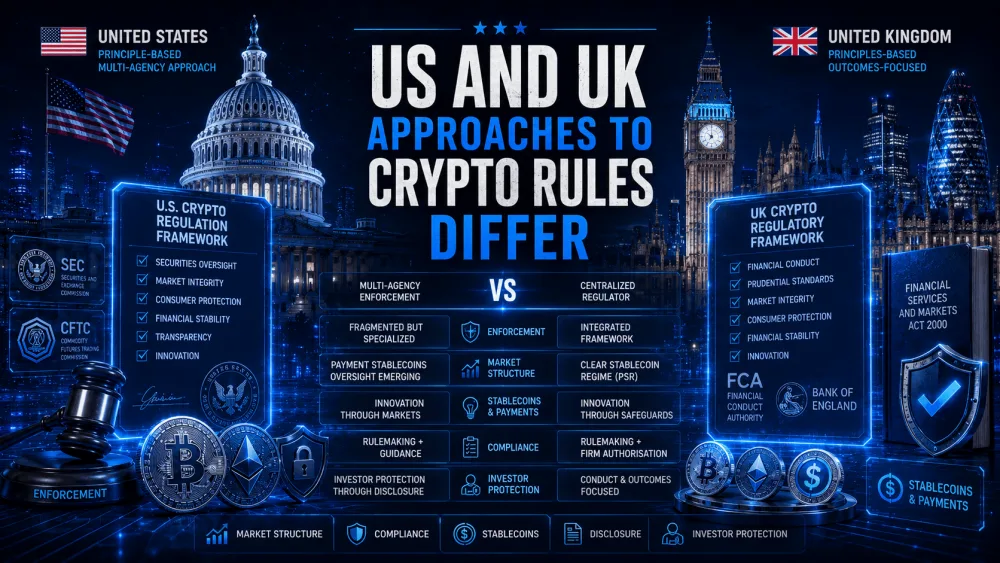
What sets US and UK crypto rules apart? It’s the attitude. While one fixes chaos caused by clashing regulators, the other builds entry points ahead of demand. One cleans up afterward. The other prepares before anyone shows up.
Enforcement Heavy Compared With Innovation-Led Approaches
Enforcement first – that’s how America rolls. Britain? Tight rules, sure, yet shaped by talking things through, testing in safe zones, then rolling out step by step.
Securities Classification vs Flexible Asset Categorization
What matters most in America? Whether a token counts as a security. Across the Atlantic, attention shifts – to how it’s used, what it does, who oversees it.
Related: U.S. Crypto Tax Guide 2026: How Cryptocurrency Is Taxed and How to Stay IRS-Compliant
Institutional Adoption Strategies Diverge
Out front, the United States moves fast on crypto ETFs, storage systems, and cash flow in dollars. Meanwhile, across the Atlantic, Britain focuses its energy on digital shares and clearing large transactions directly between institutions.
Retail Investor Protection Approaches
Fences around shoppers are getting higher everywhere. In America, it’s legal muscle through financial regulations that does the work instead of softer nudges. Over in Britain, sharp labels about danger plus gate-keeping by approval bodies handle the job rather than broad promises.
| Area | United States | United Kingdom |
|---|---|---|
| Main approach | Enforcement history plus clearer rulemaking | Regulated innovation and staged authorization |
| Key regulators | SEC, CFTC, banking regulators | FCA, Bank of England, Treasury |
| Market strength | ETFs, dollar stablecoins, deep capital markets | Tokenization, sandboxes, institutional pilots |
| Main focus | Securities classification, stablecoins, exchanges | Custody, promotions, stablecoins, tokenized assets |
| Biggest risk | Agency overlap and legal uncertainty | Slow authorization and cautious retail access |
Power Shift Effects on Global Crypto Markets
Markets in 2026 might tilt toward wherever money trusts it won’t vanish overnight. Innovation pulls investment – provided access to wallets, loans, and cashing out actually works.
Liquidity Migration Across Jurisdictions
Should clarity come to American regulations, onshore markets might hold tighter onto spot and ETF flows. When British oversight moves quicker, with fewer surprises, London could pull in teams testing tokenized assets plus early-stage investor trials.
Arbitrage Opportunities Created by Regulatory Fragmentation
Where regulations split, gaps appear. One city allows a token, another blocks it – this mismatch shapes how freely it trades. Differences show strongest when staking enters, or stablecoins move, or real-world assets get tied in. Trading pools grow unevenly. Some react sharply to news, others barely twitch.
Impact on Altcoins and Token Listings
Should rules tighten, altcoins might struggle more than expected. Even so, Bitcoin tends to weather changes without much trouble. Ethereum also holds up fairly well under pressure. Yet smaller projects often lack that kind of resilience.
Institutional Capital Allocation Shifts
Funds, banks, and others who manage money find their path shaped by how crypto rules evolve in 2026. When it comes to holding digital assets securely, verified storage matters most of all. Legal clarity opens doors where uncertainty blocks progress. Clear price data builds trust in places where guesses once ruled. Behind every big move is a demand for openness that won’t fade.
Read more: Top 5 Altcoins Whales Are Buying Aggressively in May 2026
Winners and Losers in the 2026 Regulatory Shift
Some firms will survive the 2026 crypto rules just fine. Others, built only on confusion, won’t last when clarity arrives.
Winners
Some who gain are those running licensed custody services. Exchanges that follow rules see benefits too. Stablecoins backed by real reserves find their place. Platforms turning assets into tokens move forward. Firms studying data also come out ahead. Watchdog tools for monitoring activity become more relevant.
Losers
Failing players? Offshore platforms hiding shaky bank ties. Think nameless token creators, dodgy so-called stable assets. Add in obscure coins barely moving on charts. Then there are promises about usefulness that never quite land.
| Group | Likely Impact | Why It Matters |
|---|---|---|
| Regulated exchanges | Winner | Gain trust, banking access and institutional flows |
| Custody providers | Winner | Institutions need secure, audited asset storage |
| Stablecoin issuers | Mixed | Strong issuers benefit, weak issuers face pressure |
| Altcoin projects | Mixed to negative | Tokens with unclear status may lose listings |
| Offshore platforms | Loser | Weak compliance can reduce liquidity and access |
| Institutional investors | Winner | Clearer rules make crypto easier to approve internally |
Neutral Players Adapting to Dual-Regulation Reality
Some players stay neutral – exchanges worldwide, firms that make markets, and those managing assets, working within American and British regulations. One playbook fits Europe, another shapes up in North America.
Institutional Adoption Within the New US, UK Frameworks
Now shaping up, the 2026 rules for digital assets tilt toward banks and funds. Regular users aren’t ignored, yet large flows demand that crypto survive strict internal reviews. Big players drive structure because approval chains won’t budge without guardrails.
Pension Pots Dip Toes, While State Wallets Watch Closely
Slow steps come first for big money. Not wild bets, but safer entries like ETFs show where they lean. Rules matter most, so custody deals open doors before anything risky. Tokenized government debt fits the pattern of caution. Bold moves wait behind layers of checks.
ETFs Now Include More Than Just Bitcoin and Ethereum
Out of nowhere, new ETFs might shake things up once they move past just Bitcoin and Ethereum. Could rules in the US shift how people trade Bitcoin? Absolutely – money flow and investor nerves usually react first. Then again, markets tend to listen when regulators speak.
Tokenized Real-World Assets (RWA) as Entry Point
Out there, pieces of property turned into digital tokens could link cryptocurrency with regular banking systems. Unlike voting-based coins, digitized loans and investment pools make more sense to most people. Still, it’s early days for trust in these new formats.
Custody And Compliance Infrastructure Bottlenecks
Just wanting it won’t make it happen. Approval from recognized custodians must back institutions, while independent audits verify reserve levels. Tracking every transaction becomes necessary, alongside clear rules for managing wallets. Protection through insurance plays a role, yet consistent reporting holds everything together.
The Role of Stablecoins in Shifting Regulatory Power
Money tied to stable value sits at the core of the crypto movement. Control that system fairly, then shape how money swaps happen, where trading flows go, and what feels like cash online.
Stablecoins Function Within Regulated Settlement Systems
These coins do more than bounce between trades now. Where exchanges once only matched buyers and sellers, they now lean on stablecoins to keep markets moving. Lending apps lock them up as security before releasing funds. Firms handling money transfers treat them like digital highways for settling accounts.
Related: Why Millions in USDT and USDC Are Suddenly Being Unfrozen on TRON and Ethereum
US Dollar Strength Compared to UK Trials of Digital Currency
Most stablecoin cash flows tie back to dollars, giving America an edge. Sterling-backed tokens are shaping Britain’s path forward. Tokenized assets play a role there, too. Rules for payments are shifting alongside trials of a digital pound. Not everything hinges on one system.
Impact on Global Payments and Settlements
Should stablecoins grow clearer and tougher in design, uses like moving government funds, sending money home, or paying businesses might lean on them. Tougher rules risk pushing cash flows beyond borders.
Competition Between Private Issuers and Central Bank Frameworks
Speed often belongs to private creators. Caution defines central banking. What emerges might not be replacement – instead, a shared space where quick digital coins thrive alongside trusted national systems.
Market Scenarios 2026–2027
Out here, the race between the US. and the UK. on crypto rules won’t crown a single victor. Instead, separate paths might take shape – each moving at its own pace.
Bullish Scenario: Clearer Rules Pull in Money
Should things go well, US regulators will start aligning more smoothly, while clearer stablecoin guidelines take shape. The UK’s licensing begins drawing in solid companies at the same time. With trust building, markets see heavier trading activity – bigger players slowly increase their stakes.
Bearish Scenario: Split Regulations Choke Market Flow
When sentiment turns negative, rules shift before systems can adjust. Delistings hit hard across exchanges while liquidity dries up slowly. Market makers step back just as alternative coins begin thinning out. Infrastructure lags behind regulatory speed.
Neutral Scenario: Regionalized Crypto Ecosystems Emerge
When things stay balanced, American markets control most exchange-traded funds along with dollar-backed digital coins. Britain takes charge of financial assets turned into tokens. Trading by individual buyers remains powerful across Asian regions.
Most Likely Outcome: Multi-Polar Regulatory System
A shift toward many centers of power seems probable. Control won’t rest in one place. London won’t step into New York’s role. Still, each helps set worldwide rules.
What Traders and Investors Watch Next
What’s behind tighter crypto rules in 2026? It’s clear when you see how deeply it’s woven into banking, ETF markets, stablecoin networks, payment services, and even everyday investors.
US Regulatory Hearings and Enforcement Actions Ahead
Start by tuning into discussions about how markets are built, who oversees what between the SEC and CFTC, plus digital coins tied to real money. See if penalties start happening less often or begin focusing on specific cases instead.
FCA Updates Policy and Expands UK Sandbox
Watch how the FCA moves in the UK – timing of approvals, stance on stablecoins, and growth of the sandbox. Progress here reveals if London turns smart rules into real traction.
ETF Approval Pipeline Beyond Major Assets
Out there, past Bitcoin and Ethereum, ETF applications might reveal what regulators target next. If approved, money could start moving in. A denial, though? That tends to slow down investor interest.
Exchange Compliance Announcements and Delistings
Before regulations shift markets, exchange updates often nudge them first. Announcements about new listings or dropping tokens speak louder than policy drafts. When a platform leaves a region, it shows a real-time risk assessment. Partnerships around asset storage reveal quiet confidence – or lack of it.
Stablecoin Audits and Transparency Reports
Watch how stablecoins are audited, what backs them, their reserves, plus how redemptions work. When rules tighten, being open isn’t just an option – it becomes the core offering.
FAQ
What Is the Biggest Difference Between US and UK Crypto Regulation?
Securities rules take center stage in the US, along with past penalties and digital coins tied to the dollar. Over in the UK, oversight stretches wider – covering crypto businesses, asset holding, stable tokens, and digitized assets.
US Crypto Rules And Bitcoin Value?
True, it’s about how much money moves in, plus who is buying. Simple laws tend to keep investors calm, helping funds grow. When rules feel messy, people step back more often. Confidence shifts based on clarity, nothing else.
Why Is Crypto Regulation Tightening in 2026?
Out of nowhere, crypto shows up inside ETFs, propped up by stablecoins, tied to big banks, handled by custody outfits, mixed into tokenized stocks. Rules are getting stricter since digital money can’t be ignored anymore when everything else on Wall Street leans in close.
Is the UK Becoming a Crypto Hub After Brexit Regulation?
Out of London comes a push to shape crypto rules people can count on. What sets it apart? Not wild promises – real oversight by the FCA opens doors. Stablecoins aren’t left floating; there’s a policy holding them in place. Test zones for finance ideas run under watchful eyes, not free-for-alls. Step by step, pieces snap into something that looks like order.
How Will Regulation Affect Altcoins and Exchanges?
Some areas will feel pressure more than others. Where transparency is high, along with steady trading volume, certain holdings could gain ground. Tokens without solid backing might see exchanges drop them, fewer traders active, plus a pullback from big investors.
One way to look at crypto rules ahead involves comparing how America handles things next to Britain’s path. Different choices shape what might come, depending on who leads and when shifts happen across borders.
One way ahead might split power many ways. America stays strong in cash flow and exchange funds. Over in Britain, bets are forming on digital tokens.