Right now, in 2026, money across the world looks nothing like it did before. Far from just a digital plaything, Bitcoin sits firmly inside serious investment plans everywhere. Instead of shrugging it off, big players treat its worth as clearly real.
Even when markets wobble, this currency holds firm – almost stubbornly so. Behind its price lie tight supply rules coded deep within its design. Bank-grade systems have grown around it, giving stability where chaos once reigned.
Money pressures worldwide push investors toward alternatives they can’t inflate at will. Each layer – tech trust, ownership limits, system strength – adds up without needing flashy claims. Its position isn’t built on hope but repeated proof under pressure. So what keeps valuing it goes far beyond early fan talk – it simply works differently than anything else out there.
Contents
Bitcoin Value Persists Through 2026 Amid Shifting Markets and Evolving Adoption
A decade and a half after its inception, Bitcoin’s role in 2026 has fundamentally changed, weathering wave after wave of collapse fears, government pushback, and shifting tech landscapes. What keeps it standing isn’t noise or frenzy – instead, it rests on being the first mover in digital cash that answers to no nation, flows across boundaries, thrives on coded rarity.
Bitcoin Long-Term Value Explained
What makes Bitcoin stand out is how it works without needing trust. When faith in big organizations – like banks or governments – keeps shifting, Bitcoin steps in as something run by rules written in software, not decisions made by people. By 2026, its path becomes clearer: it acts as a fair ground for money movement. Across distances, large amounts shift fast through it, skipping intermediaries. Its amount stays fixed, untouched by leaders who might twist numbers for power. Certainty here comes from math, not promises.
Bitcoin Price Stability Influences
Even with swings still happening, Bitcoin’s value in 2026 rests on firmer ground compared to earlier runs. Gone are most of the lawless zones where 100x bets ruled; now, big financial players and approved exchange funds shape activity. Because of this shift, the market has built a base that resists deep drops. On top of that, more people simply hold tight through ups and downs, taking coins off the table – so fewer move, even when markets elsewhere stumble.
Related: Bitcoin Bull Market Returns? Experts Forecast BTC Price Surge to $250K
Macroeconomic Factors Influencing Bitcoin’s Value

One thing stands out about 2026: money feels different now. Shaped by those wild inflation years back at the start of the decade, trust in cash has shifted. Bitcoin’s role in big-picture finance pushed people to rethink what they assume about dollars. Not just American ones either – other government-backed currencies too. What started as whispers is now part of everyday thinking.
Inflation and the Decline of Paper Money
Stubborn price rises have lasted longer than most central bankers expected. Because national debts keep growing compared to economic output, authorities print more money, slowly eroding how much cash can actually buy. That slow fade has lifted Bitcoin into sharper focus as something that might resist value loss. People now see clearly: while each dollar stretches less far today than five years ago, one Bitcoin still represents the same slice of all Bitcoins ever made – holding its share steady through the years.
Global Money Rules and Loan Costs
In 2026, though, Bitcoin began moving on its own, breaking free from how tech stocks behaved. At first, rising interest rates after years of loose cash made things tough for digital currency. Because it owes nothing to anyone, trust shifts toward it when markets wobble. Instead of mirroring Wall Street, it now acts more like an outlet – especially while central authorities juggle slowing price hikes without triggering broader collapse. Whenever tension builds in global finance, money quietly drifts this way.
Bitcoin During Times of Financial Doubt
In 2026, shifting world powers and broken trade routes pushed people toward assets that ignore borders. When banks crumble, or money loses value – especially in developing economies – Bitcoin becomes a way out. Because it works like backup protection, it matters just as much to someone rich in New York as to a shop owner in Lagos.
Bitcoin Scarcity And Supply Behavior
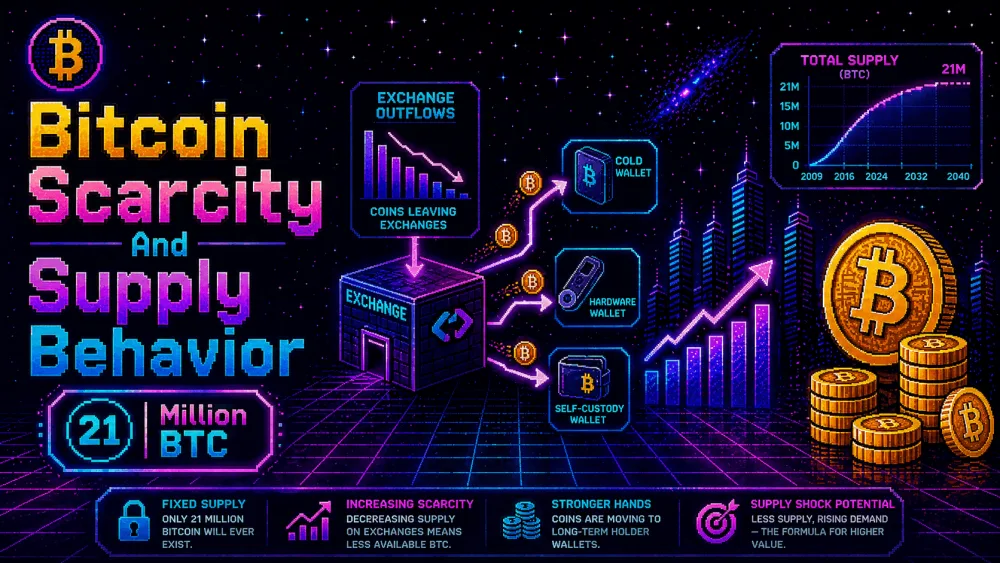
Bitcoin’s key feature? Its unchangeable shortage. Gold might see new digging when prices climb; government money gets made in bigger amounts – Bitcoin follows fixed code instead. Supply grows on schedule, never bending to demand or decisions.
Fixed Supply of 21 Million Bitcoin
Right now, twenty-one million coins matter more than any figure in money. Come 2026, the flow slows way down – most coins are already out there. Since 94 percent have been dug up, new ones trickle in while big players keep asking for more. When hunger rises but supply stays locked tight, pressure builds somewhere else instead. That force pushes price upward because nothing else can budge. The math won’t change; what changes is how much people pay.
Bitcoin Halving Effect on Price
Right now, we sit halfway through the cycle after Bitcoin’s 2024 halving. Past patterns show the real impact of that event hits the supply only after more than a year passes. By 2026, lower miner payouts will start shaping the market clearly. Miner-driven selling flows have dropped by fifty percent, yet demand from ETFs, along with company purchases, remains strong or grows further.
Related: Why Bitcoin Is Compared to Oil: Digital Gold vs Black Gold Explained
Supply Shock Theory 2026
Bitcoin sitting on exchanges keeps dropping, nearing record lows. With long-term owners shifting coins to offline wallets, fewer are left up for grabs. Big firms stash away chunks weekly through custody setups, pulling supply further out of reach. When buying interest rises by 2026, prices might jump fast – few willing sellers remain at old price tags.
Institutional Adoption of Bitcoin
Bitcoin ownership shifted sharply from 2021 to 2026. Once seen mainly in individual wallets, it now sits firmly within major financial players’ portfolios.
Bitcoin ETFs Meet Traditional Finance
In 2026, Bitcoin ETFs matter more than most realize. Pension plans, retirement account managers, because of them, now hold Bitcoin just like they do shares or government debt. That kind of access pulls serious money into crypto – not quick flips, but long-term bets guided by analysts who think years ahead. Stability grows when decisions aren’t made on impulse.
Corporate Treasuries Hold Bitcoin
One step ahead, Saylor-run Strategy kicked off what many now follow. By 2026, big names on the S&P 500 quietly tuck part of their savings into Bitcoin. Behind closed doors, company vaults hold digital coins just like paper money once did. Protection comes first when the dollar loses strength over time. So far, shifting wealth this way helps guard what firms have built.
Hedge Funds and Asset Managers Influence
Nowhere else does money behave quite like this. Some investors believe skipping even a small slice of Bitcoin might mean they are not doing their job right. Over the years, its moves hardly match stocks or bonds at all. That strange independence tends to smooth out rough patches in standard mixes of assets. Holding just a tiny bit can make the whole group perform better when measured against risk.
Bitcoin Global Store of Value
Once just internet slang, calling Bitcoin “Digital Gold” now shapes real investment thinking. A joke turned serious talk among money experts.
Comparing Gold and Other Assets
Younger investors lean toward Bitcoin when weighing it against gold. Though gold sits dense, resists movement, needs careful checking, digital coins float free, zip worldwide fast, confirmed on arrival by shared ledgers.
Digital Gold Narrative in 2026
Bitcoin acts like digital gold because its supply grows much more slowly than demand. In 2026, new coins entering circulation will be far fewer compared to gold’s yearly output. That tight scarcity helps protect worth over time. People moving across borders often choose it since national boundaries don’t limit their access. Wealthy individuals around the world now treat it just as seriously as physical bullion.
Read more: Bitcoin Price Prediction 2026: Will BTC Finally Rally?
Cross-Border Interest in Bitcoin
By 2026, people will rely on Bitcoin to send money across borders. When SWIFT starts bending under political pressure, breaking into pieces, an alternative stands ready. The Bitcoin network runs nonstop, every day of the year. It moves funds directly, skipping layers of fees along the way.
Regulatory Environment Affects Market Trust
Clear rules have pushed Bitcoin forward by 2026. Though often overlooked, how laws are written shapes what happens next. Because guidance improved, uncertainty faded slowly. Since confusion dropped off, movement began in quiet ways. With fewer questions hanging, decisions grew firmer across the board.
Global Crypto Rules Effects
Now things feel clearer since Europe rolled out MiCA, with changes also showing up in the U.S. and parts of Asia. Though a few who value pure decentralization aren’t happy about rules stepping in, those very rules opened doors. Billions upon billions in cautious money now see it as safe enough to step inside. For long-held doubts once clouded everything, they’ve mostly faded into the background.
Institutional Trust Built on Compliance Structures
Now that custodians follow rules and taxes are spelled out, vanishing overnight because of scams or shaky laws isn’t as likely. Because of this shift toward following the rules, big investors see Bitcoin differently – more like something they can trust.
Risks and Volatility Factors
Even now, Bitcoin carries danger in 2026. Watch closely – sudden drops often follow unseen pressures. While it has aged, surprises still lurk beneath. Sharp swings come not from nowhere, but from built-up tension. Those holding should stay alert. Moves against the trend tend to strike fast. Past growth doesn’t block future falls. Hidden forces shape each dip differently.
Market Cycles and Price Corrections
Still, Bitcoin moves in cycles. Even when the long-term trend climbs, drops of 20 to 30 percent happen regularly. Usually, too much borrowed money in futures markets sets them off. Sometimes it is sudden changes in global economic conditions instead.
Liquidity and Macroeconomic Shocks
When the world’s financial system faces a sharp shortage of cash, traders may dump holdings fast – Bitcoin won’t escape quick drops in value during those moments. A rush to free up funds often leads to broad asset sales, pulling digital coins down along the way. Pressure from collapsing positions elsewhere pushes even decentralized assets into temporary declines. Facing urgent demands for payment, participants shed risk fast, including what some see as high-risk bets. So long as markets seize up globally, volatility sticks around – even in cryptocurrency cycles.
FAQ
Bitcoin Investment Outlook 2026?
Most experts still see Bitcoin as solid over time, mainly because there is so little available BTC, combined with more big companies jumping in. Still, holding other types of assets makes sense too.
How Does the Bitcoin Halving Affect The Price in 2026?
Supply drops when Bitcoin halves its output every few years. Come 2026, the slowdown from 2024’s event begins shaping prices more clearly. With fewer coins arriving, demand starts pressing upward slowly.
Bitcoin As Digital Gold?
Bitcoin moves easily, breaks into tiny parts, yet stays rare – much like real gold, though shaped for modern tech. Its limited supply fits alongside practical design, making value transfer smoother across borders. Though physical gold sits still, this version travels fast without changing what makes it valuable.
What’s The Biggest Risk to Bitcoin in 2026?
Even so, the system’s held up well against threats like weak spots in tech, quantum advances, or heavy-handed rules piling on over time. Still, those pressures linger beneath the surface, waiting.
Why Do Corporations Hold Bitcoin on Their Balance Sheets?
Bitcoin kept by big firms acts as a shelter when regular money loses value. Holding something limited helps guard savings from shrinking worth down the line.
By 2026, Bitcoin’s worth might come from smart tech meeting rare supply, alongside rising demand for digital cash outside traditional banks. While systems go online worldwide, its place as foundational code for future money feels harder to shake.