Right now, people who handle big money – alongside regular folks trading online – are talking about Bitcoin and oil in the same conversation. One gets called Digital Gold, the other Black Gold, even though they come from completely different worlds.
While machines ran on oil throughout the last century, some now think computer networks will run on Bitcoin in this one. It might sound odd to compare goop dug up underground with numbers stored online.
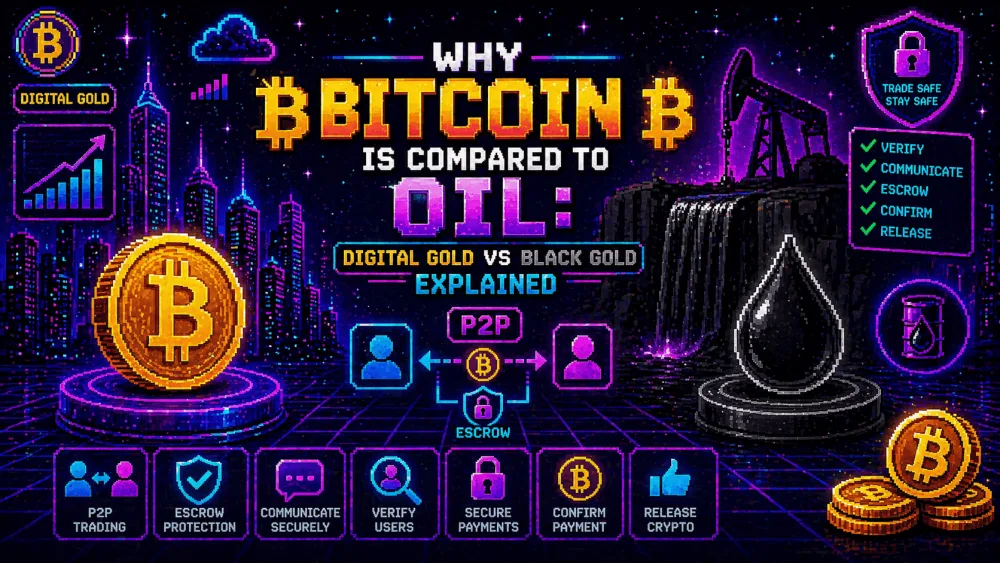
Yet somehow, both keep showing up together in debates about value, scarcity, and what backs worth over time. Even if their forms seem opposite, the reasons we trust them aren’t as far apart as you’d guess.
Related: Bitcoin Price Prediction 2026: Will BTC Finally Rally?
Contents
- What Do Digital Gold and Black Gold Mean?
- Bitcoin Known As Digital Gold
- Why Oil Is Called Black Gold
- Historical Context of Both Terms
- Bitcoin vs Oil: Price Differences
- Fixed and Variable Supply Systems Compared
- Market Demand and Global Use
- Bitcoin and Oil Price: Changes Over Time
- Why Investors Compare Bitcoin to Oil
- Bitcoin Or Oil: Which Holds Value Better?
- How Money Rules Shape Bitcoin
- Crisis Behavior: Which Asset Does Better?
- Bitcoin and Oil Compared
- Key Differences Between Digital Gold and Black Gold
- Bitcoin and Oil Both Called Black Gold, But Differ in Nature?
- FAQ
What Do Digital Gold and Black Gold Mean?
What lies behind the name game of digital gold and black gold? It starts by unpacking what people now call these assets. Not every label is clear at first glance, yet each carries weight. One term speaks to code, the other to crude. Their identities form through usage, not decree. Meaning builds slowly, shaped by how they’re used in everyday talk.
Bitcoin Known As Digital Gold
Bitcoin earns the nickname “Digital Gold” because it shares traits like scarcity and resilience, much like its shiny metallic counterpart. A fixed number of coins exists, similar to how Earth limits gold deposits through nature. Mining happens online now instead of deep underground tunnels dug by machines and workers. Control spreads across networks rather than resting in one nation’s hands or vaults. Its role? Holding worth steady when money elsewhere loses strength over time. Portability gives it an edge – slipping into devices easily, breaking into tiny usable chunks, unlike heavy bullion bars. Value stays put, even if systems shift beneath. Digital form simply makes the transfer smoother without changing the core purpose.
Why Oil Is Called Black Gold
Oil is called Black Gold because it’s worth so much, like finding buried treasure. Starting around the 1850s, machines, cars, and homes began running on it. Having access to oil meant wealth beyond counting, almost like printing money. Even today, holding those underground pools can make nations powerful.
Historical Context of Both Terms
Back then, oil rose to power in the industrial age by overtaking coal as the planet’s key resource. Not long after 2009, Bitcoin got labeled Digital Gold because sharp minds saw how its hard cap of twenty-one million coins made supply tight, much like real gold buried underground.
Read more: Top 5 Crazy Bitcoin Price Predictions: Will BTC Hit $1M?
Bitcoin vs Oil: Price Differences
Looking at Bitcoin versus oil prices, their shifts come from entirely separate forces. Each follows its own rhythm, shaped by distinct triggers behind the scenes.
Fixed and Variable Supply Systems Compared
Here’s what stands out: one key factor shifts everything. Twenty-one million – Bitcoin stops there, always. Even if demand skyrockets, that number stays fixed. Oil plays differently. Its amount changes based on digging, tech advances, and global decisions. Supply moves, stretches, adapts. Unlike digital scarcity, oil flows where effort pulls it. Oil prices go up, so companies pump more crude, slowly adding supply until things level out. Unlike that, Bitcoin cannot stretch its supply no matter what happens.
Market Demand and Global Use
Driving habits, flight activity, plastic output – these shape real-world oil needs. Not quite the same with Bitcoin; its use grows when more folks treat it like insurance against chaos, trade fuel, or a long-shot bet. Decisions made in closed meetings shift oil prices now. Open flows of money worldwide, plus expanding usage networks, move Bitcoin instead.
Bitcoin and Oil Price: Changes Over Time
Back then, Bitcoin danced wilder than oil each day. Still, remember how oil tumbled below zero in 2020? That wasn’t pretty either. Compared to steady U.S. government debt, both carry big risks. Yet they play separate roles when markets shift between bold and cautious moods.
Why Investors Compare Bitcoin to Oil
Bitcoin moves markets just like oil does, which explains why money watchers link them despite differences. One powers engines, the other shifts digital finance – yet both shake entire systems when they change.
Store of Value Debate
One holds worth by being used up – oil fits here, valued because people need it daily. Yet the other keeps value by staying rare and hard to control – Bitcoin works like that. Some who choose Bitcoin hope it grows quicker compared to older types of assets. Worth sticks around in oil thanks to constant demand across industries. Meanwhile, digital trust and limited supply help Bitcoin hold onto its price over time. People compare them, though their reasons for holding differ sharply behind the scenes.
Inflation Hedge Idea
Oil gets pricier when inflation hits, since transport and energy costs climb. When folks think that dollars or euros buy less, their eyes turn to Bitcoin. The idea? Digital coins might hold value better than cash. This belief fuels talk linking Bitcoin to inflation protection. Much like fuel markets react to economic heat, so does interest in cryptocurrency.
Macro Trends and Institutional Interest
By 2026, movements in oil prices will start echoing through digital currency trading floors. Not long ago, hedge fund managers stuck strictly to physical resources – now they’re balancing Bitcoin alongside barrels. What used to be separate worlds blend into one strategy, driven by big investors watching the same signals. Instead of picking sides, traders treat crude and crypto as twin reflections of economic change. Shifts in confidence ripple across both at once.
Bitcoin Or Oil: Which Holds Value Better?
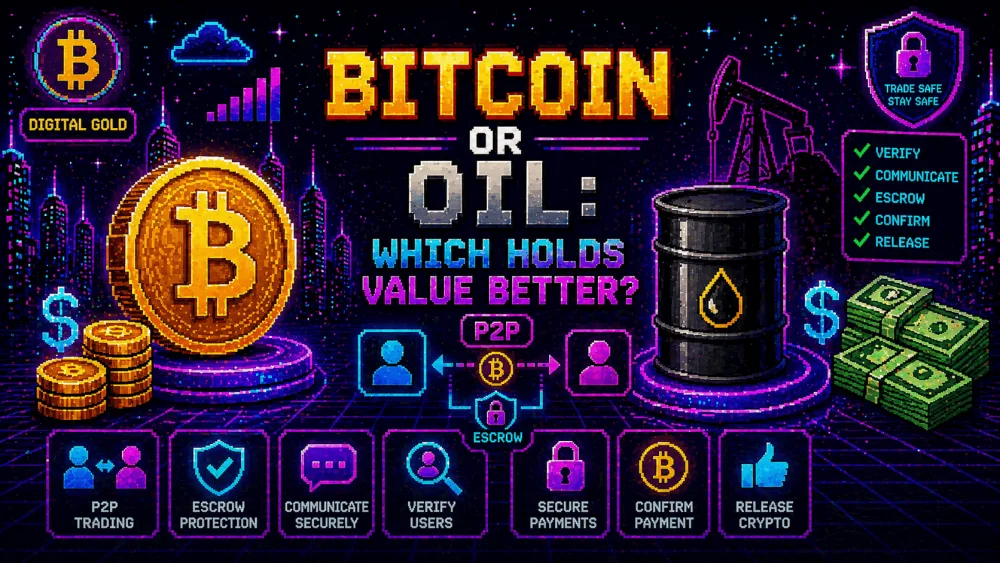
Bitcoin versus oil – what holds value better now? That thought shapes how today’s investors build their portfolios.
Scarcity and Limited Supply
Only twenty-one million Bitcoins will ever be made. That number does not change. Oil reserves? Not so clear. Geologists keep uncovering new pockets beneath rock layers. Methods shift. Supplies adjust. But Bitcoin’s limit stays fixed. Because of that unchanging cap, some say it holds value better over decades. Scarcity you can count on beats scarcity that might grow. Numbers matter when waiting long into the future.
Liquidity and Market Access
Storing oil yourself? Nearly impossible. Try fitting 100 barrels in your cellar – doesn’t work. Instead, people buy promises of future delivery, nothing physical in hand. But Bitcoin slips into a tiny hardware wallet without trouble. That shift changes who gets access. One fits in your pocket. The other needs contracts, brokers, and space. Ownership shaped by what you can hold. Physical limits define old assets. Digital ones bend differently. A flash drive beats pipelines when it comes to personal reach.
Long-Term Performance Comparison
Bitcoin beats oil by huge margins when checked over ten years. Still, demand for power keeps oil anchored in place. What people agree on – and how often they use it – sets Bitcoin’s baseline worth.
Bitcoin and Oil Both Respond to Global Events
Bitcoin’s moves during inflation differ from its response when oil shifts – each shaped by global tensions in separate ways.
Geopolitics Affects Oil Prices
Out of nowhere, tension spikes can jolt oil prices. When fighting erupts in the Middle East, crude shoots upward – fast. That reaction happens since oil travels by sea through narrow, risky passages. These routes are weak spots that anyone can target.
Related: US Crypto Tax Guide 2026: How Cryptocurrency Is Taxed and How to Stay IRS-Compliant
How Money Rules Shape Bitcoin

Low rates light a fire under Bitcoin. Easy cash from the central bank? That’s when it climbs fast. Pull that support, like a tighter policy, then down it can go. Oil doesn’t ride those waves the same way. The path each takes through market shifts tells a different story.
Crisis Behavior: Which Asset Does Better?
When economies stumble, oil feels the squeeze – fewer people driving means less need for fuel. Yet Bitcoin dances to its own tune: shaky confidence in banks might lift it, treating it almost like digital gold. On another turn, when cash gets tight everywhere, it tumbles alongside tech shares, fragile and reactive. Sometimes it hides from stormy markets, sometimes it drowns in them.
Bitcoin and Oil Compared
Even though they seem worlds apart, Bitcoin shares surprising common traits with oil once you step back a bit.
Global Demand Drivers
Across the world, each relies on large-scale systems to operate. While oil depends on refineries and pipelines, Bitcoin runs through miners connected by fast internet. Priced in U.S. dollars everywhere, their value often rises when the dollar slips. A drop in the currency’s strength tends to lift both.
Speculation and Market Cycles
Big players shape both markets more than most realize. When global traders adjust their commodity bundles at once, Bitcoin and oil sometimes move together sharply.
Role in Portfolio Diversification
Some financial planners recommend holding a little of each, just to stay safe when risks pop up. When supplies run short and prices jump, oil tends to hold value. If money loses worth because too much is printed, Bitcoin might help instead.
Key Differences Between Digital Gold and Black Gold
Physical versus Digital Assets
This difference stands out right away. Because storing oil means paying for space, safety, and movement, it builds up expenses over time. Bitcoin does not work that way at all. Moving a huge amount of value in Bitcoin crosses borders fast, with tiny fees. Sending an equivalent sum in physical barrels demands ships, planning, and days just to arrive.
Regulation and Market Structure
Oil trades under tight government control, shaped largely by decisions from the OPEC alliance. Bitcoin runs without central oversight, yet regulators are paying closer attention – especially around fund approvals and rules meant to stop financial crime.
Environmental Impact and Sustainability
Out in the open now, talk about environmental costs dominates 2026. Fossil fuels like oil are directly tied to carbon output. Yet what about power-hungry Bitcoin mining? It’s shifting toward unused renewables – think hydro, solar, wind – even capturing wasted gas from oil sites. This twist links Bitcoin, gold, and oil through an unexpected flow of energy choices.
Bitcoin and Oil Both Called Black Gold, But Differ in Nature?
So, is Bitcoin taking oil’s place as black gold? Not because it powers engines, yet maybe because wallets now watch it more closely. A different kind of fuel moves markets these days.
A Move to Digital Money
Oil feels less impressive now, even as electric cars and clean power grow faster. Digital money, though, gains attention while the web learns to move value like data.
Energy Markets versus Crypto Markets
Oil firms now turn extra gas into power for Bitcoin mining. Not rivals anymore, these industries link up through shared needs. One feeds energy waste into digital coin creation while the other gains fuel without new infrastructure.
Bitcoin and Oil Future Trends
Decades will pass before heavy industry stops relying on oil. Still, when it comes to holding value, Bitcoin now takes the place once reserved for raw materials.
FAQ
Bitcoin Correlation Comparison: Gold versus Oil?
Bitcoin tends to move more like gold when money supply grows, though it sometimes dances closer to tech shares. Oil rarely pulls it along, even when markets shift. What matters most shows up in how traders act when cash floods the system.
Bitcoin Energy Use Compared to Oil?
Some say Bitcoin guzzles power. Others claim digging up oil burns more juice when you tally drilling, shipping, and cleaning it. One thing stands clear: both take massive effort to run.
Bitcoin and Oil Buying?
Bitcoin now sometimes backs deals for physical goods, though you still won’t pay with it at most fuel stations. Instead, private trading desks handle these arrangements more often behind the scenes.
Is There a High Oil Price and Bitcoin Connection?
True, though not directly. Oil costs climb, so do everyday prices. When that happens, people notice their money buys less. Worried about losing value, some shift toward things like Bitcoin. It’s seen as a shield when cash weakens. Not guaranteed, but it’s a pattern repeated before.
Which Is a Better Long-Term Investment?
Oil brings returns through use. Yet Bitcoin leans on limited supply plus rising value hopes. By 2026, many investment sets will hold each. One is tied to real-world energy systems. The other aims for tech-driven growth.