Babylon Protocol Explained: Bitcoin Staking Without Bridges
Built right into Bitcoin, the Babylon protocol sidesteps wrapping or bridging entirely. Instead of moving coins elsewhere, users lock BTC▲$62,630.00 directly on its home chain. For years, Bitcoin owners could only store, sell, trust third parties, or port tokens across networks. Now, staked Bitcoin can back external systems without leaving base-layer protection.
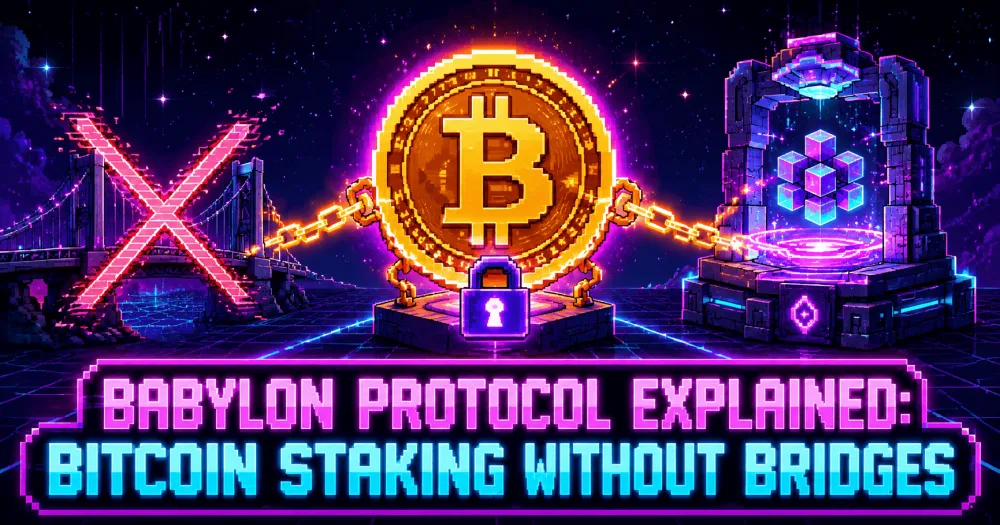
Here is the main point: Bitcoin staking without bridges. Through Babylon, people place BTC into timed transactions on the Bitcoin chain. This locked value then lends its strength to finality providers who help secure other networks. Rather than turning Bitcoin into an artificial version of itself, the setup leans on Bitcoin’s native protections and code logic.
BTC owners see the benefit right away. Bitcoin’s value is high, yet earning chances are thin. With the Babylon protocol, dormant coins might finally work harder with no wrapping needed and no middlemen taking control.
Read more: Faston Crypto Etherions (EFC): Understanding What EFC Is and How the Protocol Works
Contents
- What Is Babylon Protocol?
- Why Bitcoin Staking Is Difficult
- How Babylon Protocol Works
- Bitcoin Staking Without Bridges
- How Babylon Connects to Bitcoin Finance
- Babylon Protocol Compared With Wrapped Bitcoin
- Babylon Protocol Compared With Traditional Staking
- Babylon Protocol Advantages
- Risks of Babylon Protocol
- Who Uses Babylon Protocol?
- Babylon Genesis and the BABY Token
- Why “Without Bridges” Matters
- How Babylon Could Change Bitcoin Staking
- Is Babylon Protocol Safe?
- Final Thoughts
- FAQ
What Is Babylon Protocol?
The Babylon protocol lets people lock real Bitcoin to support outside proof-of-stake (PoS) blockchains. No need for Bitcoin itself to change how it works. Proof-of-Work stays exactly as it is. Security value moves outward through locked coins.
One way to look at it: people who own BTC keep their coins on the Bitcoin network. Instead of sending them across risky pathways, they stay put. Users pick a finality provider, and rewards may come when these users help protect linked systems. Locked BTC never leaves its home chain.
What sets Babylon apart? Most older Bitcoin DeFi systems lean on wrapped BTC, bridges between chains, third-party holders, or synthetic tokens. Instead of copying that path, Babylon builds closer to Bitcoin’s core structure. A fresh type of activity takes shape: native BTC staking.
Why Bitcoin Staking Is Difficult
Bitcoin runs on raw power, not staking. Instead of validators holding coins, it uses miners solving puzzles. No smart-contract system runs inside it like Ethereum. There are no rewards handed out just for locking supply. To earn anything, people have to turn to outside setups instead.
In the past, Bitcoin holders could choose these alternatives:
- Lending BTC through centralized platforms
- Wrapping BTC into tokens like WBTC
- Bridging BTC into DeFi ecosystems
- Using custodial yield products
- Taking counterparty risk for extra return
One wrong step increases danger. Bridges can fail. Custodians can freeze funds. Lending platforms can vanish. Wrapped tokens rely on who backs them and how solid those reserves are.
The Babylon protocol keeps BTC on its home chain while using it to back other systems. Security flows elsewhere without moving the coins.
How Babylon Protocol Works
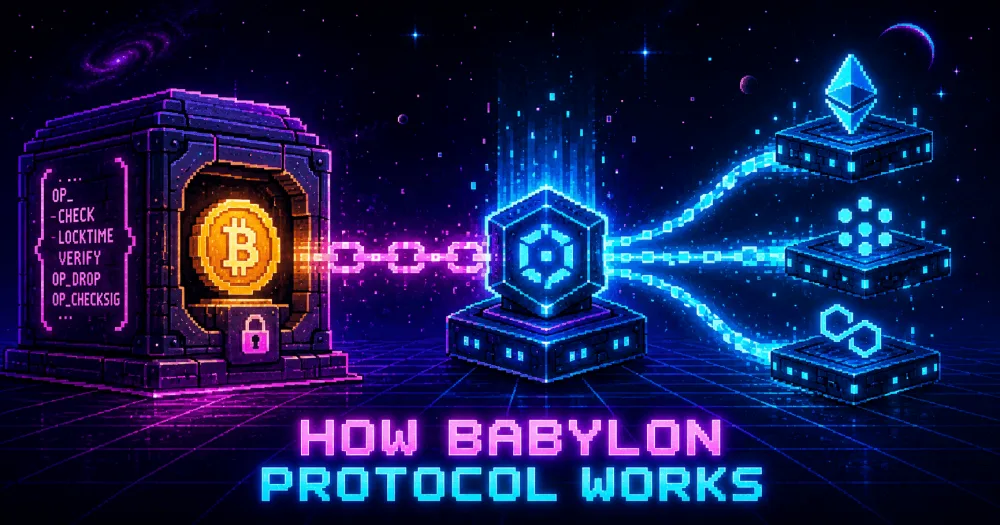
Staked coins back the Babylon system, using Bitcoin transactions as the foundation. Finality comes from special providers watching activity closely. Misbehavior can lead to penalties enforced by protocol rules.
A BTC holder sets up a unique Bitcoin transaction, locking coins temporarily. Nothing is sent across networks. Through Bitcoin script-based logic, access stays secured without moving assets elsewhere.
The staker delegates to a finality provider. This provider joins finality voting to help confirm blocks across connected chains. When it follows the rules, stakers may gain rewards. If it breaks protocol behavior, some locked Bitcoin can be slashed.
Here is where the Babylon protocol starts standing out. It brings Bitcoin-backed slashing rules into Proof-of-Stake-style security, yet Bitcoin stays exactly as it is.
Finality Providers Explained Simply
Babylon’s ecosystem leans on finality providers. These actors work somewhat like validators because they help make sure transactions stick across linked chains. Yet they never hold a user’s BTC.
One way to look at it: someone hands off responsibility but keeps hold of their assets. Another party handles confirmation tasks while the coins stay frozen under rules built into Bitcoin.
Most Bitcoin holders would rather not manage complex systems on their own. Delegation lets regular owners and larger institutions get involved without running infrastructure.
Even so, picking a finality provider matters. If operators cut corners, penalties may follow. Users should care about uptime, reputation, technical reliability, and security practices.
Related: What is AI in Crypto? Complete Guide to AI Agents, Tokens & Use Cases
Bitcoin Staking Without Bridges

The Babylon protocol stands out because it lets people stake Bitcoin directly with no bridges needed. Most crypto systems require wrapped versions when BTC moves off its home network. That process gives users a token that acts like Bitcoin elsewhere.
Useful as it may seem, that model has flaws. Wrapped assets tie into bridges, issuers, custodians, code logic, and redemption rules. Break one piece, and what looked like BTC may stop behaving like BTC.
Babylon sidesteps that issue. BTC stays rooted in its home chain. The coin never gets shipped off to another system. That makes the setup more aligned with Bitcoin’s security culture.
Most danger is not gone. The shape of risk changes. Instead of bridge risk or custodian risk, users face protocol risk, slashing risk, operator risk, liquidity risk, and market risk.
How Babylon Connects to Bitcoin Finance
Most crypto value lives on Bitcoin, yet much of it just sits there. BTCFi brings money tools to that huge pile of unused coins. Ethereum offers more ways to use funds, while Bitcoin has fewer active finance options.
The Babylon protocol could change that by giving BTC new purpose. Staking becomes possible without changing ownership or wrapping coins. Security strengthens across chains, and Bitcoin liquidity may become more active.
That matters for several reasons:
- BTC can become useful beyond holding and trading
- Proof-of-Stake networks can access Bitcoin-backed security
- Bitcoin holders may gain new reward opportunities
- BTCFi can grow without relying entirely on bridges
- Institutions may get cleaner Bitcoin staking infrastructure
Babylon takes Bitcoin and weaves it into staking while leaving its core untouched. Not a clone, not a copy: the original doing more than before.
Babylon Protocol Compared With Wrapped Bitcoin
Wrapped Bitcoin usually means creating a token tied to BTC but living on a different blockchain. Someone locks BTC first, then receives a matching token on Ethereum or another network.
Wrapped tokens can be useful in DeFi. Trust becomes the price. Users rely on bridges, custodians, issuers, or smart contracts managing that asset.
The Babylon protocol works another way. Instead of turning BTC into a mirrored version, it keeps BTC on Bitcoin. Locked there, it backs staking duties through protocol-defined rules.
| Feature | Babylon Protocol | Wrapped Bitcoin |
|---|---|---|
| BTC location | Stays on Bitcoin | Represented on another chain |
| Main use | Bitcoin staking and shared security | DeFi liquidity |
| Key risk | Protocol and slashing risk | Bridge, issuer, and custody risk |
| User model | Native BTC staking | Synthetic BTC exposure |
| Bitcoin alignment | Higher | Lower |
Wrapped BTC has uses, but it does not match staking real Bitcoin through a native design.
Babylon Protocol Compared With Traditional Staking
Inside a Proof-of-Stake system, staking usually happens with the chain’s own token. Users lock that token, validators secure the network, and returns come from supply emissions, transaction costs, or incentives.
Babylon stands apart because BTC does not act as the base currency for the chains it supports. Bitcoin stays Proof-of-Work. Linking Bitcoin’s value to PoS security happens through finality providers and cryptographic enforcement.
Related: What Is Solana? Complete Beginner’s Guide 2026
Babylon Protocol Advantages
The Babylon protocol offers several potential benefits for Bitcoin holders and blockchain networks:
- Native BTC Utility: BTC stays where it should: on Bitcoin. Babylon unlocks its use without moving or converting coins.
- No Need for Custodial Yield: Users do not need to chase returns through centralized lenders or custodial products. That sidesteps a danger crypto has seen too many times.
- Bitcoin-Backed Security: Bitcoin’s economic strength can support linked systems. Rather than depend only on native tokens, these networks may use BTC as security collateral.
- Delegation: Users can delegate to finality providers instead of setting up complex systems on their own.
- BTCFi Growth: If Babylon works at scale, it may grow BTCFi by giving holders more native ways to use Bitcoin.
Risks of Babylon Protocol
The Babylon protocol is not magic yield. Bitcoin staking brings fresh dangers, so expectations must stay grounded:
- Slashing Risk: If a finality provider breaks the rules, some of the delegated stake may be taken away. That danger sits at the heart of every staking-style setup.
- Protocol Risk: Babylon relies on complex cryptography and locked funds. Hidden flaws, strange edge cases, or implementation mistakes could lead to losses.
- Operator Risk: If finality providers fail, cut corners, or run poor infrastructure, stakers may feel it directly.
- Liquidity Risk: Once locked, Bitcoin stays put through the staking window. Users need to understand timing, withdrawal rules, and exit conditions.
- Reward Uncertainty: Rewards can shift based on network demand, incentives, finality provider performance, and adoption.
Who Uses Babylon Protocol?
The Babylon protocol can appeal to long-term Bitcoin holders, institutions, finality providers, BTCFi protocols, and Proof-of-Stake networks looking for Bitcoin-backed security.
Potential users include:
- BTC holders seeking native yield
- Institutions holding large Bitcoin positions
- Staking providers and node operators
- BTCFi protocols
- PoS chains looking for stronger security
- Crypto users avoiding bridges and custodians
Still, Babylon fits better if users already understand staking risk. For those who want quiet cold storage with no activity, staying put may feel right. Quiet has perks. That is exactly why plenty of Bitcoin holders sleep well.
Babylon Genesis and the BABY Token
Babylon Genesis is the chain connected to the Babylon ecosystem. It supports staking coordination, finality providers, governance, and Bitcoin-backed systems.
Inside the Babylon system, the BABY token helps with functions such as governance and staking. But BTC staking and BABY staking are not the same thing. BTC staking uses actual Bitcoin through the Babylon protocol. BABY staking supports the Babylon Genesis chain itself.
This distinction matters. Mixing up staked BTC with staked BABY creates confusion. Each has separate mechanics, risks, and rewards.
Why “Without Bridges” Matters
Bridges often sit quietly beneath the surface of crypto, moving large amounts of value across chains. Yet they connect chains with different security models. Sometimes those links depend on complex code. Other times, trust sits with a small group watching over the system.
Breaks happen. When one piece cracks, everything behind it can spill out fast.
That is why Babylon’s no-bridge approach matters. The system lets Bitcoin earn staking rewards directly, with no need to move coins through risky cross-chain paths.
Control matters most to Bitcoin holders. Keeping keys, trusting less, and staying close to Bitcoin’s base layer all stand out. A staking design that skips wrapped BTC fits that mindset better.
Related: What Is Bitcoin DeFi (BTCFi)? Complete Guide
How Babylon Could Change Bitcoin Staking
If the Babylon protocol works, a fresh market may emerge where Bitcoin secures value directly. Instead of just sitting idle or being traded, BTC may start serving active roles elsewhere.
This could affect crypto in several ways:
- More BTC may become economically active
- PoS networks may compete for Bitcoin-backed security
- BTCFi protocols may build new products around staked BTC
- Institutions may get safer staking infrastructure
- Bitcoin may gain a larger role in cross-chain security
What really matters is whether interest lasts. Staking needs rewards. Rewards need networks willing to pay for security. If that market grows, so does Babylon’s role. Otherwise, it remains smart but limited.
Is Babylon Protocol Safe?
Truth is, the Babylon protocol may be safer than some bridge-heavy Bitcoin yield setups in certain ways, yet it still carries danger.
Babylon skips wrapping and bridging. BTC stays rooted on Bitcoin instead of becoming a copy elsewhere. Risk drops when users are not turning real coins into synthetic assets.
Still, slashing matters. Staking rules matter. Finality providers matter. Wallet safety and withdrawal timing matter too. No bridge does not mean no danger.
Careful users should start with education. Know what gets locked, for how long, under which conditions, and what can trigger penalties.
Final Thoughts
Built around Bitcoin’s own framework, the Babylon protocol takes a serious look at how staking can work without changing what makes Bitcoin reliable. Rather than pushing users toward wrapped tokens or bridges, it leans on real Bitcoin locks, delegation, finality providers, and coded penalties.
That is why Babylon stands out as BTCFi moves forward. If Bitcoin enters staking, shared security, and cross-chain finance, systems that skip bridges become critical.
Reality check first. Babylon is not free money. It is a staking system with complicated tech and real downsides. Its strength is not wiping out every threat. Its strength is giving Bitcoin holders a native way to seek rewards while skipping older models built on bridges, wrapped tokens, and blind trust.
For long-term Bitcoin holders, that makes the Babylon protocol worth watching.
FAQ
What is Babylon protocol?
The Babylon protocol lets BTC holders lock native Bitcoin directly and help secure outside blockchains without wrapped BTC or bridges.
Does Babylon protocol use wrapped Bitcoin?
No. Babylon avoids wrapped BTC. It keeps Bitcoin secured through Bitcoin-native locking mechanisms instead of converting BTC into a synthetic asset.
How does Babylon Bitcoin staking work?
Bitcoin holders place BTC into a special staking transaction, delegate to a finality provider, and may earn rewards for helping secure connected systems. Misbehavior can trigger slashing risk.
Is Babylon protocol risk-free?
No. Babylon reduces bridge and wrapping risk, but users can still face slashing risk, protocol flaws, operator failures, liquidity limits, and reward uncertainty.
Why does Babylon matter for BTCFi?
Babylon matters because it gives Bitcoin holders a native way to stake BTC, support outside networks, and seek rewards without relying on custodians, bridges, or wrapped Bitcoin.