Out of nowhere, Bitcoin finds itself pulled by two thoughts. Not just one thing – it plays both roles. Think scarcity, think vaults underground: that’s digital gold, patient wealth sitting still. Then there’s the flip – money moving freely between strangers online, no middlemen calling shots. In 2026, something shifts. The Lightning Network usage climbs, quietly breathing life into the forgotten half.
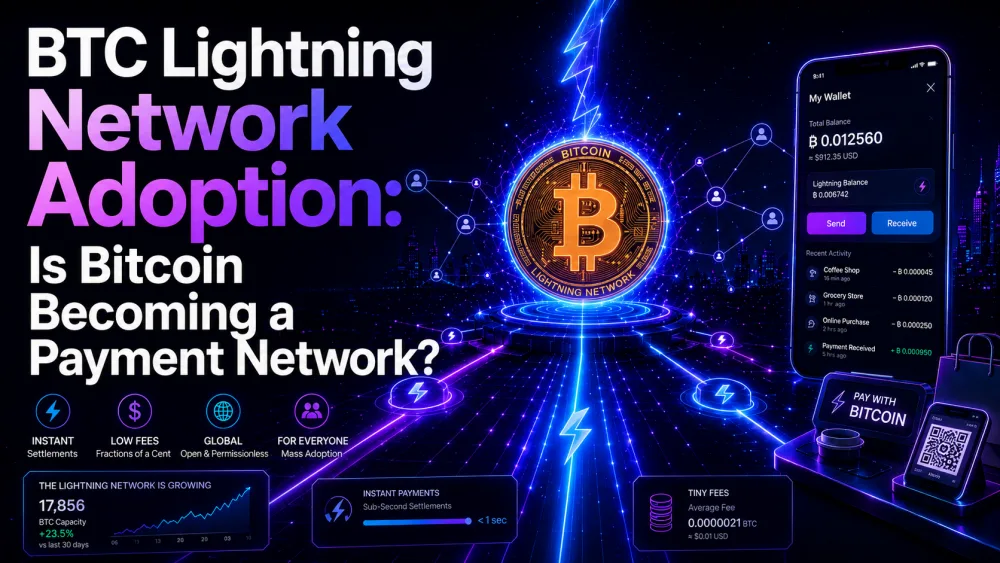
Out of nowhere, the Bitcoin Lightning Network didn’t morph Bitcoin into Visa – didn’t even edge past stablecoins. Yet somehow, the whole conversation shifted. Holding BTC▲$62,630.00 used to mean storing it, tapping the network now and then. Now? It slips through wires like data, fast as the web itself.
Contents
Bitcoin Lightning Network Explained Simply
On top of Bitcoin sits the Lightning Network, a second layer for payments, created by Blockstream and the cypherpunk legend Adam Back, the guy who invented HashCash and was mentioned in the Bitcoin whitepaper.
Lightning was built not just for speed but necessity, since base chain blocks come slow. Space inside those blocks stays tight. When traffic piles up, costs go up too. Security holds strong that way, true. Yet handing over tiny amounts? Sending pocket change or money home? Clumsy at best.
A flash of speed comes from shifting Bitcoin trades outside the main chain through payment pathways. Locked inside one of these links, two users hold BTC while changing their personal ledgers each time money moves. When it is time, only the last balance hits the Bitcoin record. According to Lightning Labs, this system forms a web where people connect directly – channels tied to Bitcoin allow quick, low-cost exchanges.
Related: Who Is Peter Schiff? Why He Criticizes Bitcoin and the Entire Crypto Industry
Most people still hold Bitcoin like digital gold, yet spend through quicker channels. Settlement happens on-chain; speed comes from what sits above. This split lets trust live deep in the network while payments zip across its surface. One job stays slow and solid, the other moves light and frequently.
Bitcoin Lightning Network Use in 2026
Some say Lightning Network use in 2026 is growing – it shows, though not everywhere alike. What we see online skips hidden links and managed wallets; the full layout stays partly out of view. Recently, the 1ML website listed around 6,160 open nodes, 20,601 connections, with some 3,004 BTC shown as available. At the same time, mempool.space displayed a broader structure: above 17,000 nodes, holding nearly 5,700 BTC.
Usage matters most. Back then, River figured Lightning handled around 5.2 million trades totaling roughly $1.1 billion during November 2025. Not larger than card networks or stablecoin flows yet – still, activity on the network has clearly grown past early test runs by curious tinkerers.
Bitcoin payments are starting to make sense for shops. With Lightning, Square now lets stores take Bitcoin right at the register – turning something new into part of their usual sale process.
Out here, Lightning spreads quickest in places where paying feels toughest – think far-flung transactions, sky-high card costs, spotty banks, money losing value fast. Where cash wobbles, new tools catch on quicker than expected.
Bitcoin Payments Using The Lightning Network in Everyday Situations
Most powerful Lightning Network payment uses show up when old systems cost too much, drag on slowly, or shut people out. Sending Bitcoin across countries stands out as the obvious case. Outside regular banking times, a worker moves BTC internationally, while someone else chooses to keep it, use it, or swap it nearby. Remittances lean toward Lightning since access stays wide open, speed remains high, without locking into any single financial route.
Even though shoppers and sellers stick to their home money, retail stays tricky. Still, Lightning clicks once a system manages exchange rates and ledgers. A buyer reads a digital bill, and payment proof lands fast on the seller’s end. What follows feels like regular trade – no tech maze needed.
Small payments might be what Lightning fits best. Credit card fees usually break tiny Bitcoin deals. Bits of support, audio show extras, digital game prizes, reading one story at a time, machine-to-machine cash – these make sense when Satoshis flow freely. Here, it stops feeling like finance and starts acting like data.
| Area | What Lightning Brings to Bitcoin | Why It Matters |
|---|---|---|
| Transaction Speed | Payments can settle in seconds instead of waiting for Bitcoin block confirmations | Makes BTC more practical for daily payments and online commerce |
| Lower Fees | Small payments can move with minimal network costs | Enables tips, microtransactions, streaming payments and low-value purchases |
| Scalability | Transactions happen off-chain through payment channels | Reduces pressure on Bitcoin Layer 1 while keeping final settlement on Bitcoin |
| Cross-Border Payments | BTC can move globally without relying on banks or card networks | Useful for remittances, freelancers and international transfers |
| Merchant Payments | Businesses can accept BTC through Lightning-enabled wallets and processors | Gives Bitcoin a clearer path toward real payment adoption |
| User Experience | Payments can feel closer to instant digital cash | Helps Bitcoin move beyond the store-of-value narrative |
| Main Challenge | Liquidity, wallet UX and channel management remain complex | Mass adoption depends on simpler tools and better reliability |
| Competition | Stablecoins offer price stability, while Lightning offers native BTC settlement | Both payment rails may coexist rather than replace each other |
Now imagine building real connections through your work. Someone hits play on a show and sends support straight to the maker. One story gets unlocked by a fan who values it. Code shared freely finds its way into wallets across borders, minus the usual gatekeepers. Payments slip through quietly, skipping big fees.
Out there, things feel heavier. When storms hit, folks might start pulling wages from overseas straight into Lightning channels – pocketing tiny amounts, tucking savings safely in Bitcoin, using just enough each day. Getting stuck happens at exchange desks, when cashing out locally, or simply not knowing how it works. A path opens where money moves without asking banks at home for approval.
The Lightning Network Might Help Bitcoin Handle Payments
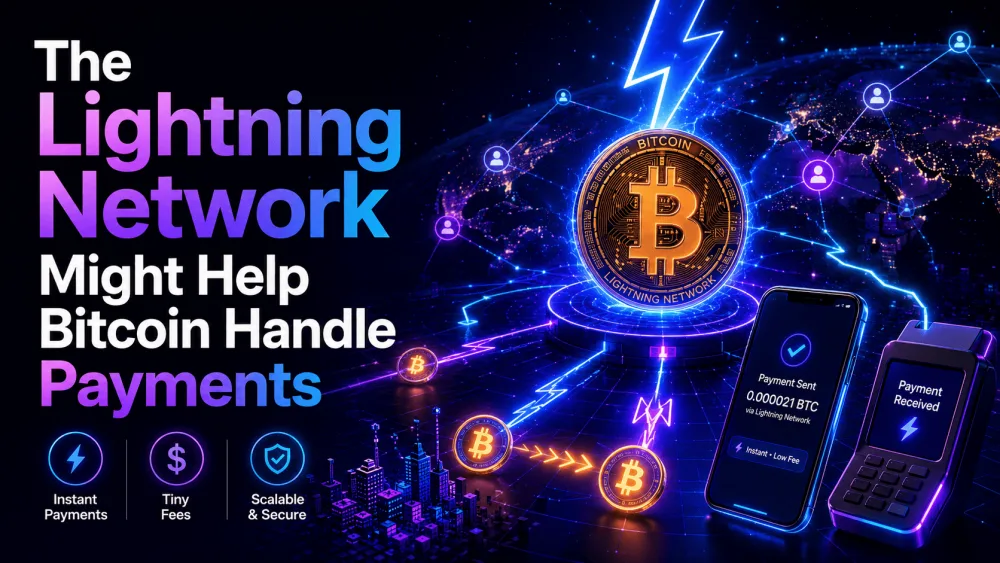
Most people just want things to work fast. What changes everything isn’t speed alone – it’s how it feels to use. Bitcoin on the chain handles big transfers, like bank settlements. For small payments, Lightning steps in. When paths exist and funds flow, a transaction finishes within seconds. Delays happen if connections fail or balances run low. Standing at a grocery checkout, no one accepts ten-minute waits. The gap between those two experiences shapes what works – and what does not.
Small costs shape choices. When charges eat up value, tiny transfers vanish – no dimes sent here, no dollar moves there, no automated micro-payments either. The Lightning Network grows not by speed alone. Its real shift opens doors to transactions too small to exist before.
Weekends mean nothing to Lightning. This network runs without pause – no holidays, no clocks punching out. When work finishes, pay follows just as fast. Are banks closed? That stops mattering. Freelancers collect when tasks are done. Online sellers get funds mid-sale, not days later. Payrolls clear while employees clock off. Time zones fade into background noise.
Related: Top 5 Crazy Bitcoin Price Predictions: Will BTC Hit $1M?
Bitcoin’s usefulness grows, yet its core remains untouched by complex code. Above the main network, tasks like billing or timed transfers take place. The foundation keeps its strict rules, even as new features build on top. Smart functions live outside the base layer, leaving Bitcoin minimal by design.
Barriers to Widespread Use of the Lightning Network
Even if optimism runs high, real hurdles stand in the way. First up – getting funds where they’re needed. Owning Bitcoin doesn’t guarantee you can receive it easily. Merchants might take payments yet struggle to keep channels open. Movement depends on timing, location, plus available paths through the network.
Getting used to it trips up plenty of folks. Nodes, invoices, those things just get in the way for most. Watchtowers? Routing hiccups? Nobody asks for that mess. What clicks instead is hitting send, getting paid – nothing more. Smooth entry happens once wallet tools hide all the gears turning underneath. Mainstream arrives when tech fades into silence behind simple taps.
Even trust brings extra drag. Smooth moves come easier with custodial Lightning – yet control slips away. Harder paths belong to non-custodial setups, staying truer to Bitcoin’s core. Failed payments pop up if connections snap or funds sit stuck in one place. Regular users won’t tolerate surprise detours when paying; steady predictability wins every time.
Related: Top Crypto Trends and Narratives That Could Explode in H2 2026
The Lightning Network Compared to Conventional Payments
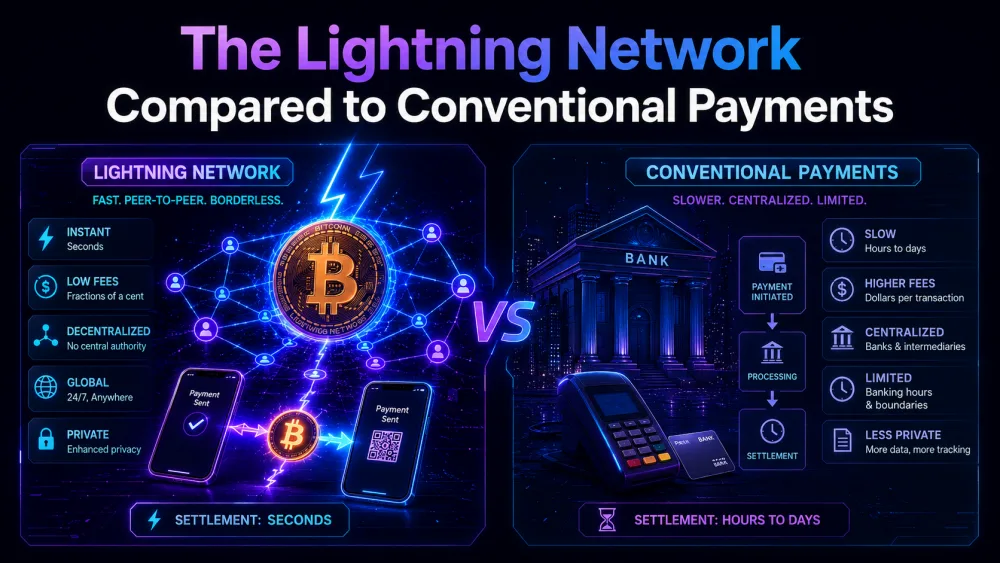
Most people already know how payment cards work. Yet reversals protect buyers. Almost every shop takes them too. Open doors elsewhere? That system runs on speed. Settlement happens quickly in Bitcoin. No big company controls who joins. Fees stay small when moving value directly. Borders matter less here. Familiarity keeps plastic strong.
Most times, SWIFT moves money slower than Lightning. Still, it connects banks worldwide through secure messages, not apps or wallets. About 60 percent of its GPI transactions finish in under half an hour, with nearly all done in a day. Speed varies, yet regulation and access to real-world currencies back it firmly. Payment speed alone doesn’t tell the whole story when systems serve different roles.
Most companies count money in U.S. dollars, so they lean toward stablecoins instead of Bitcoin on Lightning. When handling salaries, bills, or company funds, a steady value beats one that jumps around daily. A tool from Visa tracking these coins shows nearly $10.2 trillion moved globally in the past year alone – a quiet proof of where big players place their focus now.
Native Bitcoin powers Lightning’s advantage. Without needing issuers, stored value, or links to banking, it stands apart. While stablecoins handle most dollar transactions, this network could lead to moving Bitcoin, be it gifts, transfers, everyday buys, or shifting funds from storage into use.
| Payment Rail | Main Strength | Main Weakness | Best Use Case |
|---|---|---|---|
| Bitcoin Lightning Network | Fast, low-cost BTC payments with 24/7 global settlement | Liquidity management and wallet UX are still improving | Bitcoin-native payments, tips, remittances and microtransactions |
| Bitcoin Layer 1 | Highest security and final settlement | Slow confirmations and higher fees during congestion | Large transfers, savings movement and long-term settlement |
| Visa / Mastercard | Huge merchant acceptance and familiar user experience | Higher merchant fees and dependence on intermediaries | Retail shopping, subscriptions and card-based consumer payments |
| SWIFT / Bank Transfers | Trusted global banking infrastructure | Slower settlement and limited weekend availability | Corporate transfers and regulated international payments |
| Stablecoin Rails | Dollar-denominated payments with fast blockchain settlement | Issuer, regulatory and reserve-risk concerns | Cross-border dollar payments, trading, payroll and treasury flows |
| PayPal / Digital Wallets | Easy consumer UX and broad online adoption | Closed ecosystem with account restrictions and fees | E-commerce, peer-to-peer transfers and online checkout |
Institutional and Corporate Use of Lightning
Big companies help new tech spread since most people do not jump straight into complex systems. Not by using networks themselves but through tools they trust. Take how Coinbase integrated Lightning in 2024. Now, some account holders can move money instantly using Bitcoin on that network. Send it, collect it, even buy things – right from their existing setup. When a known platform adds a feature like this, what was once hidden becomes routine. Something running quietly under the surface gets used without thinking.
Bitcoin reaches everyday people through payment firms, trading sites, storage services, and financial apps. Instead of hurdles, taking funds out now flows smoothly on most exchanges. Wallets? They quietly speed up transactions until sending BTC seems routine. Shop owners simply toggle a feature to start accepting bitcoin payments.
Most companies haven’t jumped into Bitcoin treasuries yet. Picture small startups built around crypto, independent workers, trading platforms – these groups pick Lightning when moving funds directly on blockchain, as costs rise. Not everyone wiring supplier payments in BTC by morning – that part stays fantasy.
Bitcoin Lightning Payments Infrastructure
Liquidity shapes how well payments move across nodes, though software holds it together. Through channels they travel, their path swayed by fees, steady connections, available funds, and online time. What drives wider use? Wallets do – those managed by others bring quick access, self-managed ones give full authority. Tools built for coders tilt the balance: smooth ones let shops plug in fast, clunky versions kill interest before launch.
Risks and Limits of Bitcoin as a Payment System
Most of the flow might cluster near just a few main spots. When that happens, things move faster – yet power shifts in quiet ways. Efficiency rises, true, though not without cost. A network built to spread control could see it tighten again, slowly. Speed arrives hand in hand with old patterns returning. Hubs grow strong, almost by accident. The system works better, technically – except for balance tips.
Even though it runs faster, Lightning stays linked to the base network. Opening and closing channels means blockchain activity, which gets costly when Bitcoin fees rise. Rules bring extra hurdles – shops face taxes, anti-money rules, records, and filings. How safe it is usually comes down to wallet quality and how keys are stored.
Bitcoin Lightning and Stablecoin Payments Growing
Bitcoin challenges how we think about money. Yet stablecoins stick close to what already exists. Scarcity defines one, while familiarity shapes the other. Volatility comes with the first, stability with the second. Instead of mimicking banks, Lightning builds on top of code. Dollars shift quickly when tied to blockchains. One pushes users toward sound money. The other speeds up old systems using new rails.
Stablecoins keep showing up whenever people talk about paying for things. Instead of dealing with Bitcoin’s swings, sellers take digital dollars that hold their value. Even so, Lightning finds its place when folks prefer real BTC instead of dollar copies. Both could stick around – neither wiping out the other. One path doesn’t have to kill the second.
Bitcoin Operating as a Payment Network
Bitcoin can work as money without losing its role as a savings tool. This idea matters most. Through Lightning, BTC stays put like gold online yet flows fast like digital cash. Saving it doesn’t block using it later. The two uses fit together now.
Money’s story shifts. Not just something you buy ahead of rising prices, Bitcoin becomes cash people actually make, send bit by bit, share casually, and use to close deals. Banks, credit networks, global payment systems, and dollar-linked tokens won’t vanish fast, yet lightning builds a working path beside them.
FAQ
What Is the Bitcoin Lightning Network?
Off the main blockchain, transactions zip through private tunnels – those are the payment channels – making Bitcoin moves faster without big fees. Final numbers get recorded back on the original chain once things wrap up. This whole setup rides above the base layer, working like a shortcut for money travel.
What About Bitcoin Use in Modern Payments?
Fine. Exchange transfers rely on it, while merchants accept it for payments – remittances move through it too, alongside tips plus digital service fees. Still, adoption trails behind both card networks and pegged cryptocurrencies.
How Fast Are Lightning Network Transactions?
Seconds – that’s often all it takes for a payment to land, if paths exist and funds flow where needed.
Is the Lightning Network Secure?
Safe storage often depends on trustworthy tools, smart handling of keys, and one clear decision about who holds access. Easier to use might mean someone else manages it for you instead of taking full charge yourself.
Companies That Take Bitcoin With Lightning?
Some places welcome it more than others, yet Lightning works with Coinbase, Square’s business features, along with plenty of Bitcoin-focused platforms.
Can Lightning Rival Stablecoins?
True – but only sometimes. For transactions in dollars, stablecoins work better. When moving Bitcoin itself or settling openly, Lightning wins out instead.Is
Bitcoin as a Payment Network Possibility?
Technically speaking, Bitcoin functions like a payment system today. In 2026, the real test lies in Lightning – will it push things into everyday use? It hasn’t happened so far, true. Still, the route forward feels sturdier now compared to just a handful of years back.