Debates involving Peter Schiff on Bitcoin now feature regularly within today’s financial coverage. Should cryptocurrency prices reach another high, commentary from Schiff tends to follow closely — offering sharp criticism rooted in long-standing skepticism.
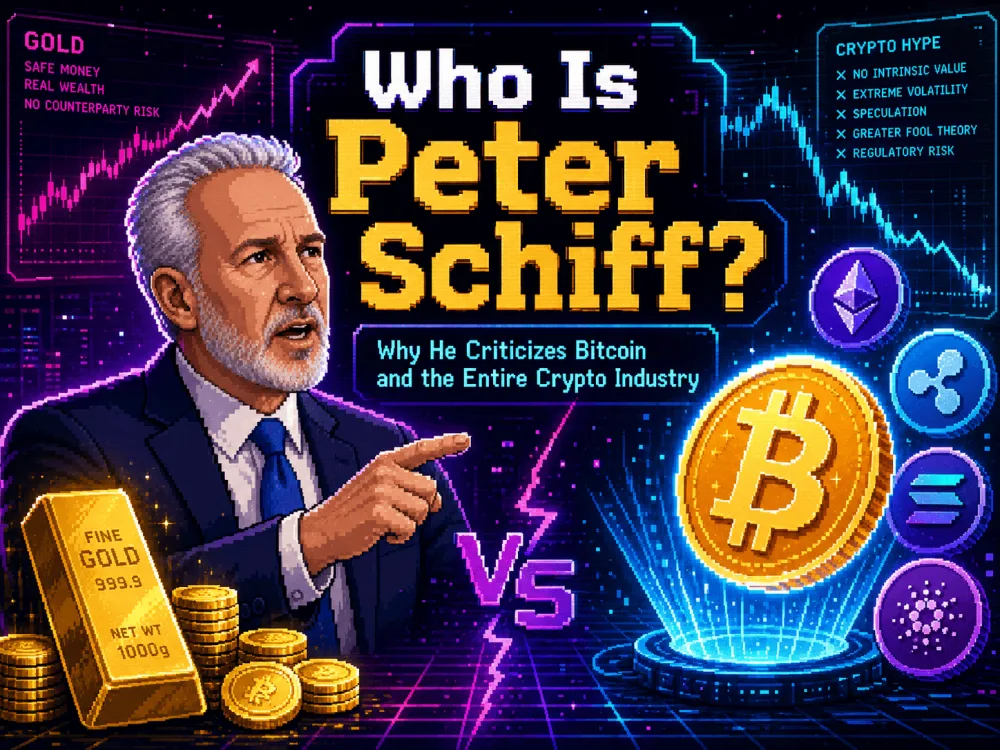
Attention comes easily to him, despite opposition, due to his background spanning years in international finance. Known for forecasting the 2008 market collapse accurately, credibility follows even when opinions clash. His influence grows not through popularity alone, but through consistency across cycles of economic change. Media platforms often include his views, regardless of prevailing sentiment toward digital assets.
That Peter Schiff Bitcoin argument is no recent development — it dates to the currency’s first appearance — yet his stance intensifies with every market phase. To grasp his background, the roots of his views, and also the reasons behind his persistent criticism reveals a key divide shaping today’s financial debates.
Contents
- From Stockbroker to Gold Advocate: The Making of Peter Schiff
- Peter Schiff Bitcoin vs. Gold: The Core of His Argument
- Why Schiff Dismisses the Entire Crypto Industry
- Bitcoin Critic With a Consistent Record — and Its Limits
- Peter Schiff Net Worth and His Own Financial Interests
- Where the Debate Stands Today
- FAQ
From Stockbroker to Gold Advocate: The Making of Peter Schiff
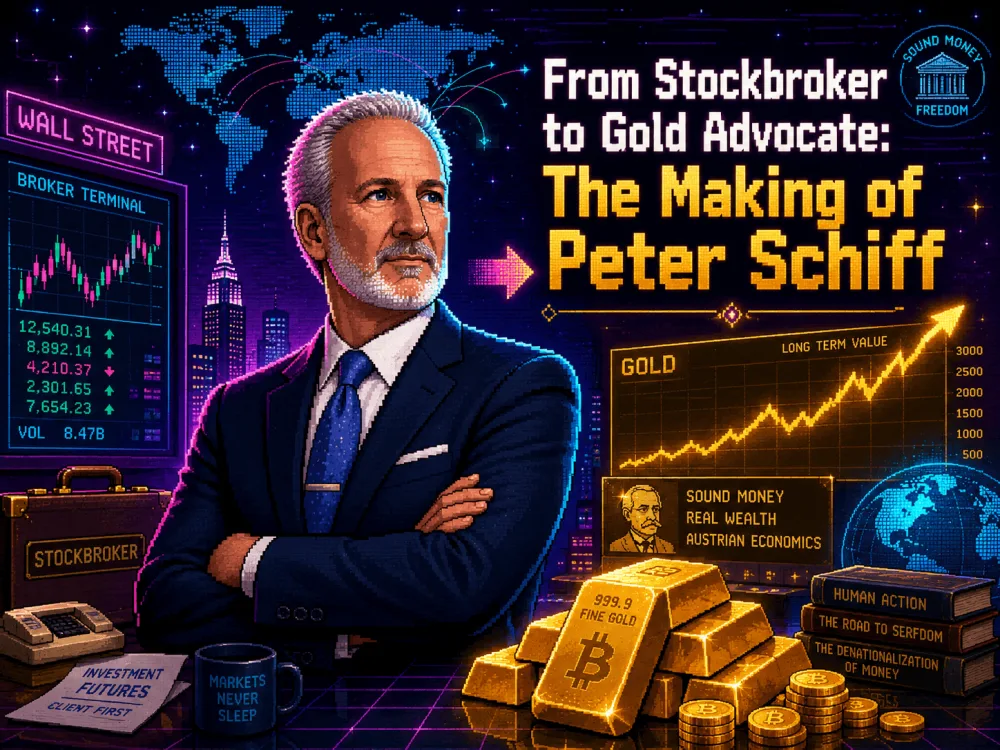
Born in 1963 within New Haven, Connecticut, Peter Schiff entered life amid early ideological currents. From the start, influence came through his father, Irwin Schiff — a figure known for libertarian views and resistance to taxation laws. Ideas emphasizing monetary integrity and caution toward state power shaped young Peter’s outlook. Over time, doubt toward centralized banking systems took root. Alongside it grew wariness of unbacked currencies. Instead, tangible holdings gained favor in his thinking. These principles — formed long before public recognition — eventually defined every major professional stance he would adopt.
Related: Who Is Kevin Warsh? Trump’s New Pick Could Replace Jerome Powell As Fed Chair
From the University of California, Berkeley, his path led not straight into finance but through early years analyzing markets as a stockbroker. Then came 1996: Euro Pacific Capital emerged under his direction, focused on overseas stocks along with holdings in valuable metals. Influence arrived earlier though — rooted in economic thought tied to the Austrian School of Economics, particularly thinkers like Ludwig von Mises and Friedrich Hayek.
These ideas insisted stability comes when currency links to what is tangible and limited. Peter Schiff gold advocacy — the conviction that gold is the only true anchor for sound money — took hold and never wavered.
Years before the 2008 collapse, his public warning about the U.S. housing bubble marked the height of his image as an outlier in forecasting. Though widely ignored at the time by conventional analysts, those warnings later gained weight through accuracy alone. Because of that outcome, reliance on his personal analytical method grew stronger. With similar determination applied since then to emerging trends such as Bitcoin, divergence from popular opinion has become standard practice.
Peter Schiff Bitcoin vs. Gold: The Core of His Argument
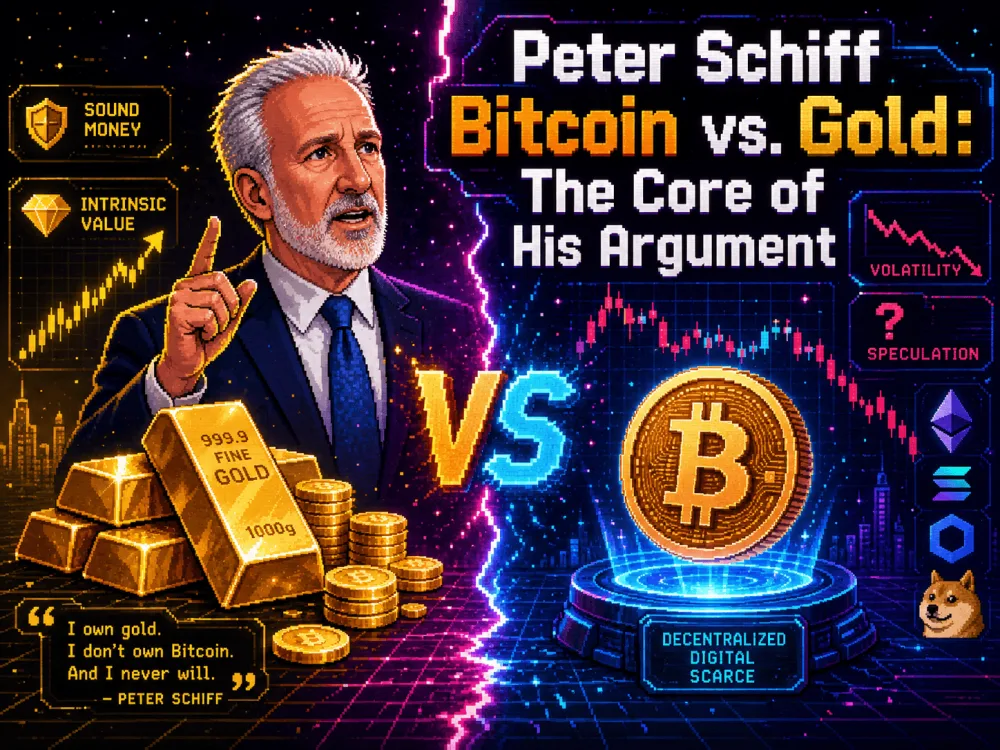
Among the reasons cited for doubting Bitcoin, the Peter Schiff Bitcoin critique rests on a deep preference for gold — not just any metal, but one shaped by centuries of trust. What counts as real money, to him, needs weight you can feel. Something used in factories, worn as jewelry, relied upon when currencies fail. This standard becomes the measure. By it, gold fits completely. Digital tokens do not appear to satisfy such demands.
Bitcoin holds no intrinsic value, says Schiff. Lacking physical form, it serves no manufacturing purpose. There is no return on holding it. Its cost depends solely on how much someone else will offer. Describing it as a “decentralized Ponzi scheme,” he points out that gains go mainly to those who entered first. Later entrants bear the loss. Growth relies not on performance but on continuous new investment. Once newcomers stop arriving, the system fails. Without fresh capital, collapse follows.
The gold vs Bitcoin debate, as Schiff frames it, goes beyond simple asset comparison. Rather, he views it as a clash of opposing ideas about what gives things value. Gold carries worth that is, in his view, objective — tied to physical scarcity and centuries of global acceptance. Bitcoin, by contrast, depends on shared belief alone. That agreement might vanish at any moment, like fog under sunlight. Its existence rests not on material limits but on human perception shifting unpredictably. History offers no guarantee it will endure beyond current enthusiasm.
Should Bitcoin really be digital gold, so the reasoning goes, then central banks would already hold it. Yet they do not. Instead, their ongoing purchases point firmly toward physical metal. This behavior reveals a clear distinction in how major financial entities view assets meant to preserve worth versus those driven by market excitement. The absence of Bitcoin on their balance sheets speaks volumes. What remains is traditional preference, grounded in long-standing criteria. Gold still draws sovereign trust — Bitcoin does not.
Related: Who Is Michael Saylor and Why He’s Betting Billions on Bitcoin
Why Schiff Dismisses the Entire Crypto Industry
Peter Schiff Bitcoin commentary extends well beyond the coin alone. Beyond its code, he sees an entire ecosystem fueled by hype, promises, slow doubt, then sudden excitement. While some praise alternative coins, he finds them weaker still — though Bitcoin carries scarcity and name value. Other digital tokens, from his angle, serve mainly those who launched them first, or got in early through luck or timing.
Government scrutiny of cryptocurrency draws his disapproval just as much as institutional involvement does. Though lawmakers enacted rules meant to regulate digital assets, he saw such moves as a bid by crypto firms to give credibility to what he views as a financial scheme built on speculation. Despite rebranding efforts, firms similar to Strategy — once called MicroStrategy — are faulted by him for amassing Bitcoin without caution, actions he deems unsound amid changing market moods. As confidence wanes, those who back such ventures may encounter steep declines in value according to his warnings.
Yet another time, Schiff challenged the narrative that Bitcoin functions as a Bitcoin speculative bubble hedge against inflation or economic instability. When markets face pressure, it typically drops together with volatile assets such as technology shares instead of holding steady like gold. Consider April 2025: amid a 12% drop in U.S. Bitcoin Reserve holdings over a single month, gold gained 2% — highlighting how digital coin moves more like an amplified stock play. That link to movements in the Nasdaq undermines arguments for treating it as money-like. From his standpoint, performance tells a different story than belief.
Bitcoin Critic With a Consistent Record — and Its Limits
Though known as a Bitcoin critic, Peter Schiff’s forecasts about its value show notable inconsistencies. Despite labeling it without worth at prices near the low hundreds, his stance remained fixed even as markets shifted. As values climbed into the thousands, he insisted collapse was imminent, yet never adjusted that view. Bitcoin reaching six figures by late 2024 did not alter his assessment; instead, he credited politics and behind-the-scenes influence for the rise. Within his perspective, the Peter Schiff Bitcoin price question admits no validation through price — each surge merely sets the stage for an inevitable fall.
Still, the steady stance pulls mixed reactions. Admiration comes from those who see integrity amid noise. On the contrary, skepticism grows where Peter Schiff crypto predictions fail to meet reality. A claim standing forever unchallenged may lack substance, some note.
Over ten years, exact figures proved inaccurate in every major call. Even as markets shifted, even as big players joined, change did not come. What looks like conviction to one observer appears inflexible to another. Long-held positions remain untouched despite waves of new evidence. The absence of adjustment speaks louder than words ever could.
Related: Top 5 Crazy Bitcoin Price Predictions: Will BTC Hit $1M?
Ironically, critics often point out this contrast. Though rooted in the Austrian School — a framework known for favoring scarce supplies, skepticism toward centralized power, and strong private ownership — Schiff diverges sharply from many within it. Digital scarcity mirrors their ideals, some argue, especially when viewed through Bitcoin’s design. Yet he remains unconvinced. In his view, authenticity as currency demands tangible support; mere code cannot suffice under such theoretical conditions.
Peter Schiff Net Worth and His Own Financial Interests
Should one examine the Peter Schiff Bitcoin position, personal financial stakes cannot be ignored. Built across years, his reported multi-million-dollar Peter Schiff net worth ties closely to ventures involving gold. Leading SchiffGold — a firm dealing in precious metals — shapes much of his public identity. Through a broadly shared podcast and media outlet, emphasis consistently lands on gold as a stronger option than government-issued money. Positioning himself against fiat systems forms a core theme in that ongoing narrative.
Wrongness does not follow simply because motives align. Still, the direction of his remarks matches where profit lies — gold gains when faith in Bitcoin slips. Benefit flows to Peter Schiff personally as others shift wealth into metals. Observers suggest this background matters, particularly given how firmly he speaks, as though detached from personal gain. Certainty like that seems odd when money ties so closely to opinion.
Where the Debate Stands Today
Should value stem only from what one can touch, then gold outweighs code every time. Yet when perception shapes worth just as much as presence, the line blurs between metal and algorithm. From this angle, clinging to tangibility might seem less like prudence, more like habit masked as logic. Where meaning emerges from agreement rather than material, digital limits carry weight equal to earthly ones. One man’s anchor becomes another’s relic under such conditions. Trust, once placed in vaults, now spreads across networks without walls.
One reason this discussion holds attention lies beyond any prediction on the Peter Schiff Bitcoin debate’s final outcome. Instead, it centers on a more fundamental issue brought forward through his continued stance — how is worth defined, by whom, and does such authority even exist. For years longer than ten, he has kept returning to this inquiry. Agreement with his conclusions matters less than the fact the inquiry stands central within today’s financial thought.
FAQ
Who is Peter Schiff and why is he famous?
Founder of Euro Pacific Capital back in 1996, he built a name through timing rather than chance. Attention grew after clear statements on the U.S. housing crisis well ahead of its peak. Opposition to digital currencies like Bitcoin runs deep, voiced consistently over years. Instead, trust placed in physical assets — particularly gold — defines much of his stance. Fame stems less from popularity than persistence in unpopular positions.
Why does Peter Schiff hate Bitcoin?
Bitcoin draws criticism from Peter Schiff because he sees no intrinsic value in it. Backed by nothing material, according to him, it produces zero returns over time. Its market value stems entirely from what buyers expect others will pay later. At times, he likens it to financial speculative bubbles of the past. A phrase he uses is “decentralized Ponzi scheme” when describing its structure. What shapes his thinking is a principle: durable currency should stem from something limited in supply and physically present. Among assets, only gold fits this idea, in his judgment.
Has Peter Schiff ever been right about Bitcoin?
Despite his forecasts repeatedly failing, Peter Schiff’s outlook on Bitcoin remains unaltered. Though he stated its value would fall to nothing — on several occasions — the opposite unfolded. Instead of vanishing, the digital currency expanded into an asset category worth trillions. Growth did not shift his stance; he assigns rising prices to speculative waves, not shifts in core principles. Official pressure, in his view, plays a role equal to market enthusiasm.
What does Peter Schiff say about gold vs Bitcoin?
Among assets compared by Peter Schiff, gold holds unique standing due to its long-standing role in global economies across centuries. Unlike Bitcoin, it carries tangible presence along with measurable utility in manufacturing and technology sectors. Its worth rests on enduring acceptance, rather than digital consensus or the “digital gold” label that crypto supporters favor. Central banks, acting independently yet consistently, increase holdings of metallic reserves instead of cryptographic tokens. That pattern reveals institutional preference grounded in stability over novelty.
Does Peter Schiff own any Bitcoin?
It remains unclear whether Peter Schiff holds Bitcoin — though he says he does not, nor plans to acquire it. Given now and then by acquaintances, tiny quantities have come his way, yet never treated as part of his holdings. Ownership, in his view, implies intent; that condition has not been met. What defines his strategy instead appears rooted in tangible value — gold takes center stage. Allocated largely to bullion and firms tied to mining, his choices mirror long-standing beliefs.