Bitcoin DeFi puts BTC▲$62,630.00 to work beyond just waiting in storage. Moving past cold vaults and basic trades, users can lend out BTC, borrow cash using it as backing, add liquidity to pools, move through faster layers, use wrapped versions on other chains, or access payment and collateral tools.
Bitcoin stands out across crypto by name power, market depth, and user base. Yet here comes the real question: can all that stored value pull extra weight without cracking what makes Bitcoin solid? Risk needs watching. Rareness counts. Keeping control in your hands stays firm.

BTCFi still feels like the beginning. Some teams are building real financial tools on Bitcoin. Others drift into shaky zones: wobbly bridges, mirrored versions of BTC, thin trading lanes, and scripts masking hidden flaws. DeFi on Bitcoin is messy, rarely clean-cut, and never a path paved with guaranteed returns.
Read more: How to Earn Yield on Bitcoin: Top BTCFi Strategies 2026
Contents
- Bitcoin DeFi Explained Simply
- Why Bitcoin DeFi Matters
- How Bitcoin DeFi Works
- Main Bitcoin DeFi Use Cases
- Bitcoin DeFi Compared With Regular DeFi
- Bitcoin DeFi and Bitcoin Layer 2s
- Bitcoin DeFi Features
- Risks in Bitcoin DeFi
- How to Evaluate a Bitcoin DeFi Protocol
- Bitcoin DeFi Types People Use
- Is Bitcoin DeFi Safe?
- Bitcoin DeFi in 2026: What Comes Next?
- Conclusion
- FAQ
Bitcoin DeFi Explained Simply
Bitcoin DeFi, sometimes called BTCFi, is decentralized finance built around Bitcoin, using BTC as collateral, liquidity, settlement, and financial backing.
When Bitcoin gets locked, it may let someone borrow stablecoins. Extra layers help transactions run faster. Wrapped Bitcoin lets BTC move through smart-contract platforms. Capital sitting in certain systems may earn yield over time.
Traditional DeFi developed on platforms built for flexible code, including Ethereum, Solana, and BNB▲$572.56 Chain. Bitcoin took another path: safety came first. Complex financial gears did not fit into Bitcoin’s core. Now Bitcoin DeFi works around those limits with sidechains, rollups, wrapped assets, bridges, payment layers, staking-like setups, and Bitcoin-native tools.
Why Bitcoin DeFi Matters

Stillness defines most Bitcoin: locked away, out of reach. For long-term holders, that fits the plan. But when coins sleep, their worth sleeps too. Bitcoin DeFi opens ways to stir that value awake without giving up ownership.
That matters because:
- BTC holders may want yield without selling.
- Traders may want to borrow against BTC.
- DeFi systems want access to Bitcoin liquidity.
- Bitcoin Layer 2 networks need financial applications.
- Institutions may trust BTC-backed tools more than smaller tokens.
- Developers want to build near the best-known name in crypto.
Bitcoin DeFi links the first cryptocurrency to open finance apps. Old networks gain fresh roles, while Bitcoin keeps its role as rare digital support.
How Bitcoin DeFi Works
Not every Bitcoin DeFi setup works the same way. Each path involves different trade-offs.
Bitcoin Layer 2 Networks
Layer 2 networks add functions on top of Bitcoin. Some make payments faster. Others support smart contracts, settlement, assets, or finance-like systems without changing Bitcoin’s base rules.
| Network Type | Main Purpose | BTCFi Relevance |
|---|---|---|
| Lightning Network | Fast payments | Everyday BTC transfers |
| Stacks | Smart contracts linked to Bitcoin | DeFi apps and BTC-backed activity |
| Rootstock | EVM-compatible Bitcoin sidechain | Lending, swaps, smart contracts |
| Liquid Network | Federated Bitcoin sidechain | Asset issuance and faster settlement |
| Citrea and rollup-style projects | Scalability and programmability | Emerging BTCFi infrastructure |
Heavy trading or loan functions rarely run straight on Bitcoin’s base layer. Second-layer networks handle that stress and open space for smoother DeFi moves.
Wrapped Bitcoin
Wrapped Bitcoin allows BTC to travel across networks that support smart contracts. WBTC on Ethereum is the best-known form, though other chains have their own versions.
Wrapped BTC can support:
- Lending
- Borrowing
- Liquidity provision
- Collateral
- Trading
- Yield strategies
Things snap together neatly at first. Yet trust hides where it hurts most. Custodians, bridges, validators, or contract rules may hold the weight. When one part cracks, what seems solid can turn fragile.
Bitcoin-Backed Lending
Borrowing against Bitcoin lets users lock BTC to get stablecoins or other digital assets. Long-term holders may choose this rather than selling. They tap value while keeping exposure.
When prices drop sharply, collateral may be sold to cover debt. Users need to watch collateral ratios, interest rates, liquidation levels, and platform risk.
Bitcoin Staking and Restaking
Some BTCFi setups let Bitcoin holders secure outside systems by locking or committing BTC. Babylon is one name that often appears in this space.
Since Bitcoin does not use proof-of-stake, these staking-like systems build around Bitcoin without changing its core rules.
Bitcoin DEXs and Liquidity Pools
Bitcoin DEXs allow users to swap Bitcoin-linked assets without major centralized exchanges. Liquidity pools rely on group-funded reserves where users add coins in hopes of earning fees.
When trading tools go missing, BTCFi stumbles. Lending markets need liquidations. Yield vaults need swaps. Stablecoin pairs need depth. Once liquidity dries, trouble follows.
Related: Can Bitcoin Crash to $20K in 2026? What Could Trigger a Historic Crypto Market Collapse
Main Bitcoin DeFi Use Cases
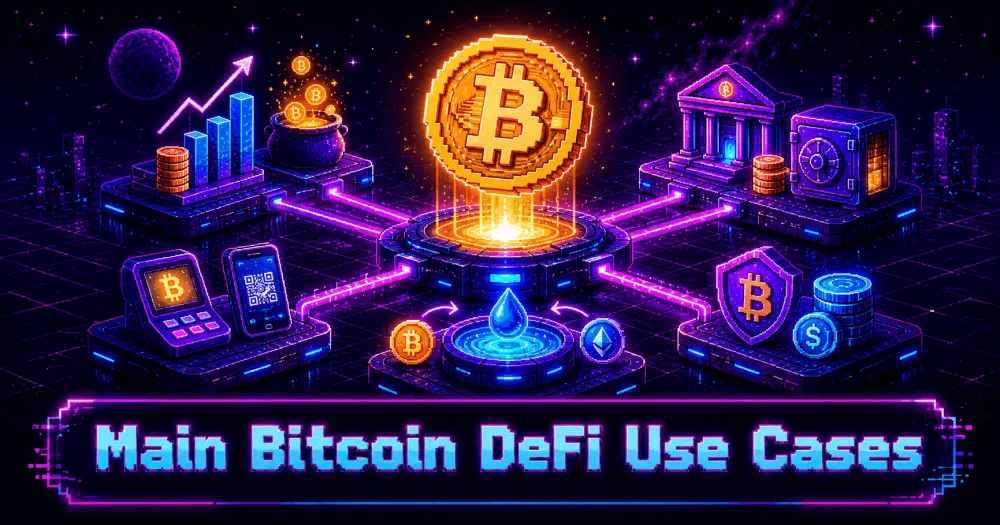
Bitcoin DeFi covers several real-world uses.
Earning Yield on Bitcoin
Yield comes first for many users. Bitcoin may sit inside a lending setup, liquidity pool, vault, or staking-like system.
Most of the time, bigger gains hide bigger risks. If a return looks unreal, it might be a scam.
Borrowing Against Bitcoin
Borrowing against BTC puts cash in hand while letting owners keep their coins. Traders gain flexibility, companies access capital, and long-term holders unlock value without selling.
When prices slide, trouble starts. A steep fall in Bitcoin can quickly turn loans shaky.
Bitcoin in DeFi Apps
Wrapped versions let Bitcoin move through trading pools, lending systems, derivatives platforms, and yield strategies. This unlocks value, but it can pull users away from Bitcoin’s core protection layer.
BTC-Backed Stablecoins and Collateral
Bitcoin can back stablecoins or synthetic assets in certain systems. This expands BTC beyond payment and storage. The key question is whether the collateral design survives wild market swings.
Bitcoin DeFi Compared With Regular DeFi
Most smart contract blockchains handle heavy apps more easily. Bitcoin does not. Its design focuses on security, restraint, and reliable value transfer.
| Feature | Bitcoin DeFi | Regular DeFi |
|---|---|---|
| Main asset | BTC | ETH▲$1,761.17, SOL▲$82.41, stablecoins, altcoins |
| Base programmability | Limited | Usually high |
| Security base | Bitcoin settlement and BTC collateral | Smart contract platform security |
| Main challenge | Making BTC productive safely | Managing app complexity |
| Main users | BTC holders, institutions, Layer 2 users | Traders and yield seekers |
| Main risks | Bridges, wrappers, custody, early tools | Exploits, oracle issues, thin markets |
Old-school DeFi leans on code-first design. Bitcoin DeFi starts with real BTC as fuel, then builds tools around it.
Bitcoin DeFi and Bitcoin Layer 2s
When Bitcoin’s main level drags its feet, Layer 2 steps up: faster, cheaper, and built for more complex moves.
Lightning Network
Lightning makes small bitcoin payments faster and cheaper. It skips complex money gadgets, but daily spending becomes smoother.
Stacks
Stacks brings smart contracts tied to Bitcoin. It stands out in BTCFi because DeFi actions can unfold using Bitcoin-backed assets.
Rootstock
Rootstock is a Bitcoin-linked sidechain that works like Ethereum. Developers can build familiar DeFi-style apps while value ties back to BTC.
Liquid Network
Liquid is a Bitcoin sidechain built for faster settlement and asset issuance. It is not fully decentralized, but it trades some autonomy for performance.
New Bitcoin Projects Using Rollup Tech
Projects such as Citrea use Bitcoin for final checks while adding code-driven actions above it. The path is still rough, but new ground is being claimed step by step.
Bitcoin DeFi Features
Making BTC Productive
Productivity sits at the center of BTCFi. Bitcoin can support yield, loan frameworks, collateral tools, and external security systems.
Expanding Bitcoin Utility
Bitcoin already works as online cash and long-term value storage. Bitcoin DeFi adds loans, trading, yield, payments, and liquidity pools.
Attracting Institutional Liquidity
Big companies usually understand Bitcoin better than smaller digital coins. If BTC-backed finance feels solid, institutions may lean toward it.
Bitcoin Layer 2 Use Rising
Bitcoin’s second-layer networks may grow when DeFi brings in new users, liquidity, and activity.
Related: Bitcoin DeFi Protocol Echo Loses $816K After Admin Key Hack
Risks in Bitcoin DeFi
Bitcoin DeFi has promise, but every extra piece adds risk.
Bridge and Wrapped Bitcoin Risks
Wrapped BTC depends on custody, validators, smart contracts, or bridges. If one piece fails, backing can weaken.
Smart Contract Risk
Software handles loans, trades, vaults, and secured holdings. One overlooked line of code can empty balances.
Liquidity Risk
A quiet BTCFi market can crack when people rush out. Thin buyers mean sharp price moves, slippage, and failed liquidations.
Custody and Counterparty Risk
A single company, federation, multisig group, software script, or external operator may control access. Each model depends on a different kind of trust.
Yield Risk
Profits grow from lending, fees, token incentives, staking-style rewards, leverage, or market activity. When users lose sight of that root, risk sneaks close.
Regulatory Risk
Bitcoin is familiar. BTCFi tools are not always simple. Lending, staking-style systems, wrapped tokens, and yield products may attract regulators.
How to Evaluate a Bitcoin DeFi Protocol
Before trying a BTCFi app, check what sits underneath.
Security Model
Ask where the Bitcoin really goes. Does it stay native, become wrapped, or get locked in a bridge? Who controls it: code, a federation, multisig signers, a custodian, or an external team?
Liquidity
Watch real activity. Check pool depth, volume, exit conditions, and whether users can leave without crashing the price.
Audits and Code Quality
Audits do not guarantee safety, but unreviewed systems are dangerous. Open code, outside reviews, bug rewards, and incident history all matter.
Yield Source
True gains come from actual use, not empty promises. Fees, borrowing interest, and real network incentives matter more than quick token drops or promotions.
User Control
Who holds the keys makes a difference. As control moves away from you, reliance on the system grows heavier.
Bitcoin DeFi Types People Use
BTC Lending Markets
These platforms let users borrow with Bitcoin as backing or lend assets tied to BTC.
BTC Staking Systems
These connect Bitcoin to added security layers or earning systems beyond mining.
Bitcoin DEXs
These let users trade Bitcoin-linked assets outside major centralized platforms.
BTC Yield Vaults
Vaults run automated strategies such as lending, liquidity provision, or staking-style participation.
Wrapped BTC Protocols
These connect Bitcoin’s market depth with smart-contract platforms.
Bitcoin Payment Layers
Payment layers make Bitcoin faster and cheaper to use as money.
Is Bitcoin DeFi Safe?
Security is not automatic just because a system uses Bitcoin. The Bitcoin network has proved durable, but many BTC-backed lending, borrowing, and yield platforms are recent creations.
Holding native Bitcoin under your own control is usually the most secure choice. Every extra step shifts some trust elsewhere. Wrapped versions rely on bridges or third parties. Lending systems can fail under pressure. Software can hide flaws. Vault returns depend on strategy execution.
BTCFi draws a boundary between simple trust and tangled effort. Holding your own keys sits on the quiet side. Chasing returns across chains pulls users toward more noise.
Related: Best Crypto Faucets in 2026: Top 5 Platforms That Still Pay Free Crypto
Bitcoin DeFi in 2026: What Comes Next?
Bitcoin DeFi could grow by 2026 because so much value already sits in BTC. Progress may stand out in:
- Bitcoin Layer 2 networks adding usable DeFi apps
- BTC staking and restaking infrastructure
- Trust-minimized ways to use BTC as collateral
Bitcoin’s usefulness depends on one core issue: making BTC work harder without hiding what could go wrong.
If Bitcoin DeFi becomes safer and simpler, BTC could move beyond digital gold and into broader decentralized finance. If security issues pile up, most holders may return to raw BTC and ignore tangled yields.
Conclusion
Bitcoin DeFi asks whether Bitcoin can do more than sit idle. Lending, borrowing, staking-like systems, wrapped BTC, Layer 2 apps, liquidity pools, payments, and collateral tools all sit inside BTCFi.
Bitcoin trades heavily. Trust in it runs deep. If some of that value moves into DeFi, possibilities shift, and Bitcoin DeFi could become a leading crypto sector.
The risk is visible. Every layer added to Bitcoin brings more assumptions. Bridges may break. Code may fail. Liquidity can vanish. What looks like profit can hide part of the story.
Treat Bitcoin DeFi as useful but still being tested. Custody comes first. Security is not automatic. Chasing high yields can expose users to avoidable harm. Bitcoin earned trust by doing little but doing it well. For BTCFi to last, it must honor that quiet power.
FAQ
What is Bitcoin DeFi?
Bitcoin DeFi is decentralized finance built around Bitcoin. It lets users lend, borrow, stake, trade, or use BTC in financial applications through Layer 2 networks, wrapped BTC, sidechains, and related tools.
What does BTCFi mean?
BTCFi means Bitcoin DeFi. It refers to tools that let Bitcoin work inside open finance, including lending, yield, payments, collateral, staking-style systems, and DeFi apps.
Is Bitcoin DeFi safe?
Bitcoin DeFi can be useful, but it is not risk-free. Holding native Bitcoin under self-custody is usually safer than using wrappers, bridges, loans, or yield setups.
How can Bitcoin earn yield?
Bitcoin can earn yield through lending, liquidity provision, staking-like systems, vault strategies, or wrapped BTC DeFi. Higher rewards usually come with higher risk.
Is BTCFi the same as wrapped Bitcoin?
No. Wrapped Bitcoin is only one part of BTCFi. Bitcoin DeFi also includes Layer 2 networks, lending, staking-style systems, payments, collateral, DEXs, and other financial tools.
What are the main Bitcoin DeFi risks?
Main risks include bridge failure, wrapped BTC custody risk, smart contract bugs, thin liquidity, liquidation risk, misleading yield, and regulatory uncertainty.
Could Bitcoin DeFi grow by 2026?
Bitcoin DeFi could grow by 2026 if developers improve BTC utility, security, liquidity, real user demand, and Bitcoin Layer 2 experiences.