Some say Four’s price in 2026 might stay shaky, given how few buyers show interest lately. Weak rallies fade fast, trust feels thin, yet the name sticks around on exchanges. Even though FORM hasn’t vanished from sight, charts tell a story of hesitation, not strength.
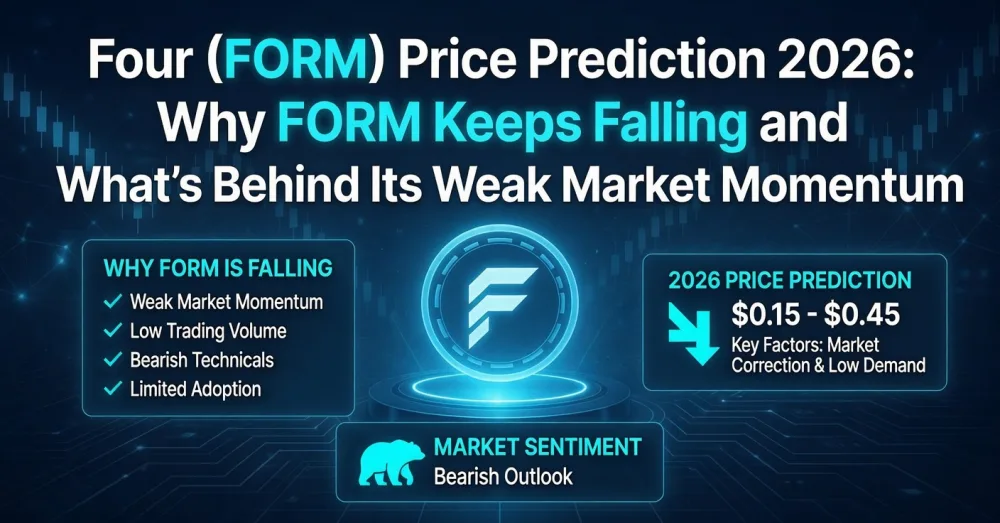
Traders seem unsure – what’s pushing FORM down stays unclear. Reasons behind the drop hide between fading volume and skipped breakouts. A real turnaround? That waits on firmer signs, something solid enough to shift the mood.
Backward movement in 2026 might define FORM’s value – shaped by how much cash flows through it, how many tokens flood the market, and whether people still trust it. Weakness lingering in these areas? The coin drags along the floor. Yet should trading pick up, a steadier path opens ahead.
Related: WLFI Crypto Price Prediction 2026: Why the Token Is in a Permanent Downtrend and Keeps Falling
Contents
FORM Price Trends 2026
FORM’s Current Price Trend
Even though FORM dipped in price in 2026, it wasn’t sudden – more like a slow fade. Brief climbs popped up now and then, yet hardly any stuck around long enough to matter. Normally, when things go well, each dip ends higher than the last, and old highs turn into new lows. That shift rarely happened here. Because of those missed chances, people watching FORM stay on guard.
FORM’s Key Support and Resistance Levels
What shapes market moves? Short-term traders watch FORM’s support and resistance levels closely. Buyers tend to step in at support, halting downward pushes. A drop through that level – especially on heavy volume – opens space below. Resistance appears where upward attempts have collapsed before. Trapped buyers unload there, adding fresh supply when the price returns.
Changes in Trading Volume and Market Liquidity
A shift in how much is traded often tells you what traders really think. When prices drop but not many are selling, it might mean the downward push is fading. Sharp jumps in activity sometimes reveal strong hands letting go. With fewer orders around, even small trades can swing the market.
Comparing Past Market Cycles
Back then, the market leaned on guesswork. Rallies before saw altcoins pull harder, drawing crowds to lookalike coins. Come 2026, money shifts, backing bolder stories, leaving thin triggers behind.
| Scenario | What Needs to Happen |
|---|---|
| Bearish | Support breaks, volume stays weak, sellers dominate |
| Neutral | Price stabilizes and trades sideways |
| Bullish | Volume returns, resistance breaks, ecosystem updates improve |
| High-risk zone | FORM trades near support without strong buyers |
| Reversal signal | Breakout above resistance with rising volume |
FORM Keeps Dropping in 2026
Weak Market Demand Lowers Buying Pressure
Downward pressure on FORM stems mostly from a lack of buyer interest. Without strong buying momentum, each price rise meets quick resistance. Traders hesitate at lower levels, choosing to watch rather than jump in. That hesitation feeds doubt, letting those selling dominate the moves.
Token Supply Changes and Release Times
Pressure from token unlocks might drag down FORM. More tokens flowing into markets mean buyers have to match rising availability. Should interest stay low, the coming influx could push value lower. Watch how many coins are moving, where they go, who holds them, when new ones arrive, and if big wallets shift balances.
Investor Confidence in FORM Declines
Falling prices shake belief just as much as wallets. Months of drops make people doubt the plan, its real-world use, how well it’s built, even if it can stand against rivals. Without active users, trading volume, or expanding networks, trust stays broken. Rebuilding takes more than promises – it needs movement.
Macro Crypto Trends Affecting FORM
Most of the time, FORM moves with bigger forces around it. Bitcoin’s path shapes things, while flows in smaller coins add pressure, too. Interest levels shift how people act. Appetite for risk plays a role just as much. If traders pull back, money finds shelter – often in BTC▲$65,768.00 or ETH▲$1,771.24. Sometimes it settles into stablecoins instead. Stronger areas of crypto tend to catch that flow when fear spreads.
| Factor | Impact on FORM Price |
|---|---|
| Weak demand | Fewer buyers defend support levels |
| Low trading volume | Rebounds fail faster |
| Supply pressure | Extra tokens can increase selling risk |
| Poor sentiment | Retail traders avoid early entries |
| Stronger altcoin competition | Liquidity moves to better narratives |
FORM’s Market Momentum Struggles Explained
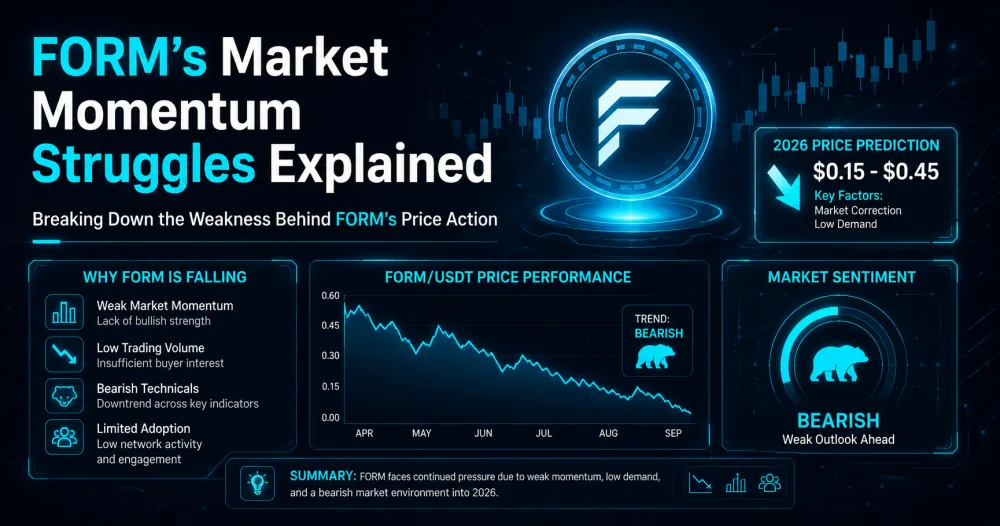
FORM’ Trading Volume Drops on Major Exchanges
It’s quieter on FORM lately, which might explain why price moves feel sluggish. With less attention from traders, there are simply fewer people stepping in when prices dip. Breakouts don’t gather speed either, since interest is thin. On top of that, thinner order books make shifts more jumpy than smooth.
Lack of Big Ecosystem Changes
Surprises keep crypto prices moving. For FORM, real movement means showing growth – new features rolling out, people actually using it, connections to other platforms forming, or more projects joining its world. When nothing new shows up, interest fades fast.
Narrative Moves Beyond Lookalike Tokens
Stories shape much of what drives interest in altcoins. When money shifts toward areas like artificial intelligence, layer-two networks for Bitcoin, decentralized physical infrastructure, real-world assets, or systems supporting stablecoins, less compelling stories fade fast. For FORM to hold ground, it must offer a narrative that sticks.
Stronger Altcoins Challenge Existing Projects
Most alternative coins chase the same pool of money, and FORM is just one of them. Stronger backing often means more attention from investors. Certain tokens offer better reasons to buy right now. Others sit on heavier trading volume already built in. When choices tighten, cash flows unevenly across options.
FORM Price Movement Examined
Downtrend Structure and Market Patterns
Even now, FORM’s price pattern looks shaky when it keeps peaking lower and stumbles at key resistance again. Each drop below prior support adds pressure instead of reversing. Strength might show only after prices stop sliding, spend time steady, then rise past recent barriers. Only once that new high holds on a second approach does the picture truly shift.
RSI, MACD, and Momentum Indicators
Slowing sell-offs might show up in momentum signals. Near the bottom range, RSI hints FORM could be pushed too far down – yet low doesn’t equal bargain. Fading downward force sometimes appears in MACD shifts. When a positive flip happens alongside stronger volume, it carries more weight.
Related: What Is RSI in Crypto Trading? How Relative Strength Index Signals Buy & Sell Moves
FORM’s Volume Confirms Bearish Move
Only when volume backs it does movement matter much. Should FORM drop below support with more shares trading, the pressure stays real. Bounces appearing on thin activity often fade fast. What works better? See selling ease off while climbing back up meets heavier trade interest.
Broken Moves and Missed Bounces
Bounces that go nowhere show just how little push this thing has. The pattern keeps breaking down since runs upward never last long enough to shift anything real. Every time it tries and falls short, people hanging on get more annoyed, while newcomers step back even farther. A turnaround needs one clear thing – FORM can’t keep peaking below where it stood before.
FORM Market Sentiment
Social Media and Community Engagement
When people lose excitement around a token such as FORM, it shows in their silence. Hype fades when chatter on social platforms drops off. Interest seen through searches often mirrors real-time shifts in attention. Conversations popping up on exchanges sometimes spark small moves in buying pressure. A shrinking presence online usually means that fewer new buyers appear. Price dips feel deeper when nobody is talking about a comeback. Without steady noise from supporters, momentum stalls fast.
Views From Analysts And Crypto Voices
Most noise fades fast, yet depth stays. Hype might lift momentum briefly; without real use, it drops just as quickly. What sticks are clear signs of demand – those matter more than headlines ever could. Predictions work best when stripped bare, left honest, free from cheerleading.
Fear and Risk in Retail Trading
Downward moves spark questions about FORM’s future. Sometimes, lower prices seem like opportunity knocks. Yet price drops might still have room to fall without solid backing. Bounces lose trust when selling follows each rise. What looks low today may feel even lower tomorrow. Confirmation matters most when doubt spreads fast.
Sentiment And Price Moving Apart
Not always, but feelings shift ahead of numbers. When chatter around FORM picks up even as prices stop dropping, it might hint at a change. Still, low excitement matched with ongoing losses means downward pressure stays real.
Form Token Basics and Use

Project Use Case and Ecosystem Role
Most of the time, lasting value comes from what a token actually does. When prices jump fast, it often means people are guessing, not using. Inside the system, things like rewards, access rights, or holding tokens might give reasons to keep them. Activity on the platform, ways to earn, or even paying fees could help too. What matters now is whether users rely on FORM daily. Traders may push numbers up today, yet fade tomorrow if there’s nothing concrete underneath.
FORM Token Supply and Allocation
Most of the time, how tokens are managed shapes what happens to FORM’s value. Supply already out there, total possible supply, new token releases, where funds go, rewards when holding, or who owns big chunks – each plays a role in pricing. Price tends to stay low whenever more coins appear quicker than people want them.
Utility Versus Speculative Demand Equilibrium
Most of the time, value sticks around when people actually use something. Not just bet on its price going up. Hype fades fast if nobody builds with it. What keeps FORM relevant isn’t chart patterns. It’s whether apps keep running on it. When usage climbs, pricing tends to follow. That shift matters more than any spike after news drops. So, judging FORM means looking past numbers flashing red or green. Real momentum comes from activity, not chatter. A coin lives longer when used, not just traded.
Developer Work and Upcoming Steps
Signs of a healthy project often show up in how much developers are doing. New product releases appear alongside tool improvements, code checks happen more often, and integration work moves forward. Confidence grows when users see features they can actually use. When things stall, or the next steps feel foggy, attention shifts elsewhere – toward efforts that move faster. Momentum matters, especially when better options start drawing interest.
What Influences FORM Price Outside the System
Bitcoin Tracks Market Trends
Bitcoin moves shape how FORM behaves. As BTC climbs alongside wide gains across cryptos, alternatives tend to rise too. Yet when Bitcoin takes up more of the market share, or investors grow cautious, little-known tokens typically drop. For FORM to aim higher by 2026, it relies on a stronger flow into alternative coins.
Liquidity Moves Across Altcoins
Liquidity for altcoins picks its spots in 2026. Stronger areas pull in traders fast, while weaker tokens get dropped without delay. When mid-cap speculation loses steam, FORM might find itself stuck. A return of broader altcoin flow could help FORM – assuming something real sparks interest first.
Small Cap Tokens Face Regulatory Scrutiny
Heavy rules might squeeze smaller tokens when exchanges update their policies or regions clamp down. Not even FORM needs to be in the spotlight for tighter checks to limit where it trades. Liquidity feels the strain because people react to how free they can move. Mood shifts follow, simply due to what’s allowed today versus yesterday.
How Listings and Delistings Affect Exchanges
Here’s something worth noting: where a token trades shapes its reach. Fresh spots to trade often bring more eyes, plus steadier movement of orders. Losing those spots, or seeing support shrink, tends to weigh on mood. Watch which markets stay active, where most deals happen, and if just one or two platforms hold the bulk of activity.
FORM Levels Traders Watch
Short-Term Price Reaction Areas
Watch how FORM bounces at known support levels – volume adds weight here. When price finds footing and lifts off, opportunity might show up. A break below that level? That changes things fast. Risk climbs once old floors fail.
Long-Term Accumulation Areas
Stability matters just as much as cost when holding assets for long stretches. Signs that dumping has slowed often matter more than how cheap something looks. Liquidity needs to settle into a rhythm, not swing wildly. Stronger hands tend to keep coins off exchanges, which helps. Fundamentals need real progress, not promises. A big drop from old peaks alone won’t pull in serious interest.
Risk Areas Showing Potential Decline
When price hovers close to support but buying pressure stays weak, risk zones start showing up. Buyers stepping back lets sellers push toward lower prices instead. Sharp moves often follow if there’s little volume on the bid. Breakdowns gain speed fast – this makes high leverage especially dangerous here.
Volume-Based Reversal Signals
A shift past resistance on stronger volume, then holding gains during a pullback – that kind of action hints at real buyer interest. Such follow-through suggests demand is stepping in. Without that pattern from FORM, hesitation makes more sense than confidence. Staying back stays sensible.
Related: Top 5 Crazy Bitcoin Price Predictions 2026: Will BTC Hit $1M?
FORM Price Forecast 2026
In 2026, FORM’s price might depend on different conditions. If things go poorly, downward movement could continue due to shaky liquidity. Weak demand joins ongoing sell-offs from large holders. Progress within the network stalls, missing key milestones. Without new reasons for buyers to step in, earlier lows come back into play.
After a while, FORM stops dropping or rising, just moving flat as trust creeps back. That shift only happens if fewer people sell, updates come through on schedule, plus chatter in the forums picks up again.
If things turn up, FORM could gain from better altcoin trading flow, livelier exchange actions, fresh ecosystem tweaks, followed by a push past key resistance levels. Risk stays present regardless, yet such movement might signal renewed buyer interest.
Right now, the outlook for FORM’s price stays careful. A comeback might happen, yet buyers have work to do to prove it. Without stronger trading activity, real-world use, trust must grow first – only then could steady gains take hold.
FAQ
Why Is FORM Crypto Price Falling in 2026?
Because demand stays low, FORM keeps dropping. Each bounce attempt fizzles out fast. With fewer people trading, the market feels thinner than before. Instead of holding, many shift funds to altcoins, showing more momentum lately.
Still Wondering If FORM Holds Value Now
Still unproven, FORM hangs in uncertainty. For those comfortable with steep risks, it might fit – yet anyone considering it must check how much trading happens, how tokens are set up, where price finds footing, plus whether development stays on track before stepping in.
Is FORM Recovery Possible by 2026?
Beyond the current dip, a rebound might spark should buyers step in again. Holding at key levels could lend stability. Progress shown through clear milestones may rebuild interest. Momentum often follows when similar assets start gaining ground.