Come May 2026, leadership of the Federal Reserve passed from Jerome Powell, closing a chapter shaped by deep economic instability. Not long into his time in office, a worldwide health emergency sparked financial turmoil, forcing swift changes in monetary strategy.
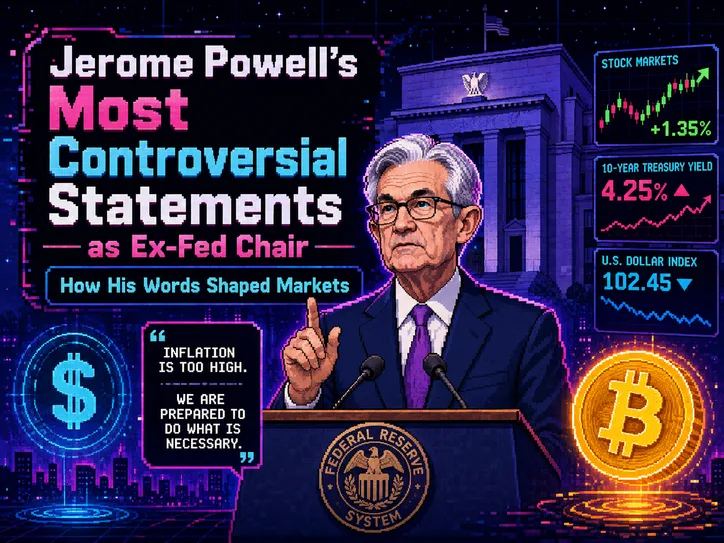
Soon after, extensive interventions by governments and central banks flooded financial systems, altering how investors viewed risk. Inflation surged with unusual speed, defying earlier forecasts. Interest rates climbed quickly, a movement seldom observed since the 1980s. During this period, remarks by Donald Trump questioned central bank impartiality, turning Fed autonomy into a persistent issue.
Though Powell avoided dramatic gestures, influence marked his speech. Calmness defined his manner, steering clear of sweeping proclamations. Despite this restraint, market reactions came swiftly. Equities responded instantly; so did Treasuries, the dollar, Bitcoin, and broader crypto markets. Hints within Powell’s statements routinely prompted realignments across global markets.
Hidden strength lives in what a central banker says. A single phrase can move financial systems ahead of any formal announcement. Power sits not only in policy itself, but in how it is signaled before action arrives.
Contents
- Why Powell’s Words Mattered So Much
- “Transitory” Inflation: The Word That Haunted Powell
- “We’re Not Even Thinking About Thinking About Raising Rates”
- Jackson Hole 2022: “Some Pain” Was Coming
- Higher for Longer: The Phrase That Cooled Risk Assets
- “The Time Has Come” for Rate Cuts
- Powell and Tariffs: The Return of “Transitory” Inflation Talk
- Protecting Federal Reserve Independence Amid Trump Pressure
- How Powell’s Speeches Moved Bitcoin and Crypto Prices
- Powell’s Communication Style: Calm Words, Violent Reactions
- Was Powell Right or Wrong?
- Final Verdict: Powell’s Words Moved Markets Because Trust Was on the Line
- FAQ
Why Powell’s Words Mattered So Much
What drives markets goes beyond Federal Reserve moves alone. Future expectations shape responses more than present decisions. Investor assumptions about upcoming policy steer today’s prices.
Because of this, every time Powell spoke at congressional hearings, media sessions, FOMC press conferences, or the annual Jackson Hole forum, markets paid close attention. Hints on inflation trends, employment figures, possible rate hikes or rate cuts, and political pressure were sought in each remark.
Stability faded under Powell’s watch, shaken by wild swings in the economy. During 2020, markets focused on liquidity stress. In 2021, attention shifted toward how long inflation would last. Then came 2022, when investors watched how aggressive monetary tightening would become. In 2023 and 2024, markets searched for signs of slowing inflation and the timing of rate cuts. By 2025 and 2026, scrutiny turned toward central bank independence as political pressure grew more intense.
What stood out was how Powell’s most controversial statements reshaped investor expectations ahead of any formal change in direction.
Read more: Who Is Kevin Warsh? Trump’s New Pick Could Replace Jerome Powell As Fed Chair
“Transitory” Inflation: The Word That Haunted Powell
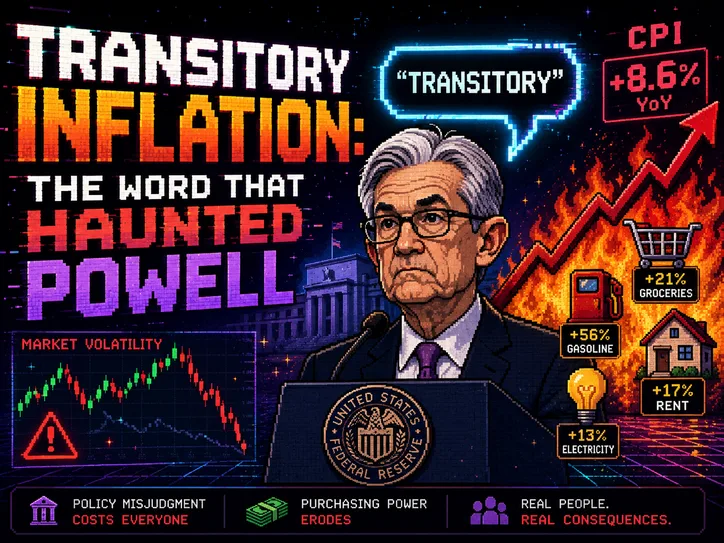
No Jerome Powell statement drew more scrutiny than his repeated description of pandemic-era inflation as “transitory.”
At first glance, the logic held. Supply networks were strained, energy costs shifted unpredictably, goods demand spiked, and services returned at uneven speeds. As time passed, officials expected inflationary pressure to soften once the economy settled into balance.
Still, inflation did not slow quickly. Across industries, pressure grew. In 2022, higher costs extended beyond temporary shipping issues. Housing, wages, services, energy, and food all added weight to something wider than first believed.
For quite some time, expectations shaped by “transitory” rhetoric softened market readiness for sharp Fed tightening. With easy money assumed to linger, stocks and crypto drew strength from that assumption. Underlying price pressures grew, yet confidence in risk assets remained surprisingly stable.
Following the Fed’s policy change, market movements turned sharp. Bond yields rose, growth equities declined, Bitcoin entered a long slump, and assets dependent on loose monetary conditions dropped significantly.
This phrase became Powell’s heaviest burden because it appeared steady when first spoken and clearly mistaken later. Central banking errors happen regularly, but financial markets react sharply not just to error, but to certainty paired with inaccuracy. Among Wall Street’s varied interests, leniency rarely appears.
Related: Trump Family Crypto Failures: Why WLFI, ABTC, and TRUMP Token Collapsed
“We’re Not Even Thinking About Thinking About Raising Rates”
In 2020, Powell focused on calming financial markets by emphasizing that tighter policy would come much later. His response reflected a crisis stance: the central bank had not begun any discussion, not even preliminary ones, about raising interest rates.
Back then, the signal met a favorable reception.
Near-zero rates were expected to continue. Liquidity stayed abundant. Support from the central bank persisted throughout the rebound phase. Rising from sharp pandemic-driven drops, stock markets gained quickly. As money flowed widely, digital currencies benefited too. Though Powell did not directly cause Bitcoin’s surge, the absence of interest acted as an accelerant.
Only afterward did questions arise. When growth returned alongside rising prices, critics argued that emergency measures had continued past their useful life. What was once seen as necessary aid slowly began to seem excessive.
Because this statement hinted the Fed might allow strong economic growth, markets changed. At first, confidence grew. Later, the same message helped set the stage for the inflation fight.
Jackson Hole 2022: “Some Pain” Was Coming
During August 2022, in Jackson Hole, Powell used fewer words than usual, yet his manner carried weight. He warned that fighting inflation would bring “some pain” to households and businesses.
This idea mattered not just because of the phrasing, but because of the implication. A regime change had become visible.
If markets stumbled, support for fragile investments would not follow by default. With inflation now at the forefront, price stability mattered more than soothing financial unease.
Without delay, selling emerged across stocks. Higher Treasury yields followed. As investors adjusted to prolonged restrictive monetary policy, digital currencies lost ground. Sentiment shifted under the weight of firmer funding costs.
It was not uncertainty that caused the debate. Powell spoke with unusual clarity. What stood out was the acknowledgment: taming inflation could depend on reduced spending, a less tight labor market, and shaken investor confidence.
For years, investors had relied on the “Fed put,” the assumption that the central bank would step in when markets fell too far. Jackson Hole 2022 made the new message clear: that support was no longer automatic.
Higher for Longer: The Phrase That Cooled Risk Assets
Powell did not coin “higher for longer,” yet his way of framing policy made the phrase settle into financial discourse through 2023 and 2024.
The point was clear: even if rate increases slowed, interest rates might stay high for much longer. This detail mattered. Expectations for swift reductions ran strong among investors. Each time optimism climbed, Powell stepped in to temper it.
Pressure appeared across stock market valuations. Despite some interest, movement into crypto remained limited. High yields continued within bonds, creating unease for assets dependent on long-term cash flows.
Disagreement emerged over timing. Though inflation appeared to slow, investors grew convinced rate cuts were near. Powell insisted the central bank required stronger evidence first.
This made him look stiff to bullish investors, yet cautious to those focused on price stability. Each instance relied on phrasing that delayed a full return to risk assets.
“The Time Has Come” for Rate Cuts
Later, Powell’s move toward easing policy held similar significance. When he remarked that “the time has come” for policy adjustment, investors saw it as proof that the tightening period was ending.
This moment marked a distinct dovish turn. Rarely had he sounded so open to easing policy.
With better access to liquidity expected, equities moved higher. Fixed-income markets adjusted toward softer central bank policy. As perceptions of borrowing costs changed, digital currencies advanced because investors became more comfortable with risk.
The debate came from timing. If rate cuts arrive too early, inflation may return. If cuts arrive too late, labor market conditions may suffer unnecessarily.
Powell’s task was not only choosing a path forward. He also had to convince markets that softer policy did not mean abandoning the inflation fight.
Read more: U.S. Crypto Tax Guide 2026: How Cryptocurrency Is Taxed and How to Stay IRS-Compliant
Powell and Tariffs: The Return of “Transitory” Inflation Talk
Among Powell’s later contested remarks were comments connecting inflation to tariff impacts. What mattered went beyond the economic assessment itself. The word “transitory” lingered in market memory.
Tariffs can act like a sudden price-level shock, not necessarily an ongoing inflation process. This time, Powell’s argument was more nuanced. Yet when language turns into a scar, subtlety rarely lasts.
The difficulty came from the policy mix. Tariffs could lift prices while economic growth slowed. That forces a hard decision on the central bank: prioritize price stability or support economic activity.
Obvious worries emerged around crypto and riskier investments. Liquidity might stay tight if tariffs pushed inflation higher and postponed rate reductions. Before economic figures confirmed the trend, Powell’s remarks influenced expectations once more.
Protecting Federal Reserve Independence Amid Trump Pressure
Some of Powell’s sharpest controversies centered not on price trends, but on Federal Reserve independence.
During Donald Trump’s presidency, pressure grew for Powell to reduce borrowing costs. Yet Powell repeatedly emphasized that the economy’s path, not elected officials’ preferences, shaped decisions at the Federal Reserve. Rate decisions were tied to the central bank’s mandate, not signals from Washington.
Financial markets felt the impact because central bank independence is not an abstract concept. If policy choices appear tied to political pressure, confidence in U.S. assets may decline. Investor uncertainty can affect the dollar, Treasuries, equities, and digital assets.
Though Powell would not concede under public pressure, becoming a focal point of scrutiny, his stance quietly reinforced trust in the Fed’s reliability.
Remaining on the Fed Board after his term as chair also sparked debate, given its effect on the pace of leadership-driven change. Some saw continuity. Others saw resistance. The move delayed a faster institutional shift.
Whatever the interpretation, Powell’s choices positioned central bank independence as one of the defining parts of his legacy.
How Powell’s Speeches Moved Bitcoin and Crypto Prices
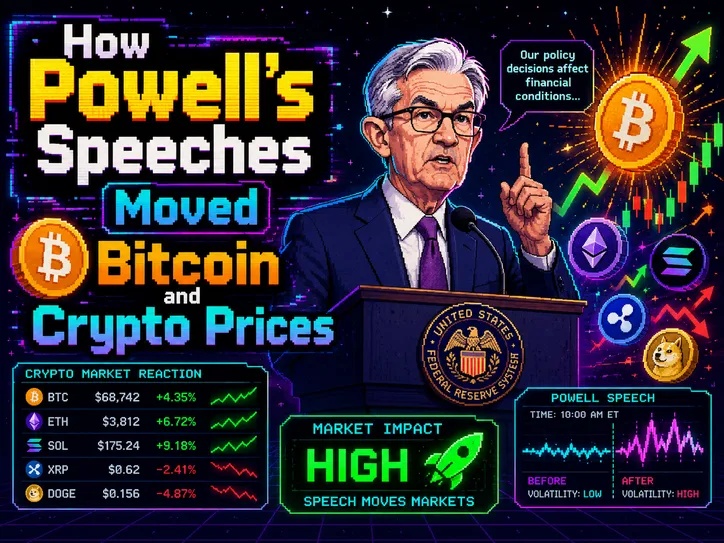
Crypto markets shifted abruptly after Powell’s remarks because digital assets often behave like volatile financial tools tied to monetary flow. Their movements align closely with shifts in broader risk appetite.
When Powell adopted a softer tone, Bitcoin and altcoins typically gained support. A sharper stance generally led to downward moves across digital assets. Not every instance followed this path, but the overall tendency remained clear.
When interest rates fall, risky investments draw attention. When liquidity is abundant, speculative assets often benefit. As bonds offer better returns, secure sources of income become more attractive. With financial conditions tightening, holdings without steady cash flow become less desirable.
Bitcoin remained outside Powell’s direct control, yet it still responded when he spoke. His words shifted market conditions, echoing through crypto bull and bear cycles.
The “transitory” period extended risk appetite. The 2022 inflation pivot damaged digital assets. Later signals about softer policy restored limited confidence.
Among crypto investors, Powell became evidence of an uncomfortable truth: decentralized systems remain affected by central forces. Bitcoin may operate without the Federal Reserve, but its value still moves within an economy shaped by Fed policy.
Powell’s Communication Style: Calm Words, Violent Reactions
Powell often spoke in measured language, with clarity and a lawyer’s precision. Emotion seldom colored his voice. Because of this quiet consistency, market reactions stood out even more clearly.
The dispute rarely centered on his manner of speech. Instead, it emerged from the underlying meaning carried by his statements.
“Transitory” implied patience on rate hikes.
“Some pain” signaled acceptance of weaker economic conditions.
“Higher for longer” meant relief would not arrive quickly.
“The time has come” suggested liquidity might return.
Fed independence language meant monetary decisions should stay clear of political influence.
Each phrase carried a market regime inside it.
Because of this, focus tightened among traders. Powell did not need to shout. A single changed term could shift trillions.
Was Powell Right or Wrong?
Truthfully, it depends. Some parts of his record hold up; others do not.
Powell underestimated how long post-pandemic inflation would last. This misstep lingered, eroding confidence in the central bank’s initial readings. Delay marked the Fed’s response, and the effects followed.
Still, Powell played a role in preventing total financial collapse when the crisis hit. Afterward, sharp increases in interest rates helped rebuild trust in the central bank’s ability to manage rising prices. Over time, inflation slowed, despite earlier fears of severe recession.
His communication history shows the same pattern: costly early errors, then clearer correction. The beginning was rough. Later actions showed steadier control.
Markets may remember “transitory” longest. A broader historical view may focus on the full arc: crisis measures, rising prices, tightening, gradual calm, and the preservation of institutional trust.
Opposing truths can exist at once. Annoying, but real.
Final Verdict: Powell’s Words Moved Markets Because Trust Was on the Line
Jerome Powell’s remarks drew attention because they were never just reflections on the present. Each carried implications about the future cost of borrowing. A shift in tone often signaled a shift in what lay ahead.
Comfort lingered in markets after his inflation miscalculation. A sharp shift followed once his stance grew stricter. Relief emerged when softer policy appeared possible. The value of central bank autonomy drew focus during his defense of the Fed’s role.
As ex-Fed chair, Powell leaves a clear communication legacy: what a central bank official says is never idle talk. Each remark previews direction before action follows.
Markets often price in what comes next before official rulings arrive. Powell’s words mattered because they shaped those expectations early.
FAQ
Why was Powell’s “transitory” inflation statement controversial?
It became controversial because inflation proved more persistent than the Fed initially expected. Markets took “transitory” as a signal that monetary policy would remain loose for longer, but rising prices eventually forced aggressive rate hikes.
Which Powell statement moved markets the most?
His 2022 Jackson Hole warning that controlling inflation would bring “some pain” was one of the most market-moving Powell statements. It showed that price stability had become more important than market comfort.
How did Powell influence Bitcoin and crypto?
Powell influenced Bitcoin and crypto through interest rate expectations and liquidity conditions. Dovish comments supported speculative assets, while higher borrowing costs and tighter financial conditions often pressured digital asset prices.
Why did “higher for longer” matter?
“Higher for longer” told markets that interest rates could remain elevated even after rate hikes slowed. That reduced hopes for quick cuts and weighed on stocks, bonds, and crypto.
Why is Fed independence important for markets?
Fed independence supports confidence that interest rate decisions are guided by inflation and employment data rather than political pressure. When markets doubt that separation, trust in U.S. financial assets can weaken.