Waiting pays off in crypto more than guessing the right moments. When prices sprint ahead, stories shift overnight, yet solid coins still crash deep before climbing again. This method spreads buys over time instead of chasing peaks. So many steady investors now choose regular small purchases regardless of market noise.
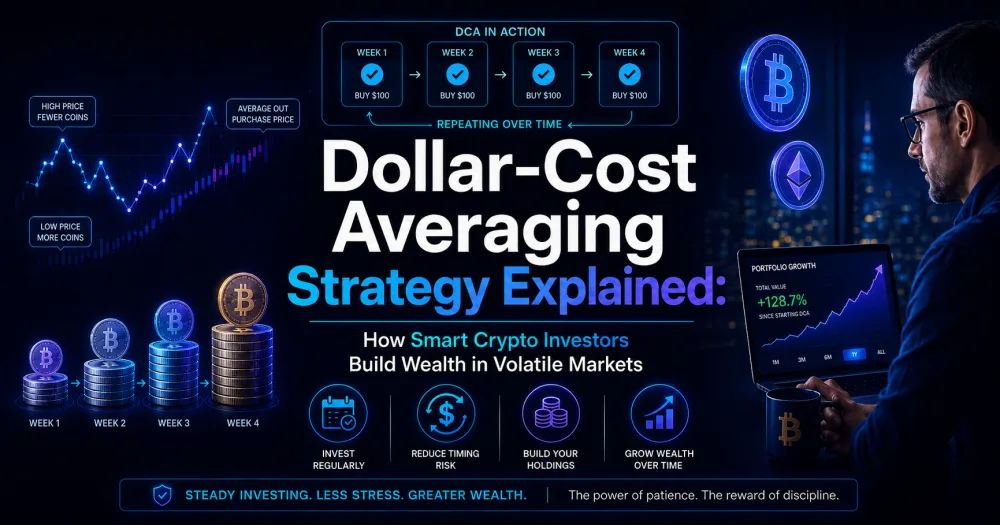
Buying small amounts regularly, come rain or shine, shapes how people handle crypto investments over time. This move won’t erase danger, yet it often keeps feelings out of decisions when prices jump or drop without warning. Sticking to steady buys helps some grow their holdings while ignoring daily chaos above and below.
Contents
- What Is Dollar Cost Averaging?
- Why Investors Use Dollar Cost Averaging in Crypto
- DCA Strategy Compared to Other Approaches
- Top Cryptos for Dollar Cost Averaging
- Building a DCA Crypto Portfolio
- Risks and Limits of DCA Strategy
- Smart Ways to Grow Crypto with Dollar Cost Averaging
- Who Benefits From Dollar Cost Averaging?
- FAQ
What Is Dollar Cost Averaging?
What DCA Means
Buying bit by bit keeps the risk spread out when putting money into something slowly. For digital coins, imagine grabbing fifty bucks worth of Bitcoin weekly or two hundred dollars’ worth of Ethereum monthly instead of one big purchase. Sticking to a schedule matters more than nailing the exact moment prices are lowest. What counts is showing up regularly, not guessing right.
Related: Top 5 Altcoins for the Next 10-100x Crypto Bull Run in 2026: High-Potential Crypto Picks
How Dollar Cost Averaging Works in Real Life
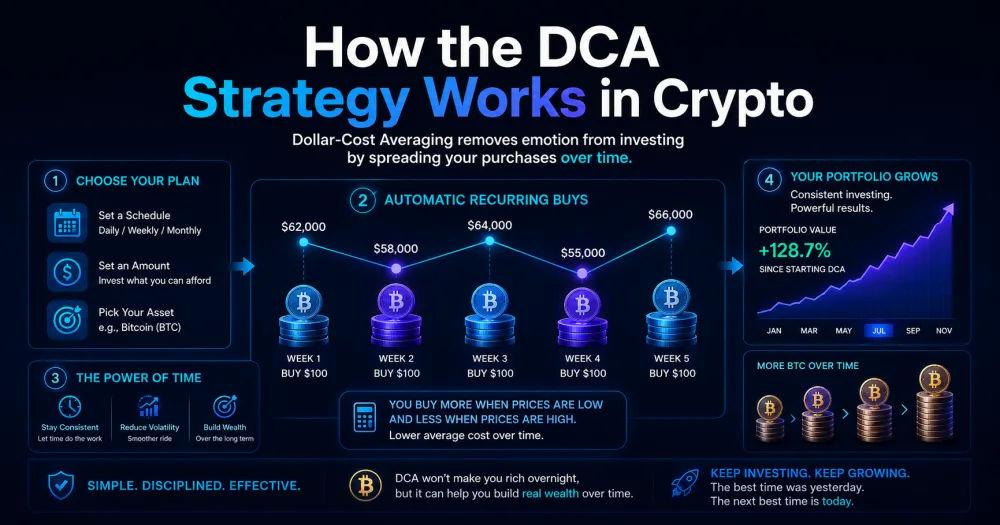
Buying at various times means some prices are steep, while a few come cheaply. Spreading trades out helps level what you pay overall. Instead of going all in once, pieces go in steadily. This way, timing the peak or bottom isn’t necessary. The path evens itself when moves stay consistent.
Why DCA Grows Common in Crypto Investing
Most days, someone somewhere buys digital coins. Markets never close, so shifts happen at any hour. Moves come after big trades or news leaks. Rules changing in different countries push prices up or down. Leaks, scams, or tweets spark sudden jumps, too. When giant holders shift their stacks, things get shaky. Spreading purchases across weeks softens risk over time. Some like buying small amounts regularly instead of timing peaks. This way feels simpler than guessing every twist.
DCA Versus Lump Sum Investing
Putting everything in right away defines lump sum investing. Spreading buys over time is what DCA stands for instead. If markets climb fast, dropping cash all at once may win. Yet easing in bit by bit cuts stress plus reduces the gamble on perfect moments – especially seen within crypto approaches.
| DCA Strategy Type | How It Works | Best For |
|---|---|---|
| Fixed DCA | Invest the same amount on a set schedule | Beginners and passive investors |
| Dynamic DCA | Increase buys during market drops and reduce them during rallies | More experienced investors |
| Dip-Based DCA | Keep regular buys but reserve extra capital for corrections | Investors with flexible cash flow |
| Portfolio DCA | Split regular buys across BTC▲$62,630.00, ETH▲$1,761.17, and selected altcoins | Long-term diversified portfolios |
How the DCA Strategy Works in Crypto
Setting Fixed Times for Investments
Most begin by picking how often to buy. Some go in every day, others once a week – or twice a month, maybe even just monthly. Sticking with it matters more than timing. That rhythm should hold steady when prices soar… and when they drag on forever.
Buying Crypto When Prices Change
Most folks stick with buying Bitcoin slowly over time. Picture this: prices drop, your money grabs extra coins. Prices climb? The same cash gets fewer units. Each purchase shifts how much you collect – no guesswork needed. That rhythm smooths out bumps across shifting markets.
Related: Best Crypto Exchange Platforms in the US 2026 — Picks for Fees, Liquidity, and App Access
How DCA Lowers The Chance Of Bad Timing
Most folks never spot the exact low point of markets. Experts, too, can trip up when prices bounce then drop again. Because it spreads buys over time, dollar cost averaging sidesteps the need to guess right once. This method works even when things feel unpredictable.
Example of a Real Crypto DCA Strategy
Picture this. One person sets aside four hundred dollars every month. Two hundred fifty goes to Bitcoin. Ethereum gets one hundred. Fifty lands on riskier picks now and then. Focus stays fixed on building holdings over the years. Quick wins aren’t the point here. Patience shapes the plan instead.
Why Investors Use Dollar Cost Averaging in Crypto
Reduces Ups and Downs in Crypto Trading
Most swings come baked into crypto’s design. When markets lack depth, debt boosts fuel price jumps – wild stories add more heat. Buying consistently won’t block drops; timing luck improves by spreading entries.
Stopping Trades Driven by Emotion
Panic fades when you treat purchases like chores. When prices scream, habit keeps hands steady. Skipping guesses about green or red bars means fewer regrets later.
Building Long-Term Investment Discipline
Sticking to a DCA approach builds routine. Month after month, it pulls attention away from quick swings. For something like Bitcoin or Ethereum, that long view helps. What counts most isn’t daily noise – it’s how many people start using them over time.
How DCA Works In Bear And Bull Markets
Most times, buying little by little means getting more shares when prices drop. When things heat up, spreading buys keeps emotions from taking control too fast. Sticking to a pace – no matter what – the market does make decisions simpler over time.
| Crypto DCA Asset | Main Advantage | Key Risk |
|---|---|---|
| Bitcoin (BTC) | Strongest liquidity and longest market history | Still exposed to major drawdowns |
| Ethereum (ETH) | Broad ecosystem use across DeFi, stablecoins, and L2s | Competition and upgrade execution risk |
| Large-Cap Altcoins | Higher growth potential than BTC or ETH | More volatility and narrative risk |
| Memecoins | Possible sharp upside during hype cycles | High failure risk and weak fundamentals |
DCA Strategy Compared to Other Approaches
DCA Versus Lump Sum Investing
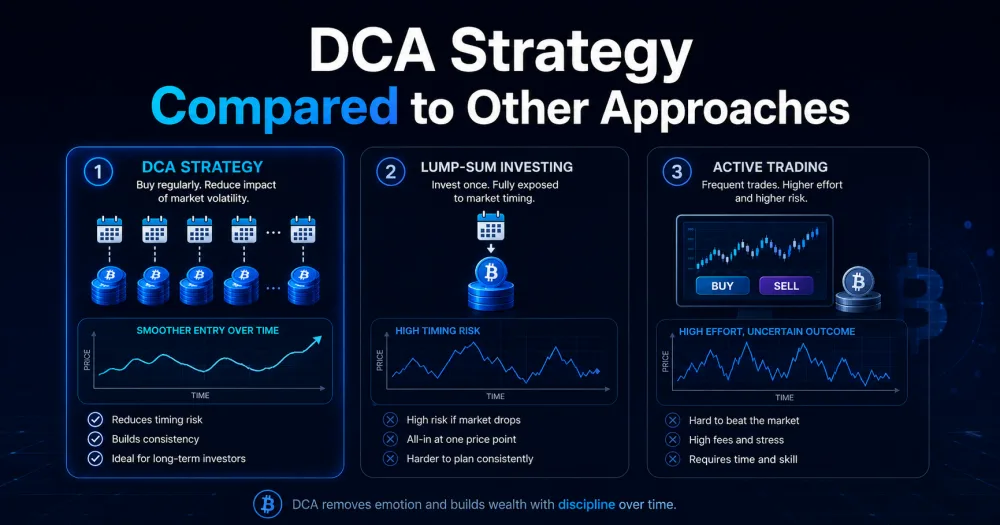
Most times, picking between DCA and dropping money all at once comes down to how prices move, plus what you think will happen next. When stocks climb without stopping, putting everything in right away tends to work out ahead. If things drift or slide instead, spreading buys over time can seem smarter – no single moment locks in a steep loss.
Dollar Cost Averaging Compared With Active Trading
Most new traders dive in without realizing how tough precise entry and exit points really are. Jumping into active moves means managing stops, borrowing power, alongside shifting market layouts – timing every piece just right. Some make it pay off, yet the challenge trips up many who start. Buying crypto slowly over time skips the rush of constant buying and selling. There is no chasing losses or risking too much on one bet. This steady method keeps emotion aside, focusing simply on showing up.
DCA Versus Swing Trading
Most swings happen between one day and several weeks. For some people who know markets well, that timing fits just right. Unlike those quick shifts, DCA takes another path entirely. Building up coins slowly over time matters more than jumping in and out. Holding tight beats constant switching.
Which Strategy Lasts Longer?
Most people do not agree on one best choice. A single payment might win when markets jump suddenly. Skill changes everything during active buying. Sticking with small regular buys helps many stay steady through rough patches.
Related: What Is Crypto Scalping and How Does It Work? Best Scalping Strategies Explained
Top Cryptos for Dollar Cost Averaging
Bitcoin Is the Most Popular DCA Asset
Most people dipping into crypto go straight to Bitcoin. With massive trading volume, unmatched recognition, a story built on limited supply, and years of price data behind it, it stands apart. Those treating Bitcoin as something beyond quick profits often stick with steady buying over time.
Ethereum for Long-Term Holding
Most people see Ethereum as a key digital asset since it runs smart contracts, supports stablecoins, fuels DeFi, enables tokens, hosts NFTs, along with boosting speed through layer-2 solutions. Choosing dollar-cost averaging into Ethereum makes sense if you think ongoing usage of its network holds value far ahead.
High-Risk Altcoins and Memecoins Factors
Fast moves up happen easier with altcoins and memecoins compared to BTC or ETH, yet crashes strike them harder. Money might disappear overnight because interest drops fast when trust fades away. Project builders sometimes miss targets, while promises grow thin over time. Smaller slices of funds go here by design since checks must come quicker and more frequently.
Diversifying a Crypto DCA Portfolio
Starting with just BTC and ETH keeps things clear. After that, a few extra pieces go into carefully picked areas. Owning everything never makes sense here. Spreading out helps, yet going too far scatters attention. Reducing reliance on one thing matters most early. Later comes fine-tuning, slowly. Less clutter often means better balance.
Building a DCA Crypto Portfolio
How Often to Invest: Daily, Weekly, or Monthly
Most days bring fresh buys with daily dollar cost averaging, though extra charges pile up along with record-keeping duties. Spreading trades across weeks strikes a middle ground for effort and exposure. Doing it once per month cuts clutter and fits tight plans well. Sticking to any rhythm matters more than chasing perfection – consistency shapes results.
Setting Budget Allocation Across Assets
Some folks give sixty percent of their holdings to BTC, thirty to ETH, while a slice goes to more volatile digital coins. Eighty percent BTC, twenty percent ETH – that setup suits someone cautious. What you pick depends on how much uncertainty you can sit with, never what’s trending online.
Using Exchanges and Automated DCA Tools
Buying crypto on a schedule shows up at most big exchanges. Meanwhile, certain wallets or money apps let you set it and forget it, too. Sticking to a routine gets easier when things run by themselves – yet watch out for charges piling up. Costs differ wildly between platforms once you tally trade fees, price gaps, moving funds out, where coins are stored, plus how well they’re guarded.
Tracking Performance Over Time
Most who dollar cost average keep an eye on their usual buy-in amount alongside how much they’ve put in overall. Their current stash size matters too, along with where that money sits across assets. Fees sneak in quietly, so those deserve a look now and then. Tracking profit or loss after selling helps spot patterns over time. A calendar reminder once every few weeks works better than staring at numbers all day. Looking back regularly beats constant screen watching any month of the year.
Risks and Limits of DCA Strategy
Opportunity Cost During Big Market Rises
Most times, spreading buys out loses to putting money in fast if prices climb quickly. Should Bitcoin jump double soon after entry, slow entries mean holding back funds too long. Paying that price comes with playing it safe.
Extended Period of Declining Prices
Most folks think steady buys shield them, yet that fails when picks lack strength. A falling coin becomes painful unless it bounces back later. When markets drag on low, what counts is staying power, cash access, and clear loss boundaries.
Over-Diversification Risks
A handful of tokens doesn’t mean better results. Spreading too thin often clouds judgment, making clear insights tougher to spot. Performance gains slip when top performers get lost in the crowd.
When Dollar Cost Averaging Might Fail
When an asset lacks buyers or sellers, DCA struggles to deliver results. A shaky foundation in design often breaks the strategy apart. If those building it lose interest, progress fades fast. No lasting need means slow erosion over time. People walking away from their plan changes outcomes completely. Sticking with it matters just as much as what is chosen. Good picks plus steady effort make the method hold up.
Smart Ways to Grow Crypto with Dollar Cost Averaging
Dynamic DCA Adjusted to Market Conditions
Most weeks, purchases stay consistent in size. When Bitcoin slips twenty percent below its latest peak, more is bought. Structure remains, yet room opens for change. Buying shifts slightly as markets shift beneath it.
Using DCA Alongside Technical Analysis
Now here’s a twist – buying more when prices hover near slow-moving trend lines, familiar floors, or deeply sold signals draws some investors in. That kind of timing tweak might sharpen entry points, yet brings tangled decisions along. Sticking close to dollar-cost averaging means sidestepping mood-based moves, even if new layers tempt a detour.
DCA Into Market Dips
Most months, money moves on time – yet some sit aside when markets drop. Imagine seventy parts follow routine buys while thirty stay ready for dips. Patience might backfire if prices never fall enough to trigger deployment. Unused funds just wait.
AI and Automated Dollar Cost Averaging Bots
Even when markets swing hard, smart programs tweak buy moments, while spreading money across spots. These helpers handle many holdings at once without needing coffee breaks. Though they shift gears on their own, folks should know what slips through the fee drains. Rules from trading sites matter just as much as who holds the keys when chaos hits. Odd moves happen if panic shakes the system too far.
Who Benefits From Dollar Cost Averaging?
Beginner Crypto Investors
Most new investors find it tough to handle when to act or how fear plays a role. A calmer entry comes through using dollar cost averaging. Rather than guessing what happens next, they gain experience over time by stepping in piece by piece. What counts for beginners isn’t excitement – it’s understanding how the method actually functions.
Related: Why Millions in USDT and USDC Are Suddenly Being Unfrozen on TRON and Ethereum
Long-Term Holders
Most people who hold crypto have been doing so for years. Because of this, spreading buys over time works well – it lines up with their patient approach. Instead of guessing when to jump in, they build ownership slowly through routine purchases. Over months or even years, buying little by little becomes automatic, turning what could be a single gamble into something steady.
Risk-Averse Traders
Some who dislike risk choose dollar-cost averaging just to ease into markets slowly. Rather than jump on each spike, they add pieces over time while holding tight to their spending plan.
Institutional Investors Apply Dollar Cost Averaging
Most big players spread their trades out, sort of like DCA, since jumping in all at once might shift prices. Because dropping a huge order at once could tip off others, they space things apart – to limit losses and stay quiet. Regular investors do something similar, just less complex.
FAQ
Is DCA Better Than Buying the Dip?
Most people find dollar-cost averaging simpler since nailing the exact moment isn’t needed. Timing the market sometimes pays off, yet plenty jump in before the bottom or hesitate past the chance. Sometimes blending steady investments with occasional low-price additions makes sense. What matters is sticking to a plan that feels manageable.
How Often to Use Dollar Cost Averaging in Crypto?
Most people stick to weekly or monthly dollar cost averaging. Smoother entry points come from doing it daily – though that might bump up fees. What fits best hinges on how often you get paid, what trading platforms charge, and how hands-on you want to be.
Can Dollar Cost Averaging Guarantee Profit?
DCA won’t promise gains. Spreading buys lowers guesswork on entry points, still it leaves exposure to falling markets, shaky assets, lost holdings, or rule changes. Losses happen if choices lean toward struggling ventures or exits fueled by fear.
Is DCA Good for Bitcoin and Altcoins?
Starting with Bitcoin and Ethereum makes sense – they’ve stuck around longer, and move more freely in markets. Altcoins? Sure, toss some into the mix if you like, keep those amounts small. Check them regularly, though, almost like clockwork. Some tokens fade fast; not one of them needs your endless backing.
What Is the Best DCA Frequency?
Most people stick with what feels doable over time. Hitting buy once a week strikes a balance – rides swing, yet stays manageable. Once per month? Easier to remember, fewer moves to track. Every day evens things out more, though honestly, it’s rarely worth the extra effort.
Most people online shout about quick wins in crypto. Yet sticking with dollar cost averaging lasts longer than flashier methods. Wise investors skip the rush for instant wealth. Building steady holdings matters more when markets swing hard. Structure guides their moves, not excitement. Patience shapes each step forward slowly. Risk stays on their mind every time they act.