We break down the latest data on how US residents view AI, how often they use it, and what they expect from the technology in the future.
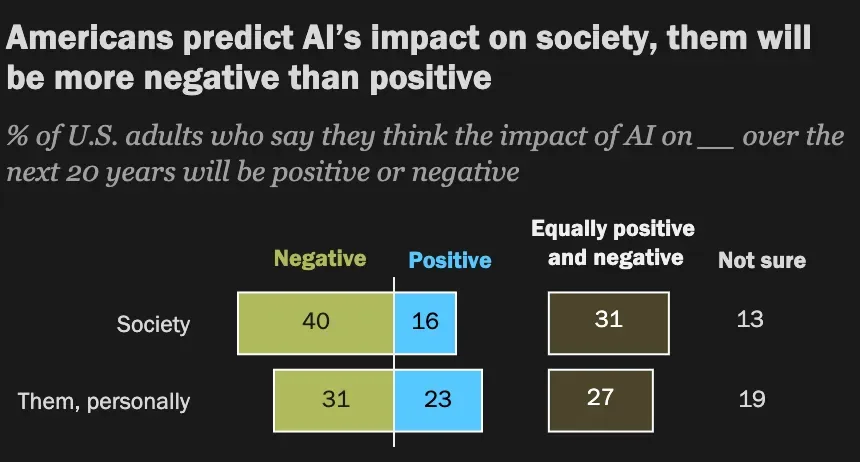
Pew Research Center has published a survey of 5,119 US adults. Only 16% expect AI to have a positive impact on society. About 40% believe the impact will be negative.
Hot topic: Bitcoin Drops Below $64K After Hawkish Fed Meeting — Investors Flee Risk Assets
Skepticism extends to institutions as well. Sixty-seven percent don’t trust the US government to regulate AI effectively. Another 59% don’t trust the companies developing it.
Contents
AI Is Moving Too Fast — and Trust in Regulators Is Falling
Nearly two-thirds of respondents say AI is developing too quickly. The most skeptical group is Democrats under 30: only 14% expect a positive impact.
The Pew data reflects a consistent trend. In May 2026, YouGov found that 71% of Americans think AI is developing too fast. Pessimists about long-term impact outnumbered optimists two to one, 51% to 25%.
Back in January 2025, YouGov saw a more balanced picture: 35% expected positive effects and 34% negative. In May 2025, a Reuters/Ipsos poll showed 61% of Americans consider AI a threat to humanity.
Read more: Top AI Crypto Tokens June 2026 — FET, RNDR, TAO, NEAR, AGIX
The Paradox: Skepticism Is Rising, but Chatbot Use Is Growing
Despite the gloomy outlook, daily AI usage keeps climbing. About one in four Americans say they use chatbots daily. ChatGPT is the most popular service, used by 44% of US adults—more than double the 2023 level. Next come Gemini at 24%, Copilot at 17%, and Meta AI at 14%.
The gap between widespread adoption and negative long-term perceptions points to a complicated relationship with AI. People are actively using the tools—but they’re worried about jobs, privacy, and social structures.
If regulatory pressure on AI increases due to public demand, it could spill over into crypto projects. But mass chatbot adoption shows the technology is already embedded in daily life—and a retreat seems unlikely.
Learn more: AI vs Crypto Smart Contracts — Can AI Replace Code Auditors?