We break down where the Ukrainian government’s millions in digital assets came from and what happens next with the seized crypto.
Ukraine’s National Asset Recovery and Management Agency has taken direct control over seized digital assets for the first time in the country’s history. The assets are Tether stablecoins worth more than $8.3M.
Hot topic: Bybit to Restrict Access to Global Platform for EU Users
The funds were seized from an alleged member of an international hacking group that carried out attacks on individuals and companies in Europe and the US.
A final decision on confiscation or sale will come after a court ruling.
Contents
The Hacking Group and Scale of Damage
According to investigators, the criminal group stole confidential data, demanded ransoms, and laundered money through real estate and car deals in Ukraine. Total damages from the network’s activities are estimated at more than $100M. Four suspects, including the alleged ringleader, are in custody. The total value of seized assets in the case is $11.1M, including residential properties, apartments, cars, and cash.
Previously, seized crypto was simply frozen on accounts, with no Ukrainian agency controlling it directly. Now the ARMA manages the seized account.
This became possible through a 2025 reform that changed the agency’s approach to seized property management, introducing independent audits and tighter oversight. The reform was a key condition for receiving hundreds of millions of euros in EU financial support.
Read more: Not Just USDT and USDC — These Top 3 New Stablecoins Are Quietly Taking Over Crypto in 2026
State Custody, Not Confiscation: What It Means for Ukraine
This is not confiscation–that requires a court decision. The agency is only holding the assets, not becoming their full owner.
USDT▼$0.9996 is pegged to the dollar, making it a stable asset for storage or potential sale. The stablecoin isn’t subject to the sharp swings seen in bitcoin. However, USDT is centrally managed–Tether can freeze addresses and block funds at law enforcement’s request.
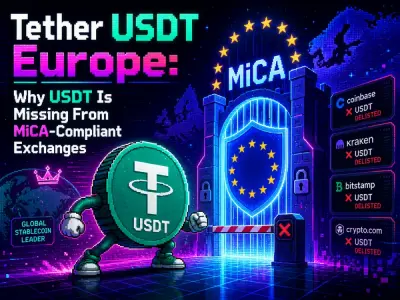
Read more: USDT vs EU Regulation — Why Tether Is Facing Legal and Compliance Challenges in Europe
Ukraine on the Path to a Crypto Reserve
The transfer of crypto to state custody comes as Ukraine discusses creating a strategic crypto reserve. The country ranks fourth in Europe by crypto transaction volume, with $206.3B flowing through it between mid-2024 and mid-2025, according to Chainalysis.
Government officials hold roughly $2.8B in bitcoin (BTC). Ukraine legalized virtual assets in 2022 and is now advancing a bill on taxation and market regulation to EU standards.
For comparison: the US directs confiscated bitcoin to a strategic reserve and doesn’t sell it, treating it as a long-term asset. Germany, by contrast, sells coins immediately after seizure–a decision that remains controversial since the price later rose. Ukraine hasn’t yet specified whether it plans to sell the seized USDT or hold the tokens on its balance sheet.
Learn more: What Is a Strategic Bitcoin Reserve?