The proposal hasn’t been adopted yet, but it has already sparked heated debate. Some see it as a boost for the network. Others call it a “tax.” We break down the details.
A proposal called Validator Redirected Revenue has been published on the Ethereum Research forum. Its author is Kleros founder Clément Lesaege. The initiative would allow validators, through a hard fork, to vote on redirecting up to 10% of staking rewards to public goods funding.
Hot topic: Can Ethereum Reach $5,000 in 2026? The Hidden Catalysts That Could Trigger the Next ETH Surge
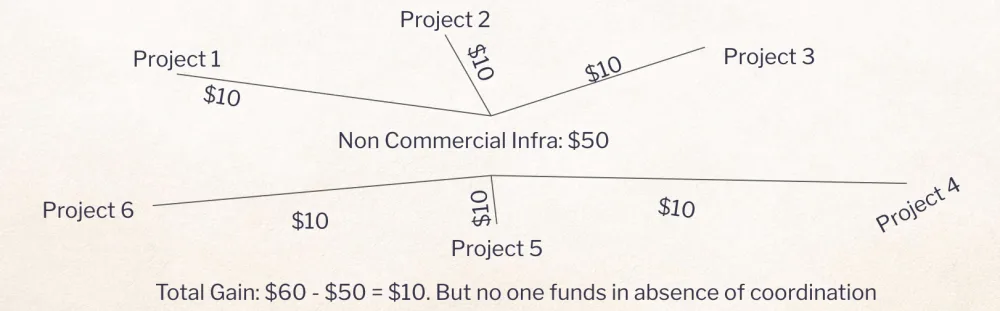
If 51% of validators vote for a rate above 0%, it becomes binding for everyone. The proposal has triggered fierce debate–some called it a “tax,” others a necessary mechanism for Ethereum’s long-term competitiveness.
Contents
The Free-Rider Problem: Why Ethereum Is Underfunded
The author argues that Ethereum (ETH) suffers from a classic coordination failure. Infrastructure, research, security, and tools are needed by everyone, but individual participants have no incentive to pay alone while others benefit for free. This creates deadweight loss, weakening the network’s long-term competitiveness.
With roughly 35-40 million ETH▲$1,761.17 currently staked and a yield of about 1.91%, validators earn roughly 700K ETH per year. Redirecting from 5% to 10% would give the ecosystem an additional 50K-70K ETH annually.
Fund recipients would be determined through a splitter contract. Validators could set addresses and shares, and the system would select the allocation that best matches majority preferences–a “king of the hill” model with pairwise comparison of alternatives.
Read more: Ethereum L2 Taiko Hack Forces Bridge Warning Amid $1.7M Exploit
Community Reaction: Criticism, Cartelization, and Politicizing the Consensus Layer
The proposal drew sharp criticism from prominent Ethereum developers. Pseudonymous developer banteg warned the mechanism could “bring politics into the consensus layer” and make it more fragile.
Crypto lawyer Gabriel Shapiro noted that any form of L1 “devmine” or tax would require reliable on-chain governance–and “that never works because the people receiving the money are the same ones designing the system.”
The main concern is the risk of cartelization. If a majority of validators collude, they could theoretically raise the rate to 10% and redirect funds to themselves–effectively “stealing” rewards from the remaining 49%.
Lesaege acknowledges the risk but argues that cartel behavior is unstable under the proposed model. If validators are greedy, he says, the “king of the hill” mechanism would never settle on a stable allocation. But banteg warned the most likely outcome is that participating validators would deploy a contract that redirects rewards to themselves, taking 10% from those who don’t participate.
Read more: Vitalik Buterin’s Top Statements — How ETH Price Reacts to Ethereum Founder’s Words
What This Means for Ethereum and ETH Holders
The initiative raises a fundamental question: should the network have a built-in mechanism for funding public goods, or should that remain a matter of voluntary donations and the Ethereum Foundation?
Supporters argue that without such a mechanism, Ethereum loses out to systems with mandatory redistribution and corporations that reinvest profits. Opponents warn it would create a dangerous precedent of interference in the consensus layer and could undermine investor confidence.
For now, the proposal is still in the discussion phase–and it’s unlikely to be adopted anytime soon without major changes.
Learn more: Ethereum’s Glamsterdam — A Complete Guide to Ethereum’s Upcoming Upgrade