Why Crypto Market Sentiment Matters for Investors
Crypto market psychology is important to understanding an emotionally driven market. In 2026, “Extreme Fear,” as indicated by readings on the index (below 15), showed true anxiety in participants and lowered investor participation.
Thus illustrating that sentiment influences both the amount of liquidity in the marketplace and the level of volatility. Therefore, there is a cycle created when prices fall; they further decrease investor morale (sentiment), resulting in increased selling pressure.
Crypto Market Sentiment Indexes allow for quantification of these emotional cycles through indexes such as the widely followed Crypto Fear and Greed Index. This index converts fear and optimism into one number so investors can determine if a particular asset class is undervalued or overvalued, permitting investors to make well-informed decisions based on multiple variables rather than just the current price.
How the Fear and Greed Index Helps Predict Market Behavior
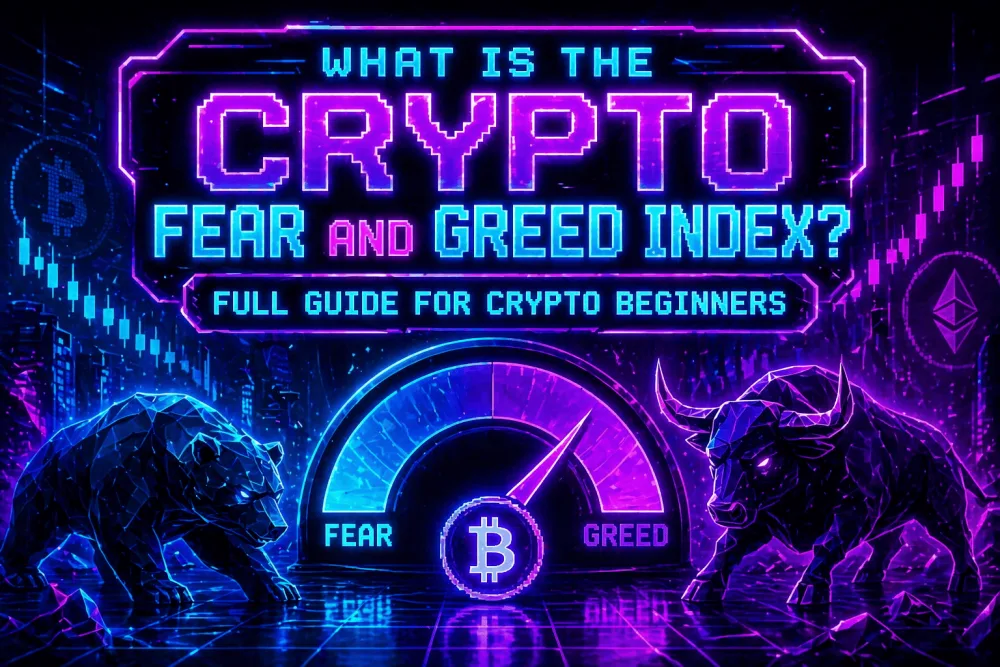
The Fear & Greed Index crypto provides an easier way of looking at sentiment through the use of a 0-100 score, which reflects volatility, trading activity, and social indicators. A lower Fear & Greed Index indicates that investors are afraid to take on risks (risk-averse) and panicked.
On the other hand, when the Fear & Greed Index reaches its upper limits, it means there is a large amount of risk-taking and speculation going on.
Although this is an easy way to gauge the current state of cryptocurrency market sentiment with the Bitcoin Fear and Greed Index, understanding how the fear and greed index works requires some level of expertise.
Research has shown that trader sentiment will sometimes react to changes in price instead of consistently indicating future price movements; however, extremely low or high levels of fear or greed can be indicative of extreme behaviors in the markets, which increase the likelihood of reversing previous trends.
As such, the Bitcoin Fear & Greed Index continues to remain one of the most commonly used tools for giving context to overall crypto sentiment analysis frameworks.
Contents
How the Crypto Fear and Greed Index Works
The Crypto Fear & Greed Index compiles several measures of behaviorally-driven and market-based indicators into an overall score from 0-100. The extremes in this measure are indicative of what type of emotions investors are experiencing.
As such, it is intended to be a way to model and illustrate the repeating cycles inside the crypto psyche, which can then be used as a simple gauge for determining if we’re seeing a sentiment regime of either panic or speculation.
While the Fear and Greed Index does not provide an indication of specific price movements, they do indicate when a particular emotion is driving sentiment.
And in 2026, understanding the current emotional regime remains important; that is because we’ve seen significant declines into “extreme fear” occur during capitulations, and significant increases in the index (suggestive of high levels of greed) have been associated with overbought markets and ultimately, correction periods.
Key Components Behind the Index Calculation
The Fear and Greed index crypto uses multiple, weighted inputs that generally give volatility and momentum about half of its weight. While an input (volatility) may be as high as 25% of the total value of the index, this would generally be relative to historic averages to help identify unusual or extreme levels of market pressure.
Read Also: Will Bitcoin Hit $100K in 2026?
Other inputs for building the framework for gauging crypto sentiment using social media, Bitcoin’s dominance in the markets, and search trend data will continue to adjust as needed to make sure that the crypto sentiment index accurately reflects the changes in the real-time investor behavior, as opposed to being based on static market conditions.
Market Volatility, Volume, and Social Media Signals
Volatility is still the most volatile input to the Bitcoin Fear & Greed Index, as rapid changes in the price of an asset are seen by many as a reaction to “fear” when there is a high level of volatility.
Elevated drawdowns relative to 30- and 90-day averages typically push the index lower, denoting increased risk aversion.
A second source of information, volume and momentum, offers another layer to this analysis. When prices have been rising for some time, and there has been significant purchasing activity, it is often viewed as a measure of how optimistic people are regarding future performance; conversely, low or decreasing volumes are seen as a lack of conviction.
Additionally, both social media and search results serve as a proxy for the overall perception of individual investors regarding their outlook and expectations for crypto assets. These two measures capture changes in the “narrative”, which can quickly affect the overall sentiment of the crypto markets.
Bitcoin Dominance and Trend Analysis Factors
Bitcoin dominance serves as a structural element inside the Crypto Fear and Greed Index; it tracks capital rotation between BTC▲$62,630.00 and other alternative cryptocurrencies. When dominance increases, this is generally indicative of defensive investor positioning; investors will shift into Bitcoin when there exist concerns about the future of cryptocurrency markets.
In addition to trend analysis, which includes search trends and general macroeconomic narratives, it can add additional insight into the data that indicates sentiment-based trading crypto strategies.
For example, when there are sudden spikes in searches relating to risk, stress, etc., these spikes have historically coincided with fear-related conditions on the Fear/Greed index; therefore, providing the index as a real-time representation of the psychological state of the crypto market.
Fear vs Greed: Understanding Market Psychology
Fear and greed are two sides of the same coin that influence crypto market psychology. The crypto market fear vs greed explanation 2026 explains how both create patterns in which markets go up or down. Retail investors’ fear of losing money is one reason why they sell their coins quickly; on the other hand, greed creates a strong feeling of enthusiasm for buying a particular asset when its price goes higher.
“Be fearful when others are greedy and greedy when others are fearful.” Warren Buffett.
Warren Buffett’s principle remains widely referenced in crypto markets, since it directly reflects the contrarian logic behind sentiment-driven trading and the interpretation of extreme index readings.
When we talk about emotions and extreme behavior in the market, many times there will be several extreme behaviors at the same time. When there is great fear in the market, it usually happens when there has been a quick correction from recent highs and when there is great economic/macro-uncertainty.
Conversely, greed occurs after long periods of rallying prices or strong momentum. Thus, understanding the influence of Fear and Greed gives us insight into the significance of market sentiment crypto, as well as provides context, even if it doesn’t give us timing information.
What “Extreme Fear” Means in Crypto Markets
Extreme fear crypto meaning in 2026 is closely related to capitulation dynamics. Investors are extremely anxious and are aggressively de-risking, which has caused a considerable drop in the index to as low as 5, its lowest level on record. When extreme fear phases last for weeks or longer, it typically reflects prolonged risk-off environments with reduced participation, volatility, and liquidity.
In the past, Extreme Fear phases have also provided long-term participants with the opportunity to accumulate positions. Therefore, while extreme fear can be used as a warning sign, depending on context, it can also provide opportunities to position for structural bottoms in markets where sentiment has been sustained below the 25 threshold for weeks.
What “Extreme Greed” Signals for Investors
The extreme greed crypto meaning refers to the farthest point on a scale from optimistic to pessimistic. When an investor has extreme greed, they are most likely speculating about future price movements based upon hype or what is currently being reported in the media.
A high reading for extreme greed typically indicates that there will be a large influx of money into an asset class, increasing borrowing and using leverage, and higher participation rates among retail investors. Often, this is caused by hype generated through social media or other momentum-driven factors.
Historically, markets with extremely greedy positions tend to make local highs. An example of this is at times of extreme greed for Bitcoin; the highest prices were reached during past cycles when greed was also at its highest.
How Emotions Drive Crypto Price Movements
Emotional factors have continued to be one of the largest drivers in crypto trading indicators and, as such, continue to amplify price moves beyond any fundamental justification. Panic selling can occur at a much faster rate than investors selling due to fear of loss when sentiment turns extremely negative.
Similarly, greed can accelerate buying activity on an asset, based on FOMO and speculative inflows during extremely positive sentiment.
Read Also: Crypto Scam Alert 2026: 3 Projects Already Red-Flagged by Experts
In addition to showing how extreme sentiment regimes increase the level of uncertainty and volatility, this crypto sentiment analysis framework additionally reinforces the idea that it is not just the direction of the emotions — but rather the degree or intensity of those emotions — which will ultimately determine market outcomes.
As a result, understanding what the Crypto Fear and Greed Index is used for becomes essential: not to predict exact price levels, but to interpret the emotional state steering market behavior.
How to Use the Crypto Fear and Greed Index in Trading
The Crypto Fear and Greed Index is generally used for informational purposes only to help assess market extremes based on trader sentiment; understanding how to use the Fear and Greed Index for trading requires combining it with wider strategies rather than relying on it for timing buy/sell decisions.
As of 2026, investors tend to view it as an indicator that can be used as a contrarian; i.e., when the majority of investors are extremely fearful or extremely optimistic, there is often an increased likelihood of price reversal.
Best Strategies for Buying During Fear Phases
The “Extreme Fear” phase is often considered the best time to buy Crypto Fear and Greed Index signals, as this phase has historically represented an extreme oversell condition and price capitulation.
In addition, many significant decline events (including some examples from the past couple of years) have included extended periods of time when the index remained in the teens.
However, successful entry/exit strategies generally rely on a steady process of accumulation as opposed to aggressive market entries. The methods of dollar cost averaging and phased buying reduce possible volatility, which is particularly important during these prolonged periods of fear.
The primary concept here is understanding that the Fear signal indicates an opportunity; however, it does not indicate that there will be an immediate reversal.
When Greed Signals a Market Top
Instead of treating greed as an independent crypto sell indicator, it is generally considered an early indication that upside potential may be limited. It should not be used to determine if the rally has reached its peak or to confirm trend direction.
However, elevated sentiment can serve as a precursor to sharp price swings. As such, the use of crypto sentiment analysis in identifying late-stage bull runs as opposed to affirming the overall direction of a trend is common.
“The Fear and Greed Index moving to ‘Greed’ is a concrete sentiment change, not background noise.” Estefano Gomez, crypto analyst.
This highlights the way shifts in sentiment are actively interpreted by traders as actionable signals rather than passive indicators, especially during late-stage rallies.
Combining the Index with Technical Analysis
Combining sentiment indicators with a technical framework will likely be the best way to make use of them. Technical indicators (RSI, MA’s, Trend) are typically used in conjunction with sentiment indicators to help confirm signals and decrease false positives.
An example of this would be when there is an increasing divergence between what the sentiment indicator is showing and what price action is indicating. This indicates weak momentum.
Adding behavioral data to your charts will improve your ability to make decisions using both a technical and a sentimental perspective. A trader must learn to combine structural data from markets with affective signals generated by sentiment in order to allow sentiment to influence their strategy, but never direct it.
Limitations of the Crypto Fear and Greed Index
Although the Crypto Fear & Greed Index is popularly utilized, it is a simplistic representation of highly complicated market behaviors. The primary flaw with the index stems from the aggregation of all the various “sentiment” signals into one number, which can obfuscate differences in the liquidity, derivative positionings, and overall macro-environmental conditions.
Analysts have continued to stress in 2026, however, that while the Crypto Fear and Greed Index is useful, the question of is Fear and Greed Index accurate for crypto depends on context and supporting data.
Further still, the Crypto Fear & Greed Index is an inherently reactive metric. Many of its input metrics are based solely on historical price activity, thus making the sentiment generally follow the market trend rather than predict future trends.
Due to this inherent delay in response time, the Crypto Fear & Greed Index can be less effective as a singular predictive tool for fast-moving markets or when news influences market patterns.
Why the Index Is Not Always Accurate
One of the biggest issues with using the Fear and Greed index is that it shows the overall sentiment of all traders, but does not show whether they are confident about which direction the price will move.
A lot of times markets stay in “Extreme Fear” or “Extreme Greed” areas for long time spans — particularly when a strong trend is happening. We saw this happen in 2026, where fear phase areas were sustained by traders for weeks while prices kept going down, and many times, early contrarian signals had limited use.
Read Also: Top 5 Crypto Trading Setups for Quick Gains: Boost Short-Term Performance
In addition to this, there have been a number of structural shifts in how people trade — including the increasing presence of institutional traders and algorithmic trading systems. As such, the influence of individual traders’ emotions has decreased in importance relative to their actions, and the ability to predict future price movements based on emotions is lessened.
False Signals and Market Manipulation Risks
False signals are an additional problem for those who use sentiment-based indicators for crypto trading. False signals result from short-term spikes in volume or social media, which create false readings that give incorrect interpretations as to whether there is fear or optimism in the marketplace.
There are numerous ways these types of distortions occur, especially with news cycles and coordinated social media campaigns (which can be manipulated quickly), which tend to cause a rapid shift in narratives.
Additionally, many people have concerns about manipulations. The relatively new and still somewhat unregulated character of fragmented cryptocurrency markets provides ample opportunities for large holders and/or influencers to manipulate their respective market’s sentiment signal.
As such, this makes crypto market sentiment more susceptible to “noise,” and therefore, traders will need to validate their signals via other forms of market data, rather than just relying upon the sentiment indicator.
Crypto Fear and Greed Index in 2026: What Has Changed?
In 2026, the Crypto Fear and Greed Index is operating in a much more complex environment as it is impacted by institutions and macroeconomic influences.
Although the methodological approach has remained relatively consistent with respect to the method used to assess retail investor outlook, there are additional variables that need to be taken into consideration when assessing the fear vs. greed metrics for the crypto markets in 2026.
Fear-based levels have been observed recently and have fluctuated over time during times of economic and/or political uncertainty. This reinforces the notion that sentiments are still extremely volatile.
Impact of AI, Institutional Trading, and ETFs
The institutional presence in the crypto space has changed how investors are viewing the overall crypto market. In a very”fear” environment, for example, with an extreme fear reading, we have seen spot Bitcoin ETFs attract significant inflows.
As such, as institutions continue to implement their own trading strategies, these will increasingly deviate from those of the retail investor, which will further reduce the ability to correlate sentiment metrics with price movement.
In addition, AI-based approaches are creating new ways to perform sentiment analysis in cryptocurrency by integrating real-time data into models using various data streams. The models being developed based on these approaches can be considered to be much more adaptive and flexible than many traditional static index models used today.
Evolution of Market Sentiment Tools
Sentiment tools are expanding well past the first Fear and Greed index for Bitcoin by including on-chain data, derivatives, and macro-level indicators. As such, the changing nature of crypto sentiment indicators expands the number of layers of technical analysis available to traders and increases the overall quality of signals.
In addition, in order to understand how to use and interpret crypto sentiment indicators in 2026, you will need to combine multiple types of data. Although the index continues to be important, its usefulness will be lessened when used alone and instead utilized as a baseline within a larger analytical framework.
Best Tools to Track Crypto Market Sentiment

Tracking crypto market sentiment in 2026 will require much more than a single indicator, as many traders are now using multiple sources of data to understand positioning and risk. One of the most widely used tools for sentiment analysis is the Crypto Fear and Greed Index. It provides a singular view of sentiment based on volatility, volume, and behavioral data.
But today’s strategies use combinations of additional platforms/data sets to build a completely different crypto sentiment analysis framework.
Alternative Fear and Greed Index Platforms
A number of sites are supplying alternatives for the crypto version of Fear and Greed indexes; they have varying methodologies and update. The widely used Alternative.me index is still a point of reference for many; however, new tools, such as CFGI, are building on the types of assets that can be covered by the index while also updating in near real time.
Also, platforms such as CoinMarketCap and CryptoRank are providing their own sentiment dashboards, which integrate index readings into their larger set of analytics related to the markets.
This is an example of what could be seen as a wider trend towards using multi-sourced data to track sentiment, as there may be few or possibly no individual indexes that entirely capture all aspects of market behavior.
On-Chain Data vs Sentiment Indicators
On-chain analytics have become a necessary addition to traditional crypto market sentiment index tools. Metrics like active addresses, exchange flows, and whale activity deliver direct evidence of investor actions (trends) before they are reflected as such by way of the sentiment scores of traditional sentiment indicators.
While these datasets provide structural insight into the market, they are still based on actual blockchain transactional activity rather than speculated emotional response from an inferred psychological viewpoint.
At the same time, there is value in using sentiment indicators for the purpose of recording the psychological layer of the market. What sets on-chain data apart from traditional sentiment tool usage is that on-chain data provides evidence of what investors are doing, while sentiment tool usage produces results based on how investors feel about the market.
In practice, combining both approaches yields better accuracy and allows traders to develop skills in how to read crypto sentiment indicators, while also helping them limit dependence on a single potentially limited signal.
FAQ
What is the Crypto Fear and Greed Index?
The Crypto Fear and Greed Index is a sentiment indicator that measures the general emotional state of the crypto market on a scale from 0 to 100, where lower values indicate fear and higher values reflect greed. It aggregates data from volatility, trading volume, social media activity, and other sources to provide a simplified view of investor behavior.
How often is the index updated?
Most versions of the index are updated once every 24 hours, using aggregated data from the previous day. Some modern platforms supply more frequent updates — even every 12 hours or in near real time — but daily updates remain the industry standard.
Can the index predict crypto prices?
No, the index is not a predictive tool. It reflects current sentiment rather than forecasting future price movements. While extreme readings may coincide with potential reversals, they should be used alongside technical and fundamental analysis instead of as standalone signals.
Is the index useful for all cryptocurrencies?
The index is primarily based on Bitcoin data, as BTC remains the dominant asset in the market. However, its sentiment readings are often used as a proxy for the wider crypto ecosystem, since market patterns and investor behavior tend to correlate across major assets.