Most people diving into digital money quickly realize price shifts aren’t random. Hidden beneath each trade sits a live record – constantly shifting, rarely still – that tracks who wants to buy or sell. This running list, called an order book, powers nearly all big trading platforms. Ever questioned what an order book in crypto actually means? That single curiosity opens the door to how markets truly work.
Imagine this: every trade, every price change, stems from one hidden system. What runs the show behind markets? A list – simple, yet powerful. Inside, buyers and sellers line up, their intentions exposed. Not magic, just matching. One side meets the other, moment by moment. See how prices shift? That comes from this constant push and pull. No central hand guides it; instead, entries stack, waiting for their turn. Each level tells a story – pressure building, fading, reversing.
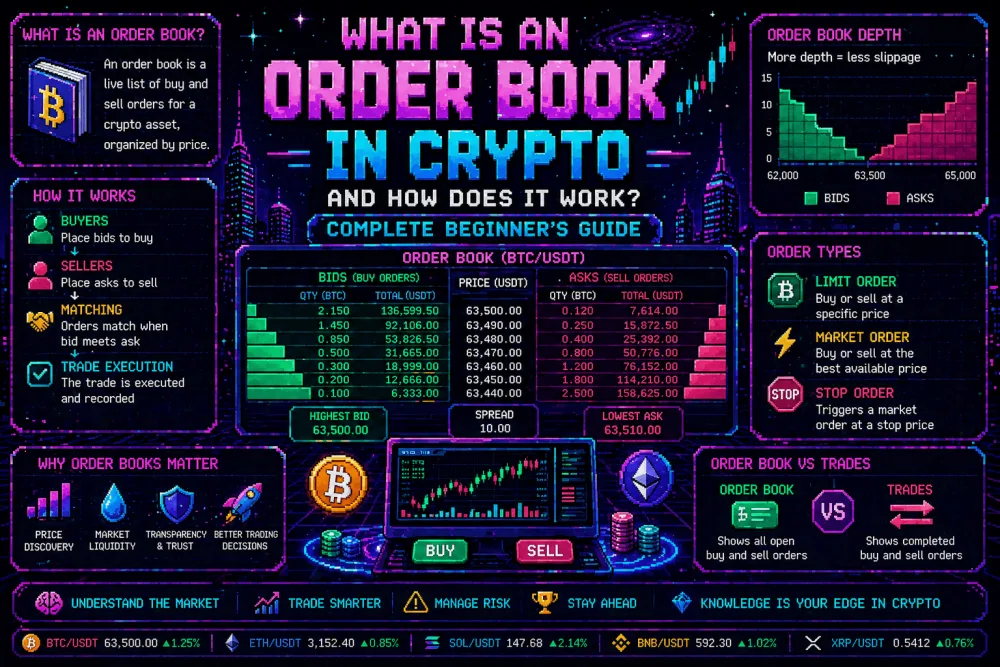
Traders watch these shifts, reading tension before moves unfold. Spotting clusters might hint at where things stall – or break through. Structure matters: depth, spread, size – all laid bare in rows. Understanding this layout sharpens timing, even in fast chaos. It does not predict, but reveals what others intend right now. Use it to align with flow, not fight against unseen forces.
Related: What Is PnL in Crypto Trading? How to Calculate Profit & Loss Guide
Contents
Crypto Trading Order Book Explained
Picture this: every time someone wants to buy or sell crypto, their request shows up somewhere. That place is a live tally that stacks these wishes based on price. Think of it as a constantly shifting scoreboard – not for points, but for what people are offering and asking. This setup reveals who’s eager to move at which cost, right down to the penny. It updates non-stop, showing exactly where interest lies at any given second.
Crypto Order Book Basics
Picture this. An order book in cryptocurrency? Just a running list of who wants to grab a coin and for how much, opposite those looking to let go and their asking prices. Every trade combo – say, BTC▲$62,630.00/USDT▲$0.9991 or ETH▲$1,761.17/BTC – gets its own separate record on the platform. This isn’t some static file sitting around. It shifts constantly, refreshed non-stop down to milliseconds when trades pop up, fill, or vanish. Think of it like a heartbeat – one flicker at a time.
Why Order Books Are Important for Trading
Most people find clarity when prices and trades stay out in the open. Public view beats hidden systems where only big players know what is happening. Seeing buy and sell levels helps regular users understand how much cushion exists before price jumps occur. Value gets shaped by real interest, not assumptions behind closed doors. Markets function better when everyone sees the same data at once. Guessing fades when actual intent appears on screen. What you see matches what others see – no special access needed.
Centralized and Decentralized Order Books Compared
Looking at how crypto order books work helps to separate them into two broad kinds.
Trading happens fast on platforms such as Binance or Coinbase because deals are paired behind the scenes. These systems keep order records in one central place, run by the platform itself. Speed comes from using internal servers that handle matching without delays. You see prices change quickly since everything flows through a single source.
On certain DEX platforms, such as Serum or dYdX, trading records are kept without a central authority. Blockchain systems or external routing networks handle the tracking of these trades. Privacy improves because of how data flows through the network. Still, delays can pop up depending on the setup used.
How Does a Crypto Order Book Work?
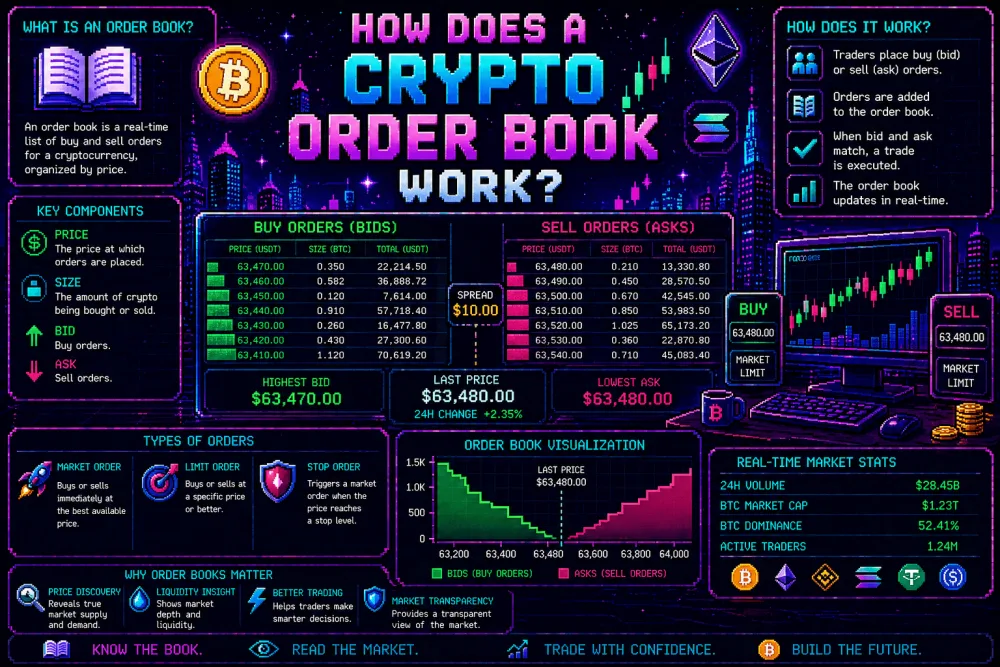
Picture a marketplace where every price people want to buy or sell shows up instantly. On one side, there’s a list of folks waiting to purchase – these are the bids. Over on the opposite side sit those ready to sell, known as asks. What holds it together is constant movement, not still numbers. Each trade shifts what appears next. Prices climb when buyers push harder. They drop if selling pressure wins. This tug happens in real time, visible only through changing rows. Seeing both sides helps spot where value might go. Not guarantees, just signals written in open offers
Buy Orders (Bids) Explained
Most people jumping into crypto deals meet bids early on. This number shows what one person will spend right now for a set chunk of digital coins. You’ll find these waiting in green on trading screens. Highest live offer? That sits at the front, bold and clear. It marks the most that anyone says they will pay today.
Sell Orders (Asks) Explained
On the flip side, “Ask” points to whoever wants to sell. That number shows what they want in exchange for their stuff. You will find these in the red-colored section. Lowest offer up there? It sits at the top of the ask list. The difference between the smallest asking price and the biggest bid makes the “Spread.”
Matching Engine Crypto Trade Execution Process
Most of the time, a hidden system runs every cryptocurrency exchange. This part checks non-stop whether someone wants to sell at the exact price another person wants to buy. A deal happens when those prices line up – say, fifty thousand dollars meets fifty thousand dollars. Once locked in, the software clears both entries and adjusts holdings accordingly. What remains is an updated record showing fresh numbers where money moved.
Price Discovery Process
Most of the time, value shows up right there in the crypto order book. Buyers stepping in wipe out cheaper offers fast. When demand keeps rising, trades shift higher just to find sellers. On days when selling hits hard, those standing near the top bids vanish quickly. Downward pressure builds as each bid gets taken one by one. What looks like smooth movement on your screen? Just uneven pushes between buyers and sellers, stacking moment after moment.
Related: Essential Crypto Trading Metrics: Top 10 Indicators for Crypto Traders
Key Parts of an Order Book
Start by noticing how prices stack up on screen, each level showing what buyers want to pay and what sellers ask for. Watch the numbers shift as trades happen, revealing pressure from big orders hiding beneath the surface. See where clusters form, gaps appear, sudden spikes flash, then fade. Notice depth charts stretching out, mapping volume like terrain across price points. Spot patterns over time, repetitions that hint at movement before it jumps. Learn which platforms highlight slippage risks when orders eat through levels. Feel the rhythm of updates, refresh speed affecting split-second views. Realize color codes mean more than direction – they signal size dominance too.
Bid Side Versus Ask Side
Picture this: the green bids and red asks act like opposite magnets pulling at prices. When trading hums along smoothly, clusters of buy and sell levels stack up tight. That crowding shows folks are busy placing trades.
Order Size and Price Levels
Inside the book, every line shows a price alongside how much is offered. Take 5.5 BTC up for grabs at $62,000 – that snapshot reveals what’s sitting where on the ladder. What sits there shapes how far prices could move before meeting resistance. Numbers like these build a picture of balance or pressure below the surface. That chunk of volume anchors expectations until something shifts it.
Market Depth Explained
Deep inside the trading world, crypto market depth shows how much buy and sell activity sits waiting at different prices. When there’s plenty of that activity, big moves barely shake the current rate. On the flip side, thin setups twitch hard – one hefty trade wipes out layers fast. Price swings strike harder where orders are sparse.
Liquidity in the Order Book
Cash conversion ease defines crypto liquidity, showing how fast you move between assets without shifting prices. A tight gap plus deep order books signals strong liquidity. Smooth trade execution draws traders toward these active markets. Price stability during trades often follows when volume runs high.
Types of Orders in Crypto Order Books
Some trades matter more than others. Your plan decides which pieces of the puzzle fit where, shaping how you move through crypto’s order maze.
Market Orders in Crypto Explained
Right now, a market order in crypto means buying or selling fast using whatever price is available. These orders pull existing deals out of the trading list. Getting filled is certain, yet the exact cost isn’t – especially when few trades are showing, leading to unexpected shifts in what you pay.
Limit Orders in Crypto Explained
A set price triggers a limit order in crypto markets, locking in your terms ahead of time. Waiting quietly in the system, it adds depth without rushing into trades. Price control comes first here, though getting filled isn’t promised. Reaching your exact number pulls it through – otherwise, it stays put.
Stop Orders in Crypto Trading
A price level gets hit, then the system turns a stop order into either a market or limit trade automatically. When things drop fast, this setup helps shield positions without needing constant watch. Traders stay covered even if they are not staring at screens all day.
Related: What is Crypto Liquidation in Trading? How Crypto Liquidation Works
How to Read a Crypto Order Book

Most people guess where prices go and hence decide on their crypto trading strategies. Seeing the crypto order book structure turns guesses into clear pictures of supply and pressure. Some watch the price alone. Others see what’s behind it – the hidden weight of buy and sell walls shaping each move. Spotting imbalances early lets certain traders act while the rest wait. The difference between reacting and anticipating comes down to one thing: reading who’s really in control.
Reading Market Sentiment
Most times, the balance between buying and selling shows up clearly on the Depth Chart. A heavy stack of green often means buyers are pushing harder. When that green side stretches way beyond the red, pressure builds upward. That kind of setup usually points to confidence in rising prices.
Finding Support and Resistance
Right where lots of trades pile up, you’ll spot how support and resistance link to the order book. Picture a thick stack of buys sitting at 60,000 dollars – price tends to bounce up from there. On the flip, sellers bunching near 65,000 often hold prices back down. That wall of asks? It plays ceiling. Meanwhile, those clustered bids form a base. Price lingers around these zones when big orders crowd in.
Spotting Big Buy Sell Walls
Most traders keep an eye out for what they call “walls” – huge single orders or tight groups moving big money. When a thick sell wall appears, upward movement tends to freeze. That happens because every coin sitting in that barrier needs to be bought before prices climb past it. The wall acts like a dam, holding back momentum until pressure builds enough below.
Trading Strategy Insights
Most solid ways to trade crypto dig into the order book using a method called order flow tracking. Watching the speed of executed trades reveals hidden moves. Big traders sometimes place fake orders to confuse others – this tactic goes by the name of spoofing. Their real goal often shows up in sudden shifts of supply and demand.
Order Book Walk-through
A closer look at a crypto order book shows how trades connect behind the scenes. One buyer meets one seller when prices line up just right. Think of it like pieces fitting together only when they match exactly. Prices shift constantly as new bids appear out of nowhere. Orders wait patiently until the right moment arrives. Matching happens automatically without anyone stepping in. Each trade clears based on timing and price precision.
Example of How Buys and Sells Pair Up
Imagine this: right now, someone wants at least fifty thousand dollars to sell Bitcoin. Meanwhile, another person is offering just under that – forty-nine thousand nine hundred ninety. The gap sits there, thin but clear. One side sets a floor; the other pushes up from below. Price hovers between them, waiting.
BTC dips near fifty large – someone waits there with cash ready. One coin sits on the line, priced before it moves. A bid rests deep below today’s number. Fifty thousand dollars holds one digital piece in place. Market floats higher, yet that offer stays put. Not now, not yet – the deal sleeps till price returns.
A price of fifty thousand dollars for BTC shows up where someone wants to sell. The system spots it right away.
A deal gets filled right away.
What Happens When Orders Fill
Right after the match happens, 1 BTC leaves the seller’s balance and shows up in Trader A’s. Vanishes from the order list once settled. At that moment, the exchange marks its newest price at $50,000.
Real Market Scenario Explained
When markets swing hard, trade matching speeds up – hundreds pair off every single second. A sudden headline hits, and buyers flood in fast. The sell orders are gone in moments. Price jumps without touching the levels below.
Order Book Compared With Alternative Trading Methods
Though many rely on the order book, trading can still happen another way.
Crypto OTC Trading vs Order Book
Most big players choose quiet deals when moving huge amounts. Instead of public markets, they meet directly to swap assets out of view. These private trades hide size so prices stay steady elsewhere. Moving 100 million in Bitcoin this way avoids shaking the visible market. Large buyers prefer this path to keep activity unseen.
Order Book vs AMM
Most talk in DeFi circles spins around order books versus AMMs (automated market makers). Uniswap-style platforms run on Math rules, fed by shared money pots rather than bid-ask lists. Price tags stick closer to reality with order books, true. Yet trades still push through on AMMs, even when few people show up to buy or sell.
Order Book Pros and Cons Compared
Most traders spot the trade-offs fast. While order books show clearer prices, they need constant trading to stay useful. On the flip side, these systems break down when few people participate. Automated market makers run non-stop without gaps between buy and sell numbers. Even thin markets keep moving thanks to their design. Yet shifting big amounts through them often costs more. Price impact hits harder during sizeable transactions.
FAQ
What is an order book in crypto?
Every trade waiting to happen sits here, stacked by price. This setup forms the heart of how crypto trading works.
How does the order book work in crypto?
Buyers offer what they will pay. Sellers state their price. A system links them when amounts match. Trades happen only if both sides agree. Price meets demand through automatic pairing.
What is the spread in an order book?
What separates the top buying price from the bottom selling one? That gap’s called the spread. When it’s tight, trading moves easily. Liquidity climbs in crypto when those numbers sit close together.
Is it possible to view the person behind each order?
True. Though volume and cost are visible, who’s trading stays hidden. People involved are unknown.
What does market depth crypto mean?
Large trades can slide through without shifting prices when there’s enough heft behind the scenes. Picture stacks of buy and sell requests sitting at different price points, showing where things might move next.
Why is my order not filling?
Should the market touch your chosen level, that limit order finally executes. When prices drift elsewhere, expect the trade to just wait, untouched. Only once you step in to remove it does the pending request disappear.