Key takeaways
- A Bitcoin ETF is an exchange-traded fund that gives investors exposure to Bitcoin through a regular brokerage account.
- Investors buy shares of a fund, not actual BTC▲$62,630.00 in a wallet.
- Spot Bitcoin ETFs hold Bitcoin directly. Bitcoin futures ETFs get exposure through futures contracts.
- A Bitcoin ETF is different from buying Bitcoin directly. It gives price exposure, but not private keys, self-custody, or onchain use.
- The main benefits of a Bitcoin ETF are easy access, no wallet setup, and a familiar investment format.
- The main risks of a Bitcoin ETF are Bitcoin price volatility, fund fees, tracking differences, and futures-related costs in some products.
A Bitcoin ETF gives investors exposure to Bitcoin through a regular brokerage account. You buy fund shares, not actual BTC in a wallet.
That is the main difference from buying Bitcoin directly. A Bitcoin ETF tracks Bitcoin exposure, but it does not give you direct ownership, private keys, or onchain control. Spot products hold Bitcoin itself. Futures products use futures contracts.
This guide explains how Bitcoin ETFs work, how they differ from direct BTC ownership, and who this type of product may suit.
Contents
- What Is a Bitcoin ETF?
- How Does a Bitcoin ETF Work?
- Bitcoin ETF vs Buying Bitcoin Directly
- What Are the Benefits of a Bitcoin ETF?
- What Are the Risks of a Bitcoin ETF?
- Who Should Consider a Bitcoin ETF?
- How to Buy a Bitcoin ETF
- Bitcoin ETF Fees: What Investors Need to Check
- Common Beginner Mistakes With Bitcoin ETFs
- Conclusion
- FAQ
What Is a Bitcoin ETF?
A Bitcoin ETF is an exchange-traded investment product that tracks Bitcoin exposure. It trades on a stock exchange, and investors buy shares of the fund through a regular brokerage account. They do not buy actual BTC into a personal wallet.
The exact structure depends on the product. A spot Bitcoin product holds Bitcoin itself. A Bitcoin futures product gets exposure through futures contracts instead of holding BTC directly.
This difference matters. Spot and futures products work differently and may track Bitcoin differently.
How Does a Bitcoin ETF Work?
A Bitcoin ETF gives investors exposure to BTC through fund shares. Those shares trade on a stock exchange, and investors buy or sell them through a brokerage account.
The fund handles the mechanics behind that exposure. The exact process depends on the product. Some Bitcoin ETFs hold Bitcoin directly. Others use BTC futures contracts.
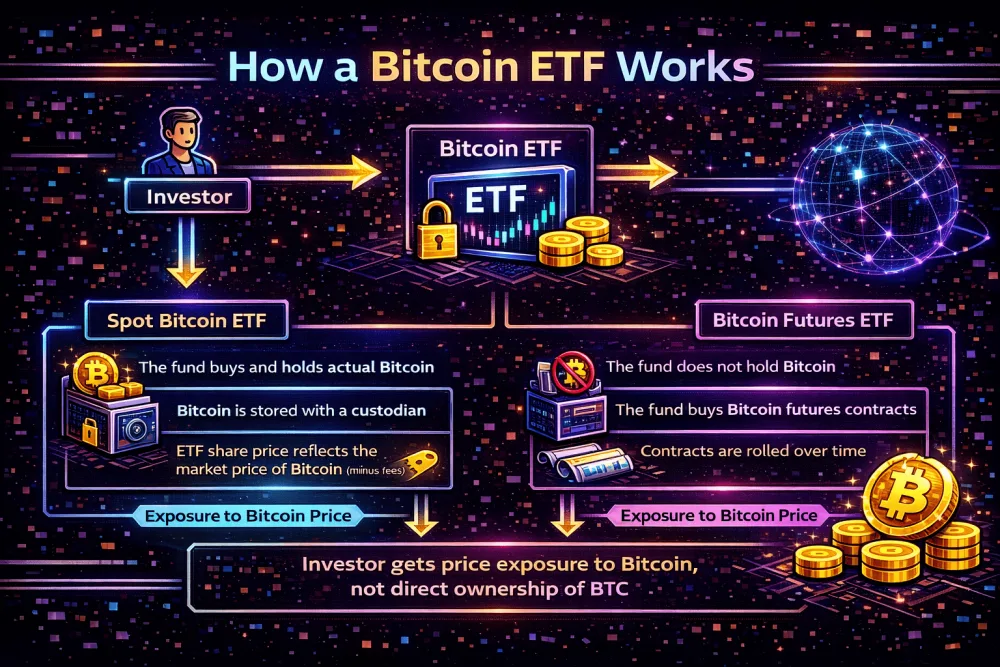
How a Spot Bitcoin ETF Works
A spot Bitcoin ETF holds Bitcoin directly. The fund buys and holds BTC, and the share price aims to reflect Bitcoin’s market price, minus fees and fund expenses.
Investors get exposure to Bitcoin’s price, but they do not manage wallets, private keys, or custody themselves. This structure is easier for many beginners to understand. The fund holds the asset, and the investor holds shares of the fund.
How a Bitcoin Futures ETF Works
A Bitcoin futures ETF does not hold the cryptocurrency directly. It gets exposure through futures contracts based on the coin instead. These are financial contracts linked to BTC’s price.
This structure is more complex. The fund must manage futures positions over time, and that can affect how closely it tracks Bitcoin’s market price. A futures ETF gives Bitcoin exposure, but it does not mirror direct BTC ownership in the same way a spot product does.
Bitcoin ETF vs Buying Bitcoin Directly
A Bitcoin ETF and a direct BTC purchase both give exposure to the cryptocurrency. The difference is in how that exposure works.
| Feature | Bitcoin ETF | Buying Bitcoin Directly |
| Ownership | Fund shares | Actual BTC |
| Custody | Managed by fund | Self-custody or exchange |
| Access | Brokerage account | Crypto exchange |
| Onchain use | No | Yes |
| Fees | Expense ratio | Trading + withdrawal fees |
| Complexity | Low | Medium |
A Bitcoin ETF suits investors who want simple market exposure through a brokerage account. Buying BTC directly suits people who want to own the asset itself and control how they store and use it.
What Are the Benefits of a Bitcoin ETF?
A Bitcoin ETF removes some of the friction that comes with direct Bitcoin ownership. It gives investors a way to follow Bitcoin’s price without dealing with wallets, private keys, or crypto transfers.
Its main benefits include:
- Easy access. You can buy Bitcoin exposure through a standard brokerage account.
- No self-custody. You do not need to manage a wallet or private keys.
- Familiar format. A Bitcoin ETF works like other exchange-traded products.
- Portfolio fit. It can sit alongside other investments in one account.
- Clear market access. It gives exposure to Bitcoin without the extra steps of buying and storing BTC directly.
For some investors, that makes a Bitcoin ETF easier to use than direct BTC ownership. It gives market exposure in a format they already know.
What Are the Risks of a Bitcoin ETF?
A Bitcoin ETF can make access easier, but it does not remove Bitcoin’s core risks. The product still tracks a volatile asset, and the fund structure adds its own costs and limits.
Its main risks include:
- Price volatility. A Bitcoin ETF can rise or fall sharply with the price of Bitcoin.
- Fund fees. Most Bitcoin ETFs charge an expense ratio, which reduces returns over time.
- Tracking differences. The fund may not match Bitcoin’s price exactly.
- Futures-related risk. A futures Bitcoin ETF can behave differently from spot Bitcoin and can bring extra costs.
- No direct ownership. You get fund shares, not actual BTC.
- Market risk. A Bitcoin ETF still depends on the broader crypto market and investor sentiment.
A Bitcoin ETF can make Bitcoin exposure more convenient, but it does not make it low-risk.
Who Should Consider a Bitcoin ETF?
A Bitcoin ETF can suit investors who want Bitcoin exposure in a familiar format. It works best for people who already use a brokerage account and do not want to deal with wallets, private keys, or self-custody.
This type of product may suit:
- Traditional investors. They can add Bitcoin exposure through the same account they use for stocks and ETFs.
- Beginners. They get access to Bitcoin’s price without learning how crypto wallets work.
- Long-term portfolio investors. They can hold a Bitcoin ETF as part of a broader investment portfolio.
- People who do not want self-custody. They avoid the risks and responsibility that come with holding BTC directly.
A Bitcoin ETF may be a poor fit for:
- People who want to own actual Bitcoin. An ETF gives fund shares, not BTC itself.
- Users who want self-custody. They do not get private keys or direct control over the asset.
- People who want to send or use Bitcoin onchain. An ETF does not work like a wallet.
- Investors who do not understand the product structure. This matters even more with futures-based products.
The key choice is simple. Some investors want Bitcoin exposure. Others want Bitcoin itself.
How to Buy a Bitcoin ETF
Buying a Bitcoin ETF works much more like buying a stock than buying crypto on an exchange. You do not need a crypto wallet or private keys. You need a brokerage account, the right ticker, and a clear idea of what product you are buying.
The process usually looks like this:
Open or use a brokerage account
You need a brokerage account that gives access to exchange-traded funds. This can be a standard taxable brokerage account, and in some cases it can also be a retirement account, depending on the platform and local rules.
Before you buy anything, check that your broker actually offers the Bitcoin ETF you want. Not every platform offers the same products.
Fund the account
Once the account is open, add cash to it. Most brokers let you fund the account through a bank transfer or another standard method. Wait until the money is available for trading before placing the order.
Some brokers show cash immediately for certain transactions, but settlement and buying power rules still vary by platform.
Choose the right Bitcoin ETF
This step matters more than many beginners expect. A Bitcoin ETF is not one single product. You need to check what the fund actually does.
Start with these questions:
- Is it a spot Bitcoin ETF or a Bitcoin futures ETF?
- What is the ticker symbol?
- What is the expense ratio?
- Who is the issuer?
- Does the fund hold Bitcoin directly or use futures contracts?
- How large and liquid is the fund?
Read the fund page before buying
Before you place an order, open the fund page on the issuer’s site or your broker’s research page. Look at the basic fund facts.
Pay attention to:
- the fund objective
- the expense ratio
- the holdings or exposure type
- the trading volume
- the bid-ask spread
- the risk summary
This takes a few minutes and can save you from buying the wrong product. Many beginner mistakes start here. People see “Bitcoin ETF” in the name and skip the structure, fees, and liquidity.
Decide how many shares to buy
Decide how much money you want to invest. Some brokers only let you buy whole shares. Others support fractional ETF shares. This depends on the platform.
Choose the order type
Most brokers will ask you to choose an order type. For beginners, the two most common are:
- Market order. You buy at the best available current market price.
- Limit order. You set the maximum price you are willing to pay. The order only fills if the market reaches that price.
A market order is simple, but the execution price can move quickly in a volatile market. A limit order gives you more price control. Many investors prefer limit orders for volatile products.
Review the full order before submitting
Before you confirm the trade, check:
- the fund name
- the ticker
- the number of shares
- the order type
- the estimated total cost
- any commission or trading fee your broker charges
This is your last chance to catch an error before the order goes through.
Place the order and monitor the position
Once you submit the trade and it fills, the Bitcoin ETF will appear in your portfolio like any other ETF or stock position. After that, keep an eye on three things:
- Bitcoin’s price movement
- the ETF’s fee level
- how closely the fund tracks the exposure you expected
What to check before you buy a Bitcoin ETF
Before buying, review this short checklist:
- whether the fund is spot or futures
- the expense ratio
- the ticker symbol
- the fund’s liquidity and trading volume
- the bid-ask spread
- whether the product fits your goal better than buying BTC directly
Buying a Bitcoin ETF is simple at the order level. The key step comes earlier. You need to know what product you are buying, how it gets Bitcoin exposure, and what fees and limits come with it.
Bitcoin ETF Fees: What Investors Need to Check
Bitcoin ETF costs do not stop at the Bitcoin price. The fund structure adds its own expenses, and small differences can matter over time.
The first thing to check is the expense ratio. This is the annual fee the fund charges as a percentage of assets. For example, iShares Bitcoin Trust ETF lists an expense ratio of 0.25%, and Grayscale Bitcoin Mini Trust ETF lists a management fee of 0.15%.
You should also check the bid-ask spread. This is the gap between the price buyers offer and the price sellers ask for. ETF investors can bear this cost when they buy or sell shares, and wider spreads can make trading more expensive. The SEC’s ETF rules and fund filings point to bid-ask spreads as a real trading cost for investors.
Another item is premium or discount to NAV. ETF shares can trade above or below the value of the assets inside the fund. That can affect the price investors actually pay.
For futures Bitcoin ETFs, investors need to look at roll costs too. A futures fund has to replace expiring contracts with new ones. That process can reduce returns over time if futures prices stay above spot prices or if contract rolls get expensive.
Brokerage costs can matter too. Even a low-fee Bitcoin ETF can cost more than it first appears if your broker charges trading fees or if the spread is wide.
Before buying a Bitcoin ETF, check these points:
- Expense ratio
- Bid-ask spread
- Premium or discount to NAV
- Brokerage commissions or trading fees
- Futures roll costs, if the product uses futures
- Tracking quality against the Bitcoin exposure you expect
Common Beginner Mistakes With Bitcoin ETFs
Many beginners treat all Bitcoin ETFs as the same product. That is one of the first mistakes. Some funds hold Bitcoin directly. Others use futures contracts. These structures can behave differently, so you need to know what you are buying.
Another common mistake is ignoring fees. A low headline fee does not show the full picture. Investors should look at the expense ratio, the bid-ask spread, and any trading costs from the broker.
Some people also buy a Bitcoin ETF without understanding what they actually own. A Bitcoin ETF gives fund shares, not actual BTC. You do not get private keys, self-custody, or onchain access.
One more issue is buying based on hype. Bitcoin ETFs still track a volatile asset. A more familiar format does not make the investment safe or stable.
Many beginners also skip basic checks before buying. They overlook the ticker, the issuer, the fund structure, and the liquidity of the product. These details can affect cost and performance.
Conclusion
A Bitcoin ETF can make sense for investors who want BTC exposure in a familiar format. It works well for people who already use brokerage accounts and do not want to deal with wallets, private keys, or self-custody.
Still, a Bitcoin ETF does not remove Bitcoin’s core risk. The price can swing sharply, fees can reduce returns, and you do not own actual BTC. You own shares of a fund that tracks Bitcoin exposure.
FAQ
A Bitcoin ETF is an investment fund that tracks Bitcoin’s price and trades on a stock exchange. Instead of buying Bitcoin directly, you buy shares of the fund through a regular brokerage account.
A Bitcoin ETF gives exposure to Bitcoin through fund shares. A spot Bitcoin ETF holds BTC directly, while a futures Bitcoin ETF uses futures contracts. The fund structure determines how closely it tracks Bitcoin’s price.
No. A Bitcoin ETF gives price exposure, but you do not own actual BTC. You do not get private keys, self-custody, or the ability to send or use Bitcoin onchain.
A spot Bitcoin ETF holds Bitcoin directly and tracks its market price. A futures Bitcoin ETF uses contracts based on Bitcoin’s price, which can lead to tracking differences and additional costs over time.
Bitcoin ETFs are regulated investment products, but they are not low-risk. Their value depends on Bitcoin’s price, which can be highly volatile. The ETF structure also adds fees and tracking risk.
A Bitcoin ETF may suit investors who want simple Bitcoin exposure through a brokerage account. It is often a better fit for beginners or traditional investors who do not want to manage wallets or private keys.
Yes. A Bitcoin ETF can lose value if Bitcoin’s price falls. Fees and tracking differences can also reduce returns over time.
Yes. Most Bitcoin ETFs charge an expense ratio. Investors may also face trading costs such as bid-ask spreads and brokerage fees.