A gold-backed cryptocurrency is a digital currency backed by gold stored in insured and audited vaults․ The common standard is that one token represents one troy ounce of gold bullion‚ effectively providing gold exposure to investors in the form of a cryptocurrency․

Contents
- 1.What Is Gold-Backed Cryptocurrency in 2026
- 2.How Gold-Backed Crypto Actually Works
- 3.Best Gold-Backed Cryptocurrencies in 2026
- 4.Why Investors Buy Gold-Backed Crypto
- 5.Risks and Limitations You Should Know
- 6.Gold-Backed Crypto vs Traditional Gold Investment
- 7.How to Buy Gold-Backed Cryptocurrency Safely
- 8.Future of Gold-Backed Tokens in the RWA Market
- 9.FAQ
What Is Gold-Backed Cryptocurrency in 2026
Definition of tokenized gold and how it works
Tokenized gold combines customary defensive assets with blockchain infrastructure․ Issuers buy and hold physical gold‚ then mint tokens redeemable for gold, which can be traded on crypto exchanges‚ or transferred between wallets․ As of 2026‚ Ethereum continues to be the market leader‚ though multi-chain support for these assets is becoming more common․
Physical gold reserves and 1:1 backing model
Most major gold token projects utilize a 1:1 model where one token is backed by the same amount of gold held in custody․ Gold backing is managed by gold token issuers such as XAUT▲$4,161.41 Tether Gold, and PAXG▲$4,168.37 in vaults in Switzerland or London․ These reserves are then verified, and attestation of reserves is published․
The product separates tokenized gold from synthetic commodities or leveraged products․ Tokenized gold would provide investors with blockchain-based ownership rights to physical gold bullion‚ rather than indirect exposure via gold-linked derivatives․
Read more: Best Crypto Exchanges 2026: Top 5 Platforms for Easy, Safe & Profitable Trading
Difference between gold-backed crypto and stablecoins
Despite some similarities in price stability‚ gold-backed crypto-products are distinct from fiat-backed stablecoins‚ such as USDT▲$0.9991 or USDC▲$0.9999‚ which are each pegged to a national fiat currency․ Conversely‚ the price of gold-backed crypto-products is determined independently by the pricing of gold bullion in the global commodity markets․
To many investors, it provides a gold stablecoin alternative during periods of high inflation or currency instability․ Rather than being backed by dollar reserves‚ physical gold on blockchain networks is backed by vaulted precious metals and sits within the rapidly growing market for RWA crypto assets․
How Gold-Backed Crypto Actually Works
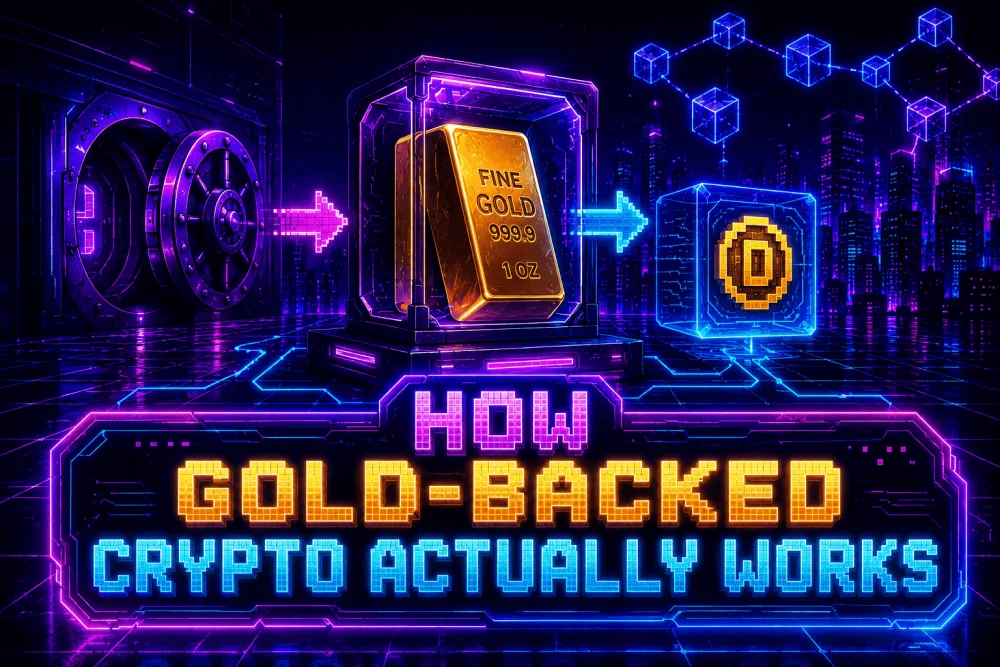
Custody of physical gold (vault storage systems)
Most gold-backed crypto issuers use third-party vaulting firms to store the LBMA-standard metals in insured vaults (in London‚ Switzerland, or Singapore)․ These vaults are generally operated by established custodians in the precious metals market: Brink’s‚ Loomis, or financial institutions such as JP Morgan & Co.
In most cases‚ the underlying allocated-reserves model means that a token holder has a specific number of gold bars allocated to them‚ but some mainstream projects also publish bar serial numbers and reserve attestations‚ and undergo third-party audits‚ in order to bring more transparency to physical gold-backed blockchain products․
Blockchain token issuance process
Issuance starts when an issuer buys and stores physical bullion‚ as per custody agreements․ Once reserves are sufficiently verified‚ equivalent tokens are minted on a generally Ethereum-compatible blockchain and then released to the public․ Each token represents a fixed quantity of gold‚ usually one fine troy ounce․
To help maintain the 1:1 backing ratio‚ the issuer can also burn tokens if investors sell large amounts of tokens or redeem their tokens․ The token burning mechanism has helped leading tokenized gold products maintain close tracking to the global spot gold price․
Redemption mechanisms (crypto to physical gold)
One of the major differences between most gold-backed cryptocurrencies and other cryptocurrencies is the redemption process‚ where the digital coins can be redeemed for physical gold or cash equivalent․
For institutional counterparties‚ Paxos allows the redemption of PAXG for LBMA-accredited gold bars‚ whilst retail investors use a partner service for their respective platform․
Because redemption involves identity verification‚ transaction fees‚ and minimum holding periods‚ PAXG redemption is generally limited to those holding 430 tokens or more in PAXG‚ or one London Good Delivery bar․ This makes it cost-prohibitive for small PAXG holders to redeem tokens for physical gold․
Conversion helps keep digital gold prices close to those of the spot bullion market․ In circumstances where the price of a token differs from the price of gold by a large enough margin‚ arbitrage around minting and redemption kicks in․
Role of auditors and transparency reports
Because gold is an immutable commodity-backed cryptocurrency‚ the ability to conduct independent audits is critical for trust in the market‚ as investors have no way of independently verifying reserves․ Therefore‚ issuers typically work with third-party auditing firms and custodians․ Projects like PAXG and XAUT regularly publish attestations on the reserves and distribution of their gold bars․
Starting in 2025 and 2026‚ as the universe of RWA crypto assets has increased‚ institutional clients have increased the number of proof-of-reserves disclosures‚ along with custodial disclosures‚ required before investing in tokenized commodity products․
Audits also address counterparty risk when reserves are held centrally‚ because token ownership is contingent on off-chain custodians maintaining adequate reserves of gold․
Best Gold-Backed Cryptocurrencies in 2026
Tether Gold (XAUT) overview
As of 2026‚ XAUT Tether Gold has the largest tokenized gold market capitalization‚ with each token backed by one troy ounce of physical gold stored in vaults in Switzerland․ Tether’s bullion reserves have increased due to institutional demand‚ with the company holding approximately 22 tons of gold backing XAUT‚ as of early 2026‚ according to Reuters.
The token is available on all major cryptocurrency exchanges‚ and XAUT has more liquidity than some of its smaller peers․ The large size of the token is one of the major reasons why it maintains its status as the best gold-backed coin even in big swings in the crypto market․
Paxos Gold (PAXG) and regulatory advantage
Paxos Gold is generally regarded as the most regulated gold-backed cryptocurrency, having been issued by the Paxos Trust Company‚ a New York-based trust that is legally regulated by the New York Department of Financial Services‚ known for its high regulation standards‚ transparency, and use of institutional-grade custodial solutions․
On-chain holdings are also tied directly to LBMA-certified gold bars, while serial numbers and allocations can be verified through Paxos reporting tools, helping the PAXG price maintain close correlation with global spot gold markets.
Kinesis Gold (KAU) ecosystem model
Unlike most of its competition‚ the Kinesis Gold (KAU) is part of the wider Kinesis payment and yield ecosystem․ KAU is backed by one gram of allocated physical gold per token․ Transaction fees on the Kinesis Network are partially distributed to participants in a yield-sharing agreement․
This makes KAU more than a simple digital gold‚ and opens the door for a host of gold-based spend‚ transfer, and savings products for those wishing to hold bullion combined with financial functionality․
VNX Gold (VNXAU) and EU-regulated approach
VNXAU (VNX Gold) was launched and became a prominent feature in Europe after European regulators tightened scrutiny on tokenized assets․ This is a multi-chain (cross-chain) tokenized gold asset backed by physical gold stored in Liechtenstein․ The token is designed to comply with EU digital asset regulations․
The regional compliance strategy made VNXAU more relevant to investors looking for regulated access to actual tokenized gold markets in the EU as the company rolled out additional integrations with European exchanges and custody providers through 2025 and 2026․
Emerging gold tokenization projects (RWA trend)
As the supply of RWA crypto assets grew‚ so also did the number of companies tokenizing gold‚ many of whom utilized a hybrid model of blockchain and physical commodity custody to market them to customary financial institutions or DeFi.
These developments are a part of the wider trend towards on-chain exposure to hard assets, of which gold crypto investment products are a sub-set․ The wider trend is towards developing real-world assets on DeFi platforms beyond government bonds and private credit․
| Project | Backing Model | Regulation | Key Feature |
| XAUT | 1 oz physical gold | Offshore structure | Largest market cap and liquidity |
| PAXG | 1 oz LBMA gold | NYDFS regulated | Strong transparency and compliance |
| KAU | 1g allocated gold | Private ecosystem model | Yield-sharing payment system |
| VNXAU | Physical gold reserves | EU-oriented framework | Focus on European compliance |
Why Investors Buy Gold-Backed Crypto
Hedge against inflation and currency risk
Gold-backed crypto is also used as a hedge against inflation‚ geopolitical challenges, or currency devaluation․ Unlike dollar-pegged stablecoins‚ the price of tokenized gold is pegged against the international bullion market‚ which has a well-established record as a safe asset during periods pertaining to geopolitical or macroeconomic turbulence․
Furthermore‚ digital gold usage indicates longer-term concerns about purchasing power․ This is particularly relevant as central banks are simultaneously tasked with balancing elevated government debt levels with interest-rate cycles․
Tokenized commodity exposure has increasingly become attractive to crypto-native investors who demand a low correlation with other digital assets․
Digital access to physical gold markets
The primary benefit of tokenized gold is accessibility․ Tokenization enables investors to potentially gain exposure to the physical bullion markets without needing to worry about such issues as vaulting‚ insurance, and international shipping‚ as well as 24/7 market access and on-chain transferability․
Entry barriers are lower than with standard bullion investment‚ allowing retail users to buy fractional amounts of gold-backed tokens directly from exchanges or mobile wallets‚ and making buy tokenized gold strategies accessible worldwide․
Portfolio diversification benefits
Gold crypto investment products are regularly used by traders to vary their portfolios of cryptocurrency․ Gold-backed tokens are also less likely to fall in price in line with some cryptocurrencies‚ helping to reduce exposure to extreme price drops in the crypto market․
Institutional interest has been further spurred by the growing market of RWA-influenced crypto assets‚ with asset managers considering exposure to blockchain-based gold as a bridge between customary protective assets and decentralized financial infrastructure․
Liquidity compared to traditional gold
At the same time‚ compared to physical bullion‚ gold-backed cryptocurrency products present more efficient settlement and easier cross-border transfers‚ since they can be traded on crypto exchanges in an instant without the need for banks‚ shipping companies‚ or precious metals dealers․
Liquidity is likely to differ among different projects․ Larger denominations like PAXG and XAUT have tighter spreads and larger liquidity pools compared to smaller projects‚ making it one of the biggest advantages of physical gold on blockchain for the native digital investors․
Risks and Limitations You Should Know

Custodial risk and centralized storage dependency
Even the most commonly used blockchain-based gold-backed cryptocurrencies are typically backed by custodial metals companies and custodial vaults like Brink’s or Loomis‚ meaning that gold-backed cryptocurrency investors must trust a third party to store their gold reserves and‚ when redeeming from the cryptocurrency‚ to complete their redemption․
This creates operational risk not found in purely decentralized cryptocurrencies‚ in the sense that token holders must trust the vault operators‚ the issuer‚ and the legal contracts governing the off-chain storage, even if the reserves are audited․
Regulatory uncertainty in different regions
The RWA crypto asset regulatory landscape stays divergent across jurisdictions‚ although the EU is heading in the same direction under the MiCA regulation‚ while the US still lacks a regulatory framework for tokenized commodity products․
This creates challenges for issuers‚ including licensing‚ reserve disclosures, and investor protection‚ as well as in their ability to support exchange listings and cross-border access to tokenized assets in platforms with a global reach․
Counterparty trust in gold reserves
One of the key criticisms of gold-backed cryptocurrency is the verification of reserves‚ as investors have to trust that the issuer has at least the full amount of circulating tokens in physical gold and no encumbrances․
“Most of the risk sits off-chain in whether the token represents a direct, bankruptcy-remote claim on specific allocated bars or a contractual claim on an issuer and its custodians.” — Michael Ashley Schulman, Partner and CIO at Running Point Capital Advisors
Top projects still rely on off-chain actors keeping proper custody and reporting standards to maintain ownership‚ and they publish audits‚ reserve attestations‚ and bar allocation reports to increase clarity about their reserves․
Liquidity differences between tokens
Liquidity of best gold-backed coins changes greatly across the wider market‚ with larger coins like PAXG and XAUT generally having more trading volume and tighter bid-ask spreads, while smaller coins can have lower market depth and higher price volatility when trading volume is high․
The differences are particularly relevant where investors are making larger investments in gold cryptocurrency tokens with lower liquidity that exhibit price variations from the spot price of gold․
Gold-Backed Crypto vs Traditional Gold Investment
ETFs vs tokenized gold
Gold ETFs remain one of the most established ways to gain exposure to bullion prices through customary financial markets‚ providing liquidity‚ government supervision, and connection with existing broker accounts․ During inflation and geopolitical unrest in 2025-2026‚ institutional demand for gold remained strong․
Tokenized gold products continue to find demand among crypto-native buyers‚ who prefer 24/7 market hours‚ blockchain settlement, and transacting directly on-chain․ This direct transfer of tokenized gold products is not limited to stock exchange trading hours, as is the case with ETFs‚ giving gold-backed crypto greater flexibility․
Physical bullion vs blockchain assets
Physical bullion also remains popular amongst investors who wish to directly hold their investment and preserve their wealth over the long term․
In contrast to digital versions‚ gold bars and coins are not dependent upon the blockchain network and exchange infrastructure that is important to many conservative long-term investors amid turbulent times․
The costs of physical ownership, such as storage‚ insurance, and transport, can be eliminated by using physical gold on blockchain systems‚ where users can hold fractional ownership via their digital wallets without the drawbacks of other forms of bullion․
Accessibility and transfer speed comparison
A benefit of a gold-backed cryptocurrency product is that it allows transactions to be conducted at a faster rate․ Rather than going through a dealer‚ custodian‚ or bank transfer‚ blockchain assets can often be transferred globally in minutes․
This also opens up digital gold for retail users that can buy smaller amounts of tokenized bullion via crypto exchanges with less friction than physical investments in precious metals․
How to Buy Gold-Backed Cryptocurrency Safely

Choosing regulated exchanges
The most secure sources of gold-backed cryptocurrency are compliance-based exchanges with custody standards for identity confirmation‚ reporting (such as reserves)‚ and security standards (such as institutional-grade security)․ These sources are safer than lightly regulated offshore exchanges and platforms․
There is also liquidity; larger exchanges can offer tighter spreads and more consistent pricing for assets like PAXG and XAUT during times of market volatility․
Wallet types and storage options
Investors can use exchange wallets or self-custody hardware wallets to store gold-backed crypto․ Hardware wallets are one of the safest methods for long-term gold-backed crypto storage․ In a hardware wallet‚ private keys are stored offline and protected from most cyber threats․
Software wallets are easier to access for trading or transferring‚ but require more diligence by the user; consistently verify that the wallet is compatible with the network; most tokenized gold products are built on Ethereum.
Step-by-step purchase process
Investors open an account with a regulated exchange‚ go through the relevant KYC/AML requirements‚ deposit fiat or stablecoin, and look for supported assets such as PAXG or XAUT․ They can then buy or sell using a market or limit order․
Tokens will either remain with the platform or be transferred into a personal wallet after purchase․ Investors with considerable investments in gold-backed cryptocurrencies may review statements about reserves and redemption policies before investing in their protocol․
Common mistakes to avoid
Some coins perform considerably better than others․ Paying any price is not the only consideration․ Also, be sure to consider the transparency of reserves and the reputability of the issuer․ The best gold-backed coins do not provide identical audits‚ custody safeguards‚ and redemption rights․
Investors should avoid keeping large account balances with weakly regulated exchanges and failing to use best practices to secure their wallets․ So, to answer the question: is gold-backed crypto safe? That has more to do with the platform quality and reserve information than with the blockchain․
Future of Gold-Backed Tokens in the RWA Market
Growth of real-world asset tokenization
Institutional and retail adoption of tokenized financial products continued into 2025 and 2026, and the RWA crypto asset market began to grow rapidly․ According to research conducted by CoinGecko‚ the market capitalization of tokenized RWAs exceeded $19 billion by the first quarter of 2026․ The tokenized commodities category was one of the fastest growing․
Part of this growth came from gold-backed assets‚ with trading of tokenized gold products reaching record levels‚ including PAXG and XAUT․ These on-chain commodity products reflect the demand for blockchain versions of customary safe haven assets such as gold․
Institutional adoption trends
Institutional participation was one of the most visible trends in the modern adoption of gold-backed cryptocurrencies‚ with major financial institutions researching tokenized commodities and more customary assets like tokenized Treasuries‚ credit products, or money market funds as part of blockchain infrastructure projects․
By 2026‚ while many banks‚ custodians‚ and asset managers were still conducting proof-of-concept experiments‚ others were implementing tokenized assets across production infrastructures with regulated custody and compliance processes․
Integration with DeFi ecosystems
There is also a growing trend to incorporate real-world physical gold on blockchain protocols‚ where tokenized gold is used as collateral‚ in liquidity pools and to generate yields on DeFi protocols․
Such interoperability allows trading in assets more easily than customary bullion and prevents having to hold excess gold exposure‚ as tokenized assets can be transferred through different blockchain ecosystems․
Long-term outlook for digital gold
Long-term prospects for digital gold are largely tied to the success of the tokenized financial system‚ with analysts expecting tokenized commodities to gain a larger part in global digital asset markets as infrastructure and regulatory clarity develops․
Some analysts have predicted that more integration between customary finance and DeFi could occur‚ using gold-pegged cryptocurrency products as a bridge between customary safe-haven investments and programmable financial infrastructure․
FAQ
Is tokenized gold redeemable for physical gold bullion?
Some issuers do allow redemption in physical gold‚ though typically with certain minimums and conditions; in practice‚ retail users redeem mostly through partner bullion dealers․
Are gold-backed tokens fully backed by real reserves?
To show physical backing‚ leading projects will publish reserve certifications and the results of third-party reserves audits‚ but transparency standards vary widely between issuers․
What are the advantages of tokenized gold over ETFs?
Regardless of the asset‚ blockchain-based assets can be instantly traded 24 hours a day‚ 7 days a week‚ from wallet to wallet‚ without the need for a trusted third party․
Can tokenized gold be stored in a personal wallet?
Yes‚ but most NFTs are transferable after purchase to a compatible self-custody wallet․ Hardware wallets are generally more secure for long-term storage․
What determines the price of tokenized gold?
Prices are mostly linked to the international spot gold market‚ but during times of low liquidity and high trading volatility‚ there may be some deviation․