This buying binge has been unfolding since the end of June and represents the main news about Bitcoin whales in July so far.
Contents
- What Is Happening With Bitcoin Whales in July?
- Why Bitcoin Whales Matter for BTC Price
- Historical Cases: What Happened After Major Whale Accumulation?
- Why Bitcoin ETFs and Whale Activity Are Sending Opposite Signals
- Key On-Chain Indicators Every Bitcoin Investor Should Watch
- Macro Factors That Could Amplify Bitcoin's Next Move
- Risks That Could Derail the Bullish Whale Narrative
- Bitcoin Price Outlook: Is Whale Activity Signaling the Next Breakout?
- FAQ
What Is Happening With Bitcoin Whales in July?
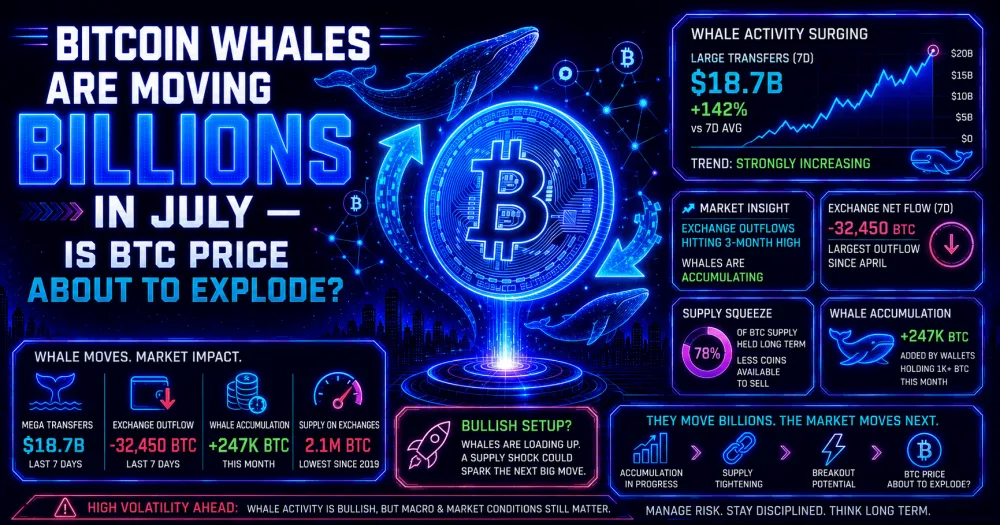
Bitcoin Whales Accumulated Billions Worth of BTC in July
Large holders have accumulated roughly 270,000 BTC▲$62,630.00 in the last two weeks alone at a value of $16.7 billion around the buying zone. Bitcoin whales and their activities are always a critical layer to monitor, as such a sizable buy indicates capacity for further whale accumulation.
Read more: Senate Crypto Bill Negotiations Reach Critical Stage: Will Bitcoin Be the Biggest Winner?
The Biggest Whale Transactions That Caught the Market’s Attention
The most interesting Bitcoin news in July concerns the overall increase in large holder balances. It is hard to say with a degree of confidence that the whales are on a buying spree just yet, as such large blockchain transfers can represent everything from exchange reorganisation to custodial transfers, OTC trading, treasury draws, and actual buying. What matters is where exactly the BTC is transferred, as spending it on an exchange will have a different impact on price than private wallet holdings.
Why Whale Activity Surged Despite ETF Outflows
ETF investors and whales have completely different risk exposures, as institutional fund investors cannot utilize custodial solutions, derivatives, and OTC desks the way private accumulators can. For the former, it is essential to periodically rebalance the risk profile, which often results in redemptions. Meanwhile, the whales can purchase BTC through OTC desks, hedge their positions via derivatives, and utilize custodial services to store their profits. The longer their exposure window is, the more likely they are to take advantage of short-term volatility.
Why Bitcoin Whales Matter for BTC Price
How Whale Accumulation Reduces Bitcoin’s Circulating Supply
Despite having a capped and known supply, Bitcoin also has a liquidity supply, a subset of coins available for sale at any given time. This metric is not visible but can be approximated by exchange balances, dormant addresses, treasury holdings, and other restricted supplies. Large buyers always reduce the liquidity supply by purchasing coins from exchanges or other whales, as they remove them from circulation. If the demand remains strong, the reduced liquidity will exert a positive impact on price.
Why Declining Exchange Reserves Support the Bullish Case
Bitcoin exchange reserves were at their 7-year low this year, around 2.2 million BTC at the time of writing. Lower reserves always indicate a lower short-term supply, as fewer coins are available for trading. Exchange reserves in tandem with large on-chain buys equal a potential supply shock, which usually results in a price increase. At the same time, a sudden increase in exchange deposits is often a precursor to institutional selling.
How Institutional and Retail Behavior Differs From Whale Strategies
Retail investors are usually more reactive, following market trends, news, and other cues. ETF flows are a mixture of institutional and retail capital but always act short-term, either speculating on Bitcoin price or hedging other portfolio assets. Meanwhile, whales can negotiate multi-billion dollar OTC trades, buy the dips, and have exposure windows measured in years. In many ways, whales represent the perfect storm for Bitcoin price discovery.
Historical Cases: What Happened After Major Whale Accumulation?
Bitcoin Whale Activity Before the 2017 Bull Run
Bitcoin whale activity before bull runs was always a slow, steady accumulation, as supply-demand dynamics dictated the timing. Large investors would purchase from new retail buyers, gradually building their long positions ahead of the broader market’s awareness. Similar accumulation patterns preceded the 2017 bull run, but it took years for the price to move higher due to increased liquidity and speculators’ interest.
How Whales Positioned Themselves During the 2020–2021 Rally
Large Bitcoin investors were net buyers ahead of the 2020–2021 rally, accumulating across the drawdown in late 2019. Exchange reserves were depleted, and long-term holder dominance increased, which added to the bullish outlook before the spot price began its multi-year upside move. At the same time, whales also set up their exits in early 2021 as the market approached the peak, shorting the frenzy by selling to new buyers.
Related: Trump Sells Early Access to Truth Social Posts — Banks and Hedge Funds Get a Few Seconds’ Advantage
What Previous Market Cycles Suggest About July’s Accumulation
Buying BTC near the bottom usually improves the price discovery for the next cycle, but it rarely has an immediate impact on the price action. BTC often consolidates near the whale entry point before breaking higher on increased long-term holder participation or renewed institutional demand. The same applies to Bitcoin whales: large accumulation will set the floor for price but rarely triggers immediate spot price action. In July, bulls should remain patient, as the current buying phase may not be sufficient to propel the price higher right away.
Why Bitcoin ETFs and Whale Activity Are Sending Opposite Signals
Record ETF Outflows Versus Aggressive Whale Buying
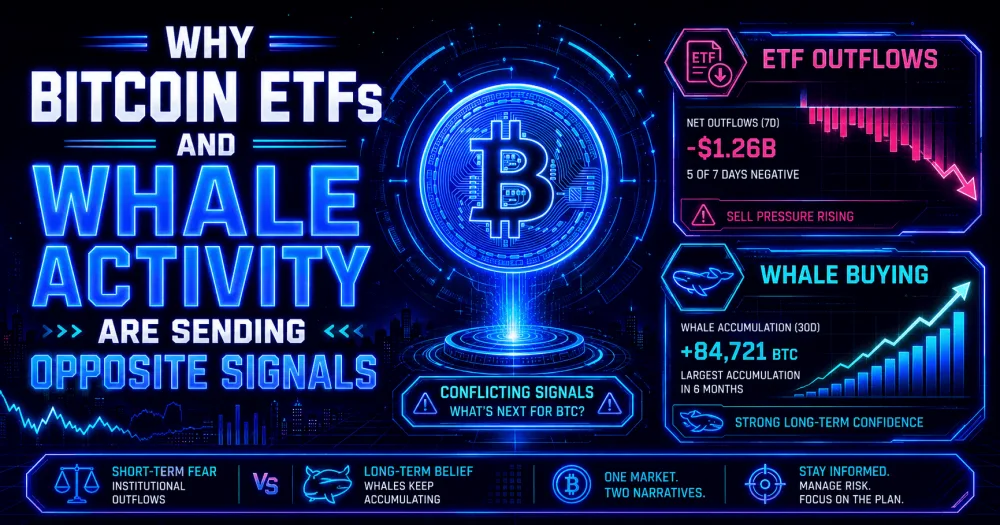
US spot Bitcoin ETFs had the highest redemption rate in their brief history in June, with around $4.5 billion in outflows. Meanwhile, large investors continue buying aggressively. On July 13, the Bitcoin spot ETFs recorded a $424.7 million net outflow, followed by three consecutive days of inflows worth approximately $368 million on July 14–16. Bitcoin ETFs and whales act as two separate market forces, with the former representing institutional allocation demand and the latter being a broad term for private investors.
Why OTC Markets Play a Critical Role
A substantial Bitcoin investor will rarely conduct a multi-billion-dollar trade on the exchange due to price discovery and transparency reasons. Instead, the large buyers will use OTC desks to negotiate directly with sellers and complete the trade without affecting the price. In effect, such a transaction will hardly register on the exchange wallet activity and can remain hidden unless it involves an exchange deposit or withdrawal. This is why Bitcoin whales can accumulate coins without an immediate increase in exchange supply.
Can Smart Money Outperform Institutional Flows?
Smart money and institutional investors are not mutually exclusive terms, as some of the biggest institutional funds are actually run by smart money investors. In effect, any family office holding Bitcoin directly or through derivatives falls under the definition of whales. As for institutional investors, their Bitcoin allocations are often in the form of futures and ETFs, making their trading activity quite limited.
Key On-Chain Indicators Every Bitcoin Investor Should Watch
Whale Wallet Balances
Whale balances should be monitored in the context of their change, as the large holder dominance can dictate price trends. Simply put, whales can control supply-demand dynamics by accumulating or distributing coins. An increase in whale balances means higher supply concentration among large investors, which will exert a positive impact on price if the demand remains strong.
Bitcoin Exchange Reserves
Lower exchange reserves in Bitcoin always indicate that some investors have moved their coins from wallets accessible for quick selling to more secure, less liquid storage. In effect, lower reserves represent a lower short-term supply, which increases the cost of selling pressure and supports prices. At the same time, rising exchange reserves always suggest the opposite scenario, as it indicates that investors are growing more confident about dumping their coins at any time.
Dormant BTC Movements
Large-scale movements of dormant BTC always impact the price, as early investors have an enormous unrealised gains reserve. Naturally, the mere fact that these investors are now willing to sell something suggests that the risk-reward moved in favour of the short. However, this is not always the case, as long-term holders might move their funds between custodians, OTC desks, or private wallets. Investors should watch out for a sudden increase in dormant address activity.
Long-Term Holder BTC Supply
Long-term holder supply dominates around 72% of Bitcoin in circulation as of early 2026, or 16.3 million BTC as of mid-July. An increase in long-term holder supply indicates that something is positively influencing these investors, thus improving Bitcoin’s prospects. In effect, any large-scale institutional buying adds to this supply and should always be a bullish signal unless otherwise stated.
Related: Is Michael Saylor Losing Faith in Bitcoin? Strategy Sells 3,588 BTC Worth $226M
BTC MVRV Ratio and Realised Cap
MVRV (Money realised versus value) is a ratio that estimates Bitcoin’s value against its cost basis or “realised value”. Lower MVRV values indicate that speculators have more room to sell, while extremely high values always precede corrections. Meanwhile, a rising realised cap during the price increase suggests that spot market investors are buying into the move, which is a much stronger confirmation.
| Indicator | Current Signal | Possible BTC Impact |
|---|---|---|
| Whale wallet balances | Large holders are accumulating BTC | Reduces available supply |
| Bitcoin exchange reserves | Reserves remain relatively low | Supports a potential supply squeeze |
| Dormant BTC movements | Limited old-coin activity is preferable | Suggests long-term holders are not selling |
| Long-term holder supply | A high share remains inactive | Strengthens the scarcity narrative |
| ETF flows | Volatile and occasionally negative | May delay an immediate breakout |
Macro Factors That Could Amplify Bitcoin’s Next Move
Federal Reserve Policy and Interest Rates
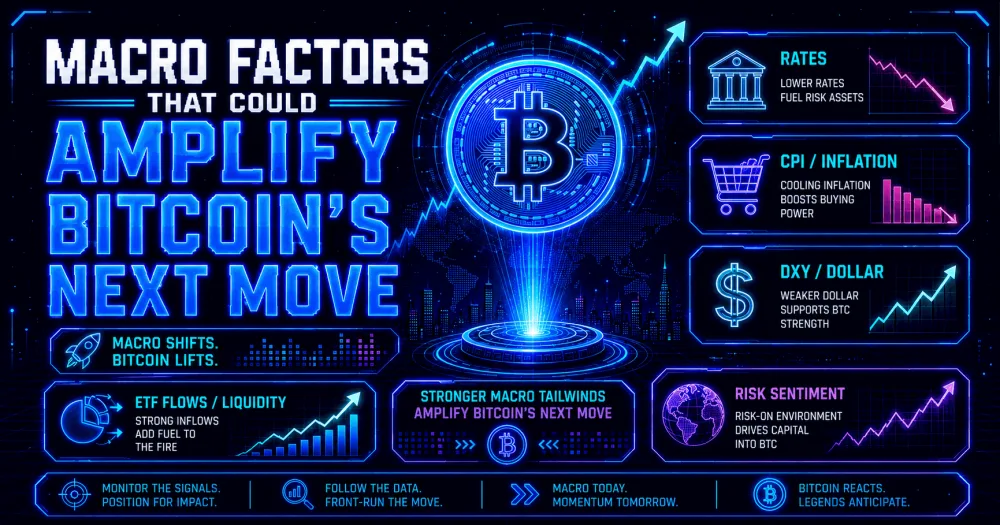
The Federal Reserve left the benchmark interest rate unchanged in June at the 3.5–3.75% range. An extended higher-for-longer period will tighten liquidity and put pressure on leveraged investors, and the reverse is true for easing cycles. In effect, the more central banks can pivot towards easing, the more scope there is for a Bitcoin price increase, as smart-money whales will be able to take advantage of the improved conditions.
Inflation Data and Market Liquidity
The US headline CPI inflation rate rose to 3.5% for the 12 months ending in June and 2.6% for core inflation, down from 4.2% and 2.8%, respectively, in May. A lower-than-expected core rate always improves the liquidity conditions for risk assets, but the threat of energy inflation persists. For Bitcoin to thrive, macro conditions should ideally reflect disinflation without an economic downturn.
How Macroeconomic Events Could Accelerate Whale-Driven Momentum
Bitcoin price discovery will benefit from easing liquidity conditions, a dovish Federal Reserve, and renewed institutional demand. Such a scenario would allow private large investors to monetise their long positions, while public funds would join the fray, increasing demand for Bitcoin exposure. Simultaneously, lower supply levels on exchanges and improved macroeconomic conditions will enhance the buying power of every BTC investor.
Risks That Could Derail the Bullish Whale Narrative
Why Whale Buying Doesn’t Guarantee an Immediate Rally
Private large investors can control the timing of their entry, which makes their activity bullish for Bitcoin but non-directional in the short term. In other words, BTC whales can be net buyers throughout the drawdown but remain neutral or even short right before the price increase. Additionally, these investors may hedge some of their long positions by buying Bitcoin futures, which offsets their bullish impact on the spot price.
Potential Profit-Taking From Large Holders
If Bitcoin price moves sharply higher and breaches the value of BTC whales’ average entry cost, some of them will likely look to secure profits. In effect, any sudden increase in whale selling will offset the demand from institutional investors and stall the price increase. The situation becomes even more concerning if exchange inflows register a significant increase alongside lower whale balances, dormant wallet activity, and overall poor spot market performance.
Regulatory and Geopolitical Risks for Bitcoin
Any change in custody rules, tax laws, banking regulations, or stablecoin legislation can affect Bitcoin liquidity in the short term. Similarly, geopolitical tensions often cause investors to rotate into cash for safety. In effect, regulatory clarity is always a positive for Bitcoin adoption, but sudden changes to the status quo are rarely bullish for markets.
Bitcoin Price Outlook: Is Whale Activity Signaling the Next Breakout?
Bullish Scenarios if Accumulation Continues
Bitcoin price reached an intraday high of $64,800 on July 17 and closed around $62,800 for the day. If the price remains resilient, the value of large holder accumulation will become evident, and a positive Bitcoin price forecast will follow. Ideally, BTC should move above $65,000 and hold higher to confirm the bullish scenario, with realistic targets set at the upper $60,000 and $70,000 levels, assuming spot market demand and ETF inflows remain strong.
Bearish Scenarios Investors Shouldn’t Ignore
A negative Bitcoin price forecast will unfold if the price fails to hold the $60,000–$58,000 corridor. In effect, the bears will regain control of the short-term price action, and a more considerable drawdown will follow. The case for the downtrend will be made if Bitcoin exchange reserves rise, ETFs continue their redemption spiral, whale balances decrease, and BTC in dormant wallets starts moving on exchanges.
What to Watch in the Coming Weeks
The most crucial elements for near-term price discovery are the large holder balances, daily Bitcoin ETF inflows/outflows, spot market performance, and exchange reserves. The macroeconomic conditions, particularly the Federal Reserve’s statements, will also be critical. The confluence of positive whale activity, strong ETF flows, bullish macro trends, and holder behaviour will suggest a higher BTC price.
| Scenario | Key Conditions | Potential Outcome |
|---|---|---|
| Bullish | Whale accumulation continues, ETF flows improve, BTC holds above support | Breakout toward higher resistance levels |
| Neutral | Whales keep buying, but institutional demand remains weak | Extended consolidation |
| Bearish | Whale balances decline and exchange inflows rise | Retest of lower support |
| High-volatility | Macro data or regulation shocks the market | Sharp move in either direction |
FAQ
Are Whales Buying Bitcoin in July 2026?
Yes, indeed. Bitcoin whales have been accumulating BTC throughout the last two weeks. Thus, the big investors have added roughly 270,000 BTC in the last fortnight, worth around $16.7 billion at the current price level.
Does Whale Accumulation Mean Bitcoin Will Rise?
It depends on a few factors, as simply accumulating crypto will not prompt an immediate price increase. However, large-scale buys almost always indicate that the whales are growing more bullish, which can positively impact the price if other forces, such as ETF inflows, are supportive.
Why Are Bitcoin Whales Buying While ETFs Face Outflows?
Both Bitcoin whales and spot ETFs represent separate investment categories with different time horizons, utilisation methods, and risk management practices. Thus, it is entirely plausible for institutional investors to redeem their shares while the private large investors continue accumulating.
Which On-Chain Metrics Matter Most?
The most important on-chain metrics for assessing the impact of Bitcoin whales on the price are whale balances, Bitcoin exchange reserves, long-term holder supply, dormant wallet activity, realised cap, and MVRV.
Is This a Good Time to Buy Bitcoin?
The prevailing atmosphere around Bitcoin whales and the rising price action suggest that now could be a good time to buy. However, it is essential to note that the market conditions are far from ideal, and an aggressive Bitcoin purchase is ill-advised. Thus, one should always consider the risk-to-reward and the likelihood of success before making any investment decision. The information conveyed in this article should not be used as financial advice.