Into 2026, Ethereum moves with uneven momentum. Still the core of DeFi, sure, yet also tied tightly to stablecoin flows, staked assets, and activity on Layer-2 chains. Even so, price lags behind progress. Because of that delay, questions arise. Might ETH▲$1,761.17 climb toward $5,000? Not everyone agrees it will.
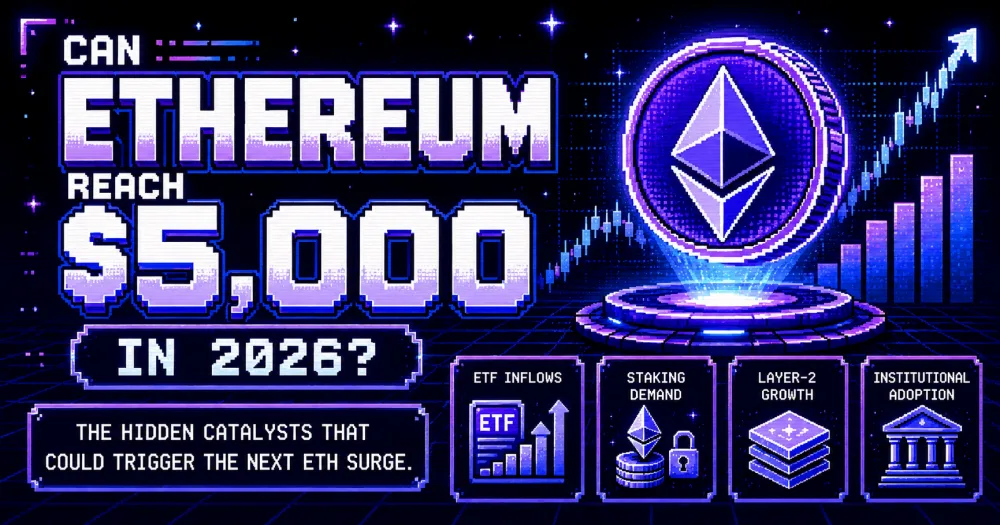
A helpful guess about Ethereum’s price won’t come from wishing. Instead, it hinges on real interest in ETFs, more people using the network, fewer tokens available, and prices moving clearly past previous highs. Things have shifted lately. Now there are physical ETFs tied directly to ETH, a shift to staking, parts of the supply getting destroyed, plus an expanding ecosystem built on rollups.
Contents
- Can Ethereum Reach $5,000 in 2026? Why This Price Level Matters Now
- The Hidden Catalysts Behind a Potential Ethereum Surge
- What Analysts Are Saying About Ethereum Reaching $5K
- Ethereum Fundamentals: Is the Network Stronger Than Ever?
- Supply Dynamics: Why Ethereum Could Enter a Scarcity Phase
- Key Price Levels Ethereum Must Break Before $5,000
- Ethereum vs Previous Cycles: Is $5K More Realistic Now?
- Risks That Could Delay Ethereum’s Move to $5,000
- Scenarios for Ethereum Price Action in 2026
- FAQ
Can Ethereum Reach $5,000 in 2026? Why This Price Level Matters Now
Ethereum’s Current Position After the Latest Market Cycle
Still topping the list for crypto app settlements, Ethereum’s position holds – though its token trails behind Bitcoin and speed-driven trends. Doubt creeps in because of that lag, yet space opens up quietly for a later correction.
A deep look at Ethereum’s value starts by questioning how much its role online truly shapes what people will pay. Could the way it powers apps matter more than trading trends? What if usage itself pushes prices higher instead of just speculation? Does being essential translate into real buying pressure? Might reliance on the network quietly build support beneath the charts?
Why $5,000 Became the Key Psychological ETH Target
Right now, the $5,000 mark holds weight – it once acted as a ceiling during Ethereum’s last high. Should the price climb past, it hints at confidence returning under new conditions. That zone isn’t just a number; it’s where old resistance meets fresh momentum.
Halfway to five grand feels like a milestone for those buying dips. People sitting on bags might see it as proof that the Merge upgrade actually changed things. So eyes are on whether ether climbs that high by late 2026 – not just because of price, but what it signals. A move past fifty hundred could mean confidence returned after years of doubt.
Read more: Ethereum Crisis Could Hit Within Months, Ex-Staffer Warns
How ETH Price Behavior Has Changed Since ETF Approval
ETH used to move on its own, shaped by crypto market swings. Once ETFs arrived, their path started bending with big money trends instead.
Slow shifts often follow big financial moves. Entry points open first. Change grows once advisors begin including it in portfolios. Lasting reach depends on steady adoption by investment groups.
The Hidden Catalysts Behind a Potential Ethereum Surge

Spot Ethereum ETFs and Institutional Capital Inflows
For some people, keeping Ethereum feels complicated. Spot ETFs change that by fitting into regular investment accounts. This helps those who avoid digital wallets. Access shifts when old systems welcome new assets.
Here’s how it looks on the upside. One rare digital item gets access to fresh markets. When money starts flowing into ETFs steadily, yet trading pools remain shallow, expectations shift higher. Ethereum gains ground once approval hits. Thin supply meets growing demand through new gateways.
Staking Rewards and the Supply Shock Narrative
When people stake, they’re adding fresh pressure on demand. Locking up ETH helps protect the system while earning something back – this naturally pulls tokens off the open market when things are stable.
Here’s something odd – “Ethereum staking supply shock” gets tossed around a lot, though the idea holds. That staked ETH hasn’t vanished into the air; still, it tends to stay put rather than flood trading platforms fast.
Layer-2 Ecosystem Growth and Network Scaling Demand
Right now, Ethereum grows by leaning on offshoots like Arbitrum, Base, Optimism, zkSync, and Starknet. These shift workloads beyond the main network yet stay tied to it somehow. What holds things together is their shared root in Ethereum’s base layer.
Most of the push behind Ethereum in 2026 rides on what happens above it. When rollups grow steadily, they carry the load, freeing the main network from handling everything itself.
What Analysts Are Saying About Ethereum Reaching $5K
Bullish Forecasts: ETH Entering a New Expansion Phase
Some, who like Ethereum, say it might just be starting its growth now, later than expected. Behind their thinking sits the approval of ETFs, plus more people locking up coins to earn rewards. Supply on trading platforms has dropped, which feels meaningful. DeFi activity creeps back, slowly waking up. Alts start moving again, fed by fresh cash flow finding its way in.
A climb in ETH’s value in 2026 isn’t certain just yet. For that rise to happen, prices need to push past key levels while trading activity picks up. Without stronger momentum compared to Bitcoin, gains could stall. Reaching new highs depends on holding upward pressure with solid support.
Neutral Views: Slow Grind Toward Resistance Levels
Fundamentals hold firm, yet ETH’s sideways drift could last. Price may zigzag, even if the base stays strong.
Maybe Ethereum hits five thousand dollars. Proof might come through ETF activity, rising stablecoins, busier DeFi networks, or higher fees, needing confirmation first.
Bearish Perspectives: Why ETH May Struggle to Break Out
Some who doubt the outlook point to rising rivals, softer income from fees, yet worry gains might flow to Layer-2 networks instead of Ethereum itself. Another concern sits in plain sight – ETFs miss out on rewards tied to staking.
What they’re really asking isn’t just if Ethereum will reach 5k once more. Instead, it’s about how ETH stacks up against blockchains with clearer paths to gains.
Related: Top 5 Wild Ethereum Price Predictions for 2026: From Realistic to Moonshot Scenarios
Ethereum Fundamentals: Is the Network Stronger Than Ever?
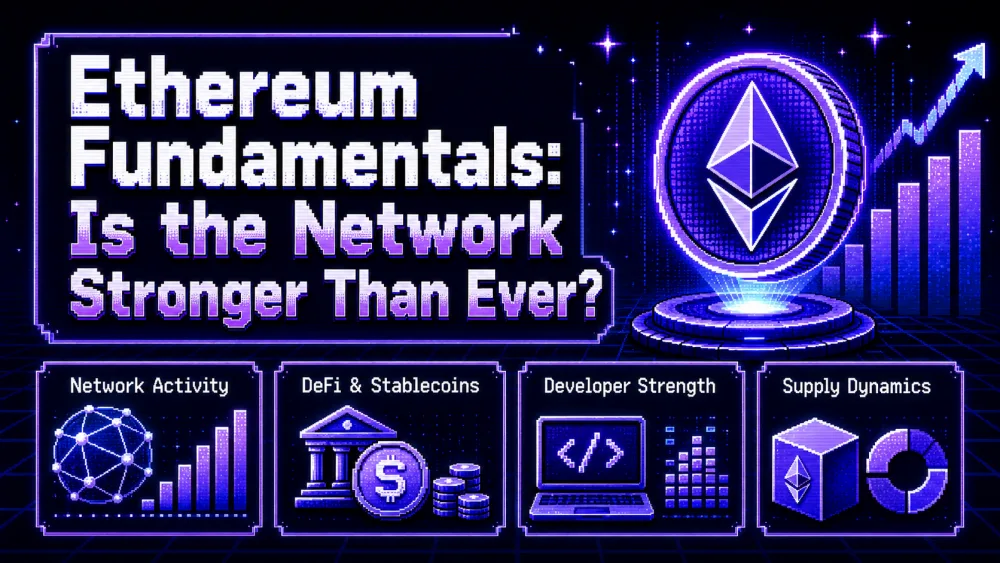
Transaction Activity and Real Network Usage
These days, counting just Ethereum’s main network misses the full picture. Instead, action splits between Level One and Two systems. Settlements matter more now. So do transfers moving across connections. App earnings show shifts, too. Even where digital dollars flow gives clues. Watching one thing alone won’t cut it anymore.
Whoever wonders about Ethereum’s rise should look past catchy phrases. Real activity counts way more than words on a screen. Growth sticks when people actually use it, build on it, and put money into it. Momentum feeds on creators showing up, folks relying on the network, and funds moving through it.
DeFi and Stablecoin Dominance on Ethereum
Still, Ethereum holds steady under DeFi movements, along with shifts in stablecoins. Underneath it all, lending setups lean on their base, while swaps without middlemen run through the same paths. Even locked-up Ether finds shape here, just like digital versions of real-world value. Through every turn, the backbone stays put.
Should DeFi returns improve, Ethereum stands to gain. A growing stablecoin supply could boost its role in settlements. Unlike many recent networks, it already has solid demand. Higher usage of collateral might drive activity. Recovery in yield markets may lift pressure across the system.
Developer Activity and Ecosystem Expansion
Still, Ethereum holds a real edge when it comes to developers. Fresh applications tend to debut there – or within its Layer-2 networks – since funding flows naturally, checks are routine, tools work well, trust runs deep.
A single burst of coding won’t push prices up. Yet when quiet phases pass, steady work strengthens the system beneath.
Supply Dynamics: Why Ethereum Could Enter a Scarcity Phase
EIP-1559 and Token Burn Mechanism Impact
Fee changes on Ethereum now include a burn mechanism after EIP-1559. As usage climbs, larger amounts of ETH disappear from supply due to these burns.
Some days the flame doesn’t shrink ETH at all. When things are quiet, fewer tokens vanish. Yet when everyone jumps in, more gets burned than created. Scarcity starts to show its face then.
Staked ETH and Reduced Circulating Supply
Out of reach, much of that ETH stays once it gets locked up. As stakes grow, available supply tightens across trading platforms. Even though tokens like Lido’s float around freely, folks often hold them like savings. Ownership shifts quietly beneath the surface.
When rallies happen, things shift. Lower liquidity means fewer coins are ready to sell. Buyers stepping in then push prices up more quickly. That speed catches many off guard. Ethereum reacts more sharply under these conditions.
Exchange Outflows and Long-Term Holding Trends
Movement from exchanges hints at ETH heading toward personal control – maybe storage, locked-up positions, or decentralized apps. Price lifts? Not promised just because coins exist in trading hubs.
When demand climbs together, things shift quickly. Sharp moves often follow if spot markets lack depth.
Key Price Levels Ethereum Must Break Before $5,000
Major Resistance Zones in the Current Market Structure
Back near spots where selling once held firm – that’s where Ethereum needs to return. Old collapse points now draw attention, along with average price trends and places stacked with heavy volume offers.
Picture Ethereum resistance levels like shifting sand, never static. Where prices stall, selling pressure meets buying will – momentum decides what happens next.
Read more: Ethereum Price Prediction 2026. Will ETH Reach New All-Time Highs in 2026?
Volume Confirmation and Breakout Validation Signals
Volume matters most when a price moves past resistance. Just a quick spike won’t convince traders it’s real. What they watch for is a steady demand at the current level. Money flowing into ETFs helps confirm strength. Leverage should stay within limits, nothing extreme. When prices dip, confidence grows if they bounce from old resistance zones.
This time, a clearer signal comes before guesses about ETH moving higher get serious. The actual follow-through counts far beyond any number mentioned first.
Correlation With Bitcoin and Macro Liquidity Cycles
Most times, Ethereum doesn’t act on its own. The bigger picture in crypto often follows Bitcoin’s lead. When Bitcoin falters, ETH may stall – despite better conditions under the surface.
When money moves freely, markets tend to respond well. Still, if access shrinks, momentum stalls – no matter how promising Ethereum stories seem. Big-picture cash flow shapes outcomes more than most expect.
Ethereum vs Previous Cycles: Is $5K More Realistic Now?
2017 vs 2021 vs 2026 Market Structure Comparison
Back then, excitement around ICOs pushed prices up. This time, it wasn’t just one thing – DeFi pulled interest, followed by digital art trends, borrowing tools added fuel, while low-cost money floated everything higher.
2026 feels unlike before. With ETFs in play, plus the shift to proof-of-stake, things have changed underfoot. Layer-2 solutions now handle load, while tools for builders are far deeper than they were years back. This route leans toward big players showing up, yet it won’t happen just because they come. Behind every step, effort still matters most.
Institutional Adoption vs Retail-Driven Cycles
Fast moves by everyday traders shift Ethereum prices in seconds. Yet big players reshape how deep the market runs over time. Investment trusts sit alongside storage systems, pooling money through structured vehicles. New digital asset formats spread entry points across wider timelines.
Right here sits the core of how institutions want ETH. Buying happens only if they can get in easily, follow rules, move freely, fit it into their holdings – all at once.
ETF Era Impact on Volatility and Price Discovery
When ETFs show up, getting in becomes easier – yet swings stay wild. Should money start pulling back, ETH might slip. Tougher economic times could drag it down just the same.
Price discovery tends to get sharper when ETFs connect digital asset trading with older financial systems. This change matters as values climb toward five thousand dollars.
Risks That Could Delay Ethereum’s Move to $5,000
Macro Pressure and Interest Rate Environment
When borrowing costs stay high, Ethereum often feels the pressure. Inflation that refuses to fade makes investors cautious. Without steady cash flow into markets, momentum stalls. Risk appetite drives crypto moves more than anything else. Money looking for safety won’t lift prices. Tough financial conditions weigh on speculative assets. Confidence fades when dollars sit still.
Progress in Ethereum might go unnoticed by traders even as updates roll out. Value does not follow development at fixed intervals.
Competition From Other Layer-1 and Layer-2 Networks
Out of nowhere, Ethereum finds itself up against rivals like Solana and Avalanche. Then there’s Sui, along with Aptos, stepping into the ring too. Even Bitcoin’s layer-two efforts are joining the mix somehow. On top of that, Ethereum’s own rollups are turning competitive. Lately, several investors have started questioning whether strong layer-two activity might weaken the main chain’s income from fees.
Reality checks matter here. Fees might shrink thanks to rollups, yet Ethereum’s reach could grow at the same time. What counts now is whether people still choose ETH as their go-to holding. Institutions are watching closely.
Regulatory Uncertainty Around Crypto Staking and ETFs
When rules get involved, things tend to slow down. What counts as a security might take years to settle. Holding digital assets safely needs clear methods. Approval for investment funds creates hurdles, too. Each detail adds to the waiting time before moving forward.
Though the ETF got approved, problems remain. For one thing, Ethereum’s staking rules stay murky. When it comes to DeFi, guidance is still thin. Big players are waiting on the sidelines, seeing little clarity, too.
Scenarios for Ethereum Price Action in 2026
Fast Break Scenario: Rapid Move Into Price Discovery
Bursting ahead, ETF money flows rise while Bitcoin holds its ground. Meanwhile, broader cash conditions start backing risk assets. ETH then punches through key levels on strong trading activity.
Here’s how Ethereum might hit five thousand. Not because of a single reason. Instead, money flowing in combines with a limited supply. Trust grows at the same time. Then, chart patterns back it up. Together, these pieces build momentum.
Gradual ETH Expansion Scenario: Slow Accumulation Toward $5K
Slow progress might just fit better. Higher lows begin to show up as Ethereum inches upward, riding through sell-offs while confidence returns bit by bit. Trust grows not fast, but steady, shaped by repeated resilience instead of sudden jumps.
Here’s how it unfolds: Ethereum hitting five thousand? Possible, though not anytime soon. Progress comes slowly, shaped by time plus consistent signals. Each step forward needs proof, then more proof after that.
Rejection Scenario: Multi-Stage Resistance and Consolidation
A stumble here traps Ethereum under five thousand dollars. When resistance stays firm, fund movements fall short – Bitcoin sags at the same time, while cash availability shrinks slowly. Pressure builds without clear upside follow-through, leaving prices pinned near recent lows.
This is why each forecast for Ethereum’s value must include ways to manage danger. Even a solid system still carries the chance of bad timing.
FAQ
Ethereum Price Possibility in 2026?
One thing is certain – Ethereum might hit five thousand dollars by late 2026. Still, that outcome leans heavily on ETFs pulling in more funds. A clear upward move past key levels has yet to show up. Investors also need to feel bolder about risk overall. On top of that, people must keep locking ETH for staking. Interest in decentralized finance platforms holds weight, too. Activity across faster secondary networks adds pressure, yes. All these pieces have to line up just right.
Is Ethereum to Reach $5,000 Once More?
Should buyers retake major resistance zones, Ethereum might revisit $5K – especially if institutions start increasing positions. This level isn’t certain, yet it remains within reach given the right momentum shifts.
Picture this blend: ETF money flowing in while staking picks up pace. Less supply sits on exchanges now. Layer-2 networks see more use every week. DeFi hums louder with fresh moves. All of it floats on calmer macro tides, easier to ride. A quiet push, steady rather than loud.
Why Are Ethereum Prices Rising?
When more people want Ethereum, its price often climbs – especially if interest grows in multiple spots together. Think ETF investors stepping in while Bitcoin holds steady or is rising. Activity inside DeFi platforms can add fuel, just like increased staking. Less supply sitting on exchanges tends to tighten things up. Stronger bets on future cash flow also help push momentum higher.
Is Ethereum Still Worth Holding Long-Term?
Still sitting near the heart of crypto’s future, Ethereum powers everything from lending apps to digital dollars, asset tokens, locked-up rewards, and faster networks. What people wonder isn’t if it matters – it’s what that value should be.