The Fed rate decision kept the key rate steady at 3.5%-3.75% for the month, supporting a dovish but cautious outlook for the year. The last Fed rate decision in 2026 failed to provide the much-needed boost to crypto markets. As such, the outlook for Bitcoin, Ethereum, and altcoins in August will be dictated by inflation, jobs, treasury yields, dollar strength, ETF flows, and the timing of the next rate hike.

Contents
- Why the Fed Held Interest Rates Steady
- How the Fed Rate Decision Impacts Bitcoin and the Crypto Market
- Bitcoin Outlook for August 2026
- Ethereum's August Outlook After the Fed Decision
- Which Altcoins Could Benefit the Most in August
- Key Macroeconomic Events Crypto Investors Should Watch in August
- Expert Predictions for Bitcoin, Ethereum and Altcoins
- FAQ
Why the Fed Held Interest Rates Steady
While the phrase Fed funds rate decision suggests neutrality, the latest decision actually reflects a dilemma. The policymakers kept the interest rate steady at 3.5%-3.75% due to fears that another hike will derail the fragile economic growth.
Read more: US Fed Holds Rates — Bitcoin Stays Near $64K, S&P 500 Posts Worst-Ever ‘Fed Day’ Reaction
At the same time, a rate cut is impossible so long as inflation remains well above the 2% threshold.
Key Takeaways From the Latest FOMC Meeting
The latest meeting left the Federal Funds Rate (FFR) on hold at 3.5%-3.75%. A closer look at the FOMC statement reveals that a quarter-point hike would have enjoyed the widest support (9-3). Three members would have supported a cut, while six voted for maintaining the status quo. The Fed decision in July suggests that the policymakers do not have a clear idea of when inflation will come down.
Why the Fed Chose to Keep Rates Unchanged
Growth is not slowing to the point that requires immediate action, and inflation is not yet low enough for the Fed to declare victory.
Furthermore, keeping rates steady allows for further gathering of information before the September meeting. Less inflation and slower job growth would allow for cuts, but persistent inflation would continue to keep the Fed on a tighter policy.
Hot topic: Kraken Warns Bitcoin Faces 48-Hour News Grinder
Federal Reserve interest rates have already had an impact on the business world, but the Fed is not confident enough that inflation will subside to allow it to reduce its policies.
How the Fed Rate Decision Impacts Bitcoin and the Crypto Market
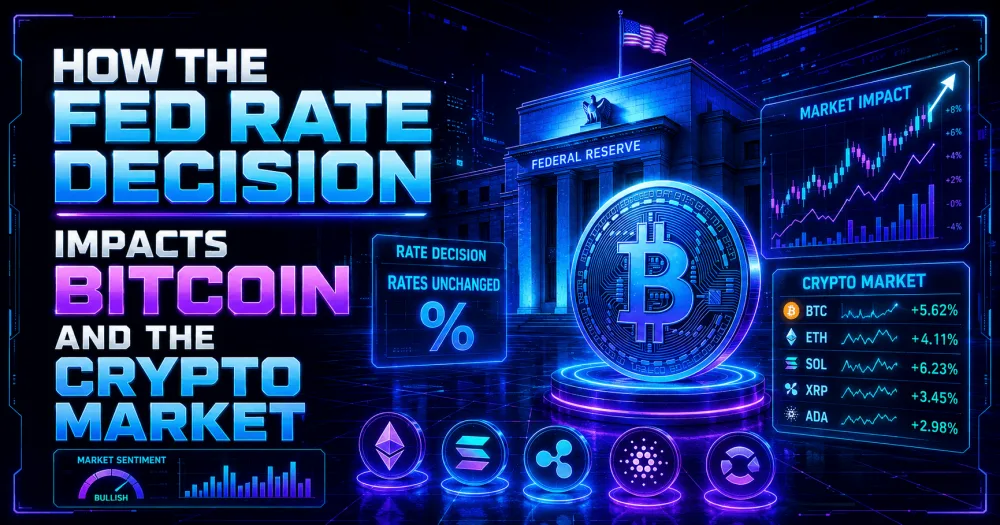
While a widely anticipated pause may trigger only a minor reaction, shifting interest rates, the dollar cost, liquidity, and expectations of future moves will have a significantly more substantial impact on the crypto market. These factors affect the willingness of investors to take on risk and increase or decrease their exposure to volatile assets.
Why Bitcoin Still Reacts to Fed Policy
While the Bitcoin network is independent and not reliant on the banking system, its price is deeply connected to moves in capital markets. When the central bank raises rates, the opportunity cost of ownership increases as safer assets offered in the market carry a higher yield.
This is why Federal Reserve policies still affect bitcoin prices. The changes in supply and demand, driven by derivatives speculation, institutional allocations, and leveraged positions, have made the network’s exposure to rate decisions grow immensely. Thus, a dovish surprise from the Fed can push the price of BTC▲$62,630.00 up, while a hawkish one can increase yields and squeeze risk exposure.
Liquidity, Treasury Yields and Risk Appetite
The main reason why liquidity is so crucial for the crypto market is that a lower yield forecast from the Treasury can make risk assets more desirable. At the same time, yield hikes tend to increase the cost of capital for many speculative investors, lowering their risk exposure. Another important consideration is the value of the dollar – crypto tends to perform well when it depreciates, although high ETF inflows witnessed recently may loosen the link between macro trends and digital assets.
Bitcoin Outlook for August 2026
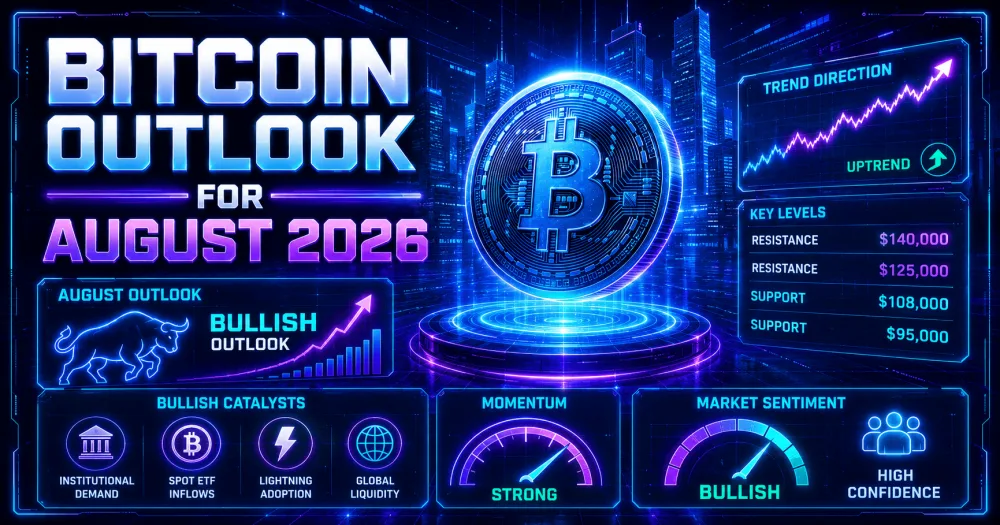
The bitcoin price forecast after the Fed decision is positive but not emphatic. The Federal Reserve has removed one major risk by leaving rates unchanged. At the same time, it has failed to remove investors’ fears that another rate hike will derail economic growth. With that said, the outlook for Bitcoin in August is highly dependent on the response to inflation and jobs data.
Bullish Catalysts to Watch
The most important factor influencing the Bitcoin outlook in August is the CPI report. A lower-than-expected reading will remove doubts about the ability of the Federal Reserve to slow down price gains without damaging the economy. In other words, a lower core CPI will probably result in a rate cut. This development will lower bond yields and improve risk appetite.
Other factors that contribute to a positive bitcoin outlook include soft jobs data and improving liquidity. The latter tends to happen once the markets realize that there will be no additional hikes. Meanwhile, a lower-than-expected print in the NFP report will prevent a sharp rise in yields following the last hike.
Learn more: Will Crypto Market Recover by End of 2026? 5 Factors That Could Decide Crypto’s Future
Bearish Risks That Could Pressure BTC
The risk that keeps haunting the Bitcoin price prediction is the possibility of persistent inflation. If the rate of price gains proves to be sticky, then the Federal Reserve will have little choice but to keep hiking. A CPI reading that is significantly higher than expected will undoubtedly hurt Bitcoin and altcoins.
The outlook for Bitcoin in August will also be influenced by the yield on the 10-year Treasury. Higher yields tend to reduce liquidity unless they are caused by an unexpected rate cut. A stronger dollar will also weigh on crypto prices as it limits the liquidity of dollar-denominated assets.
Ethereum’s August Outlook After the Fed Decision
An Ethereum outlook is closely linked to that of Bitcoin. So long as the macro environment remains stable and institutional flows keep growing, ETH▲$1,761.17 should follow BTC’s lead. That said, ether price prediction requires a closer examination of the network’s activity and supply dynamics. ETH bears must remember that their token is much more sensitive to market fluctuations than BTC.
Why Ethereum Could Diverge From Bitcoin
Ethereum has strong potential to outperform if macro conditions remain stable and there is an inflow of institutional buying. As a network, Ethereum benefits from staking, which makes the supply contractionary. If ether validators keep growing faster than miners, then the supply will gradually decrease. In addition, ETH has fundamental advantages over BTC that can be leveraged if the overall sentiment improves.
Ethereum can also outperform if institutional investors rotate from BTC to ETH. Such a scenario is possible if the latter attracts more flows than the former. This will probably happen if the inflow of ETF buying is channeled directly into Ethereum rather than a broader basket of crypto assets.
Institutional Demand and ETF Momentum
Then, sustained flows into the ETF would indicate that institutions are carving out a separate allocation to ETH. This, combined with the drawdown of stakes and long-term positioning, would further tighten the supply, especially if the inflows are consistent.
Inflows are more important than outflows, but the momentum of the former is decisive. If the funds and the network’s realization rates move in the same direction, then ETH’s performance will match or beat its predecessors. Otherwise, in a risk-off environment, Ethereum’s volatility will be higher than its peers’.
Which Altcoins Could Benefit the Most in August
Altcoins have the best chance to benefit from the latest Fed decision if the broader crypto market begins to stabilize. The importance of macro trends cannot be overstated, but liquidity improvements and selective rotations into alternative assets can also play a major role. In general, the outlook for altcoins in August depends on the performance of Bitcoin.
Layer-1 and Infrastructure Tokens
Layer-1 tokens could see gains if their networks exhibit signs of increased adoption, on-chain fees, developer activity, and stablecoin liquidity. Infrastructure projects that solve interoperability, data availability, storage, tokenization, and scaling may also see inflows.
The supply concentration remains a critical factor, as large unlocks can offset on-chain fundamentals. Assets that demonstrate adoption, emission control, and catalysts have a higher chance of outperforming peers with merely “incentive-driven” narratives.
AI Tokens and Memecoins
AI tokens could see a re-rating if the macro environment allows for increased adoption of decentralized data and computational resources and autonomous agents. The emphasis will be on actual use cases, and tokens that demonstrate adoption will outperform the narrative-driven projects.
Memecoins can have sudden positive shocks when liquidity arrives, but their short-term volatility and potential for negative shocks are also significant. A positive macro environment for risk assets will benefit the whole ecosystem, but memecoins and AI tokens can be the first ones to suffer when the environment becomes unfavorable.
Key Macroeconomic Events Crypto Investors Should Watch in August
The crypto market outlook for August will be defined by the concentrated nature of the macroeconomic calendar. Each report will be crucial in shaping expectations for the September horizon and yields, the dollar, and crypto.
US CPI Inflation Report
The all-CPI inflation data for July is scheduled to be released on August 12. The reaction to the print will be critical in forming the outlook for the Federal Reserve’s (the Fed) policy direction and, by extension, the price action of Bitcoin and Ethereum.
A lower-than-expected reading will contribute to the dovish outlook, while higher figures will push the yields higher and put pressure on crypto prices, especially if the core CPI prints higher than expected.
Nonfarm Payrolls (NFP)
The NFP report for the July employment data will be released on August 7. The market will be focused on the number of jobs created, the unemployment data, and wage growth, including the revisions for the previous two months.
A moderate print with lower-than-expected wage growth will contribute to the soft landing narrative and put downward pressure on the yields. A strong print will reduce the urgency for the rate cuts, while a weak print will trigger recession fears.
PCE Inflation Data
The personal income and expenditure report along with the PCE inflation data for July is scheduled for August 26. This report contains the most critical inflation data for the Fed, and the reaction to it will shape the market’s outlook for the central bank’s policy direction.
A lower print will contribute to a dovish outlook, while higher numbers will prolong the higher-for-longer narrative and push yields higher, putting pressure on crypto prices.
Jackson Hole Symposium
Jackson Hole Symposium runs on August 27 – 29. The event’s 2026 theme is “Financial Innovation and Its Implications for Payments and Policy.” Given the focus on digital assets and their impact on the financial system, the speeches of the Symposium will be of particular interest to crypto investors.
The market will be looking to the Fed officials for guidance on the economic outlook, inflation, and the policy outlook. The speeches will shape the expectations for the federal funds rate for the year.
Bitcoin and Ethereum ETF Flows
Flows into Bitcoin and Ethereum ETFs will be a critical short-term indicator for institutional demand. The inflows will contribute to the bullish thesis, while outflows will suggest a risk-off environment.
Related: What Is the BIP-110 Upgrade? Why Bitcoin Developers Can’t Agree
The allocation between Bitcoin and Ethereum will also be an essential indicator, as the demand for both assets will suggest a broad institutional interest in crypto. A higher concentration of flows into Bitcoin will allow the altcoins to remain range-bound.
Expert Predictions for Bitcoin, Ethereum and Altcoins
Each expert’s opinion should be considered as a scenario rather than a forecast, as the outcome will depend on how the confluence of macroeconomic indicators, yields, and institutional demand develops in the coming months. The August outlook for Bitcoin, Ethereum, and altcoins can be considered in the context of the three scenarios: bullish, neutral, and bearish.
Bullish Scenario
In the bullish scenario, CPI and PCE inflation data print lower than expected and contribute to the dovish outlook, the NFP data print lower than expected and support the soft landing narrative, and bond yields start to decrease. The flows into crypto ETFs remain positive, contributing to the bullish momentum.
BTC price breaks higher on strong on-chain fundamentals and spot demand, with ETH following suit on institutional adoption. The institutional allocation into crypto will likely see a rotation from BTC into ETH and higher-quality altcoins. Layer-1, infrastructure, and AI-related assets will outperform, with memecoins seeing sporadic short-term speculative flows.
Neutral Scenario
In the neutral scenario, CPI and PCE inflation data remain rangebound, with no significant pressures on the yields. The NFP data remains strong, but the wage growth prints lower than expected, and the Fed keeps the dovish stance on the rate outlook. The bond yields trade rangebound, with crypto ETFs seeing intermittent flows.
BTC remains rangebound, with ETH and altcoins following their on-chain performance. Volatility will likely increase around the key macroeconomic reports, with no particular bias for the end-of-month price action.
Bearish Scenario
In the bearish scenario, CPI and PCE inflation data prints higher than expected and contributes to the higher-for-longer narrative, with higher bond yields and a stronger dollar. Higher energy prices add to the inflationary pressures, with the market pricing in higher rates for the year or a rate hike in September.
BTC experiences a significant sell-off, with ETH underperforming, and lower-liquidity altcoins seeing substantial shorts. The leveraged longs will be liquidated, with the shorts covering their positions, initiating a broader selloff across the market.
FAQ
Why Did the Fed Keep Interest Rates Unchanged?
The Fed funds rate was left unchanged due to fears that another hike will derail the fragile economic growth. The policymakers reckon that it is too soon to cut rates so long as inflation remains elevated.
How Does the Fed Rate Decision Affect Bitcoin?
The Fed rate decision affects Bitcoin by influencing liquidity, dollar strength, treasury yields, borrowing costs, and risk appetite. Simply put, Bitcoin reacts to rate hikes and cuts in a similar way to how it responds to changes in the general macroeconomic environment.
What Does the Latest Fed Decision Mean for Ethereum?
The latest decision means the Federal Reserve is not ready to cut rates, despite concerns that another hike could derail economic growth. With that said, Ethereum bulls must remember that ETH requires a strong macro backdrop, as well as increased institutional flows and network activity, to outperform Bitcoin.
Which Altcoins Could Outperform After the Fed Meeting?
Altcoins can benefit from the latest decision if macro trends start to improve and liquidity conditions stabilize. In general, tokens representing alternative assets, such as layer-2 and layer-1 networks and AI applications, have the best chance of benefiting.
What Are the Biggest Crypto Catalysts in August?
The biggest catalysts for the crypto market are CPI, NFP, PCE, the Jackson Hole Symposium, and Bitcoin and Ethereum ETF flows.
Will the Fed Cut Interest Rates Later This Year?
A Fed rate cut in the later part of the year remains possible, but it is not certain. If inflation comes down, then rate cuts will almost certainly happen. However, if it proves to be persistent, the Federal Reserve will most likely continue to hike.