Out of nowhere, money rules are changing across the world in 2026. Even as regular government-backed cash wobbles under rising prices and political chaos, digital coins aren’t just toys anymore – they’re becoming essential tools. So, what’s sitting right in the middle of this shift? Stablecoins. These work like dollar twins but move fast, anywhere, thanks to decentralized networks. Sure, big names such as Tether (USDT▲$0.9991) and Circle (USDC▲$0.9999) have held power for years.
Yet now another player steps into the ring – World Liberty Financial (USD1▲$0.9989) – pulling attention, questions, and sharp looks from every corner of crypto land. What adds curiosity and tense attention to this new player is that the World Liberty Financial fund is directly affiliated with the family of the US president, Donald Trump. It also has its native coin, WLFI▼$0.0570.
Contents
- What Is World Liberty Financial USD1?
- USD1 Stablecoin At A Glance
- Who Founded World Liberty Financial?
- Core Mission and Vision of the Project
- How Does USD1 Work?
- USD1 compared to other stablecoins
- Is USD1 gaining attention?
- Real World Applications
- Or Just Another Hype Token? Risks to Consider
- Expert Views and Market Mood
- FAQ
What Is World Liberty Financial USD1?
Starting from the beginning helps make sense of where things are headed. This idea took shape in a moment shaped by politics and money unlike any other. Not simply a system, World Liberty Financial shows what independence in finance can mean. Its roots tell part of the story others skip.
Read more: Stablecoin Regulations 2026: What Crypto Traders Need to Know Before Using
USD1 Stablecoin At A Glance
A dollar-backed token called USD1 stands at the heart of World Liberty Financial’s network. Built to match the US currency exactly, one unit equals one real-dollar value. Instead of just serving traders on big platforms, this coin reaches further. Because its role shifts beyond exchange-based uses, it supports broad financial activity.
From large-scale borrowing systems without middlemen to small everyday purchases, movement flows through it. While exploring what defines USD1 in crypto terms, think less about code and more about ideals. Freedom, self-driven enterprise, trustless rules – these shape its identity. Though quiet in tone, its purpose echoes loudly across digital transactions.
Who Founded World Liberty Financial?
Right off the bat, people keep mentioning where this project comes from. Tied tightly to big names – like those linked to the Trumps – and seasoned hands in decentralized finance. Thanks to these links, it landed attention fast, something others grind for years to get. Still, fame cuts both ways here, drawing crowds while also pulling regulators close. Seeing politicians around it made some dig deep into the World Liberty Financial Review stuff. They want proof it runs on solid tech – not just who’s standing behind it.
Core Mission and Vision of the Project
World Liberty Financial wants to shake up money handling, skipping old-school banks entirely. Instead of waiting for approval, people could manage dollar-linked accounts freely. Think speedier transfers, fewer barriers, and control staying with users. This idea ties into how stablecoins are shifting – fewer middlemen, more personal authority. Behind it sits USD1, a token built using DeFi logic, aiming to cut delays and gatekeeping. Access opens globally, no central office calling the shots. What feels new actually reflects bigger moves already underway in digital cash spaces. Rules change when trust shifts from institutions to code. Not everyone agrees it will stick, but momentum builds anyway.
How Does USD1 Work?
What you see isn’t just polish – underneath sit layers of code and logic. To make it through 2026, any digital asset needs more than hype; it demands systems tough enough to handle wild swings and sudden shocks.
Stablecoin Design and How It Stays Tied to Value
Looking into how the USD1 stablecoin operates reveals something called a “Hybrid-Collateralization” setup. Unlike the algorithm-only versions that faded out after crashing in the early 2020s, this one holds full backing. Its value sticks close to par thanks to top-tier liquid holdings – think short-term US government debt – paired with extra cryptocurrency deposits in big names like Bitcoin and Ethereum. Because it uses both layers, there’s a firm base under its price anchor. At the same time, the system can gain when crypto values climb.
Blockchain systems supporting USD1
Picking more than one blockchain wasn’t an afterthought – it shaped how World Liberty Financial built their system. Instead of locking everything into a single network, they placed the main framework on a fast Ethereum L2. Yet the USD1 token shows up without extra steps on blockchains like Solana and Avalanche, too. Moving across chains isn’t just possible; it’s smooth, helping money reach busy markets quickly. Bridges and message systems work quietly behind the scenes so funds shift efficiently. High fees and messy price gaps – common problems for newer stablecoins by 2026 – fade when transfers stay fluid.
Transparency and Reserve Backing
After 2022, crypto holders choose to trust only when they see proof. World Liberty Financial built a live reserve check called Real-Time Proof of Reserves. Instead of promises, it uses tools such as Chainlink to pull data straight from blockchains. A public tracker reveals what supports each USD1 token at any moment. Seeing real assets behind the number settles doubts about safety better than old banking reports ever did.
Related: Stablecoin Market Cap Tops $321B, Extending 2026 Growth
USD1 compared to other stablecoins
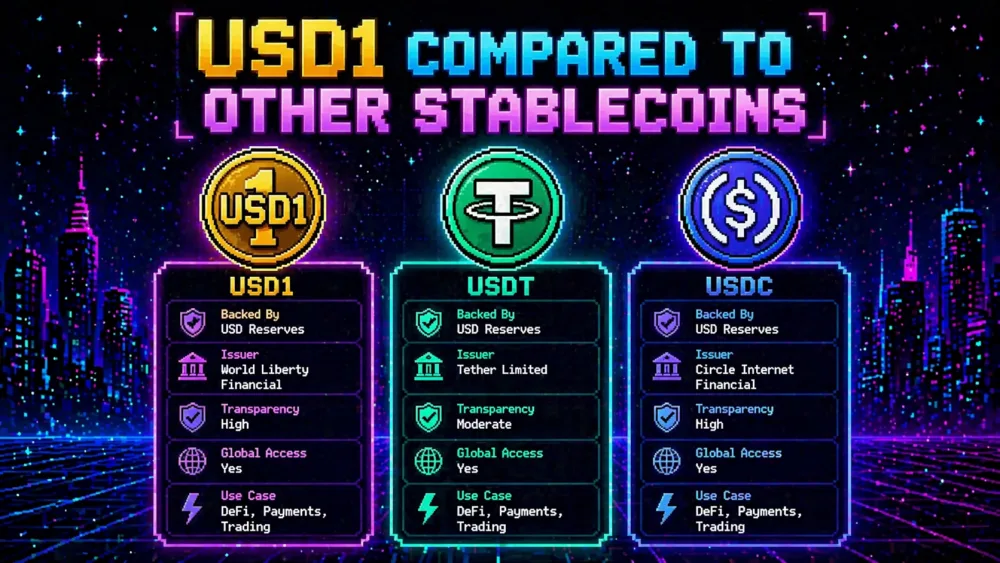
Right now, lots of stablecoins are fighting for attention. To stand out, USD1 needs a difference that Tether and Circle can’t match.
Comparing USDT and USDC
When looking at the project, big investors tend to focus on how USD1 stacks up against USDT and also USDC.
Tether still moves the most cash around, yet scrutiny lingers about where it really sits and who watches over it. Offshore ties keep some eyes narrowed, even as volume piles up day after day.
Standing tall among stablecoins, USDC – issued by Circle – moves with the quiet approval of American financial players. Yet some eyes narrow at its strings tied too tightly to regulators’ whims. Trusted there. Questioned here. Control shifts fast when authorities step in. A fortress built on rules that can also become its walls.
USD1 tries something different. Not too stiff like USDC, yet not wild like USDT either. Instead of top-down rules, choices come from users. Its backers bring clout – names that open doors. That weight helps shape a new path. The middle ground is the goal, built without copying old models.
Key Advantages and Differentiators
What sets the USD1 crypto project apart? It’s built-in lending and borrowing marketplace makes all the difference. Owning USD1 means more than having digital dollars – it opens access to an entire financial network. While USDC often forces users into third-party platforms for yield, USD1 pays earnings automatically. Thanks to what’s called “Yield-at-Rest,” part of the platform’s loan income flows directly to holders. That quiet stream of returns happens without extra steps – just holding the token is enough.
Potential Weaknesses
Every effort carries some danger. Though meant to shift control later, power now sits with a small group called the Founder Council – a setup that many question. If things stay centralized too long, problems could spread just like they do in old banking systems. Instead of spreading trust, one weak spot might bring everything down. What happens in Washington matters more than expected – elections can shape how this digital dollar moves forward. Its path isn’t set; decisions made far from code may steer its fate.
Related: Top 10 Cryptocurrencies with the Lowest Transaction Fees in 2026
Is USD1 gaining attention?
One thing stands out about this project – its energy keeps growing. By 2026, being seen matters more than ever, yet USD1 already owns that space like few others.
Market trends shaping interest
In 2026, stablecoins shift toward becoming part of mainstream finance. Big banks stepping onto blockchain platforms want digital dollars built for today’s tech and tomorrow’s trust. USD1 lines up just right. Because assets like buildings and loans now live on chain, there’s a need for reliable digital cash to close deals. That role is often filled by stablecoins made for real-world use.
Community Growth and Hype
This project uses celebrity money and power more than any crypto effort before it. Instead of waiting years to grow slowly, it reached millions right away through loyal fan bases. Excitement here goes beyond how much the coin costs. It ties into a broader shift where people see USD1 as a way to push back on mainstream banks they distrust. Not just trading – a statement.
Partnerships and Growing Networks
One step at a time, World Liberty Financial built ties with big-name DeFi platforms along with companies handling everyday payments. By 2026, whispers spread – maybe USD1 would slide into Twitter’s money tools or hook up with a country-wide property network. That kind of talk lit small fires of curiosity. Real usefulness keeps digital cash alive after the noise dies down, which matters when someone wonders if putting faith in USD1 makes sense.
Is USD1 A New Era Of Stablecoins?
A fresh chapter in stablecoins needs more than tweaks – it demands rethinking who creates digital cash, plus how control shifts over time. Only then does something truly count as different.
Innovations From World Liberty Financial
Belief holds power when shared among many hands. People sticking around get noticed within USD1’s design somehow. Loyalty builds up value slowly through actions taken together regularly. Trust grows differently here than in places where one team runs everything tightly. Community choices shape how things move forward each step. Networks of users start feeling like co-owners without calling themselves such outright. Stability comes not from promises but patterns formed collectively day after day.
Real World Applications
In 2026, we are seeing USD1 being used in innovative ways:
Out of nowhere, small and medium businesses across America started tapping into the World Liberty system. Instead of traditional banks, they now pull loans worth a dollar each, backed by what’s sitting in their warehouses. Inventory turns into cash, quietly. This shift didn’t come from big policy – just practical moves by owners trying different paths. One item at a time, value unlocks.
Out of every dollar sent, a full one hundred cents goes directly to families overseas. Not stuck in bank delays. Not eaten up by costly middlemen. Workers skip big-name transfer companies entirely – those often take five to ten out of each hundred. Instead, fresh methods move cash faster into struggling economies. One single unit of currency travels farther now than before. Without extra charges cutting into it. Money arrives where needed without shrinking along the way.
Who holds USD1 gets to help decide stuff – like what counts as collateral or how fees work – in the USD1 system. Not just owning it, but weighing in matters too. Having tokens opens doors to real choices. It is participation baked into ownership itself. Votes shape rules, slowly shifting how things run over time.
Read more: Justin Sun Sues Trump-backed World Liberty Financial Over Frozen WLFI Tokens
Long-Term Potential
One step beyond its creators might define how far the USD1 coin goes. If rules live inside software instead of people, it could weave itself into world markets. But if tied too tightly to one agenda, reputation drags it down.
Or Just Another Hype Token? Risks to Consider
Hidden risks sit behind each Crypto Scam Alert. A project’s weak spots come into view when hype fades. Not every bold claim survives close inspection. Behind flashy promises, flaws often wait. Truth shows up only if you dig past surface glow. Shiny fronts can’t always cover shaky cores.
Regulatory Uncertainty
World Liberty Financial faces tough scrutiny, mainly from the SEC and similar agencies worldwide. Because its leaders have high visibility in politics, attention follows closely. Enforcement tends to target initiatives like this one without delay. Should authorities label USD1 a security not properly filed, consequences will follow fast. Banking rule breaches tied to how it operates might trigger immediate halting. People keep questioning whether World Liberty Financial is real or fake. That judgment usually depends on your view of regulation.
Liquidity and Adoption Challenges
A coin tied to a dollar matters only when people actually use it. When big platforms such as Binance or Coinbase block USD1 – maybe because of politics or rules – it gets harder to move. Thin trading means shaky pricing, which breaks trust. Once that peg wobbles, real business stops using it.
Trust and transparency issues
Even though the project claims to offer Proof of Reserves, its mix of collateral types isn’t easy for most people to check. Because verification gets so tangled, any mismatch between stated holdings and real funds could spark doubt. Should the team secretly hold override power in the system, confidence might collapse overnight. That kind of failure often begins with overlooked code flaws – so scrutiny of smart contracts becomes unavoidable. For USD1 crypto, oversight at the contract level isn’t optional; it just is.
Expert Views and Market Mood
Bullish Perspectives
Some say USD1 is the first stablecoin built for everyday users. Because its creators grab attention and rally huge crowds online, big finance might have to join in. A well-known investor puts it plainly: when 50 million people rely on a currency, you can’t just look away. Its backers view it as foundational – like digital ground zero for an alternate economy.
Skeptical Views
Still, some remain unconvinced about the project’s true intent. Not efficiency but promotion seems front and center, they say. After all, tools like USDC and LUSD already handle what USD1 claims to fix. What looks like liberation reads more like leverage to them – a way to pull in everyday investors using bold slogans. Safety? That word gets laughed off. Without real founder exit plans, trust won’t arrive. For now, their answer stays firm: far from safe.
What Analysts Say
USD1 might grab a small slice of the stablecoin pie, say five to ten percent, though experts see it lagging behind USDC for big players. Years of legal fights likely stand between it and any real stability.
FAQ
Explain USD1 in layman’s terms
A dollar’s worth sits behind every USD1 token, backed by real holdings. World Liberty Financial introduced it, using both digital coins and government debt to keep things steady. Each unit ties directly to the US currency’s strength. Stability comes from blending modern crypto with traditional bonds. Value holds firm because actual assets support each coin. The system leans on a balance between new technology and established finance.
Is World Liberty Financial Legit Or Scam?
A fresh start doesn’t always mean safer ground – this one runs on verified code, supported by big names in finance. Still, ties to controversial policies tilt the balance toward caution when stacked up against steady options such as USDC.
How Does USD1 Stablecoin Work?
From time to time, a reserve holds property worth at least what all USD1 tokens add up to. When someone puts up security, they get new USD1 in return. Taking back what was locked happens when those coins are removed from play.
Is USD1 Worth Considering As An Investment?
Most of its worth stays flat by design. Still, rewards from lending on the platform could draw interest. Governance rights tied to it might also hold appeal over time.
What is the future of USD1?
What happens ahead rides on whether everyday people start using it widely, while also dealing with tough American rules in the years just around the corner.