July first marks a turning point across Europe’s digital currency scene. That day shuts the door on temporary rules that let businesses run using past country-specific permits. Firms without an approved CASP status by then could find themselves locked out of serving EU users. The window to adapt quietly has closed – the MiCA regulation is about to take effect in the EU.
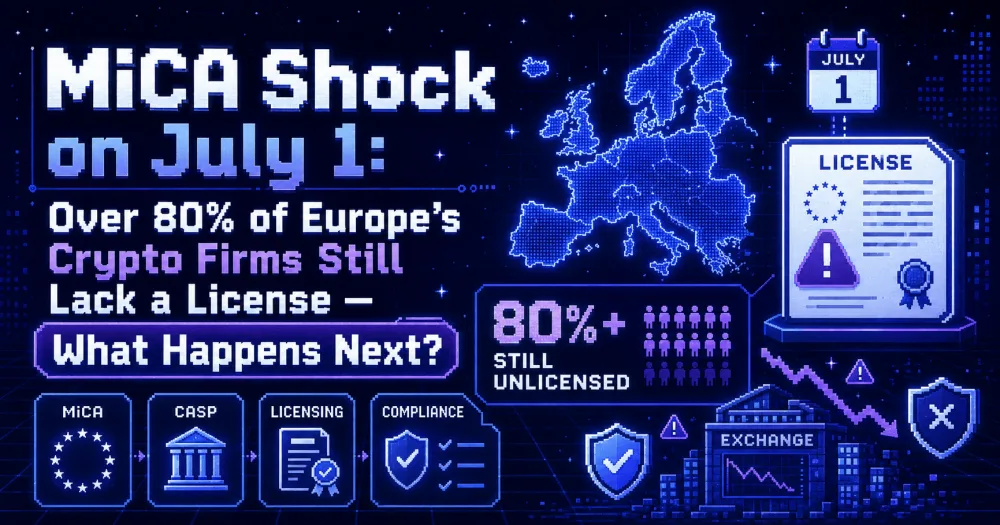
One by one, certain sites earn approval while building user confidence. Still others shut down registrations, freeze cash access, pull services, or exit Europe entirely. From a user’s view, it comes down to this: where can you still trade after the MiCA crypto regulation is implemented?
Contents
- MiCA Shock on July 1: What Is Actually Happening in the EU Crypto Market?
- How MiCA Licensing (CASP) Works in Practice
- Why So Many Crypto Exchanges Are Not Ready for MiCA
- Binance and MiCA: Why It Became a Key Pressure Point in Europe
- Which Crypto Exchanges Are Already Compliant With MiCA
- What Happens to Non-Compliant Exchanges After July 1
- Impact of MiCA on Crypto Traders in Europe
- Market Impact: Liquidity, Volatility, and Capital Flow
- Winners and Losers Under MiCA Regulation
- Long-Term Effects of MiCA on the Crypto Industry
- FAQ
MiCA Shock on July 1: What Is Actually Happening in the EU Crypto Market?
What Is MiCA and Why It Was Introduced
Starting now, Europe speaks more clearly on digital money rules. That patchwork of mixed signals between nations? Gone. One place used to sign off companies, another didn’t trust. A new playbook steps in – firm, wide-reaching. It is called MiCA, short for Markets in Crypto-Assets Regulation. First time the bloc lines up terms for crypto stuff and who offers it.
Related: What Is MiCA? How the EU Regulates Cryptocurrency Markets in 2026
Key Goals of the Markets in Crypto-Assets Regulation
Aiming for fairness, clear rules, honest markets, safety for people using services, and tighter oversight. With the MiCA regulation coming in mid-2026, companies have to talk about who owns what, how assets are held, where clashes of interest might pop up, how decisions get made, plus dangers users could face. Safety in digital money isn’t guaranteed here. Responsibility lands heavier on those offering it.
Why July 1, 2026, Is a Critical Enforcement Milestone
Midyear marks a shift few saw coming. The grace period ends when July begins. Past approvals under old rules lose their power to protect. Without fresh permission, companies face hard choices by summer’s start. Serving European customers gets complicated overnight. Compliance stops being optional around then – crypto regulation is coming to Europe for good and real.
How MiCA Licensing (CASP) Works in Practice
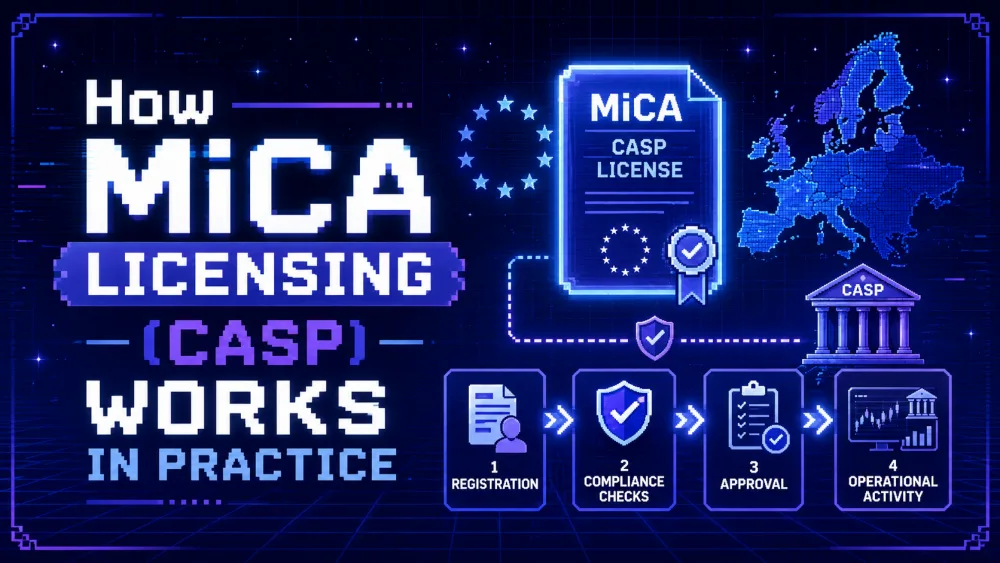
What Is a Crypto-Asset Service Provider (CASP)
A crypto firm with a CASP status runs supervised digital asset activities. Besides holding assets securely, it handles trades, runs platforms, moves funds, gives guidance, manages investment mixes, plus places tokens for clients. Holding a CASP license in the EU means approval under MiCA rules – often allowing cross-border service access throughout member states.
Requirements for Obtaining a MiCA License in the EU
A company seeking a cryptocurrency license in Europe needs an established base within the EU. Management has to be competent, proven through track records rather than promises on paper. Financial strength matters – steady funding sits at the core. Oversight mechanisms are checked carefully by authorities watching how decisions flow. Protection of client assets gets close attention during evaluation.
Systems handling threats like fraud or failure come under scrutiny, too. Rules around adherence to law form another layer, reviewed thoroughly. Outside service providers? They count just as much as internal ones. Which digital tokens appear on platforms may affect approval chances. Openness about operations helps build trust with supervisors. Corporate connections across borders raise extra questions when assessed. Links beyond European territory do not go unnoticed.
Differences Between MiCA CASP and Old VASP Registrations
Starting with rules for money movement, old checks stayed narrow. Instead of just gatekeeping access, real oversight kicks in later. Looking beyond laundering fears, new demands appear quietly. Custody methods face review now, not later. Conflicts of interest get examined under steady eyes.
Governance shapes matters more than before. Financial soundness becomes a constant issue. Moving across borders triggers wider attention. Permission once ended scrutiny. Now watchfulness stays active through time.
Why So Many Crypto Exchanges Are Not Ready for MiCA
Transition Problems from National Regulators to EU-Wide Framework
Not every country shifted at the same pace when switching to EU-level oversight. Where some watchdogs acted quickly, delays held others back. Picking a base within the bloc became mandatory for trading platforms – setting up offices came next, along with naming responsible leads and submitting thorough paperwork.
Compliance Costs and Operational Challenges
Costs pile up under MiCA rules. Legal help becomes a must, along with oversight from board members. Reporting tools take shape slowly. Audits require backup systems that hold data tightly. Holding assets needs extra layers of control. Risk plans get written, reviewed, and then rewritten. Tiny trading venues often run short on cash. Places outside Europe might resist opening their books fully. Products seen as too risky could fall outside approved categories.
Regulatory Delays and Approval Bottlenecks Across EU Countries
Only now do regulators move carefully, knowing loose rules might invite firms to hunt for easier licenses. Months pass while applications get stuck in rounds of queries and edits. What happens in Europe’s crypto scene reveals mismatched timing – laws demand speed, but approvals lag behind.
Binance and MiCA: Why It Became a Key Pressure Point in Europe

Ongoing Regulatory Scrutiny of Binance in the EU
One reason the Binance MiCA situation counts? It’s still among the biggest crypto platforms globally. When questions hang over its standing in Europe, traders feel it – so does trading flow. What happens with oversight there isn’t just paperwork; it shapes how things move across markets. Since MiCA targets operations aimed at EU users, where Binance stands becomes something others watch closely. If Binance wants to continue operating here, it must comply with Europe’s crypto regulation rules.
Challenges in Securing Full MiCA/CASP Authorization Across Multiple Jurisdictions
Not every exchange works the same way. Some mix different companies, pool trading activity, operate outside borders, and run local versions of their platform. What matters under MiCA comes down to who actually handles a customer in Europe – and whether that firm holds proper approval.
Potential Impact on Binance Services for European Users After July 1
Binance might face hurdles in Europe. MiCA rules do not shut down platforms by default yet they limit unapproved offerings. Access could shrink if registration gaps remain. Some features may vanish overnight. Withdrawal-only mode might activate without warning. Customers could get shifted to compliant setups instead. Approval depends on which local entity handles operations. Legal standing rests on that structure alone.
How Binance Is Adapting Its Compliance and Regional Structure
Now, Binance is showing interest in staying within legal frameworks. Much like big trading platforms worldwide, adjustments could come via country-specific branches, updated offerings, shifting users around, or scaled-back operations in certain areas. Look at messages from your account. Review which company actually serves you.
Which Crypto Exchanges Are Already Compliant With MiCA
Early Approved Exchanges and Licensed Platforms in Europe
Starting with regulated platforms gives European crypto exchanges a leg up. These firms continue adding customers while showing that clear rules matter. Trust grows when banks see steady compliance. Look at government approvals first when comparing the top digital asset marketplaces for 2026. Facts beat guesses every time.
Large Global Exchanges Adapting to MiCA Rules
Europe matters enough that big exchanges feel pressure to follow its rules. Still, adjusting might mean fewer options for users. A few platforms may pull certain assets when they fall beyond permitted areas. Stablecoin trading pairs could vanish where licenses do not cover them. Leverage offerings might disappear in unapproved regions.
Related: Binance MiCA License Delay Raises Risk of Losing EU Market
Competitive Advantage of Fully Regulated Platforms
When rules are clear, some platforms stand out simply by following them. Where others stall new users or plan retreats, these stay open. Banks tend to listen more closely. Payment processors respond faster. Auditors show up without hesitation. Even institutions begin to lean in. Trust builds quietly, just by staying put.
What Happens to Non-Compliant Exchanges After July 1
Loss of Ability to Serve EU Customers
Out of step with rules, an exchange loses its grip on serving EU users normally. Without approval, continuing key operations invites penalties instead of profits. Banned there? It hits activity, not assets – access gets blocked, not holdings. What’s off limits is offering services freely without green lights, while owning digital coins stays untouched.
Possible Geo-Restrictions and Service Blocking
Across certain sites, location checks might kick in. Access to the app could vanish, new sign-ups from Europe might freeze, cash moving in gets cut off, and some find their accounts locked to payouts only. A few switch people over to an approved affiliate instead.
Migration Strategies Used by Offshore Exchanges
A few offshore platforms might seek approval, though getting it takes time. Buying an existing licensed business could work instead. Teaming up with a company already under rules is another path. Scaling back what they offer helps some stay compliant. Leaving European markets entirely remains an option, too. A handful will claim clients reached out first, yet authorities rarely accept that excuse.
Impact of MiCA on Crypto Traders in Europe
Changes in Access to Trading Platforms
One way or another, European traders could face a smaller pool of available platforms. The ones still operating might offer less variety in tokens while tightening their listing conditions. Since active traders rely heavily on deep markets, fast execution, euro banking links, and wide availability, the shift hits them harder. What changes is how easily they can move and trade.
Stronger KYC and User Verification Requirements
Beyond just a formality, verification steps could include ID scans or paperwork showing where someone lives. Expect tougher rules on confirming personal details before access is granted. Some might hand over bank records, others submit company filings – each case is different. These moves line up with how digital asset services are watched across European regions. Knowing exactly who uses the system isn’t optional anymore – it’s built into operation.
Potential Withdrawal Limits and Account Restrictions
Later on, some people might hit short-term restrictions when moving data. Before trading begins, a service could block new deposits. Withdrawals might still work even as extra functions disappear. When everyone waits till the final period, help teams slow down and systems back up.
Market Impact: Liquidity, Volatility, and Capital Flow
Short-Term Liquidity Disruptions in EU Markets
Out of nowhere, MiCA could shake up market flow for a while. Should big exchanges limit access for EU traders, trading depth might shrink – euro-linked pairs, along with minor coins, could be hit hardest. Even so, Bitcoin and Ethereum are likely to hold steadier ground.
Possible Altcoin Volatility During Transition Period
Should exchanges drop certain tokens, price swings might grow. When transparency is lacking, or teams stay hidden, those coins often feel pressure early. Firms without solid backing face sharper risks, too. Under MiCA rules, even stablecoins aren’t immune – regulation tugs hard there.
Shift of Trading Volume to Regulated Exchanges
Eventually, more trading shifts to supervised platforms. Since big firms trust only those who are properly licensed. When regular traders notice steady availability, they tend to switch, too. Being officially recognized starts making a difference.
Winners and Losers Under MiCA Regulation
Winners: Compliant Centralized Exchanges and Institutional Platforms
Early preparation pays off for companies that are already ahead of time. Centralized exchanges with licenses lead the pack, along with custodians, brokers, and institutions. Banks trust them more because the rules are clear now. Payment partners treat them differently, too. MiCA compliance acts like a wall – others struggle to get through.
Losers: Unlicensed Offshore Exchanges and High-Risk Platforms
Platforms built on loose rules face tough times ahead. Exchanges outside strict jurisdictions find it harder now. Firms with shaky asset protection see pressure grow. Risk-heavy operations lose ground fast. Ownership without clarity becomes a liability. A few exit the European market entirely. Some stay online but quietly pause services for EU users.
Impact on DeFi and Non-Custodial Ecosystems
Most rules struggle to catch DeFi since its core runs on open code, not central control. Yet websites people visit, wallet services that hold keys, middlemen, and companies near DeFi might still take heat. Under MiCA, a few may start keeping their own assets while others turn to approved access points.
Long-Term Effects of MiCA on the Crypto Industry
Institutional Adoption and Market Legitimacy
Clearer rules might help big financial players feel more comfortable with cryptocurrency. Because banks, investment firms, and payment services like to know who is responsible. When guidelines exist, oversight teams can judge storage, management, and vendors without guesswork. Accountability becomes visible under structured frameworks.
Reduced Risk of Fraud and Exchange Failures
Failure still happens under MiCA. Hidden players fade when rules tighten. Bad tokens keep existing, just harder to hide. Mistakes by users? Still on them. Custody gets clearer, though. Marketing lies shrink in the light. Complaints go somewhere real now. Chaos loses ground slowly. Smooth breakdown beats messy crash every time.
Standardization of Crypto Regulation Across the EU
One dream stays fixed on a single marketplace stretching across nations. From any country inside, a permitted business reaches others easily when rules align. What waits ahead in 2026 – tighter gaps, smoother oversight, split systems fading – is written into Europe’s digital money plan. Still, trust grows only if each piece holds.
FAQ
What Is MiCA Regulation?
Starting things off, MiCA lays down how crypto assets and their providers operate within the EU. Rules pop up around licenses, what details must be shared, how decisions are made, who holds funds, safeguards for users, plus ongoing oversight. Each piece fits into a broader system meant to keep activity clear and accountable. Oversight steps in where risks might grow.
Protection isn’t an afterthought – it shapes design. Governance ties closely to how firms run day to day. Custody gets defined with care, not left vague. Disclosures come regularly, not just when convenient. Licensing opens doors only after checks pass. The framework grows out of real use cases, not theory alone.
What Happens on the MiCA July 1 Deadline?
When the trial phase finishes, companies serving EU customers lose leeway. Without approval, they can no longer operate there.
What Does a CASP License Mean in the EU?
A CASP permit lets a digital asset firm run under MiCA rules while moving freely within the European Union. While operating legally, it gains access to most member states without extra approvals. Across borders, its offerings travel just like traditional financial tools do.
Will Binance Face A Ban In Europe?
One moment it’s available, next some features might pause. When approval’s missing, access in Europe could shift without warning. Services sometimes freeze, move elsewhere, or stop entirely.
Is Binance Allowed in the European Union?
Depending on who you are, what you need, where you live, plus whether you’re approved, things change fast. Look up the latest updates through government sites or formal announcements.
Some Crypto Exchanges May Be Scaling Back In Europe?
Leaving could happen for a few exchanges, with service limits or client shifts tagging along. Sticking around works for others – approval already landed, or they’re mid-step in getting it done.
Will MiCA Make Crypto Safer?
Still, MiCA brings clearer views into operations while cutting some behind-the-scenes dangers. Yet it won’t touch wild price swings, shaky tokens, code flaws in agreements, or mistakes made by people using them.