A crypto exchange API powers applications that aim to interface directly with a crypto exchange’s data and operations. Binance is the most comprehensive crypto exchange API in 2026, while Coinbase, Kraken, Bybit, and OKX have advantages in certain categories.

Contents
- What Is a Crypto Exchange API?
- 5 Best Crypto Exchange APIs in 2026
- Best Crypto Exchange APIs Compared
- Binance API vs Coinbase API vs Kraken API vs Bybit API vs OKX API
- Key Features to Look for in a Crypto Exchange API
- How to Choose the Best Crypto Exchange API
- Crypto Exchange API Use Cases
- How to Get Started With a Crypto Exchange API
- Crypto Exchange API Security Best Practices
- FAQ
- Final Verdict: Which Crypto Exchange API Should You Choose?
What Is a Crypto Exchange API?
A crypto exchange API enables applications to interface directly with a crypto exchange’s data and operations. In other words, it allows applications to access market data or conduct operations that otherwise would require a user to log into the crypto exchange’s website or mobile application.
Related: Best Multisig Wallet in 2026: Where Should You Trust Keys?
How Does a Crypto Exchange API Work?
A crypto exchange API works via endpoints, i.e., software “doors” that provide access to specific operations. Public endpoints provide general information about the exchange’s operation and data, while private endpoints are secured by an API key and cryptographic signature, enabling users to conduct operations on an account or orders.
What Can You Do With a Crypto Exchange API?
A crypto exchange API can be utilized to access market data, portfolio data, and order management. Thus, developers can build applications that enable trading, data analysis, portfolio management, and algorithmic trading strategies, including those powered by AI agents.
REST API vs WebSocket API for Crypto Exchanges
Two protocols power most crypto exchange APIs. REST is request/response, while WebSocket creates a permanent link between a client and a server, continuously sending and receiving information.
5 Best Crypto Exchange APIs in 2026

The best crypto exchange APIs have a wide range of functionality, extensive market coverage, comprehensive documentation, and testing tools.
1. Binance API — Best Overall Crypto Exchange API
Binance provides the widest selection of market data and trading tools, advanced API capabilities, and extensive documentation. Binance’s crypto exchange API is best overall due to its depth and variety of offerings.
2. Coinbase Advanced Trade API — Best for US-Focused Applications
Coinbase Advanced Trade API offers tools for developers, including comprehensive documentation and a sandbox environment with predefined mock responses. The Coinbase crypto exchange API is best for U.S.-focused applications due to the company’s concentration on U.S. products and services.
3. Kraken API — Best for Security and Regulated Markets
Kraken provides a range of market offerings and products, including spot, futures, and staking. Kraken’s API is best for security and regulated markets due to the company’s emphasis on institutional clients and products.
4. Bybit API — Best for Derivatives and Trading Bots
Bybit’s API offers advanced market data and analytical tools, as well as support for spot, perpetual, futures, and options products. Bybit’s API is best for derivatives and trading bots due to its broad offering of products and tools. However, it blocks requests from U.S. and mainland China addresses.
5. OKX API — Best for Advanced Trading and WebSocket Integration
OKX API provides advanced trading tools, including extensive market depth and sophisticated order types. The OKX crypto exchange API is best for trading and WebSocket due to the breadth of its offerings and tools for developers.
Read more: Top 5 Altcoins for the Next 100x Crypto – Best Crypto to Buy Now 2026
Best Crypto Exchange APIs Compared
Crypto Exchange API Comparison Table
The table below summarizes the strengths and weaknesses of the leading crypto exchange APIs in 2026.
| Crypto exchange API | Best for | Major markets | REST API | WebSocket API | Testing environment |
|---|---|---|---|---|---|
| Binance API | Best overall | Spot, margin, futures, options | Yes | Yes | Testnet |
| Coinbase Advanced Trade API | U.S.-focused applications | Spot, derivatives for eligible users | Yes | Yes | Static sandbox |
| Kraken API | Security and regulated markets | Spot, margin, futures | Yes | Yes | Futures demo |
| Bybit API | Derivatives and trading bots | Spot, perpetuals, futures, options | Yes | Yes | Testnet |
| OKX API | Advanced trading and WebSocket integration | Spot, margin, perpetuals, futures, options | Yes | Yes | Demo trading |
Supported Trading Markets and Assets
The number of assets and markets covered by an exchange determines the scope of products available for applications powered by its API.
REST API and WebSocket Support
Crypto exchange APIs typically support both REST and WebSocket protocols, which serve different purposes. Developers should choose the protocols based on the targeted application.
Authentication and API Key Security
Private API endpoints, i.e., those requiring authentication, are protected by an API key and a cryptographic signature. A key and signature must be provided with each request to authenticate a user.
Rate Limits and API Request Limits
Most crypto exchange APIs throttle API requests based on the type of requests and the user’s account type. Developers should review rate limits and restrictions before building an application.
Sandbox and Testnet Availability
Sandbox environments enable developers to experiment with an API without affecting live data and funds. Some exchanges provide testnet data, while others offer sandbox accounts.
Historical and Real-Time Market Data
Most crypto exchange APIs provide historical data, but the availability of this type of information varies significantly between exchanges.
Trading, Order Management and Account APIs
Crypto exchange APIs typically provide tools for placing orders, canceling orders, and inquiring about open orders and account balances.
Binance API vs Coinbase API vs Kraken API vs Bybit API vs OKX API
The choice of a crypto exchange API depends on the developer’s needs.
Which Crypto Exchange API Has the Best Market Data?
Binance has the most comprehensive selection of market data and tools for analyzing it, but Bybit and OKX are strong in their offerings of derivatives data.
Which Crypto Exchange API Is Best for Trading Bots?
Bybit provides the greatest variety of tools for trading bots due to the unification of several products under one API version (V5).
Which Crypto Exchange API Has the Best WebSocket Support?
OKX provides the greatest depth and variety ofWebSocket data and tools for processing it.
Which Crypto Exchange API Has the Best Rate Limits?
There is no universal winner as rate limits vary depending on the type of request. Bybit and Binance are sometimes described as the most generous, but this might not hold across all use cases.
Related: 10 Best Crypto Custody Providers in 2026: Top Services & Solutions Ranked
Which Crypto Exchange API Is Easiest to Integrate?
Coinbase has the most straightforward integration due to the availability of testing tools and documentation, while Bybit has the easiest multi-product integration.
Which Crypto Exchange API Is Best for Developers?
Binance has the greatest variety of tools for developers due to the breadth of its products and the quality of its documentation and support.
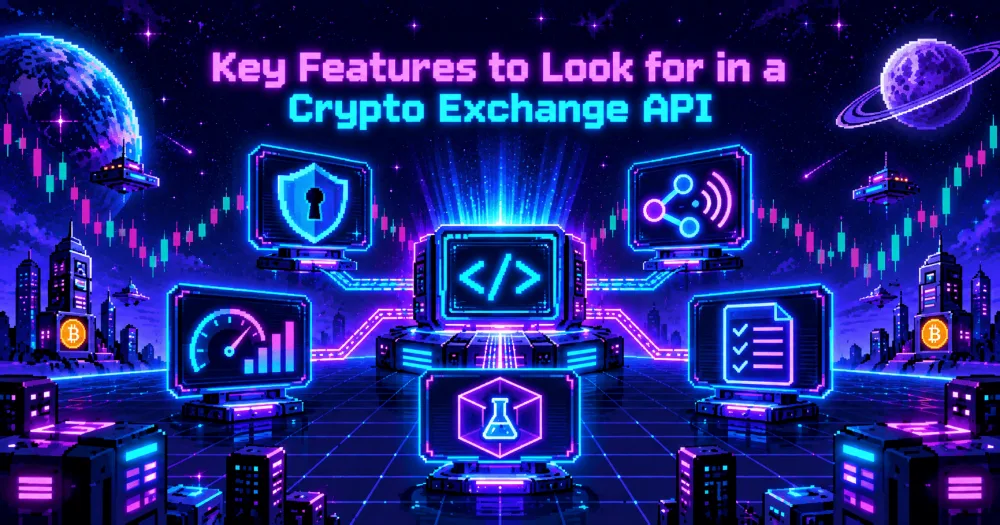
Key Features to Look for in a Crypto Exchange API
API Documentation and SDK Support
Documentation and software development kits (SDK) are essential for creating applications. Developers should select an API with comprehensive documentation and tools.
REST Endpoints and WebSocket Streams
Most applications that utilize a crypto exchange API require both REST and WebSocket features. REST is needed for requests, while WebSocket is needed for real-time data.
Authentication and API Permissions
Authentication is required to access private API endpoints. Developers should ensure that their applications have access to the necessary permissions and utilize best practices in terms of security.
Rate Limits and Request Quotas
Rate limits are restrictions in terms of the number of requests allowed per second, multi-second, minute, or hour. These limits vary depending on the type of request, user account, and API version.
Order Types and Trading Functionality
The selection of order types available through an API can impact the performance and profitability of a trading bot or a cryptocurrency trading platform.
Market Data Coverage and Data Latency
The quality and quantity of market data depend on the crypto exchange’s offerings and infrastructure.
API Reliability and Uptime
Applications powered by a crypto exchange API require stable connections and predictable performance.
Testnet and Sandbox Environments
Testing tools enable developers to ensure that their applications function properly without utilizing real funds. Developers should prioritize an API that provides a sandbox environment or testnet data.
How to Choose the Best Crypto Exchange API
Choose an API Based on Your Use Case
Crypto exchange API applications fall into several categories: trading bots, trading platforms, trackers, and analytical tools. The choice of an API depends on the application’s purpose.
Choose Between a Single-Exchange and Multi-Exchange API
Multi-exchange applications provide greater variety and depth of tools, while single-exchange applications are simpler to develop and maintain.
Check API Limits Before Building Your Application
Developers should estimate the expected number of requests, WebSocket connections, symbols, and orders before selecting a crypto exchange API.
Compare API Security and Permissions
Permissions determine what actions an application can perform. Developers should minimize the risk of a breach by only utilizing the necessary permissions.
Evaluate Documentation and Developer Experience
A developer-friendly API provides ample documentation, examples, and tools. Documentation and examples are paramount in determining the quality of the API.
Related: Best Crypto Tokens Under $5 to Buy Before the Next Big Rally
Crypto Exchange API Use Cases
Crypto Trading Bots
Crypto trading bots are computer programs that execute cryptocurrency trades based on a set of instructions.
Algorithmic and Automated Trading
Algorithmic trading is a type of automated trading that utilizes mathematical expressions and indicators.
Portfolio Trackers
Portfolio tracking involves monitoring balances, holdings, transactions, positions, valuation, and performance
Crypto Trading Platforms
A crypto trading platform is an application that enables users to execute cryptocurrency trades.
Market Data and Price Applications
Market data applications span a variety of use cases, ranging from price discovery to order book tracking.
Arbitrage and Multi-Exchange Trading
Arbitrage refers to profiting from price discrepancies between exchanges.
Crypto Analytics and Research Tools
Crypto analytics and research tools are utilized in a variety of applications, including arbitrage, market-making, and portfolio management.
How to Get Started With a Crypto Exchange API
Create an Exchange Account
Developers should select a crypto exchange API and create an account on the exchange’s website.
Generate a Crypto API Key
Next, the developer should generate an API key, typically found in the account’s API section. An API key is a unique combination of letters and numbers that authenticates an application.
Configure API Permissions
An API key must be configured to ensure that the application has only the necessary permissions.
Connect to the REST API
The developer must connect their application to the exchange’s REST API, which typically involves utilizing a programming language library.
Connect to the WebSocket API
The developer must also connect their application to the WebSocket API in order to receive real-time information.
Test API Requests Before Going Live
Before utilizing a crypto exchange API in a production environment, it is essential to test it in a demo or sandbox environment.
Crypto Exchange API Security Best Practices
Never Share Your API Secret
API keys should be kept secure at all times, as an attacker who gains access to an API key and secret can impersonate an exchange user.
Use IP Whitelisting
Exchanges that offer IP whitelisting allow users to specify the IP addresses that have access to the API.
Restrict API Key Permissions
Limiting permissions reduces the damage an attacker can do if they gain access to an API key.
Disable Withdrawal Permissions
Permissions that are not utilized by an application should be disabled. For the majority of applications, withdrawal access should be disabled.
Rotate and Monitor API Keys
Best practices recommend the utilization of application-specific keys and regular key rotation.
Handle API Errors and Rate Limits Safely
Errors and rate limiting should be handled gracefully by an application.
FAQ
What Is the Best Crypto Exchange API in 2026?
Binance is the best crypto exchange API in 2026 due to its wide coverage and robust developer tools.
What Is the Best Crypto API for Trading Bots?
Bybit is the best crypto API for trading bots. It has testnet data available, while providing access to multiple products via one API.
Which Crypto Exchange Has the Best API?
While Binance has the best overall API covering most common use cases, other exchanges provide superior tools in specific categories.
Are Crypto Exchange APIs Free?
Most crypto exchanges do not charge a fee for API use specifically. However, standard fees apply to each trade executed via API.
Do Crypto Exchanges Have APIs?
The majority of crypto exchanges provide APIs for both public data and private account operations.
What Is the Difference Between REST and WebSocket Crypto APIs?
REST and WebSocket are two protocols that power most crypto exchange APIs. REST is request/response, while WebSocket creates a permanent link between a client and a server.
Can I Use a Crypto Exchange API Without Trading?
Yes, most crypto exchange APIs have public endpoints that do not require authentication. These endpoints provide price data, candles, order books, and other information.
Are Crypto Exchange APIs Safe?
Crypto exchange APIs are safe if you follow best security practices: limit permissions, use IP whitelisting, and keep your API keys private.
Final Verdict: Which Crypto Exchange API Should You Choose?
For most developers, Binance is the best crypto exchange API 2026 due to its strong functionality, comprehensive documentation, and robust tools. However, other exchange APIs may be preferable for specific locations and use cases.