Crypto exchange risks are back in focus in 2026 as traders ask where their assets are held, who controls them, and whether major platforms can survive another funding shock.
The question is not only whether there could be a next FTX. The deeper issue is whether the flaws behind past failures have truly been fixed.
| Risk Type | What It Means | Why It Matters |
|---|---|---|
| Security risk | Hacks, wallet breaches, compromised controls | Funds can vanish even if the platform is solvent |
| Solvency risk | Assets fall short of obligations | Deposits may become unrecoverable |
| Liquidity risk | Assets exist but cannot move quickly | Panic can outrun systems |
| Regulatory risk | Licenses, enforcement, custody rules | Access may shrink under scrutiny |
| Contagion risk | Links to lenders, market makers, OTC desks | One collapse can pull others down |
Contents
- Why Exchange Risk Is Back in Focus in 2026
- What Triggered the New Wave of Exchange Panic
- Warning Signs Traders Are Watching Closely
- Are Centralized Exchanges Hiding Bigger Problems?
- Binance, Coinbase, Bybit, OKX — Which Exchanges Look Safest?
- Why Traders Are Moving Funds Off Exchanges
- Could a Major Exchange Collapse Trigger Another Crypto Crash?
- How Smart Traders Are Protecting Their Funds in 2026
- Is Crypto Entering a New Era of Trust Crisis?
- FAQ
Why Exchange Risk Is Back in Focus in 2026
Unease has returned to platforms handling digital currency trades. Traders are questioning asset locations, reserve verification, and whether exchange solvency can survive large crypto withdrawals. Crypto exchange risks feel closer now because memories of FTX remain fresh and confidence can disappear fast.
The Shadow of the FTX Collapse Still Haunts Crypto Markets
Size alone offers no shield. FTX showed that volume, celebrity names, and public trust mean little when obligations hide beneath the surface. Customer money mixed without warning, controls failed, and few noticed the cracks before collapse came. Today, crypto exchange risks have shifted from visible market moves to hidden structures.
Read more: Best Crypto Exchanges 2026: Top 5 Platforms for Easy, Safe & Profitable Trading
Why Traders Are Suddenly Talking About “Counterparty Risk” Again
Crypto counterparty risk means the risk that a platform holding user funds cannot return them when asked. In 2026, trust depends less on claims and more on verifiable reserves, visible liabilities, and real liquidity. Fears now emerge not only from volatility, but from opacity in asset backing.
The Difference Between Market Volatility and Exchange Insolvency
Market volatility reduces value. Crypto exchange insolvency blocks access. A 20% Bitcoin drop causes pain, but being unable to reach your wallet is worse. That gap reveals how serious centralized exchange risks become when platforms control user assets.
How Fear Spreads Across Crypto During Liquidity Crises
A small ripple of doubt can ignite a crypto liquidity crisis. Outflows grow, screenshots spread, platform tokens fall, and trust fades. Since crypto markets never close, crypto market panic can move constantly through networks.
Suggested image/scheme:
Rumor → withdrawals → reserve strain → forced selling → price decline → more rumors → crypto bank run.
What Triggered the New Wave of Exchange Panic
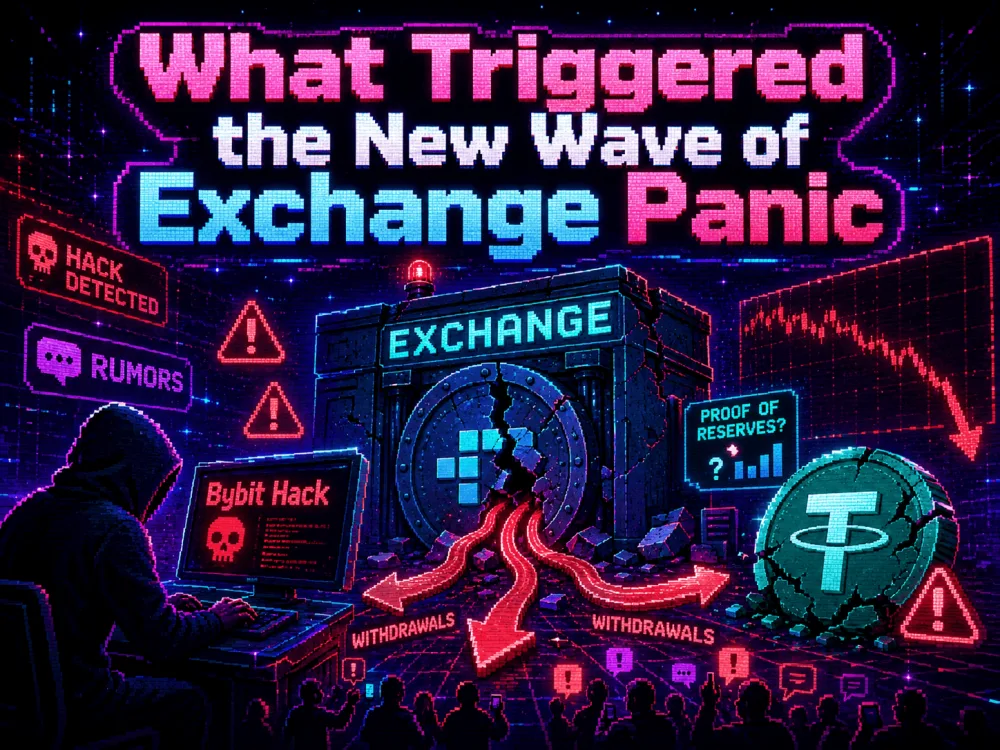
The latest wave of fear comes from hacks, sudden outflows, doubts around reserve backing, stablecoin stress, and the memory of FTX. Crypto exchange risks become more visible whenever major platforms face breaches or heavy withdrawal pressure.
The Bybit Hack and the Return of Security Concerns
The Bybit hack revived security concerns after digital asset losses approached $1.5 billion in Ethereum. Although it was not exactly a crypto exchange hack 2026 event, its impact continues to shape discussions around platform exposure into 2026.
Why Massive Withdrawals Are Raising Red Flags
Large crypto withdrawals do not automatically signal danger. Sometimes they are standard movements between storage systems. But when outflows coincide with crypto exchange rumors, slowed confirmations, falling exchange tokens, or unclear executive statements, traders start watching closely.
Rumors, Social Media, and the Speed of Crypto Bank Runs
Crypto exchange rumors travel fast through X, Telegram, Discord, Reddit, and on-chain dashboards. When platforms hesitate to clarify, reaction begins without them. In a crypto bank run, silence becomes part of the story.
Proof-of-Reserves Is No Longer Enough for Many Traders
Proof of reserves crypto reporting can display wallet balances, but liability clarity often remains absent. Reports may exclude hidden obligations, off-record risks, asset quality, and ownership rights. Traders now expect reserves, liabilities, independent verification, custody separation, and regular updates.
Read more: Best Crypto Exchange Platforms in the US 2026 — Picks for Fees, Liquidity, and App Access
Stablecoin Liquidity Stress and Exchange Exposure
Exchange functionality often depends on liquid stablecoins. If a platform relies too heavily on one stablecoin, one issuer, or one banking connection, stress can move from payment rails directly into trading systems.
Warning Signs Traders Are Watching Closely
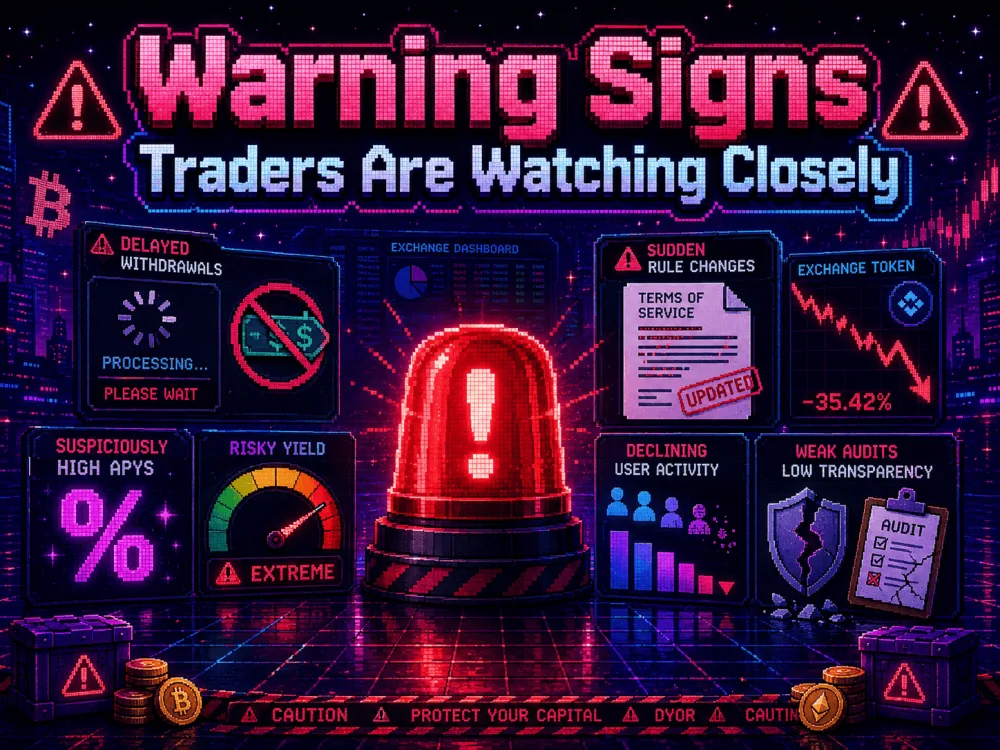
| Warning Sign | Possible Meaning |
|---|---|
| Slow withdrawals | Liquidity pressure |
| Sudden rule changes | Internal strain |
| Extremely high APYs | Hidden exposure |
| Falling exchange token | Weakening trust |
| Lower trading volume | User exit |
| Weak reserve audits | Poor transparency |
Delayed Withdrawals and Liquidity Bottlenecks
Delayed withdrawals often signal trouble. A brief system glitch happens, but repeated holdups across several assets can point to deeper cash flow strain.
Related: Crypto Scam Alert 2026: 3 Projects Already Red-Flagged by Experts
Sudden Changes in Terms of Service or Withdrawal Limits
When platforms revise terms without warning, timing matters. During financial stress, altered withdrawal limits, new verification steps, or changed redemption procedures may reflect internal pressure rather than routine policy updates.
Unusually High Yield Products and “Too Good to Be True” APYs
High returns can come from lending, leverage, reused collateral, or reward structures users do not fully see. When APYs appear detached from market fundamentals, risk is probably hiding beneath the surface.
Falling Exchange Token Prices as a Risk Indicator
Exchange tokens often reflect market trust. If a platform relies on its native coin for backing, liquidity, incentives, or operations, falling prices impose more stress on an already strained system.
Declining Trading Volume and User Activity
Drops in activity may reflect fading user interest, liquidity provider retreat, or reduced confidence. This trend does not prove a crypto exchange collapse, but prudent traders include it in their risk checks.
Lack of Transparent Audits and Reserve Reporting
Crypto exchange regulation is pushing platforms toward better reporting, but consistency remains uneven. Traders increasingly prefer regular audits, visible liabilities, open reserve structures, and wallet-level proof.
Are Centralized Exchanges Hiding Bigger Problems?
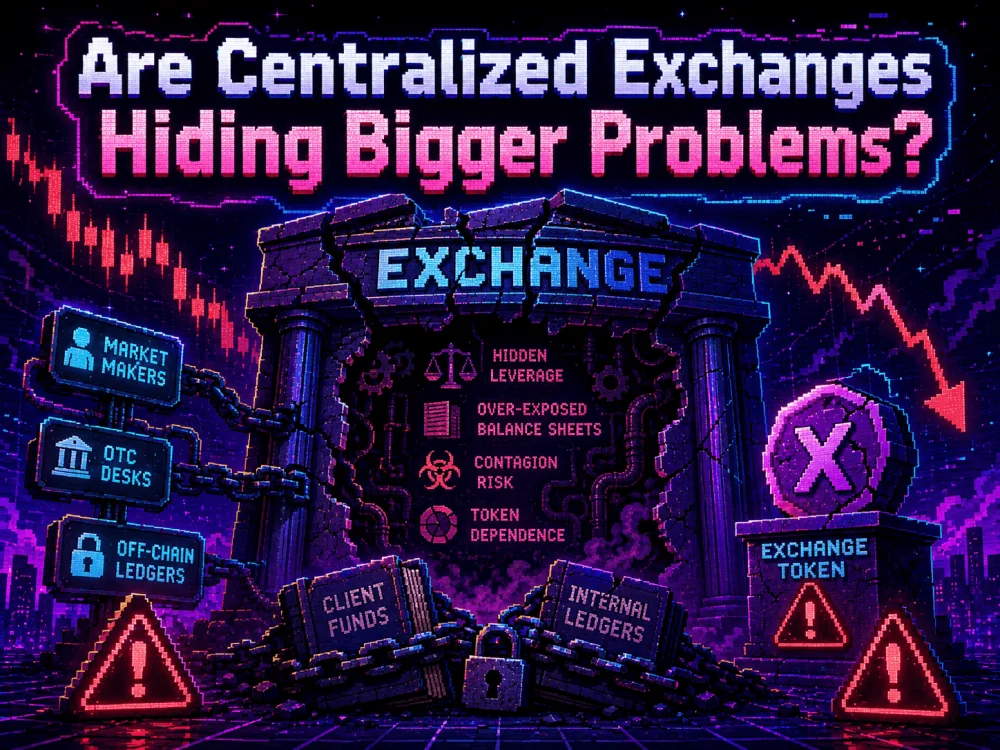
Centralized exchange risks come from what users cannot see. Interface balances do not reveal full financial records, lending commitments, market-maker exposure, third-party dependencies, or internal safeguards.
Related: Top Crypto Trends and Narratives That Could Explode in H2 2026
The Opaque Nature of Exchange Balance Sheets
Most trading platforms are privately owned. Some disclose digital holdings, but borrowing activity, pledged collateral, court issues, and binding obligations often remain hidden. These gaps keep crypto exchange risks alive.
Hidden Leverage and Off-Book Liabilities
Hidden leverage may appear through credit instruments, affiliated entities, private trading desks, structured yield products, or funding support systems. These areas are difficult for ordinary users to evaluate.
How Market Makers and OTC Desks Create Contagion Risk
Market makers and OTC desks supply liquidity, but they also connect platforms. If one key player breaks, pressure can spread to exchanges, lenders, funds, and stablecoin markets.
Why Some Exchanges Depend on Their Own Tokens to Survive
Exchange tokens can support fee discounts, incentives, and network activity. Trouble begins when such tokens become collateral, reserve-like assets, or essential pieces of daily operations.
Could Another Liquidity Spiral Hit the Industry?
Yes. A liquidity spiral begins when whispers spread, users pull funds, holdings are sold to meet redemptions, values fall, collateral weakens, and further exits begin. This is how doubt can turn into crypto exchange insolvency:
Withdrawals rise → forced selling begins → prices fall → collateral weakens → more withdrawals → liquidity spiral.
Binance, Coinbase, Bybit, OKX — Which Exchanges Look Safest?
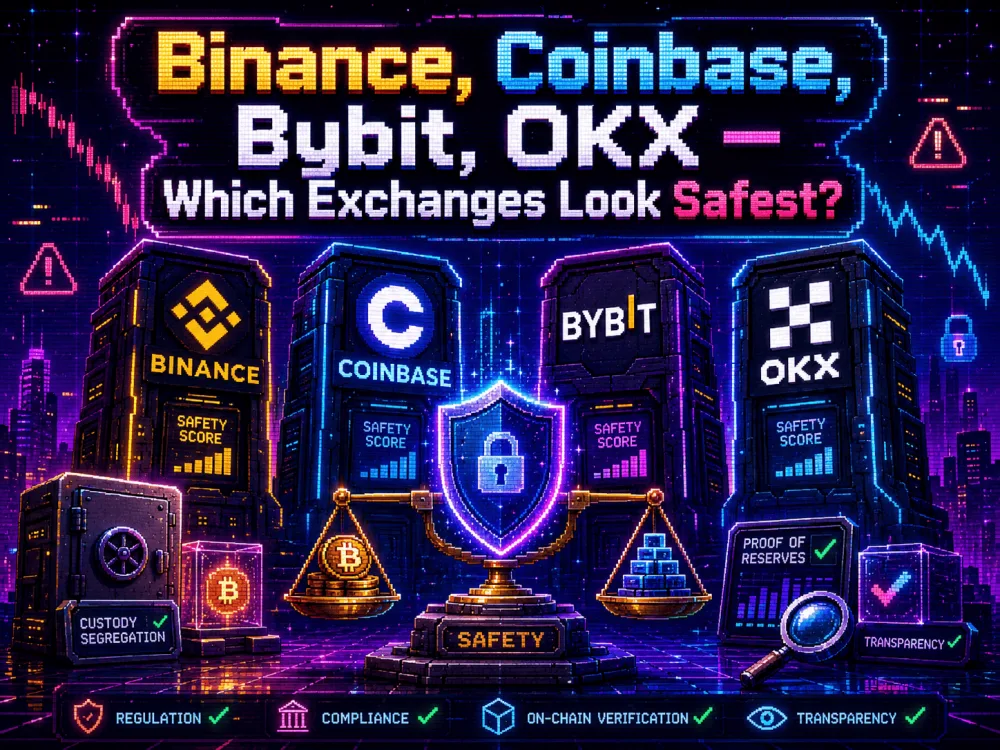
The safest crypto exchanges 2026 are not always the largest. Safety depends on public company status, reserve visibility, custody structure, liquidity depth, and proven withdrawal reliability during stress.
| Exchange | Strength Traders Watch | Main Risk Question |
|---|---|---|
| Coinbase | Public company, U.S. compliance, custody infrastructure | Higher fees and policy pressure |
| Binance | Deep liquidity, global reach, reserve disclosures | Regulatory complexity |
| Bybit | Major derivatives venue, recovery focus after the Bybit hack | Security perception |
| OKX | Strong liquidity, Web3 tools, reserve reporting | Transparency depth |
Why Regulation Matters More Than Ever in 2026
Crypto exchange regulation matters because it mandates clearer custody terms, tighter controls, fuller reporting, and stronger compliance. Risk remains, but supervision makes misconduct costlier and harder to sustain.
MiCA, U.S. Oversight, and the New Compliance Race
MiCA in Europe and stricter U.S. oversight are pushing exchanges toward licensing, secure asset handling, and better user safeguards. Compliance now helps separate stronger firms from weaker ones.
The Importance of Custody Segregation and Reserve Transparency
If things go wrong, client property must sit apart from firm resources. Legal separation matters more than interface design. When a business collapses, where funds are held becomes decisive.
Which Platforms Publish Real-Time Proof-of-Reserves?
Major platforms such as Binance and OKX publish proof-of-reserves information. Still, traders should check whether reports show liabilities, how often reviews occur, how visible wallets are, and which assets are covered.
Are Licensed Exchanges Actually Safer?
Usually, but not automatically. Licensed exchanges can still face hacks, low liquidity, or poor management. Approval raises standards, but it cannot remove crypto exchange risks entirely.
Why Traders Are Moving Funds Off Exchanges
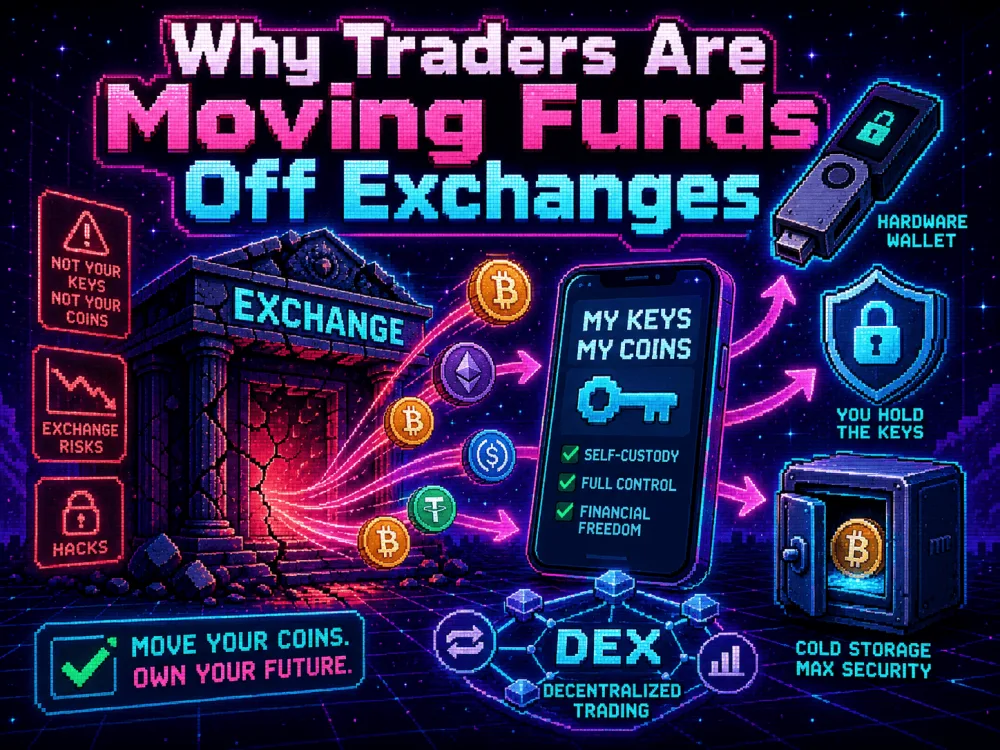
Ownership differs from accessible funds. That is why more traders are reducing exchange exposure and returning to personal control. Self custody crypto practices gain favor every time centralized platforms look fragile.
The Rise of Self-Custody After FTX
After FTX, many traders saw exchanges differently. Holding money there looked less like ownership and more like a promise. True access starts when private keys stay with the user.
Hardware Wallet Sales Are Surging Again
When confidence in centralized systems drops, hardware wallet use tends to rise. Less reliance on exchanges reduces exposure to service breakdowns and possible crypto exchange collapse scenarios.
“Not Your Keys, Not Your Coins” Is Trending Once More
The phrase “not your keys not your coins” remains blunt but accurate. If keys are outside the user’s possession, control is outside the user’s hands. Authority over funds follows key management.
The Shift Toward Decentralized Exchanges (DEXs)
Decentralized exchanges let users trade while keeping custody of funds. Yet new risks appear, including code flaws, bridge vulnerabilities, MEV, and fragmented liquidity pools.
Can DeFi Really Replace Centralized Exchanges?
Not fully. DeFi can handle some spot trades and yield activity, but centralized platforms still dominate fiat onramps, customer support, derivatives markets, and large-scale execution.
Could a Major Exchange Collapse Trigger Another Crypto Crash?

A major crypto exchange collapse could trigger renewed declines because exchanges are liquidity centers. If one fails, confidence, asset prices, and trading volume can weaken together.
What Happened to Bitcoin and Altcoins After FTX
After FTX collapsed, Bitcoin and altcoins dropped sharply as investors retreated from speculative assets. The larger lesson was that one institution’s failure can erode trust across the whole market.
How Exchange Failures Impact Liquidity Across the Market
Failing exchanges trigger market maker retreat. Bid-ask spreads widen, withdrawals climb elsewhere, and traders sell holdings to reduce risk. Just when demand for liquidity peaks, liquidity disappears.
Why Bitcoin Dominance Often Rises During Exchange Fear
Bitcoin dominance often rises during exchange fear because traders move toward larger, more liquid assets. In panic, safety and access matter more than speculative upside.
Which Altcoins Could Be Most Vulnerable?
The most exposed assets include low-volume altcoins, exchange tokens, coins favored by leveraged traders, and tokens dependent on a single platform for market flow.
Would Institutions Exit Crypto if Another Exchange Failed?
Some institutions may reduce exposure, but a full exit is unlikely. More capital would probably move toward regulated custody, ETFs, audited platforms, and strategies using less borrowed money.
How Smart Traders Are Protecting Their Funds in 2026

Experienced traders now treat crypto exchange risks as operational risks. Failure is considered possible regardless of platform reputation, so safeguards are built before trouble begins.
| Protection Step | Practical Action |
|---|---|
| Limit exchange balances | Keep only trading funds online |
| Use cold storage | Move long-term assets offline |
| Split venues | Avoid one-platform dependency |
| Test withdrawals | Confirm exit routes early |
| Watch on-chain flows | Track exchange wallet movements |
| Avoid high leverage | Reduce forced liquidation risk |
Diversifying Assets Across Multiple Exchanges
When holdings are split among several exchanges, a shutdown at one platform causes less damage. Price exposure remains, but access does not depend on one venue.
Using Cold Wallets for Long-Term Holdings
Long-term assets are safer in cold storage than on exchanges. Trading platforms help with transactions, but they should not be treated as vaults.
Monitoring On-Chain Wallet Activity of Exchanges
On-chain monitoring can reveal major transfers, wallet reshuffling, unusual withdrawals, or stablecoin balance changes before official announcements. Imperfect? Yes. Still useful.
Why Traders Are Avoiding Excessive Leverage
Leverage exposes traders to sudden account collapse during stress. Spreads widen, borrowing conditions shift, and forced selling can deepen losses.
The Importance of Testing Withdrawals Regularly
Small test withdrawals can reveal account restrictions, network delays, address problems, or clunky platform behavior before emergencies strike. Unexciting, but practical.
Is Crypto Entering a New Era of Trust Crisis?

Crypto has faced distrust before, but this moment feels more mature. Traders increasingly understand that exchange failures were not isolated accidents. Crypto exchange risks are built into systems that hold assets for users.
Why Confidence Is the Most Important Asset in Crypto
When trust holds, deposits stay, liquidity moves, traders remain active, and stablecoin flows continue. If confidence breaks, even a solvent platform can face sudden withdrawal pressure.
Can Regulation Prevent Another FTX-Level Disaster?
Regulation can reduce risk through audits, custody separation, governance rules, and transparency demands. It cannot fully prevent hacks, fraud, bad management, or funding gaps.
Will Decentralization Become the Dominant Narrative Again?
Yes, especially when centralized systems appear unstable. The more durable model may be mixed: regulated exchanges for fiat access, self-custody for long-term holdings, and DeFi for direct wallet-based transactions.
What Exchange Risk Means for the Future of Bitcoin and Crypto
Crypto exchange risks will continue shaping market behavior in 2026. Platforms that prove reserves, safeguards, transparency, and regulatory alignment before a crisis will gain trust. Traders who treat custody as foundational rather than secondary will be better positioned.
FAQ
What are crypto exchange risks?
Crypto exchange risks are hazards tied to holding money on centralized digital asset platforms, including hacks, insolvency, delayed withdrawals, weak custody, hidden borrowing, poor reporting, and crypto bank run scenarios.
Is Binance safe in 2026?
The question “is Binance safe” has no simple answer. Binance has deep liquidity and reserve disclosures, but safety also depends on regulation, liabilities, withdrawal history, jurisdiction, and how much a user keeps on the platform.
What is proof of reserves crypto reporting?
Proof of reserves crypto reporting shows assets an exchange claims to hold. Stronger reporting also includes liabilities, independent verification, custody details, and clear visibility into storage addresses.
Is another FTX-like collapse possible?
Yes. Another next FTX scenario could still happen if weak oversight, hidden debts, flawed custody, high leverage, and fading trust combine. Progress exists in parts of the industry, but vulnerability remains.
How can traders reduce crypto exchange risks?
Traders can reduce exposure by using self custody crypto wallets, keeping only active balances on exchanges, testing withdrawals, avoiding excessive leverage, monitoring exchange solvency signals, and spreading funds across several platforms.