The XRP▲$1.13 SEC case was finally resolved when Ripple and the SEC dropped their remaining appeals in 2025, closing one of the most meaningful legal cases in crypto history. Even before the final ruling, the court already decided that XRP sales on public exchanges do not constitute a sale of securities. The final decision removed the last barrier to institutional adoption.
Contents
- Why the SEC Shift Changed XRP Ecosystem in 2026
- What Makes a Strong XRP Ecosystem Token in 2026
- Flare — The Leading DeFi Layer for XRP
- RLUSD — Ripple’s Stablecoin Powering XRPL Liquidity
- Xahau — Smart Contracts and Hooks on XRPL
- Sologenic / TX — Real-World Asset Tokenization Bet
- Coreum — Enterprise Smart Contract Infrastructure
- XPMarket — The Growing XRPL Trading and AMM Ecosystem
- Emerging XRP Ecosystem Narratives Investors Are Watching
- Risks to Consider Before Investing in XRP Ecosystem Tokens
- Which XRP Ecosystem Tokens Could Benefit Most After the SEC Shift?
- FAQ
Why the SEC Shift Changed XRP Ecosystem in 2026
What Happened Between the SEC and Ripple
The Ripple SEC settlement helped shift attention toward payments, tokenization, and regulated finance instead of ongoing legal uncertainty.
Why Regulatory Clarity Boosted XRPL Adoption
Developers and enterprises were reassured by the regulatory clarity plus began building on XRPL, engaging in tokenization, stablecoins, and liquidity infrastructure, while XRP investment products and futures markets drew institutional interest after years of uncertainty.
It made projects in XRP ecosystem building for real utility more visible, and helped to build an understanding of XRPL as an infrastructure for payments and real-world use cases.
How Institutions Are Entering XRP Ecosystem
With the regulatory picture improving, Ripple also began to focus on enterprise solutions for custody, stablecoin infrastructure, and payment services for regulated financial institutions.
Simultaneously, ETF-related activity and the expanding derivatives markets started to pivot the 2026 narrative of XRP ecosystem away from regulatory warfare towards liquidity, cross-border settlement, and tokenized finance.
The Rise of Compliant Crypto Infrastructure on XRPL
The most visible trend after the settlement was more compliance infrastructure across XRPL, and Ripple continued to build out enterprise payments and stablecoin products for regulated financial institutions and global settlement flows.
This trend, along with the regulatory environment, has influenced interest in the best XRPl tokens related to tokenization, institutional DeFi, and on-chain liquidity. Unlike in previous crypto cycles dominated by speculation, many projects on XRPL are focusing on regulated finance and the market for real-world assets in 2026.
What Makes a Strong XRP Ecosystem Token in 2026
Utility Beyond Speculation
The most promising XRP ecosystem tokens in 2026 appear to be those with actual utility cases, with investors showing interest in the projects with payment, liquidity routing, tokenization, token utilities, and institutional activity infrastructure on XRPL network.
That began to change as regulatory pressure around Ripple eased, and other projects with solid use cases, like DeFi liquidity, stablecoin settlement, and enterprise services, began to outperform purely narrative-driven assets in the greater XRP ecosystem crypto sector.
Integration With XRP Ledger and Ripple Infrastructure
As such, XRPL-based tokens with strong integration into the wider XRPL ecosystem, for example, through Ripple services and XRPL AMMs, or through interoperability layers, are generally considered to have a stronger chance of adoption.
These successes further attracted the market towards projects that increased the functionality of XRPL while maintaining compliance and speed, with a focus on XRP Ledger projects related to payments, institutional finance, and scalable settlement infrastructure.
Real-World Asset (RWA) Tokenization Potential
Tokenization has emerged as one of the most important growth narratives across the wider XRPL ecosystem, with Ripple and XRPL developers positioning the network for tokenized stocks, tokenized funds, tokenized treasuries, and other regulated financial products for institutional blockchain settlement.
As a consequence, the focus on complying with regulatory demands to issue these tokens is the major driver of the mindshare for XRPl RWA tokens and platforms in this instance, as compared to prior crypto cycles, where speculative markets were built first, and the related infrastructure took real financial assets and institutional capital for granted.
DeFi, Stablecoin, and Cross-Chain Functionality
Since the launch of AMMs in XRPL and the liquidity pools for RLUSD▲$0.9999, DeFi on XRPL has grown considerably, and lending, liquidity providing, and cross-chain structure of existing and new ecosystem projects became the focus of XRPFi.
Read Also: Ripple Unveils Plan to Protect XRP Ledger From Quantum Computers
Cross-chain infrastructure, looking beyond payments, is also emerging as networks such as Flare and Xahau expand the smart contract and interoperability capabilities that had previously been missing from XRPL, growing the number of XRP DeFi tokens in existence.
Community Growth and Ecosystem Liquidity
Continued community participation was central to liquidity additions across XRP ecosystem, with XRPL AMMs, developer grants, and ecosystem funding expanded throughout 2025 and 2026 to improve trading and on-chain activity.
As institutional products are introduced, the depth of liquidity will be very important, and strong community and exchange support, along with sustainable liquidity pools, are seen as the most likely candidates among the best Ripple ecosystem coins to survive.
Flare — The Leading DeFi Layer for XRP
How Flare Enables XRPFi and Smart Contracts
Since its launch, Flare has become one of the largest infrastructure layers in XRP ecosystem, providing XRP holders with access to smart contract functionality without changing XRPL. XRP can be bridged to Flare as FXRP and used in lending, liquidity, and trading protocols within the Flare Network.
The model inspired the creation of XRPFi, a sub-category of DeFi services aimed at XRP holders. Flare does not propose to compete with XRPL but leverages it as an execution layer, thereby extending the utility of XRP to programmable finance and building a DeFi ecosystem.
FXRP, Staking, and Passive Yield Opportunities
Flare XRP enables holders to use DeFi applications like lending markets, AMMs, and yield strategies while remaining on XRPL settlement infrastructure. This has been helped by integrations with platforms such as Xaman and other XRP-native applications to provide easy access to Flare’s ecosystem.
In addition, the network uses staking and liquidity rewards for participating in the FLR▲$0.00696988 and FXRP ecosystems, and therefore, Flare XRP infrastructure is increasingly being used by those who want passive rewards without investing their XRP.
Why Flare Benefits From XRP Adoption Growth
Flare’s growth parallels that of XRP, with institutional XRPL adoption increasing following settlement of the Ripple-SEC litigation, which in turn increases the demand for smart contracts, inter-chain liquidity, and yield.
This could support projects that do not use XRP simply for speculation, but instead look to provide liquidity. In this case, Flare would become relevant to XRP ecosystem by supporting XRPL growth and providing interoperable decentralized finance (DeFi) protocols.
FLR Price Catalysts After the SEC Resolution
XRPFi activity across trading, lending, and liquidity applications has been an important catalyst for FLR. In late 2025 and 2026, Flare reported continued growth in FXRP minting, DEX trading volume, and institutional interest.
At the same time, the post-settlement conditions have also unleashed an acceleration in sentiment towards the entire XRP ecosystem tokens market. If XRP adoption continues growing through payments, ETFs, and tokenization, Flare could be one of the winners on XRPL infrastructure.
RLUSD — Ripple’s Stablecoin Powering XRPL Liquidity
What RLUSD Is and How It Works
The RLUSD is a dollar-pegged stablecoin minted on XRPL and Ethereum, used for payments, settlement, and on-chain liquidity, and backed by cash equivalents and short-term Treasuries. Ripple has marketed the stablecoin as regulated infrastructure for enterprise finance.
The launch of RLUSD added a native settlement layer with a stable value to the Ripple payment network, which built on the liquidity tools of XRPL protocol to provide liquidity for tokenization and cross-border payments.
Why RLUSD Matters for Institutional Adoption
The stablecoin usage is becoming critical for the adoption of blockchain technology by institutions, especially for payments and treasury settlement. Ripple launched RLUSD for institutions and enterprise liquidity flows.
The narrative around the Ripple stablecoin continued until 2026, with regulations encouraging institutions to pilot blockchain-based settlement systems with dollar-pegged digital assets in regulated environments.
RLUSD vs XRP — Complementary Roles Inside the Ecosystem
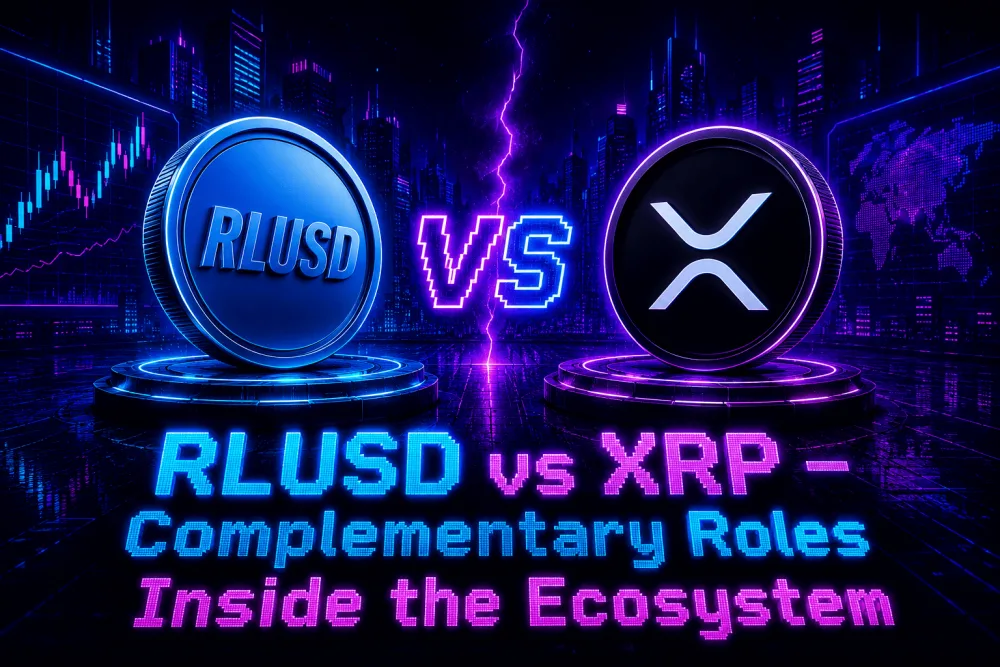
The two assets fulfill different functions: XRP operates as a bridge asset for liquidity and settlement, while RLUSD serves as the main price-stable asset for payments, treasury management, and decentralized finance liquidity in the Ripple ecosystem.
Instead of competing with XRP directly, RLUSD could improve liquidity across other exchanges, AMMs, and institutional payment corridors in XRP ecosystem.
Cross-Chain Expansion and Enterprise Payment Use Cases
Ripple has sought to expand RLUSD use through integrations with Ethereum and cross-chain liquidity for enterprise finance and the development of stablecoins for remittance, settlement, and tokenized asset markets.
Given the rise of tokenization, RLUSD has the potential to become a key liquidity layer for many XRP Ledger projects in payments and real asset settlement.
Xahau — Smart Contracts and Hooks on XRPL
What Makes Xahau Different From the Main XRP Ledger
Xahau is an XRPL-based network with the goal of making XRP Ledger programmable with Hooks, a lightweight smart contract system built directly into accounts. While XRP Ledger focuses on building fast and cheap transactions for payment and settlement, Xahau is designed for automation and programmable money.
Read More: XRP Price Prediction April 2026: Expert Analysis & Market Forecast
The network uses its own native asset, the XAH, but is closely tied to the larger Xahau XRP ecosystem. It is also seen as a way to extend and add functionality to XRPL, without compromising on its conservatively designed Ledger.
Hooks Technology and Programmable Finance
Hooks are small pieces of logic that can be triggered before or after a transaction is executed on Xahau accounts. They can thus be used to implement automated compliance, payment conditions, treasury controls, or reward disbursement directly at the Ledger level.
It has drawn interest from programmers researching programmable finance applications for XRP ecosystem projects. Hooks are compact and fast, and they conform to XRPL-style transaction flows better than general-purpose smart contracts that are usually used on other blockchains.
Features on the Xahau roadmap include native AMMs, oracle infrastructure, a set of JavaScript Hooks, and enterprise settlement tools for compliance.
Why Developers Are Watching XAH in 2026
Developer interest in Xahau grew through 2025 and 2026 as XRP infrastructure expanded beyond payments and applications, focusing on DeFi automation, token incentivization, and institutional compliance checks began building and testing Hooks-based applications.
The greater XRPFi narrative has also drawn interest to Xahau, including by many developers who see Hooks as a way to add advanced functionality in XRP-based finance without the need for additional EVM sidechains.
Risks and Adoption Challenges for Xahau
Despite this growing interest, Xahau continues to be at risk of poor adoption; its userbase is dwarfed by that of existing smart contract ecosystems, and enterprise adoption of Hooks-based infrastructure remains tentative. Ethereum-compatible chains and Ripple’s own plans to build an EVM sidechain could also limit growth.
An additional challenge is liquidity fragmentation, which can be a concern for individuals seeking to invest in the best XRP ecosystem tokens built on the latest XRPL infrastructure. While Xahau has considerable backing from XRP developers, it is still uncertain whether real-world finance use cases will reach production level.
Sologenic / TX — Real-World Asset Tokenization Bet
From Sologenic and Coreum to TX
Starting with a tokenized securities infrastructure on XRPL, Sologenic’s ecosystem has expanded with the launch of Coreum and TX, featuring compliant tokenization and enterprise-grade blockchain infrastructure.
It shifted Sologenic closer to institutional tokenization trends, away from retail-oriented cryptocurrency speculation.
Tokenized Stocks, ETFs, and RWAs on XRPL
All along, TX’s thesis is that real-world financial assets are best served by tokenization, and it builds out infrastructure for tokenized stocks & ETFs, commodities, and other RWAs to travel across blockchain settlement rails.
Interest in XRPl tokenization was ignited by institutions looking to use blockchains for settlement, particularly given improved regulatory clarity in the US, the low cost of using XRPL, and its regulatory compliance.
Why RWA Narratives Favor XRP Ecosystem
Tokenizing real-world assets proved to be one of crypto’s strongest narratives heading into 2026, and XRP ecosystem was ideally placed to benefit, thanks to Ripple marketing XRPL as a network for regulated finance, payments, and capital formation.
That made XRPl RWA tokens backed by settlement infrastructure and compliant issuance systems more visible.
Institutional Tokenization Opportunities After Regulatory Clarity
After the Ripple-SEC case’s resolution, institutions began showing greater interest in XRPL-related networks for evaluating blockchain platforms that can integrate securities settlement with other tokenized finance applications, as these platforms deliver a lower legal risk for tokens.
Likewise, projects building with XRP ecosystem tokens may see additional adoption if banks continue to use blockchain-based asset issuance and settlement.
Coreum — Enterprise Smart Contract Infrastructure
How Coreum Expands XRPL Functionality
Coreum was created to support smart contracts and enterprise-grade infrastructure, which have historically been lacking in the main XRP Ledger. Built on Cosmos SDK architecture, it provides an alternative with support for advanced tokenization, WASM (WebAssembly) smart contracts, and asset management with compliance features.
This focus helped Coreum crypto stand out in the fields of institutional blockchain infrastructure and XRPL ecosystems, rather than speculation and investment in the retail marketplace.
Interoperability Between Coreum and XRP Ledger
Interoperability also forms a part of Coreum’s ethos, and the network maintains bridges with XRPL to ease liquidity provisioning, tokenization, and cross-chain transfers across ecosystems.
The tech stack allows developers to interface with smart contracts while enjoying the settlement XRPL speed, thus providing market participants with a practical extension of existing XRP Ledger projects targeting enterprise finance use cases.
DeFi and Tokenization Opportunities
Coreum’s tooling and interoperability are now focused more on tokenization and institutional DeFi applications, including the issuance of custom tokens, compliance tooling, on-chain liquidity tooling, and financial applications for regulated markets.
This environment would coincide with the broad narratives of XRPl tokenization in 2025 and 2026, as banks seek to leverage blockchain settlement and programmable assets with regulatory compliance and interoperability.
Long-Term Outlook for Enterprise Blockchain Adoption
Coreum’s long-term case depends on the continued acceleration of enterprise blockchain use across a variety of sectors post-Ripple-SEC resolution, where regulatory clarity might make it easier for institutions to experiment with tokenized assets and blockchain-based settlement networks.
It is competing against Ethereum, Solana, and private enterprise blockchains, but XRP ecosystem projects may benefit if regulated finance increasingly prioritizes interoperability, compliance, and low-cost settlement infrastructure.
XPMarket — The Growing XRPL Trading and AMM Ecosystem
What XPMarket Offers to XRPL Users
XPMarket has become one of the most popular trading and analytics tools of XRPL ecosystem, supplying features including token tracking, portfolio management, NFT viewing, AMM monitoring, and on-chain trading against XRP Ledger’s order books.
It is growing not only from activity on centralized exchanges but also from a growing demand for infrastructure that supports decentralized trading and exploration of XRP ecosystem projects.
AMMs, Token Discovery, and On-Chain Liquidity
The introduction of the XRPL AMM feature increased the volume of on-chain activity happening in XRPL ecosystem, and XPMarket served as one of the primary platforms for XRPL liquidity pools, token data analytics, and market discovery for XRPL-native assets.
Read More: Ripple Integrates XRP and RLUSD Into Corporate Treasury Systems for First Time
That infrastructure is becoming more important for smaller best XRPl tokens, which want liquidity and visibility without having to rely on centralized exchanges. When AMMs see greater adoption, on-chain liquidity might become more important for ecosystems.
Why XRPL Trading Activity Matters in 2026
Tokenization, stablecoins, and institutional liquidity were the major drivers of trading volume on XRPL. Furthermore, liquidity on RLUSD, tokenized assets, and XRPFi applications on XRPL grew throughout 2025 and 2026, which also helped to increase transaction activity on XRPL.
The increasingly decentralized trading infrastructure has been integrated into a wider narrative for XRP ecosystem in 2026, with a focus on blockchain finance utility.
Potential Upside Tied to Ecosystem Growth
XPMarket would also benefit if a resolution between Ripple and the SEC allows developers, liquidity providers, and tokenization projects to migrate to XRPL. Additional usage of AMMs and an increased demand for analytics infrastructure could also drive demand.
Furthermore, as they become more liquid, infrastructure platforms that ease on-chain liquidity for XRP DeFi tokens have the potential to become prominent in XRP ecosystem.
Emerging XRP Ecosystem Narratives Investors Are Watching
XRPFi and On-Chain Yield Generation
As of 2026, one of the fastest-growing narratives in the crypto space is XRPFi. This refers to investing in lending, liquidity provision, and yield generation for holders of XRP through decentralized protocols. The creation of platforms such as Flare and XRPL AMMs formed new narratives for staking, liquidity farming, and DEXing on XRP Ledgers.
More recently, as the market appears to be slowly shifting from passive holding of tokens to capital-efficient blockchain finance, attention has shifted to whether XRP liquidity can support large-scale DeFi.
Real-World Asset Tokenization on XRPL
Tokenization has remained one of the strongest institutional themes of XRPL infrastructure, with Ripple continuing its pursuit to make XRPL the preferred settlement layer for tokenized treasuries, securities, stablecoins, and enterprise financial assets.
The thrust for an RWA token on XRPL has also been supported by the recent regulatory clarity afforded to cryptocurrencies within the US, with analysts expecting XRP infrastructure to benefit from the prospective shift towards blockchain-based assets.
Stablecoin Expansion Across the Ecosystem
The liquidity for stablecoins in XRPL-enabled markets increased with the launch and RLUSD expansion, as Ripple envisioned the asset becoming a regulated, enterprise-ready infrastructure for payments, treasury settlement, and blockchain finance.
This development paralleled the expanding Ripple stablecoin narrative, with companies choosing regulated digital dollar platforms for transactions over these volatile crypto assets.
Institutional DeFi and Permissioned Finance
Institutions and businesses such as exchanges looking to use XRP Ledger have become another major area of focus within the XRP ecosystem. Several XRPL projects targeting these entities are less focused on retail use cases and more on compliance, identity, and permissioned finance in regulated markets.
This may allow parts of XRP ecosystem crypto sector to differentiate themselves from more speculative blockchain ecosystems, which largely compete for retail trade activity.
XRPL Sidechains and EVM Compatibility
By 2026, XRPL sidechains and EVM compatibility are of growing interest among developers, with projects supported by Ripple researching expanded smart contract functionality and interoperability with XRPL settlement tools on EVM infrastructure.
Sidechains, Flare, and programmable finance infrastructure may be central to the next generation of XRP ecosystem projects for decentralized finance, tokenization, and institutional blockchain applications.
Risks to Consider Before Investing in XRP Ecosystem Tokens
Regulatory Uncertainty Outside the US
Ripple’s legal battle with the SEC may be nearing a conclusion, but uncertainty remains. Stablecoins, tokenized assets, and decentralized finance infrastructure are regulated variously across Europe and Asia, raising challenges for projects with a worldwide reach.
That could affect parts of XRP ecosystem crypto market tied to cross-border payments and institutional blockchain finance-focused payments.
Competition From Ethereum and Solana Ecosystems
XRPL-based projects compete against much larger ecosystems: Ethereum for institutional tokenization and smart contracts, and Solana for liquidity and development in trading and payments.
For investors considering the best XRP ecosystem tokens, XRPL’s long-term success may depend on its capacity to maintain growth in terms of developer adoption and enterprise use cases in a highly competitive market.
Liquidity and Volatility Risks in Smaller XRPL Tokens
Some of the smaller assets within XRPL ecosystem have also been low liquidity and highly volatile, with some tokens being highly sensitive to speculative exchange and new trading pairs being listed on the exchanges.
This is especially pronounced on newer XRP DeFi tokens, which have relatively smaller markets relative to other blockchain ecosystems.
Dependency on Ripple Ecosystem Growth
In fact, much of the overall sentiment around XRPL’s adoption in markets still relates to the trajectory of Ripple’s overall success in payments, tokenizing value, its court case, and partnerships, especially in enterprise and financial services.
This leaves several XRP ecosystem projects reliant on Ripple sustaining demand in the long run beyond only the crypto-native ecosystem.
Which XRP Ecosystem Tokens Could Benefit Most After the SEC Shift?
| Project | Main Focus | Key Strength | Main Risk |
| Flare | DeFi / XRPFi | Smart contracts for XRP liquidity | Dependence on XRPFi growth |
| RLUSD | Stablecoin infrastructure | Institutional settlement utility | Regulatory oversight |
| Xahau | Hooks / programmability | Native XRPL automation | Early-stage adoption |
| Coreum | Enterprise infrastructure | Interoperability and tokenization | Strong competition |
| Sologenic / TX | RWA tokenization | Tokenized securities narrative | Regulatory complexity |
| XPMarket | XRPL trading infrastructure | AMMs and on-chain liquidity | Reliance on ecosystem activity |
Best Token for DeFi Exposure
Flare is one of the leading candidates for DeFi exposure within XRP ecosystem. The Flare Network’s scalability enables XRP holders access to lending, liquidity pools, staking, and smart contracts through FXRP and XRPFi.
As more decentralized yield-producing applications are built on top of XRP DeFi tokens, more liquidity could flow onto XRPL-based markets.
Best Token for RWA Tokenization
Sologenic, TX, and Coreum projects are still highly linked to the real-world asset narrative, and the infrastructure is centered around tokenized securities, enterprise assets issuance, and regulated blockchain settlement systems.
Read Also: Ripple Integrates AI to Strengthen XRP Ledger Security
This positioning may stimulate interest in XRPl RWA tokens as institutions explore a tokenized financial system and blockchain settlement infrastructure.
Best Infrastructure Play on XRPL
Coreum and Xahau are developing more infrastructure-type solutions within XRPL ecosystem by extending XRPL with interoperability and enterprise smart contract functionality, respectively. Xahau supports Hooks-based programmability and XRPL-like financial use cases.
As XRP ecosystem continues to support more than just payment apps, infrastructure providing tokenization, automation, and compliance may prove to be very important.
Best High-Risk/High-Reward XRP Ecosystem Token
XAH is considered a relatively high-risk investment among the new XRPL infrastructure. Although Hooks technology and programmable finance are still in their infancy, community members believe Xahau could become a key layer for high-level applications on XRP blockchain.
Because of this volatility, the best XRP ecosystem tokens from the smaller ecosystem assets can be sensitive to changes in liquidity and sentiment.
Long-Term Outlook for XRP Ecosystem Through 2027
Long-term, prices on XRPL may be driven by institutional adoption, stablecoins, and tokenization applications, rather than speculative exchange activities. Ripple’s continued presence in the payments, custody, and enterprise blockchain infrastructure markets may also help support the ecosystem moving forward.
Furthermore, if tokenized assets, the liquidity of RLUSD, and XRPFi infrastructure continue to evolve, the general XRP ecosystem 2026 narrative can stretch into 2027 via regulated finance and blockchain settlement.
FAQ
Is XRP the same as Ripple?
No. XRP is the native digital asset of XRP Ledger, while Ripple is the company developing payment and blockchain infrastructure based on XRPL-related technologies.
Why do institutions care about XRPL?
Many companies considered XRPL a cheap and fast way to settle payments, stablecoins, and tokenized assets. Regulatory clarity in the United States also made it more appealing for institutions.
What is RLUSD used for?
Originally envisioned for enterprise payments, funds management, and blockchain-based settlement, Ripple promoted RLUSD as a regulated stablecoin for institutional finance use cases.
Does XRPL have smart contracts?
Although not as programmable as Ethereum, efforts such as the Flare network, the Xahau network, and EVM sidechains are expanding smart contract capabilities around XRP Ledger.
What is the biggest risk for XRP ecosystem?
The ecosystem still faces strong rivalry from bigger blockchain networks and remains dependent on continued institutional adoption and enterprise growth.