Fidelity has played a significant role in bringing Bitcoin to the mainstream market. Even before spot crypto ETFs took off, the firm was researching blockchain technology, mining Bitcoin, and building institutional custody infrastructure.
This factor has made Fidelity one of the most influential market participants in crypto. It helped create an environment where banks, funds, advisers, and retirement accounts could invest in digital assets through conventional finance products.

Contents
- What Is Fidelity?
- When Did Fidelity Get Involved in Crypto?
- Fidelity Digital Assets Explained
- Fidelity's Bitcoin ETFs and Their Market Impact
- Why Fidelity Is So Important in Crypto
- Fidelity's Crypto Products and Services
- Fidelity's Role in Bitcoin Adoption
- Fidelity vs. BlackRock vs. Coinbase
- Risks and Criticism
- What's Next for Fidelity in Crypto?
- FAQ
What Is Fidelity?
A Brief History of Fidelity Investments
Fidelity Investments was founded in 1946 and has developed as one of the largest US-based financial institutions. The company offers brokerage services, retirement and mutual funds, wealth management, employer services, and institutional assets.
Read more: BlackRock vs Fidelity: Who Controls the Future of Bitcoin ETFs?
Fidelity’s Position in Traditional Finance
The company serves retail investors, employers, advisers, pension funds, and institutional investors. This wide customer base is one reason why Fidelity is important in crypto: the firm has a significant distribution capability for its crypto services.
Why Fidelity Entered the Crypto Market
Fidelity recognized the potential of blockchain networks and scarce digital assets as a large part of finance. The company focused on researching custody, settlement, mining, trading, and institutional investment rather than trying to predict the price of tokens.
When Did Fidelity Get Involved in Crypto?
The Launch of Fidelity Digital Assets
Fidelity announced the launch of Fidelity Digital Assets in 2018 and began providing institutional custody and trading services shortly after. The business was established to offer custody, settlement, and execution services to institutional investors.
Early Bitcoin Mining and Blockchain Research
Prior to launching Fidelity Digital Assets, the company engaged in extensive research on blockchain technology, experimented with Bitcoin mining, and developed internal wallet and custody infrastructure. This shows why Fidelity is important in crypto: it took a long-term view of the technology rather than speculating on short-term price changes.
Key Milestones in Fidelity’s Crypto Expansion
Some of the key developments that took place in Fidelity’s crypto space include custody, retail trading, spot Bitcoin and Ethereum ETFs, retirement products, and educational resources.
Related: Fidelity Names 6 Major Crypto Market Trends for 2026
Fidelity Digital Assets Explained
Institutional Bitcoin and Ethereum Custody
Fidelity Digital Assets offers institutional custody services for Bitcoin and other digital assets. Institutional custody refers to the management of private keys, controls, approvals, and reporting procedures. Institutional investors usually require higher levels of governance, documentation, and control rather than relying on a single employee’s seed phrase.
Crypto Trading and Execution Services
Fidelity crypto trading services allow institutional and retail investors to buy and sell crypto assets. Institutional investors can utilize custody, trading, and reporting services on a single platform.
Security Standards for Institutional Investors
Fidelity crypto custody infrastructure utilizes cold storage, limited access, internal controls, and segregation of duties to protect institutional investors from theft, fraud, and errors.
Fidelity’s Bitcoin ETFs and Their Market Impact
Spot Bitcoin ETF Overview
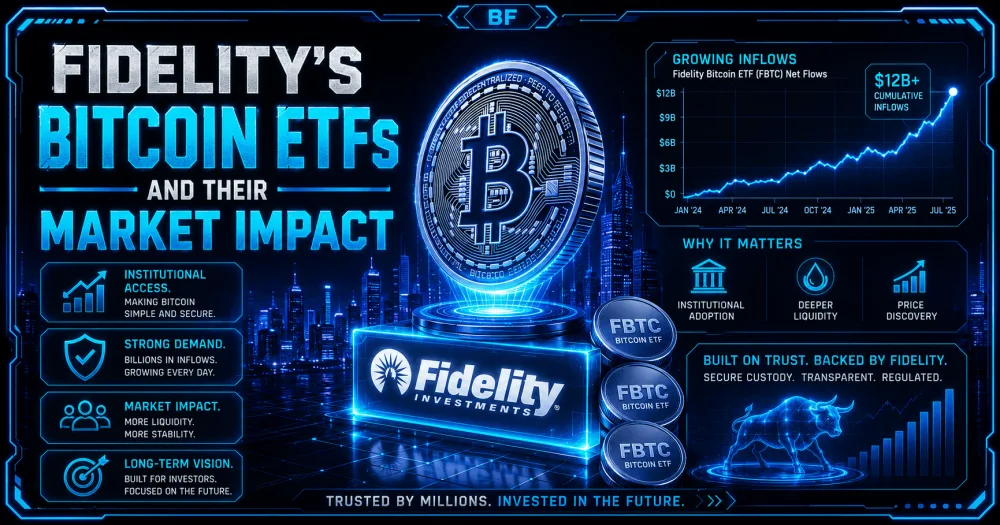
Fidelity Wise Origin Bitcoin Fund, known under the FBTC ticker, is a crypto fund that gives investors exposure to the price of Bitcoin. It is a regulated exchange-traded product that allows investors to purchase Bitcoin through conventional brokerage accounts. The Fidelity Bitcoin ETF helped the company become important in crypto by making it easier for investors to gain exposure to the top cryptocurrency without worrying about wallet security.
Spot Ethereum ETF Offering
Fidelity also launched a similar Ethereum ETF, which allows investors to gain exposure to Ethereum without having to purchase or store crypto assets.
Assets Under Management and Market Share
The Fidelity Bitcoin fund became one of the largest BTC spot ETFs in the US. Its popularity had an impact on the market in general, as other issuers competed to launch similar products. The competition resulted in lower fees, increased liquidity, and better accessibility to crypto products.
The inflows and outflows of assets from the Fidelity Bitcoin fund can impact the Bitcoin price. For example, institutional investors who want to purchase BTC would have to buy shares in the fund, which would, in turn, increase the demand for crypto assets. On the other hand, investors who want to sell Bitcoin can redeem their shares, increasing the supply of the cryptocurrency.
Why Fidelity Is So Important in Crypto
Bringing Institutional Capital to Bitcoin
One reason why Fidelity is important in crypto is that it enabled institutional investors to purchase Bitcoin. Pension funds, advisers, and asset managers needed a regulated way to buy, sell, and store crypto assets. Fidelity Bitcoin ETF allowed institutional investors to hold a portion of Bitcoin with confidence in a familiar custody environment. This contributed to the importance of Bitcoin by making it easier for large organizations to participate in the market.
Increasing Trust and Legitimacy for Digital Assets
Fidelity’s involvement in crypto boosted the legitimacy of digital assets. While the presence of the company did not ensure the success of Bitcoin or make every crypto project credible, it increased institutional investors’ confidence in the asset. This is one reason why Fidelity is important in crypto: it played a crucial role in making Bitcoin a legitimate asset class.
Competing With BlackRock, Grayscale, and Coinbase
Fidelity’s competition with other large financial companies is another reason why the company is important in crypto. BlackRock has an extensive distribution network, Grayscale pioneered crypto investment products, and Coinbase offers trading and institutional custody services. Fidelity competes with these companies by providing brokerage services, retirement accounts, custody infrastructure, ETFs, research, and direct trading services.
Expanding Access for Retail and Institutional Investors
Retail investors can utilize Fidelity’s crypto trading platform, purchase funds, and invest in crypto through retirement accounts. Institutional investors can benefit from Fidelity’s custody, execution, and reporting services.
Related: Is Michael Saylor Losing Faith in Bitcoin? Strategy Sells 3,588 BTC Worth $226M
Fidelity’s Crypto Products and Services
Bitcoin and Ethereum Investing
Fidelity offers both direct and indirect ways of investing in Bitcoin and Ethereum. The company allows eligible investors to purchase crypto assets directly or buy exchange-traded funds that track the price of digital assets.
Fidelity Crypto Trading Platform
The Fidelity crypto trading platform allows eligible investors to buy and sell crypto assets. The platform is accessible via the company’s website and mobile application. The most significant advantage of Fidelity crypto trading is convenience: clients can store their crypto assets alongside traditional investments in one account.
Retirement Accounts and Crypto Exposure
Fidelity’s Bitcoin and Ethereum funds (ETFs) can be held in various retirement accounts. The company also facilitates a direct crypto IRA for eligible clients.
Educational Resources for Investors
Fidelity provides educational resources on Bitcoin, Ethereum, crypto custody, volatility, and portfolio construction.
Fidelity’s Role in Bitcoin Adoption
How ETFs Accelerated Mainstream Adoption
The launch of spot ETFs made Bitcoin more accessible to mainstream investors. For example, the Fidelity Bitcoin ETF allowed clients to purchase the cryptocurrency through conventional brokerage accounts. This eliminated the need for investors to store their assets in crypto wallets.
Additionally, financial advisers could analyse Bitcoin exposure in the context of traditional portfolio management. These factors contribute to why Fidelity plays an important role in crypto: the company facilitated the adoption of Bitcoin by institutional investors and ordinary Americans.
The Effect on Bitcoin Liquidity and Market Structure
Bitcoin spot ETFs impacted the liquidity and market structure of the cryptocurrency. For instance, institutional investors purchased shares in the ETFs, which, in turn, increased the demand for Bitcoin. The inflows of institutional capital into the Fidelity Bitcoin fund impacted the price of the cryptocurrency. The same effect can be observed when large investors redeem their shares in the ETFs, increasing the supply of Bitcoin. Moreover, large market participants can influence the price of crypto assets.
Why Institutions Prefer Regulated Investment Vehicles
Institutional investors tend to prefer conventional investment products due to their familiarity and regulatory compliance. For example, a Bitcoin ETF can be more attractive to institutional investors compared to a direct custody account. This is another reason why Fidelity is important for crypto: the company provides institutional investors with regulated investment vehicles that ease the adoption of crypto.
Fidelity vs. BlackRock vs. Coinbase
ETF Offerings Compared
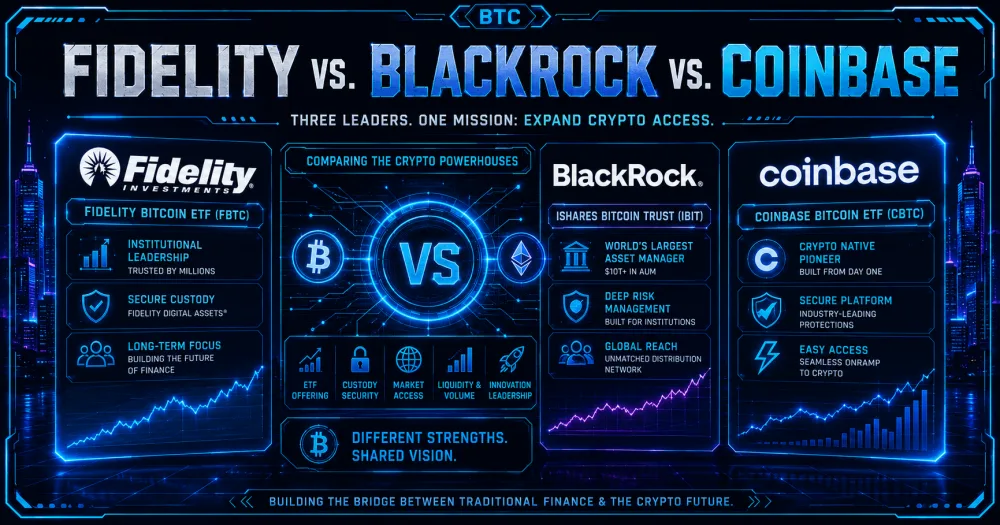
Fidelity and BlackRock offer spot Bitcoin ETFs, while Coinbase does not have an ETF product. However, Coinbase provides crypto trading services and institutional custody solutions.
Custody and Security Comparison
Fidelity utilizes its in-house custody infrastructure for its institutional clients, while BlackRock uses third-party custodians. Coinbase institutional custody services are available to funds and other institutional investors. When comparing crypto custodians, investors should take into consideration cold storage, legal jurisdiction, internal controls, and concentration risk.
Fees, Accessibility, and Investor Experience
While investment fees are an essential consideration when choosing a crypto custodian, investors should also analyse the liquidity of the asset, account accessibility, withdrawal options, range of products, and overall experience. Fidelity crypto services can be more attractive to brokerage clients, while Coinbase institutional custody can be more appealing to active crypto investors. BlackRock’s Bitcoin ETF has an edge in terms of liquidity and scale.
Risks and Criticism
Centralization Concerns
Large crypto custodians pose a risk to institutional investors due to their centralization. For example, Fidelity’s Bitcoin fund owns a significant amount of Bitcoin, which means that institutional investors who purchase shares in the fund are reliant on the custodian. Additionally, investors cannot move their assets to another custodian without the permission of Fidelity.
Regulatory Challenges
Regulatory compliance is one of the most significant risks associated with crypto investing. The regulatory landscape is continuously changing, which can impact custody infrastructure, trading rules, taxation, stablecoins, retirement accounts, and tokenized assets.
Market Risks for Crypto Investors
Fidelity’s involvement in crypto does not eliminate the risks associated with crypto investments. For example, Bitcoin and Ethereum prices can be extremely volatile, with sharp decreases in value, liquidity constraints, and changing market sentiment. Institutional investors who utilize Fidelity crypto products can experience similar risks when investing in the crypto spot ETFs. Additionally, investors should consider the expense ratio of the ETF and the fact that trading hours are limited compared to traditional stocks and bonds.
What’s Next for Fidelity in Crypto?
Tokenization and Real-World Assets
Tokenization of real-world assets has the potential to become one of the most significant developments in crypto. Fidelity has the opportunity to become one of the key market infrastructures in this space. The tokenization of funds, bonds, and other financial instruments will allow institutional investors to benefit from faster settlement times and greater liquidity.
Stablecoins and Blockchain Infrastructure
Stablecoins can provide institutional investors with an essential settlement infrastructure for tokenized funds and other assets. Fidelity’s interest in blockchain technology and tokenization can enable the company to play a more prominent role in the stablecoin market.
Future Outlook for Fidelity’s Digital Asset Business
Obviously, Fidelity will continue to build its digital asset business by providing institutional custody, Bitcoin ETFs, and direct trading services. Additionally, the company can capitalize on the growing demand for stablecoins and tokenization of traditional assets. Fidelity’s greatest strength in the crypto space is its distribution infrastructure, which will enable the company to continue being one of the most significant market participants in crypto.
FAQ
Does Fidelity Let You Buy Bitcoin?
Eligible investors can purchase Bitcoin directly from Fidelity Crypto or buy the Fidelity Bitcoin ETF.
Does Fidelity Make Crypto Available to Everyone?
Fidelity crypto services are not available to all investors. Eligibility depends on an individual’s location, account type, and other factors.
Is Fidelity a Bitcoin Custodian?
Yes, Fidelity Digital Assets is a Bitcoin custodian that provides institutional custody services for crypto assets.
Does Fidelity Own Bitcoin?
Fidelity-owned crypto funds and custody accounts hold Bitcoin for their clients. However, the company does not have unrestricted ownership of the cryptocurrency.
Is Fidelity Better Than BlackRock for Bitcoin ETFs?
Fidelity and BlackRock offer different services to crypto investors. While Fidelity Bitcoin ETFs may be more convenient for brokerage investors, BlackRock’s products have an edge in terms of liquidity and scale.
Why Do Crypto Investors Trust Fidelity?
Fidelity has extensive experience in the financial industry and serves millions of investors. The company has a strong reputation in traditional finance and has been researching crypto for years. However, individual investors should conduct their research when considering Fidelity’s crypto services and analyse potential risks and rewards.