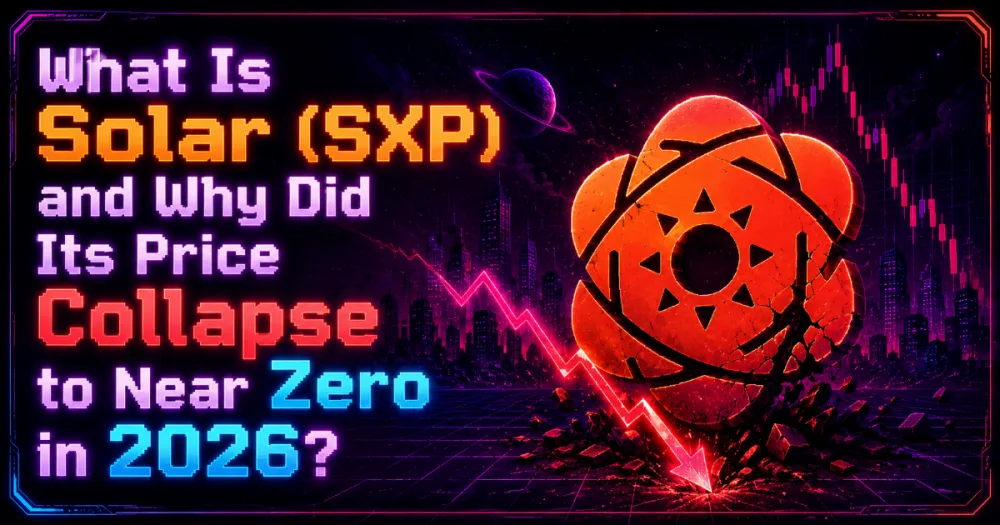
Solar (SXP) is a Layer-1 blockchain built from the Swipe ecosystem after a consolidation of its functionalities and a reorganization. The blockchain operates using the Delegated Proof-of-Stake consensus mechanism, with SXP holders voting for validators to maintain the blockchain and process transactions. SXP asset is the ecosystem’s native utility and governance token.
Contents
What Is Solar (SXP)?
Overview of Solar (SXP) Crypto Project
Any Solar crypto project overview would also describe the network as a community-oriented infrastructure ecosystem focused on staking, governance, payments, and decentralized applications.
Origin and Evolution From Swipe to Solar
Prior to its current use, the framework was operated under the Swipe brand, a cryptocurrency payments platform powering wallets and Visa card integrations. Swipe’s name was further popularized after it was acquired by Binance in 2020 and integrated Swipe’s infrastructure into its own payments ecosystem.
The project would later be rebranded to Solar and migrated to a stand-alone blockchain governed by the community, with Swipe being token swapped to Solar on a 1:1 basis, keeping the SXP ticker. The network is still perceived by many investors as asking what is Solar as a wallet and payments platform because of its earlier Swipe branding.
Related: Stellar (XLM) Price Prediction 2026 – Is a Massive Bull Run Coming?
Key Use Cases and Ecosystem Explained
Within Solar, SXP token holders can stake SXP for block rewards and engage in ecosystem governance by voting on proposals related to ecosystem development. Staked SXP can also be used to cover transaction fees and handle validation duties.
The network was also used for decentralized applications, token creation, payments, and low-cost peer-to-peer payments, although usage of the network was much lower than that of larger Layer-1 competitors in the space.
Why Solar (SXP) Was Initially Popular in Crypto Markets
Solar SXP was initially popularized as a cryptocurrency-based payment system powered by crypto exchange Binance and the Swipe payment network during the 2020-2021 Bitcoin bull run, and was seen at the time as a “bridge” project between customary finance systems and crypto-based payment systems by cryptocurrency investors.
The project price rally was partly attributed to the wider trends of speculation that impacted other smaller blockchain networks focused on staking or governance, as well as the increasing interest in cryptocurrency projects focusing on payments and emerging Layer-1 blockchain ecosystems.
Solar (SXP) Price History Overview
Early Growth and Market Performance
Solar SXP’s first rise is attributed to the increase of the Swipe payment platform during the 2020 cryptocurrency bull market and the acquisition of Swipe by Binance in mid-2020. Traders identified SXP token as a provider of a crypto payment platform integrated with a debit card.
SXP experienced extreme price volatility in 2021, with multiple major rallies followed by price corrections. Like other altcoins, SXP price was subject to trends in smaller-cap, altcoin blockchain payments and tokens.
Major Price Peaks and Bull Market Cycles
The token reached a peak price of around $5.80-$5.86 during the 2021 bull run, according to various crypto market data aggregators. The bull run was believed to have been powered by broad speculation in the cryptocurrency market and interest in Layer-1 chains and payment tokens.
The momentum picked up again with the news of Binance acquiring Swipe and restructuring its ecosystem. It was reported at the time that while SXP appreciated considerably, Bitcoin and Ethereum seemed more cautious.
However, the rally was not to last, and a lengthy bear market, which would wipe out most of those gains, began when liquidity fell in 2022. Market price return histories would have shown that they were about to collapse from several dollars to fractions of a cent by 2026.
| Year | Key Event | Impact on SXP |
| 2020 | Binance acquires Swipe | Strong market attention and growth |
| 2021 | Bull market peak | Price rises above $5 |
| 2022 | Crypto bear market begins | Liquidity and demand decline |
| 2025 | Falling exchange activity | Investor confidence weakens |
| 2026 | Binance delisting | Sharp collapse in liquidity and price |
Key Events That Influenced SXP Price Movements
Significant events in SXP token price action history were the acquisition of Swipe by Binance, the migration from Swipe to Solar, and the transition to an independent blockchain ecosystem. Although promising, all these events raised concerns about the long-term utilization and SXP governance decentralization.
Additionally, the overall state of the cryptocurrency market played a major role, with SXP’s price fluctuations being highly correlated with Bitcoin price movements, liquidity cycles, and risk-on sentiments. The collapse of speculative demand after the 2021 bull market had an outsized effect on smaller ecosystems, which have lower levels of on-chain activity.
Investor Sentiment Before the Collapse
Before Solar price began to drop sharply, investor involvement waned as trading volume declined and the presence of Solar SXP ecosystem diminished. Although some members of the community continued to discuss and develop alternative recovery scenarios, confidence in the token further decreased as resistance levels stayed intact.
Read Also: Bitcoin Crashes to $73K: US-Iran Conflict Escalation Hits BTC Price and Crypto
By 2025-2026, other variations of the question why is SXP going down had become commonplace, and market members noted that dwindling liquidity, speculative interest, and exchange listing activity were signs of impending SXP collapse.
Why Did Solar (SXP) Collapse in 2026?
Breakdown of the Major Causes Behind the Crash
Analysts discussing why did Solar SXP crash often pointed to a set of falling liquidity, declining exchange support, weaker ecosystem activity, and negative sentiment toward smaller altcoins. By early 2026, the project had lost most of the unique momentum earned during the previous bullish market cycle.
Solar SXP price largely crashed due to the decision by Binance, a cryptocurrency exchange, to remove trading support for the token, followed by de-listing it from its platform. Binance notably cited a lack of liquidity and trading volume as the reason behind the delisting, bringing further selling pressure to Solar SXP.
| Factor | Description | Market Impact |
| Falling Liquidity | Lower trading activity across exchanges | Higher volatility and weaker exits |
| Exchange Delistings | Binance and other platforms removed support | Sharp decline in investor confidence |
| Weak Ecosystem Activity | Lower developer and user engagement | Reduced long-term demand |
| Bear Market Conditions | Capital shifted toward large-cap assets | Pressure on smaller altcoins |
| Panic Selling | Traders rushed to exit positions | Accelerated price collapse |
Liquidity Issues and Market Exit Pressure
The liquidity issues became apparent in 2025 and early 2026, when the trading volume on some exchanges was considerably lower, and large holders would need to push prices much further to exit trades as quickly as possible.
The lack of confidence caused many traders to leave the market simultaneously, creating a liquidity spiral (declining asset price leads to more selling and less buying support). Reports of extreme short-term volatility and the continuing outflow of capital from the asset were seen following the announcement of Binance delisting the token.
Loss of Utility and Ecosystem Activity
The loss of Solar crypto support was aggravated by the lack of activity in its ecosystem. Despite Solar’s broad support for such ideas as staking, governance, token issuance, and decentralized payment infrastructure, its network activity was not comparable to most major Layer-1 ecosystems.
As of January 2026, the project has announced that no further protocol upgrades are planned. This was attributed to operational instability and unresolved structural issues. The announcement and previous media reports of governance organizational issues and internal project management issues have negatively impacted investor faith.
A reduced developer activity was part of the bearish narrative, as some exchanges and market analysts had flagged lower GitHub activity and public involvement before issuing risk warnings and trading reviews.
Exchange Delistings and Reduced Trading Volume
Exchange altcoin support is critical to their success, especially for low-cap altcoins. At the time exchanges began delisting or removing SXP trading pairs, the token’s market depth worsened. Binance later opted to delist trading Solar support due to deteriorating liquidity.
It immediately led to panic: double-digit downswings and abnormal volatility were reported after the delisting announcements, as sellers sought to close their positions before markets were forced to close.
Macro Crypto Market Conditions in 2026
The overall cryptocurrency market’s declining risk appetite also contributed to SXP price collapse 2026. Following several years of declining speculative investing in small altcoins, this trend continued, which impacted SXP price. Investors increasingly concentrated on Bitcoin, Ethereum, and large-cap ecosystem plays during the downturn.
This introduced a layer of macro pressure to the story of why did SXP lose value, beyond the usual suspects: less liquidity, less adoption, lower activity within the ecosystem, and exchange listings.
Did Solar (SXP) Really Go to Near Zero?
Understanding “Near Zero” Price Movements
The term Solar SXP near zero became popular when the token had lost nearly all its value since the 2021 peak price. However, the market data shows that SXP has not reached zero. The asset has fallen to extremely low fractions of a cent following wide-ranging sell pressure and low liquidity.
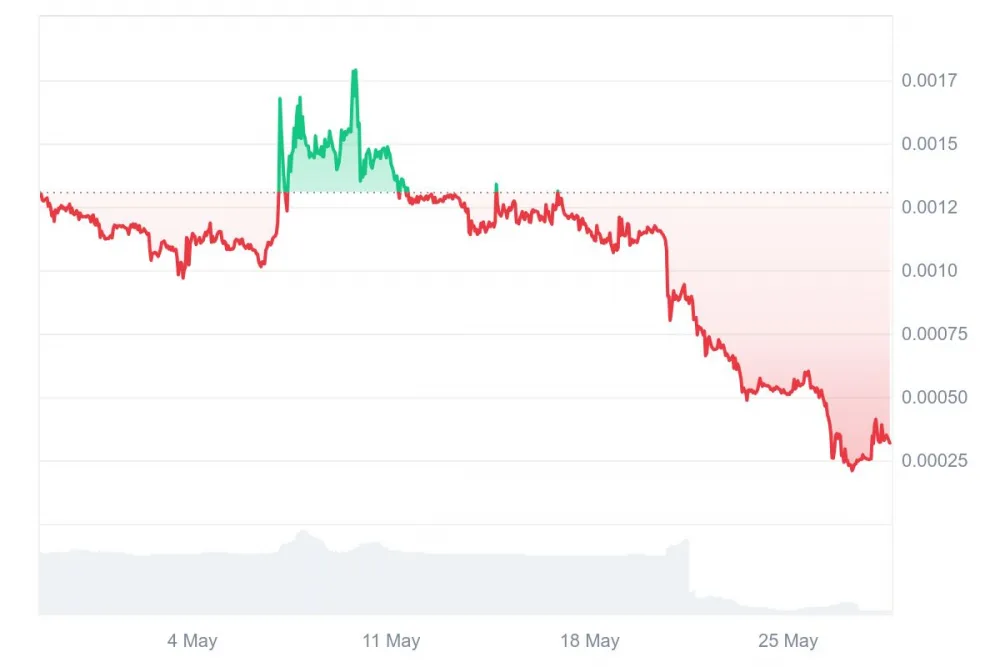
Likewise, the term “near zero” is commonly used in the cryptocurrency markets for cryptocurrencies that have fallen more than 95% from the all-time high. Because of the drop in trading volume and low liquidity, Binance announced the removal of trading SXP support, which accelerated the price drop.
Real Market Data vs Panic Narratives
Despite the extreme bearishness Solar price collapse, SXP saw continued exchange listings, even after most of the major delistings, with public exchanges considering the token to still exist operationally, although trading access and market depth sharply declined.
At the same time, many traders discussing what happened to SXP pointed to panic on social media, even though market data still showed highly volatile but active trading.
Some say that, due to the very thin order books of some altcoins, low-liquidity assets can appear to be effectively abandoned even though they are still listed, misleading traders as to the true state of the market for that asset.
Volatility, Liquidity Gaps and Price Illusions
Perhaps the most defining element in Solar token crash explained narrative is the extreme volatility that followed Binance’s SXP delisting announcement. With traders exiting their positions and liquidity exiting continuously, SXP had extreme intraday volatility.
Poor liquidity was a factor; the price for a few contracts in illiquid markets can change considerably because there is not enough buying or selling pressure close to the market price, leading to the impression that markets are recovering from or collapsing faster when this may not reflect actual demand.
Was Solar (SXP) a Failed Project?
Differences Between Failure and Market Cycles
While opinions vary as to whether Solar SXP was a failed project, its price had decreased greatly. Solar blockchain and foundation continued operating through 2026, not shutting down.
Read Also: What Is a Bear Market and Why Is Crypto Crashing?
However, the delistings from exchanges and low liquidity hurt market confidence. Binance and other Asian exchanges cited low trading volumes and liquidity when they delisted SXP-related activity, and SXP crypto crash narrative accelerated.
Development Activity and Project Status
Solar Foundation still referred to the network in 2026 as an active Layer-1 ecosystem focused on governance and payment infrastructure, while validators and staking services were still active.
The ecosystem stagnated in comparison to other larger blockchains, causing exchange volumes to drop. This led to is Solar SXP dead discussions, and numerous warnings and delistings across exchanges.
Community Reaction and Investor Trust Breakdown
Post-collapse, community opinion about Solar SXP analysis was polarized: supporters of the token’s value said that the blockchain continued functioning normally, while detractors said the blockchain was structurally broken because of the prolonged decline.
By 2026, Solar SXP news coverage will increasingly focus on trust erosion, liquidity risks, and exchange delistings rather than ecosystem growth. In cryptocurrency, exchange listings and liquidity frequently act as legitimacy markers, and forced delistings can change the way a project is viewed by the market and developers, despite its continued existence.
Solar (SXP) vs Other Collapsed Crypto Assets
Comparison With Other Major Crypto Declines
Solar SXP collapse was likened to the failure of several other cryptocurrencies, including Terra/LUNA and the FTX-linked FTX token FTT, Celsius, and Voyager, which suffered a common loss of liquidity that rapidly eroded confidence and caused large-scale runs on those projects.
Whereas Terra/LUNA wiped tens of billions of dollars out of the market in a matter of days following the collapse of its algorithmic stablecoin UST, FTX’s collapse was due to misappropriation of customer funds.
In contrast, Solar crypto downfall was a lengthy, gradual event driven by a drop in liquidity, exchange support, and Solar’s role.
What Makes SXP Different From Typical Altcoin Crashes
In many market reports, Solar SXP explained discussions focused on the fact that the project operated as an active blockchain ecosystem rather than a purely speculative token. It included staking, governance, and a validator network, and continued to exist publicly after the token fell off the market.
Additionally, SXP’s downfall was attributed more to market declines and exchange delistings than to fraud allegations or protocol failure.
However, Binance cited low liquidity and trading quality for delisting the token, and did not accuse Solar SXP crash project of engaging in criminal activities.
Lessons From Similar Token Downfalls
The clearest takeaway from the crypto crash SXP story is that exchange support and liquidity can have a huge impact on the survival of an altcoin. Volume below a sustainable level can result in sell-offs, no matter how many good technical developments and milestones are still on the table.
The wider crypto market has shown that a narrative alone can’t save a project in a prolonged bear market, as was seen in the case of Terra, FTX, Celsius, and many small altcoins, where the confidence rapidly evaporated as liquidity and ecosystem development dried up.
Can Solar (SXP) Recover in the Future?
Conditions Needed for Recovery
For Solar SXP to recover, either more liquidity would need to be added, relisting on exchanges, or increased ecosystem visibility. On Binance, the delisting was due to decreasing trading volume, liquidity, development activity, and community involvement among listed trading pairs.
The project would also need to restore investor confidence, as many smaller altcoins that experienced major delistings in 2025 to 2026 would not recover unless there was increased network activity and trading demand for each of the altcoins.
Possible Rebranding or Ecosystem Revival Scenarios
Solar blockchain and its official website remained online in 2026, indicating it was not completely abandoned in the wake of the token crash. The project continued to position itself as a Layer-1 ecosystem that offered governance and staking infrastructure for developers.
Post-delistings, some traders speculated as to the potential of a relaunch or revitalization of the ecosystem. However, there was no announcement of a major relaunch, partnership, or rebranding effort, similar to what has occurred in other crypto ecosystems that revived themselves.
Risks That Prevent a Comeback
The biggest factor that makes Solar SXP analysis difficult is the low liquidity due to Binance and other platforms stopping the support of the trading pair, which increases volatility and reduces availability in the market.
Additionally, existing competition in the Layer 1 space is extremely high, with the majority of developer activity, capital, and institutional interest being towards larger ecosystems at the expense of smaller projects.
At the same time, a prolonged Solar SXP drop caused a loss of confidence that is hard to recover from once most major exchanges have abandoned an altcoin.
What Investors Should Learn From Solar (SXP)
Risk Management in High-Risk Altcoins
The eventual Solar SXP failure demonstrated the vulnerability of smaller altcoins to loss of liquidity and exchange access, and in response, Binance confirmed a planned Solar delisting to address declining volume, liquidity, and market quality.
Read Also: Why Is Ethereum Price Still Dropping? ETH Technical Analysis & Market Outlook
For investors, this shows the need for diversification and a controlled level of exposure to speculative investment. The cryptocurrency market remains subject to volatility, especially for low-cap projects reliant on speculation and centralized exchanges.
Importance of Liquidity and Utility
Solar crypto downfall was also representative of the fact that liquidity is every bit as important as technology: once major exchanges start delisting coins, it is harder for traders to exit, as spreads widen and order books become thinner and more volatile.
Another important indicator of long-term success is the project’s utility: does the project meet a need in the ecosystem? Projects may be highly successful during bull markets, but in today’s market, hype isn’t enough to sustain them. In the Solar case, the declining market activity preceded the collapse, but accelerated with it.
Red Flags Before Investing in Crypto Projects
Several warning signs preceded the Solar SXP price drop, including lower trading volume, weaker liquidity, and growing exchange concerns over market quality.
A second lesson is that listings and delistings from exchanges can quickly erode investor belief, even when the underlying blockchain is not impaired. Difficulty accessing assets in crypto markets usually means less visibility, less liquidity, and more capital flight from smaller projects.
FAQ
Is Solar (SXP) Still Active in 2026?
In 2026, the blockchain infrastructure and network of validators remained public, although major exchanges had since stopped supporting trading due to low liquidity.
Why Did SXP Lose So Much Value?
Decreased liquidity, volume, exchange support, and activity within the ecosystem, along with announcements of exchange delistings, contributed to the drop in price and associated panic selling.
Is Solar (SXP) a Good Investment Now?
Many investors researching what is Solar crypto may first evaluate exchange support, ecosystem activity, and long-term demand before entering high-risk altcoins.
Can SXP Ever Reach Its Previous Highs Again?
A recovery is likely to require greater liquidity, adoption, listing across more exchanges, and confidence from investors in the network. Historically, many delisted altcoins have not reached previous all-time-highs following bearish markets.