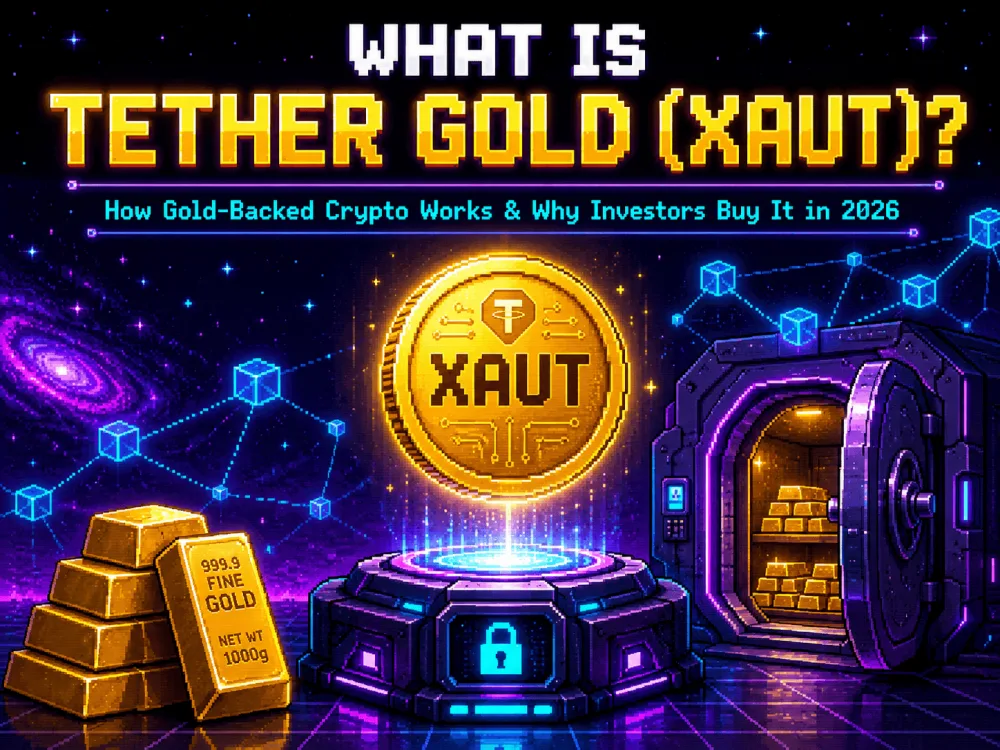
Gold and crypto once stood apart in finance. While gold moved through history with weight and tradition, crypto raced ahead: light, fast, volatile, and unproven. Tether Gold (XAUT▲$4,161.41) blends these natures. Built on blockchain, Tether Gold exists as code tied to real metal held somewhere solid. The past meets a system built for speed.
By 2026, this blend holds greater weight than in past digital currency phases. Rather than chasing volatile coins and fleeting stories, investors now seek different outcomes. Preference shifts toward assets operating within blockchain networks yet anchored to physical value. Gold-backed crypto begins appearing in these conversations more often.
Ownership of Tether Gold (XAUT) does not mirror a dollar-linked stablecoin. Instead, it reflects a digital claim on actual gold. One XAUT token equals one fine troy ounce of real, vault-stored precious metal. Movement in its value typically tracks live gold pricing. Stability at a one-dollar level is not part of its design. Rather, fluctuations align with commodity trends.
What results is Tether Gold (XAUT), functioning as a blend: exposure to physical commodities on one level, digital currency traits on another, alongside representation of tangible assets through tokens. Its nature emerges across layers: material value anchored in gold, operational flow shaped by blockchain mechanics, and ownership logic encoded within tokenized infrastructure. It is not fully traditional, but it is not purely speculative either.
Related: Top 5 Altcoins for the Next 10-100x Crypto Bull Run in 2026: High-Potential Crypto Picks
Contents
- What Is Tether Gold (XAUT)?
- Gold-Backed Crypto Explained Simply
- Tether Gold (XAUT) Compared With Physical Gold
- Why Investors Buy Tether Gold in 2026
- Why XAUT Gained Importance in 2026
- Benefits of Tether Gold (XAUT)
- Risks and Limits of XAUT
- XAUT and Bitcoin Serve Different Purposes
- XAUT vs Stablecoins
- Who Might Use Tether Gold?
- Why XAUT Matters in 2026
- FAQ
What Is Tether Gold (XAUT)?
A single unit of Tether Gold (XAUT) corresponds to one fine troy ounce of physical gold held in reserve. Ownership exists digitally, recorded on a public ledger accessible globally. Instead of storing bars, investors hold tokens representing real bullion secured in vaults. Movement between parties happens directly through blockchain infrastructure, without the usual friction of traditional gold markets.
One way to look at it: simplicity drives the concept. Rather than purchasing bullion, arranging storage, managing insurance, or relying on standard funds, market participants gain exposure through XAUT, a digital representation tied directly to real gold. Trading occurs across cryptocurrency platforms, while movement between compatible digital wallets remains possible.
Unlike Bitcoin, XAUT does not rely on digital scarcity. Unlike USDT▲$0.9991, its worth does not follow the U.S. dollar. While most altcoins depend heavily on market expectations, this one stands apart. Backed by physical gold, that support shapes what it is worth.
Put simply, owning Tether Gold means access to gold value while staying within cryptocurrency platforms. For those using digital assets, exposure to precious metals becomes possible through XAUT tokens. Holding physical bullion is no longer required under such models. Value tied to gold moves on-chain instead.
Gold-Backed Crypto Explained Simply
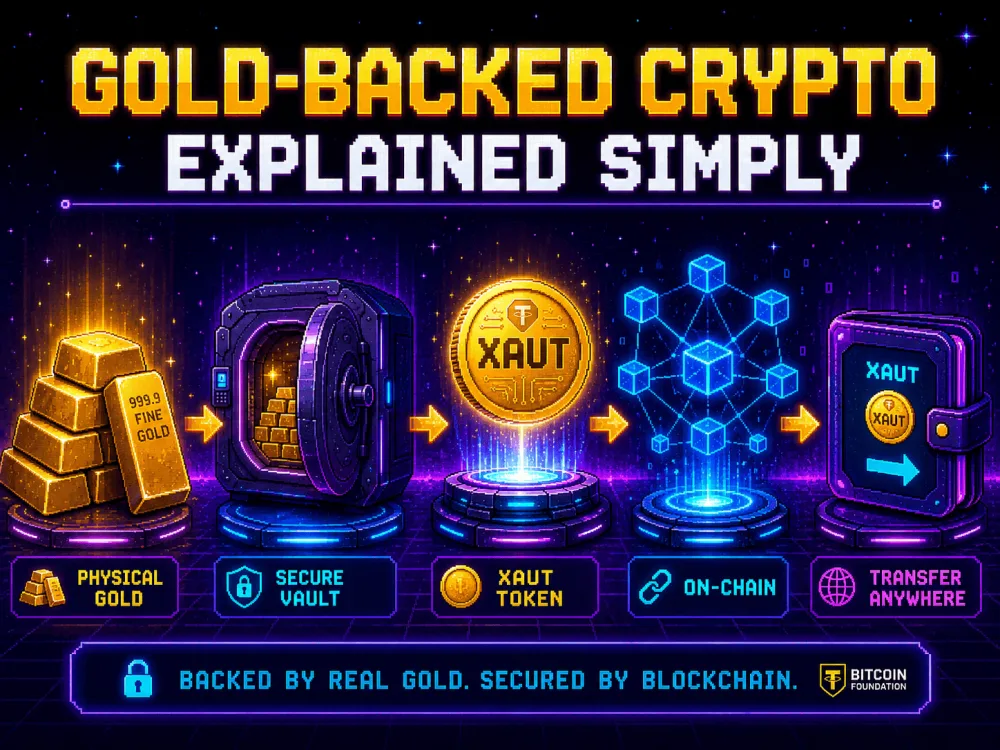
Gold-backed crypto links blockchain tokens to physical gold stored securely by a third party. Ownership transfers happen digitally while the underlying asset remains untouched. What moves is access, not metal. Behind each unit sits real weight in vaults. These tokens mirror value through verified reserves, not empty promises.
A typical sequence follows these steps:
- Physical gold is placed within highly protected storage facilities.
- Tokens are issued to represent claims on that gold.
- Each token stands for a set quantity of gold.
- Users hold or trade the token on-chain.
- The token’s value usually follows shifts in gold’s market price.
- Redemption may exist under the issuing authority’s framework.
A single fine troy ounce of physical gold underlies every Tether Gold token. Ownership can be linked to specific gold bars, not just a shared vault with undefined portions. This clear link to assigned assets forms a key distinction. Many similar tokens lack transparent reserves, making their value uncertain by comparison.
Still, relying only on the word “backed” can mislead investors. Custody arrangements shape confidence just as much as audit frequency does. Redemption conditions matter alongside legal design when assessing safety. Trust in the issuer weighs heavily, as does platform stability. Tokenized gold eases some ownership hurdles tied to real gold, but risks shift rather than vanish.
Tether Gold (XAUT) Compared With Physical Gold
Understanding Tether Gold (XAUT) becomes clearer through contrast with conventional methods of holding physical gold.
| Feature | Physical Gold | Gold ETF | Tether Gold (XAUT) |
|---|---|---|---|
| Ownership format | Coins or bars | Shares in a fund | Blockchain token |
| Storage | Investor or vault provider | Fund custodian | Issuer-linked vault storage |
| Transfer speed | Slow due to manual handling | Market-hours trading | Crypto-style transfers |
| Divisibility | Limited by minted sizes | Easy through shares | Easy through token units |
| Market access | Dealers and brokers | Brokerage accounts | Crypto exchanges and wallets |
| Redemption | Direct possession if held physically | Usually limited for retail users | Possible under issuer terms |
| Main risk | Storage, theft, liquidity | Fund structure, fees, access | Issuer, custody, exchange, smart-contract risk |
Mobility defines the contrast. Heavy weight comes naturally to physical gold. This trait attracts yet also limits. With XAUT, ownership stays linked to gold while easing how it moves and trades.
Traditional investors already found partial relief through gold ETFs. Yet interaction ease draws crypto-savvy individuals toward tokenized gold. It links smoothly with exchanges, fits existing wallet systems, and works within digital frameworks with less friction.
Read more: Why Bitcoin Is Compared to Oil: Digital Gold vs Black Gold Explained
Why Investors Buy Tether Gold in 2026
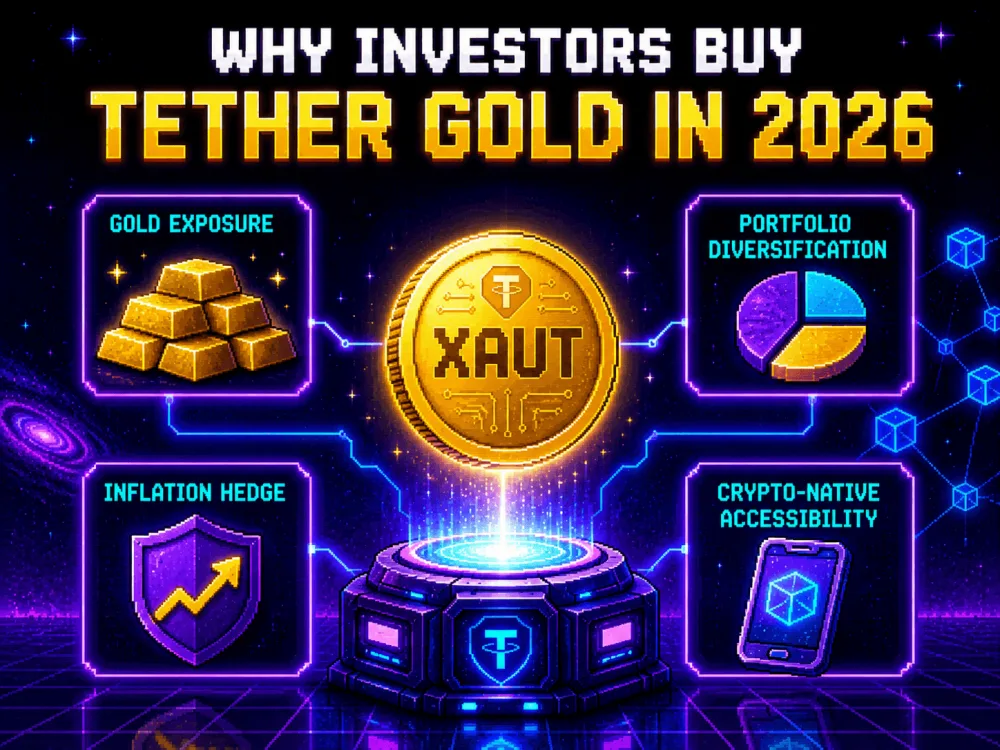
For investors in 2026, holding Tether Gold (XAUT) often ties to cautious strategy rather than pure pursuit of gains. Volatility defines most digital asset holdings. Inside the same environment, an asset tied to physical gold provides balance without requiring users to exit crypto entirely.
The main reasons investors buy XAUT include:
- Gold exposure without physical storage
Ownership of gold becomes possible without arranging vaults, insurance, shipping, or secure facilities. - Crypto-native accessibility
Through existing cryptocurrency systems, XAUT becomes accessible for purchase and movement. With standard blockchain tools, transferring value remains straightforward for experienced participants. - Inflation and currency-risk hedging
When concern rises over weakening fiat money, gold tends to draw interest. Debt worries, macroeconomic imbalance, and monetary uncertainty can all support demand for gold-linked assets. - Portfolio diversification
Unlike most digital currencies, Tether Gold (XAUT) follows the value of physical gold instead of shifting mainly with blockchain narratives. - Real-world asset exposure
By 2026, real-world asset tokenization remains a major crypto theme. XAUT fits that trend directly. - Liquidity compared with physical bullion
Selling tangible gold may involve intermediaries, price spreads, verification checks, and waiting periods. Exchanging digital gold tokens may move more quickly, depending on platform liquidity.
Should volatility rise, investors holding Bitcoin, Ethereum, stablecoins, or alternative cryptocurrencies may find XAUT useful for balance. Not an impenetrable shield, obviously. More like a seatbelt: practical protection when conditions shift, but not a force field.
Why XAUT Gained Importance in 2026
By 2026, Tether Gold (XAUT) carries more relevance than before, surpassing $4 billion in value. Rising interest in gold emerges among investors tracking inflation, government borrowing, central bank policy, global tensions, and doubts about traditional money systems.
Meanwhile, digital currency markets have evolved visibly. Participation now extends beyond early adopters. Banks, wealthy investors, asset managers, and stricter retail buyers have entered the field. Interest grows around holdings that merge distributed ledger settlement with conventional financial logic.
Gold-backed cryptocurrency occupies a practical role. It does not aim to challenge Bitcoin directly, mimic memecoins, or promise a fresh blockchain layer. The reasoning follows a straight line: gold already holds recognized value, and tokenization simplifies transfer.
This explains how Tether Gold (XAUT) aligns with growing interest in tangible assets. Tokenized government debt, digitized investment pools, blockchain-based clearing, and tokenized commodities all follow the same broad path. Real holdings delivered through digital infrastructure are gaining ground.
Benefits of Tether Gold (XAUT)
One strength of XAUT lies in how it merges gold’s defensive reputation with cryptocurrency’s ease of movement. Physical value meets digital efficiency across transactions.
| Benefit | Why It Matters |
|---|---|
| Gold price exposure | Tracks value shifts without requiring ownership of metal bars |
| On-chain transfer | Allows gold-backed value to move directly through blockchain records |
| Fractional access | Users do not need to buy a full physical bar |
| Crypto exchange availability | Makes gold exposure easier for digital asset traders |
| Portfolio diversification | May balance portfolios focused only on digital currencies |
| Real-world asset appeal | Fits the growth of tokenized physical assets |
What stands out most is ease of access. For someone handling digital currencies, gaining exposure to gold becomes possible without a brokerage setup or tangible bars. This straightforward approach explains rising interest in asset-backed tokens.
Risks and Limits of XAUT
Tether Gold (XAUT) carries exposure despite its asset support. Though physical gold may temper swings seen in digital alternatives, challenges remain within execution, regulation, trading environments, and custody arrangements.
Among these are potential hazards such as:
- Issuer risk
Should Tether fail to uphold its obligations, XAUT may lose alignment with promised reserves. Confidence follows proof, not branding. - Custody risk
Safe storage of gold is essential, with clear assignment of responsibility to prevent system errors. Location matters just as much as documentation. - Redemption limits
Physical redemption may demand high thresholds and defined procedures. It is not the same as walking into a shop and collecting a coin. - Exchange risk
Holding XAUT on a platform introduces exposure to that platform’s financial stability and internal controls. - Liquidity risk
Major markets often show fair liquidity, but less prominent exchanges might see broader spreads during stress. - Regulatory risk
Tokenized commodities may face changing legal treatment across jurisdictions. - Price risk
Gold can decline. Exposure through XAUT exists without assured gains.
One might err by viewing Tether Gold (XAUT) as entirely secure within the crypto space. Rather than calling it safe, it is better to call it gold-linked crypto with a different risk profile from Bitcoin, stablecoins, or alternative coins.
XAUT and Bitcoin Serve Different Purposes
Occasionally, discussions link XAUT to Bitcoin due to shared traits involving currency alternatives. Useful though it may seem, that parallel holds value only within narrow limits.
Among digital assets, Bitcoin stands apart due to predefined issuance limits, decentralized ownership verification, and strong network effects. Volatility remains common because pricing reacts sharply to shifts in sentiment, adoption, liquidity, and market belief.
Tether Gold (XAUT) works differently. It originates from a corporate entity and is supported by physical gold reserves. Market perception of the issuing firm’s storage and redemption framework shapes trust. Price fluctuations mainly follow the gold commodity market.
| Question | Bitcoin | Tether Gold (XAUT) |
|---|---|---|
| Backed by physical gold? | No | Yes |
| Decentralized? | Yes | No |
| Main price driver | Crypto adoption and market demand | Gold price |
| Volatility | Usually higher | Usually closer to gold |
| Supply model | Fixed issuance schedule | Token issuance tied to gold backing |
| Best use case | Digital scarcity exposure | Tokenized gold exposure |
Bitcoin is supported by a strong belief in digital scarcity as money. XAUT is backed by gold turned into digital form. One might hold both together, but their roles differ clearly.
XAUT vs Stablecoins
XAUT also differs sharply from dollar stablecoins like USDT or USDC▲$0.9999.
A dollar-linked stablecoin typically holds near one U.S. dollar in value. Its function centers on consistency, transfers, market pairing, clearing trades, and digital dollar access. XAUT is not fixed to that same level. It tracks movement in gold prices instead. When gold rises, XAUT tends to follow upward. Downward shifts in gold usually pull XAUT lower as well.
For this reason, XAUT does not function like a dollar-backed stablecoin. Instead, it behaves more like an asset tied to physical goods.
What sets them apart is relevant to traders. Holding USDT provides access to digital dollar value. Holding Tether Gold (XAUT) provides access to gold value while remaining within digital asset systems.
Who Might Use Tether Gold?
Tether Gold (XAUT) may appeal to investors who want gold exposure through blockchain technology instead of physical holdings. For those cautious about conventional methods, this asset provides access without relying on typical market routes. Ownership becomes traceable and transferable, while still tied to real-world value.
XAUT may be particularly relevant for:
- Crypto investors looking to diversify without exiting digital asset markets.
- Traders seeking a hedge when economic conditions shift unpredictably.
- Users interested in real-world asset tokenization.
- Investors preferring to avoid handling real gold.
- Portfolio builders balancing Bitcoin, stablecoins, and defensive assets.
Should ownership involve direct handling of metal, reliance on central parties might feel inconvenient. Where trust in institutions runs low, physical bars may look cleaner despite logistical burdens. XAUT solves some problems, but not all of them.
Why XAUT Matters in 2026
Tether Gold (XAUT) holds relevance because it bridges conventional finance with blockchain systems. It lacks the decentralized nature of Bitcoin and does not mimic basic fiat-pegged tokens. Instead, it offers access to gold value through dynamic digital transfer methods.
By 2026, that matters. With expansion in tokenized physical holdings, instruments such as XAUT show how traditional reserves can be reshaped for digital ledger participants. Attraction stems less from excitement and more from function. Movement simplifies, access widens, and the backing remains familiar.
What matters most for investors is knowing the true nature of the purchase. Tether Gold (XAUT) is not “digital gold” in Bitcoin’s philosophical sense. It is real gold turned into tokens. Its value emerges from tangible metal, yet relies heavily on custody, issuer trust, and redemption rules.
When handled with attention, XAUT may serve a measured role in diversification. When followed without thought, it joins the ranks of assets acquired on appearance alone. A steady line on screen often masks what follows when markets shift. In digital currency spaces, quiet patterns tend to demand payment down the road.
FAQ
What is Tether Gold (XAUT)?
Tether Gold (XAUT) is a gold-backed crypto token issued by Tether. Each unit represents one fine troy ounce of real gold held in protected storage.
Does XAUT have real gold behind it?
Yes. Physical gold supports XAUT, ensuring its worth aligns more closely with gold prices than with fluctuations in the U.S. dollar.
Is Tether Gold the same as Bitcoin?
No. Bitcoin operates without central control and is not backed by tangible property. Tether Gold is issued by a company, with each unit representing gold-backed tokenized exposure.
Why do investors buy XAUT?
Investors buy XAUT for gold exposure, portfolio diversification, inflation hedging, crypto-native access, and exposure to real-world asset tokenization.
Can XAUT lose value?
Yes. A drop in gold prices may reduce XAUT’s worth. It also carries issuer, custody, exchange, liquidity, and regulatory risks.