The Ethereum Classic community seems divided over who should receive the base fees under a new fee market system.
Ethereum Classic is facing a new debate over what to do with base fees if it adopts a fee market like EIP-1559, which sets a base fee that adjusts automatically with network demand and burns those fees on Ethereum.
In Ethereum Classic, the main divide is between those who want the fees sent to a treasury and those who want them paid directly to miners, according to a blog post published Monday, March 30.
The Olympia Approach
The Olympia camp, led by blockchain developers Cody Burns and Chris Mercer, wants base fees routed to a treasury that would fund development and network work through smart contracts. It’s expected that this approach would give Ethereum Classic a steady funding path and keep decisions open and transparent:
“Rather than directing all base fees exclusively to the treasury, governance can allocate a portion to miners, allowing the network to balance treasury funding with miner incentives. This split would be adjustable through the OIP process without requiring hard forks.”
Alternative Focused on Miners
The other plan, ECIP-1120, was proposed by Ethereum Classic contributors Istora Mandiri and Diego López León, who have been active in protocol development and fee market research. Their plan would send base fees directly to miners, with supporters arguing miners need the money as block subsidies keep falling.
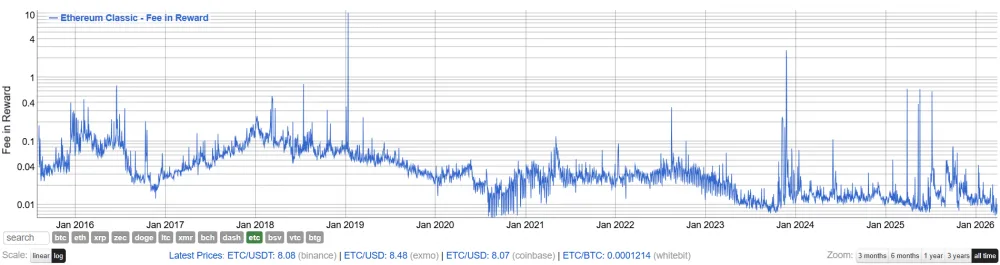
- Under ECIP-1017, which was applied in December 2017, ETC▲$7.27 has a programmatic emission schedule that reduces block rewards by about 20% every 5 million blocks. That means the block subsidy — the new ETC paid to miners per block — decreases over time as the network emits more coins, with each era paying less than the last.
Where Dispute Arises
Opponents of the treasury idea warn it could change ETC’s original rules and introduce additional legal, political, and technical risk. The blog post reads:
“Ethereum Classic exists because of a community that refused to accept a rushed, contentious change to protocol rules. That history carries a responsibility: changes to ETC’s economic model deserve the highest standard of scrutiny, and the cost of getting it wrong far outweighs the cost of taking more time.”
There is one area where both sides seem to agree, though. ECIP-1121 would update execution clients with newer Ethereum improvements while leaving out the fee market debate and any move toward Proof-of-Stake.
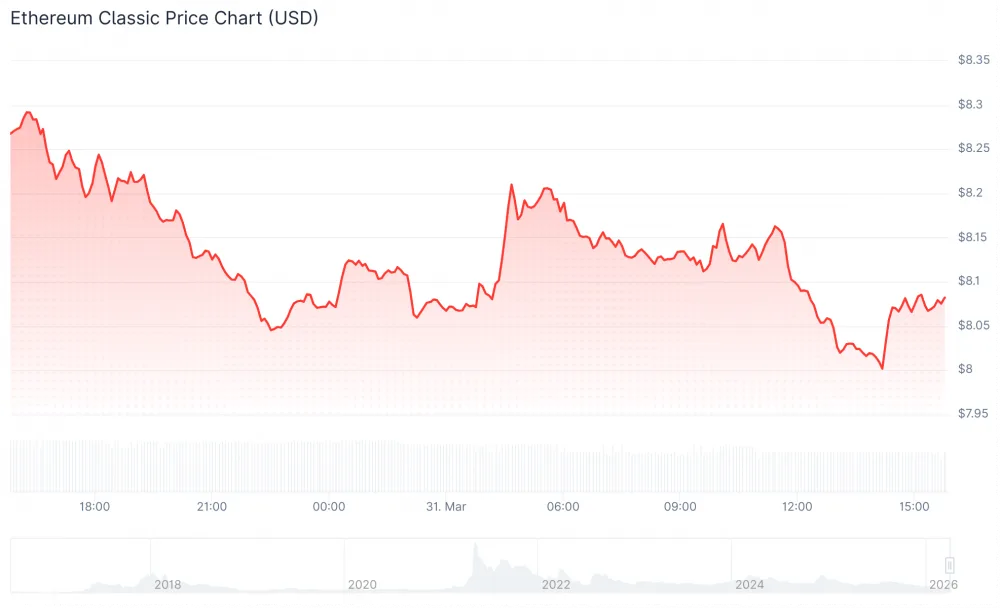
The blog notes that neither proposal is final and both remain open for discussion, with no timeline set. As of press time, Ethereum Classic (ETC) is down 2.4%, slightly underperforming the broader crypto market, which is down 1.7% on the day, per CoinGecko.